Interview (Written): Robert Towne
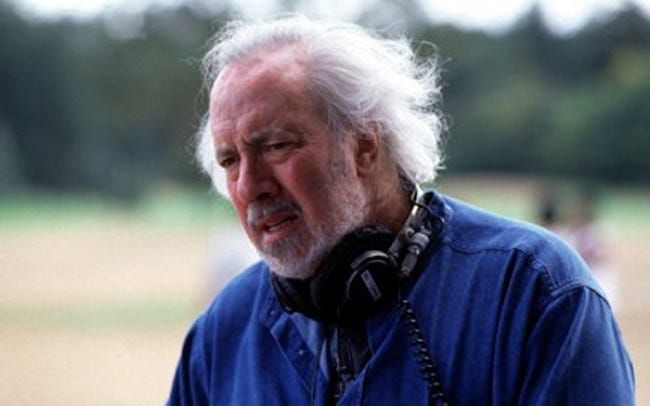
A Creative Screenwriting interview conducted in 2000 with legendary screenwriter Robert Towne (Chinatown, Shampoo, Mission: Impossible):
Do you think that modern-day audiences have the willingness to believe, as much as they used to?
Oh, sure they do. Audiences want to believe that as much as they ever did. They’re just more skeptical than they’ve ever been, more sophisticated than they’ve ever been. You have to be more careful about letting them enjoy it. In other words, you have to create a situation where it’s not that easy for the hero to display his wares, so they’re rooting for the hero. Showing up’s not going to do it.
Those dynamics don’t ever change, any more than storytelling ever changes for children or adults. All you have to do, if you want to be reassured of that, is look at Harry Potter. What’s number one, two, and three on the best-seller list, on the New York Times list. Not for children. For children and adults. It’s Harry Potter. If you want to know whether storytelling is something audiences want to read, hey, Potter’s a real hero. If you want to read great storytelling, that’s great storytelling. And all the things we’re talking about, in terms of a hero whom you have to believe can get it together to overcome incredible odds, is there.
Writer-director Robert Towne
It’s really a wonderful story.
Yes, that never changes. The skills that have been brought to motion pictures in recent years have not been as finely honed as they were in the past. It’s partly a legacy of the ’50s and ’60s where the advent of television had such a powerful impact on movies. And so Hollywood, in an attempt to lure audiences back to the theaters, relaxed the code of what could be depicted in a film. Let them see something they can’t see on TV. So, in a way, it was great. We used language we hadn’t used before, and showed scenes dealing with sex. But it also removed the stumbling blocks that were really spurs to good storytelling. All right, you can’t show them having sex so what do you do?
All the inventiveness the old films had in terms of storytelling — you can’t show a certain type of violence — all of our inventiveness was gone. Our need to be inventive was gone. Not that you can’t be inventive with additional colors in your palette, but just the fact that you can show blood, and bullets in people, and do it in slow motion, and have simulated sex and all of those things.… It very often became the occasion for people to photograph that, rather than use them judiciously; therefore, a lot of storytelling lapsed. The improved techniques with the camera and CGI and everything else became Grand Guignol and the razzle-dazzle of technological advancement. To the detriment of storytelling.
For the rest of the interview, go here.