Interview (Written): Taylor Sheridan
Screenwriter of the movies Sicario, Hell or High Water, and Wind River.
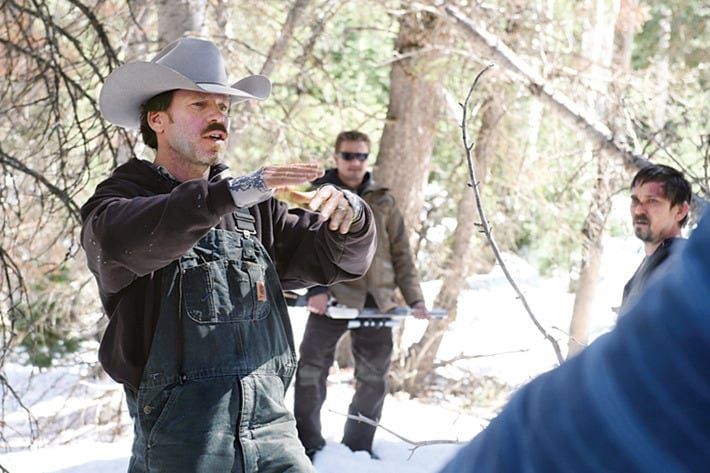
Screenwriter of the movies Sicario, Hell or High Water, and Wind River.
A Vulture interview with Taylor Sheridan:
You never studied screenwriting in any serious fashion and didn’t even try it until your 40s. What clues did you have that you’d be any good?
I’m an actor, and the screenplays I read were the screenplays that were sent to me. But I wasn’t Brad Pitt, so I wasn’t getting sent Se7en. Instead, I was reading episodes of Aaron Spelling soap operas. After 20 years of that, I remember saying to myself, “I have no idea how to do this, but by God, I know how not to.”
What were some of the common mistakes you were noticing?
I just realized that nobody knows what they’re doing. Our business says, “Give me the script that checks all the boxes,” but the films that resonate usually don’t do that. Think about GoodFellas: It could be a textbook on how not to write a screenplay. It leans on voice-over at the beginning, then abandons it for a while, then the character just talks right into the camera at the end. That structure is so unusual that you don’t have any sense of what’s going to happen next. And to me, that’s the goal of a screenwriter: to allow audiences into a world where they can’t predict what’s going to happen.
Your own scripts veer pretty far from any traditional screenplay structures, and I know you don’t do advance outlining or plotting. Are there any screenwriting principles that you’ve found helpful? Or is your process totally instinctual?
I’ve made up little mantras for myself, catchphrases from a screenwriting book that doesn’t exist. One is “Write the movie you’d pay to go see.” Another is “Never let a character tell me something that the camera can show me.” Then there’s “You always want the audience wondering what’s going to happen next, never what’s happening.” Maybe if I’d graduated college or read a book on screenwriting, I’d do things differently. But this is how I do ’em.
The structures of your screenplays are complicated, but the plots are simple. Is the latter meant to counterbalance the former?
Plot is just not my gift. I’m fascinated with complex characters, and that doesn’t mix well with complex plots. And by the way, when the plot is simple, you can move one piece around and make it feel fresh. Hell or High Water’s a good example: I don’t tell you why the brothers are robbing the bank. By my not telling you, the audience feels conflicted — you root for the brothers in spite of what they’re doing rather than because of it. I also like to play with the way information about the plot is revealed. In Wind River, I reveal the “mystery” to the audience in a flashback, and for that brief moment, I let the audience be smarter than everyone in the film, which you’re never supposed to do. There are really two ways to mess with the audience’s expectations about what’s going to happen: visually, which is expensive, and structurally, which is free. I choose free.
“Write the movie you’d pay to go see.”
“Never let a character tell me something that the camera can show me.”
“You always want the audience wondering what’s going to happen next, never what’s happening.”
Hey, another writer who’s fond of writing mantras! Those three from Taylor Sheridan are keepers.
For the rest of the interview, go here.