“Jackie’s Screenwriter Walks Us Through the Stories That Inspired the Movie’s Best Scenes”
Vulture checks in with Jackie screenwriter Noah Oppenheim.
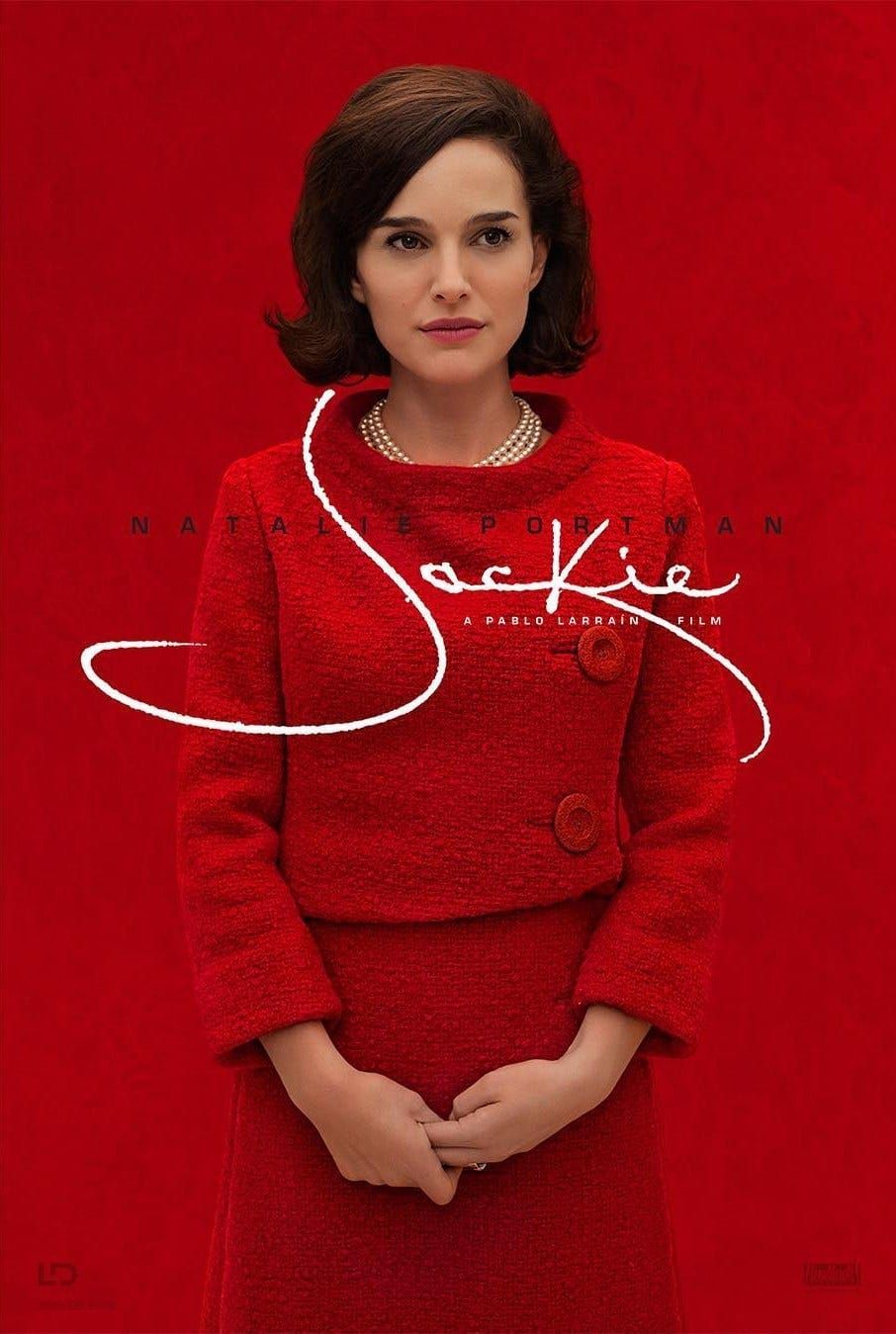
Vulture checks in with Jackie screenwriter Noah Oppenheim.
Ever since during the Award Season of 2012–2013, Vulture has featured screenwriters talking about the screenplays they wrote for notable movies. Today we look at the 2016 movie Jackie, written by Noah Oppenheim.
Oppenheim based his writing on extensive research, archival material, and documents of how Jackie actually responded to the murder of John F. Kennedy. Vulture asked Oppenheim to walk us through five of the movie’s best scenes, explaining how he went about creating the version of Jackie that Portman then brought to life onscreen.
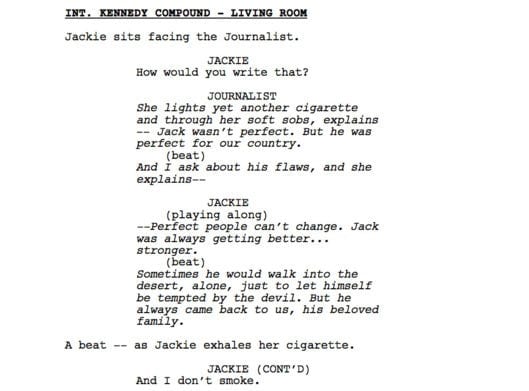
Jackie is talking to a journalist, played by Billy Crudup, for a story about how she handled herself in the wake of the assassination. The conversation is as much about them having the conversation as it is her experience of her husband’s death.
“One of the most extraordinary things about Jackie Kennedy is that she is the person who coined the Camelot mythology, a week after her husband’s assassination. That always struck me as an interesting cornerstone to build the story around: During that incredibly intense period where she’s grieving the loss of her husband, she’s dealing with the trauma of having been sitting right next to him when he was murdered, she’s shepherding two young kids through the loss of their father, she’s planning a funeral that the entire world is going to watch, she still had the presence of mind then to realize, I have to cement my husband’s legacy somehow. She comes up with this cultural reference in Camelot that ends up being more powerful than any list of policy accomplishments ever could be. I thought that was a stroke of genius, given the circumstances.
“In terms of what that interaction would look like throughout the film, it’s based on what we know of how she controlled her image and interacted with the press. We know that she was a smoker during her husband’s presidency, and yet she was never photographed with a cigarette — the public didn’t know that. We know that she actively edited her conversations with journalists, reporters, historians, that she would heavily redact things that she said and was very conscious of what ended up in the hands of the public. I tried to build a back and forth between her and this journalist based on that.”
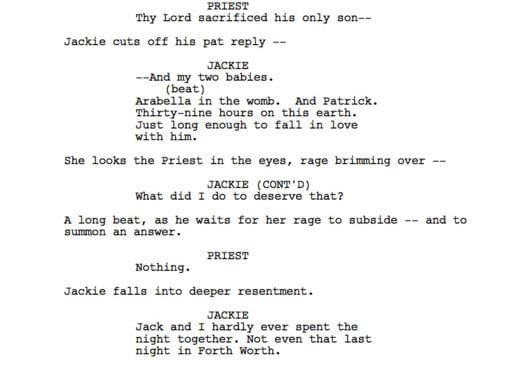
For the rest of the article, go here.
For past Award season Vulture features on screenwriters:
12 Years a Slave — John Ridley
A Most Violent Year — J.C. Chandor
Argo — Chris Terrio
Beasts of the Southern Wild — Lucy Alibar
Best Marigold Hotel, The — Ol Paker
Birdman — Nicolas Giacobone and Alexander Dinelaris
Boyhood—Richard Linklater
Chef — Jon Favreau
Concussion — Peter Landesman
The Danish Girl — Lucinda Coxon
Dear White People — Justin Simien
Enough Said — Nicole Holofcener
The Fault in Our Stars — Scott Neustadter and Michael H. Weber
Flight — John Gatins
Foxcatcher — E. Max Frye and Dan Futterman
Fruitvale Station — Ryan Coogler
Guardians of the Galaxy — James Gunn
Her — Spike Jonze
The Imitation Game — Graham Moore
Inside Llewyn Davis — Joel Coen and Ethan Coen
Les Misérables — William Nicholson
Lee Daniels’ The Butler — Danny Strong
The LEGO Movie — Philip Lord and Chris Miller
Looper — Rian Johnson
Love is Strange — Ira Sachs and Mauricio Zacharias
The Martian — Drew Goddard
Nebraska — Bob Nelson
Obvious Child — Gillian Robespierre and Elisabeth Holm
Perks of Being a Wallflower — Stephen Chbosky
Philomena — Steve Coogan
Room — Emma Donoghue
Saving Mr. Banks — Kelly Marcel
Sicario — Taylor Sheridan
Spotlight — Josh Singer
The Skeleton Twins — Craig Johnson and Mark Heyman
The Spectacular Now —Scott Neustadter and Michael H. Weber
Straight Outta Compton — Jonathan Herman and Andrea Berloff
The Theory of Everything — Anthony McCarten
Whiplash — Damien Chazelle
Wreck-It Ralph — Jennifer Lee and Phil Johnston
I find features like this — where we get to read a script excerpt, then read about its execution from the screenwriter — to be invaluable. It affords us the opportunity to enter into the writer’s creative process and see how they attack solving story problems. After all, Hollywood screenwriters get paid a lot of money to be problem-solvers.
You may download the script for Jackie here.