Joseph Campbell: The Hero’s Journey
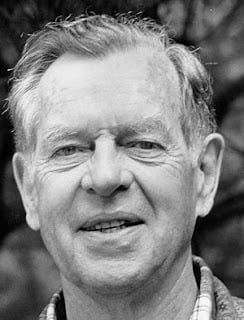
Joseph Campbell was a fascinating guy. I first studied Campbell’s work as an undergraduate at UVA, so originally I thought of him strictly in terms of academics. Then when I first made the rounds of studio execs and producers in 1987, I was shocked to see Campbell’s seminal book “The Hero With A Thousand Faces” in their offices. That’s when I discovered that George Lucas had used Campbell’s ideas in shaping the original Star Wars movie.
Beyond Campbell’s articulation of character archetypes and mythic elements, I think that the core reason why his idea of The Hero’s Journey, or as it’s sometimes called the “monomyth”, has taken root in the culture of contemporary screenwriting is the dynamic of transformation. The emotional arc of the Protagonist, starting out the story in one emotion-state, then ending up in a different psychological ‘place,’ is prevalent in most mainstream commercial Hollywood movies.
In the wonderful PBS series “Joseph Campbell and The Power of Myth”, which I highly recommend, Campbell provides a succinct version of the hero’s journey. Here it is in his own words:
The Hero is found in the ordinary world…
In ancient myths it used to be the cottage or village…
In films, it is usually the suburbs or common urban environment.
The Hero is making do, but feels something missing from their life…
a sense of discomfort or tension.
The Hero needs to change, even if they are unaware of that need.
Something happens…
Maybe the Antagonist enters the Protagonist’s world, disrupting it.
Or maybe someone comes, a Herald, who calls the Protagonist to action.
The call to adventure is about transformation and that’s terrifying.
The Hero has to confront fear.
Will the Hero survive?
Will they change for the Good or the Bad?
During the first half, the Hero is tested…
The Hero has to determine the rules of the Extraordinary World into which they are moving.
Who can the Hero trust?
Along the way, the Hero meets “threshold guardians,” people who guard the entrances.
The trick to facing any opponent is to get into their skin, understand their habits… maybe make them friends and allies.
The midpoint from a mythological standpoint is that moment when the Hero confronts that which they fear most, often related to entering the headquarters of the enemy.
Afterwards, the Hero feels the consequences of the Midpoint…
Reflects on their task, often a chance to rest…
Then a chase scene often occurs…
The enemy has been struck a mighty blow, but recovers enough to mount one final act.
A black moment where it looks like all is lost, there is no way to defeat the enemy.
The final test…
To demonstrate whether the Hero has learned his lesson or not…
The process has purified him to ensure that he hasn’t become part of the Other World… but will he succeed?
The Hero returns home with some booty, an elixir, the source of power from the Other World, i.e., treasure, Holy Grail, knowledge, gold, love, wisdom, humility.
In the end, the Hero is a transformed individual.
For more on Joseph Campbell, you can go here, here, and here.
And here are some great Campbell quotes. One I have up on my wall is what Campbell understood to be the moral of The Hero’s Journey:
“Follow your bliss.”
Comment Archive