Learn more about monthly Black List Happy Hours in 18 cities!
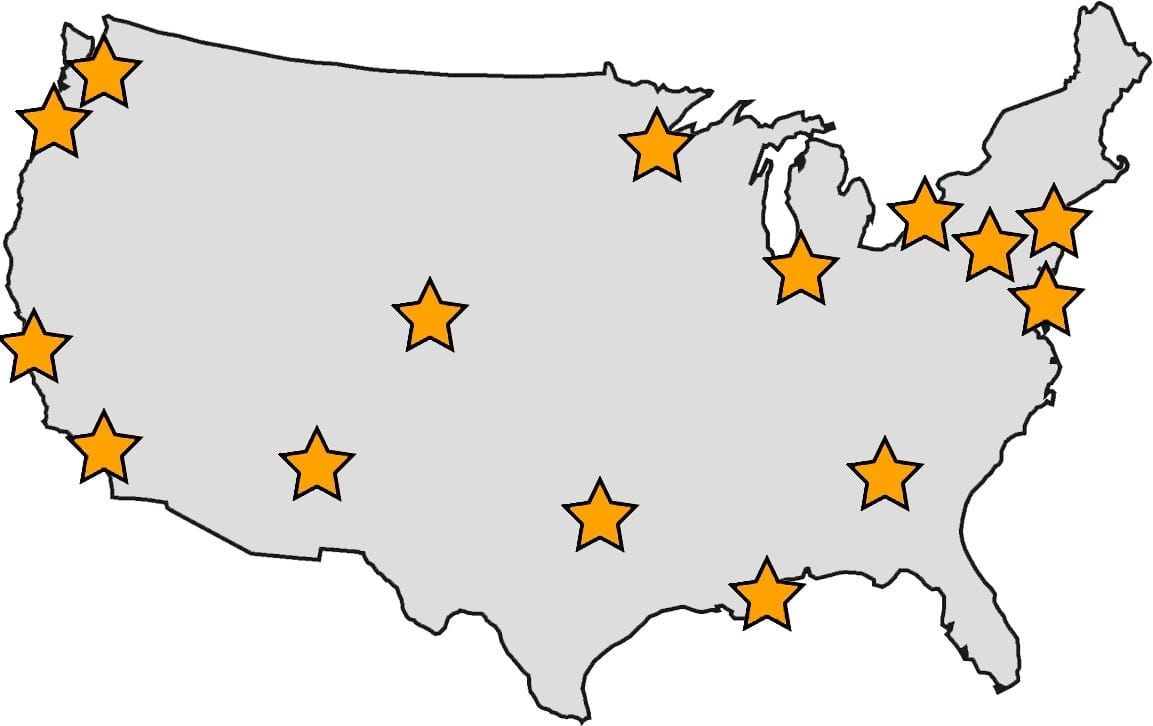
As I approach the 5th anniversary of this humble site becoming the official screenwriting blog of the Black List, I am reminded — yet again — of why I’m stoked by my association with Franklin Leonard and his cohorts. To wit: The monthly Black List Happy Hour events have expanded to 18 cities:
Denver, CO | The Living Room at 6:00PM
Montreal, QC | Brutopia at 7:00PM
Philadelphia, PA | Jon’s Bar & Grille at 6:00PM
Portland, OR | Produce Row Cafe at 5:30PM
These four to go along with existing Happy Hour communities:
Albuquerque, NM | Draft Station @ 7PM
Atlanta, GA | Smith’s Olde Bar @ 5:30PM
Austin, TX | The Mohawk @ 6PM
Brooklyn, NY | The Rookery @ 7PM
Chicago, IL | Chuck’s: A Kerry Simon Kitchen @ 6PM
London, GB | Stephen Street Kitchen @ 7PM
Los Angeles, CA | Melrose Umbrella Co @ 6PM
Manhattan, NY | Metrograph Lobby Bar @ 7PM
Minneapolis, MN | Uptown VFW @ 5:30PM
New Orleans, LA | Barrel Proof @ 6PM
San Francisco, CA | Stookey’s Club Moderne @ 6PM
Seattle, WA | The Rendezvous @ 7:30PM
Toronto, ON | The Hideout @ 6PM
Washington, DC | Dirty Martini @ 4PM
To give you more of a sense of the what you can expect at these events and the type of writers with whom you may expect to intersect, I forwarded some questions to Shelley Gustavson who is the point person for the Chicago event:
How did you find your way into screenwriting as an interest and how have you gone about learning the craft?
I was a college and post-college theater geek. I had an anthro degree, but 90% of my time was spent acting, working on tech builds and lighting, and working as the Production Manager for my university’s theater department. Like most drama queens, theater and film were part of my romantic DNA from childhood. I come from a very small rural community in Iowa, and the Gatsby-like desire to transform and remake oneself was strong… But flash-forward to the pragmatic of adult life. Marriage. Kids. Acting was part of the past.
By then I had babies and quit working in museums. Like many stay-at-home parents, you come up out of this fog, fearful you’ve spent your life doing nothing but pick up toys, referee fights, and empty the dehumidifier tray. So once my youngest was out of infant stage I began to reexamine my creative life.
I make stuff. I knit. I love remodeling our vintage home. I garden. I work on exhibits for friends. I always have to be creating. Plus, I think like many film lovers, there was a fear that my personal hobby was always going to be just that.
Fear and regret are powerful motivators.
I started with my personal desire to tell a very, very specific story. I coupled it with my first love — Shakespeare — and my adaptation of King Lear was born. Yes, it was a spoiler-alert 400 years in the making, but it was messy, and mine, and my first every Blacklist read scored my dialogue and characterizations in the 9s. It’s come a long way since then and still is on my revision queue, but…
That was all I needed. Proof I wasn’t a moron. I began building from there — your Go Into The Story blog, chatrooms, twitter. I was sponge, and still am. Through your core and craft classes — plus Tom Benedek’s — I’ve been able to step back, focus on a particular issue I need to improve, build, and move on.
I have an army of dearly-loved fellow-writers I am honored to call my friends. They’re blunt, honest, but always supportive. They help me workshop the weak bits, praise the stuff I’m antsy on, and give me encouragement. Again, like exhibits, the curiosity and intellectual support network has to be in place. If it’s positive, you seek out growth and improve. If you’re only met with negativity, you shut down.
I’m humbled to say I have the best squad of female creatives behind me.
…Plus, your GITS screenplay archive kills my paper supply, and clutters my nightstand, but reading movies is the best education I could ask for. (As with kids, I rarely get to watch them in a theater. God bless scripts and Netflix.)
How did you discover the Black List and what has it meant to you in terms of your development as a writer?
When I first gave myself permission to call myself a “screenwriter” (which I kept to myself for nearly 6 months), I reached out to college acquaintances who had been working successfully in Hollywood — cringing, I should add, as I was sure they were inundated with “Hey, I’m a screenwriter!” emails. I made it clear I didn’t want a read or an “in,” just advice on how to not look like an idiot.
A dear friend David Ortiz responded immediately. David is one of the hardest working humans I have every had the privilege of knowing in my life, hands-down. And as I was hemming and hawing over the phone, articulating my ideas (horribly), the first thing out of his mouth was Franklin’s name and The Black List. From there it was as simple as Google…
As for my development as a writer? It’s pretty easy to say I’d be lost if it hadn’t been for The Black Board and your Go Into The Story blog. Terrified I’d be laughed from the virtual chat room I hovered, I observed, and then recognized that all I was sensing was the primordial surge we get when we first step into a room of strangers, or a class at the beginning of semester. It’s scary, but the potential to make yourself better can be felt everywhere you turn. As a result of those online chats, shared articles, and kind words of guidance I began building an amazing collection of friends and mentors via twitter. It was all about community.
Now the reader services and hosting? That’s a different side of the equation. Community is one thing, but growth and feedback is another. Some writers use The Blacklist as a hosting service and networking tool. Others? They use the reader evaluations, make their scores public, and then use it as a networking tool. Me? I’ve always used reads as a development tool to test-run a script concept. When I think a draft is somewhat ready I get 2 reads. Not statistically valid, I realize, but I get feedback, keep it private, and then take my draft down to analyze the notes.
A quick aside about Readers — and I won’t be as articulate as many other mentors. Readers are there to give you the experience of being vetted for an Exec’s desk. Some are writers and worship at the altar of pacing and character. Others are marketing folks. And yes, many will be a hell of a lot younger than you and are reading to cover their bills — we’ve all been there, don’t judge. But all have experience — their life, film, and artistic experiences just may be different from yours. It is a subjective exercise. I’ve had readers give nuanced, detailed thoughts on improving the pacing or development of my subplots, whereas others speak harsh words about feasibility in today’s marketplace. Some are supportive. Others sound like Walter Matthau in Grumpy Old Men. But, the real world of being a writer and being vetted by strangers is often harsh. My past work in exhibit label writing was identical — it has to be faced. And you need that experience.
I’m Miss Slow-Burn-Indie-Arthouse-Drama. Not really high concept or tent-pole. And I have had readers disagree wildly on my work. But, to reassure? It’s all data, and data is never a bad thing.
You calm your mind, look for trends in what’s not working, and trust your heart where you know something things just aren’t their “thing.” Data is your ammunition to become better. You are given an opportunity to hear how you’re doing. Egos are strong, I get it. But self-awareness is the best attribute I could have asked for. I’m an experienced qualitative researcher and focus-group moderator…. But I don’t have the luxury of interviewing all my readers. I get two pages of paper, if I’m lucky, to try and unpack their meaning and listen between their words.
(And if you feel you’re truly dealing with an asshat from a customer service perspective? You speak up. Kate at The Blacklist is great at responding in flash if you feel there’s been a problem with the quality of a read.)
As with any skillset or art form, you have to view your personal growth and development as if you were crawling up a ladder with staggered rungs. One side? That’s your insecurities, fears; the “I know nothing” modesty rung. The other? That’s your “I’ve got this, I have a voice and a story to tell,” ballsy rock star side. You must use them in tandem. Be brave, tell yourself you have a right to be at the table — but then reach over and say, “What are my weaknesses?” You seek out honest advice and assess where you need to go. Then you pull up your bravery pants and put yourself out there again. Back and forth. Back and forth. Confidence in what you do well, tempered with self-awareness of where you’re weak. Karma rewards those who don’t act like jerks. A community remembers jerks. A community loves cheerleading one of its own. The Blacklist is a really great community.
You’ve taken the lead on the monthly Chicago Black List Happy Hour events. What may writers expect when they show up for a Black List Happy Hour?
Short answer? A casual bar, a chance to smile, shake hands, and be at ease with like-minded folks who do what you love.
Not sold yet? Okay, here’s the pitch:
I think it’s too easy for writers — or creatives in general — to walk into networking situations dreading the more extreme end of the professional spectrum: pitching, posturing, judgement, etc. I’d like to make it as clear as possible — and this is when my maternal, den-mother instinct kicks in — Blacklist Happy Hours are not like that at all. It’s simply a drink, or a snack, and meeting other folks in similar boats as you… just boats you may have never bumped into before.
Look, all of us are some crazed combination of introverted-extroverts. We observe human nature. We pour our souls onto paper. We geek-out over lighting and nuanced, emotionally-laden moments of silence — those aren’t the qualities that cause one to do tequila shots, brag about one’s portfolio, or make it rain with business cards.
As Franklin stressed once during a host Skype session — Black List Happy Hours simply encourage people to step away from the keyboard and make connections. Writing can be a liberating process, but a lonely one. We’re here to remind people that we’re all in it together — from newbies looking for growth and resources, to “transitioners” like myself (you write, but the industry-specific terminology and “rules” are still a little daunting,) to pros that want to expand their social network and seek-out creative partners.
Do people have to RSVP or can they just show up?
RSVP’ing is nice, as it gives the Blacklist Hosts and the venue a heads-up on how many to expect. It’s incredibly easy via Eventbrite — and we don’t even finalize our body count until right before the event. Plus, as we’re adding new cities to our community meet-ups every month, if you’re traveling or new in town, it’s easy to check the Events page on the main Blacklist site to see who’s hosting, and make new friends.
The more the merrier — drag along your friends, bring business cards (or paper to jot-down names and numbers), and leave your insecurities at the door.
Give me one good reason why writers in Chicago or any of the other 17 cities which host Black List Happy Hours should participate in these events.
I’ve met entertainment lawyers, actors, fellow screenwriters, producers, casting agents, and directors all within the past 6 months who I would now consider my friends. And they want to read your stuff. It pays to be nice, folks.
Mark the date for the next Black List Happy Hour: September 7. And for those of you in and around Chicago, I will be making my first appearance at the next session and plan to be a regular fixture at the events.
For more information, go here.
Comment Archive