Michael Arndt: “Beginnings: Setting a Story Into Motion”
I have been a big fan of screenwriter Michael Arndt ever since I read his script Little Miss Sunshine, then saw the movie. And, of course, there’s Toy Story 3 which Arndt penned. My admiration goes beyond his writing, it extends to how Arndt thinks about writing as clearly he has done a great deal of reflection about the craft. Fortunately for us, he has gone public with at least some of those thoughts. I have featured his ruminations multiple times through years including here, here, here, here, here, here, here, here, here, here, and here. So I was interested to see this recent blog post by John August referencing this video:
In his post, John wrote this:
When I saw this video, I immediately wondered what it was from. It’s clearly professionally made, so why is it on some random guy’s YouTube account?
I emailed Michael Arndt, who wrote back that it was originally a bonus feature on the Blu-ray for Toy Story 3. He gave me his blessing to link to it.
I’m aware the model I set up here applies imperfectly to TS3 itself. (It applies much more cleanly [for example] to TOOTSIE, which I consider one of the best comedy first acts of all time.) The broader point is that the emotional fuel for your first act break is largely set up in your inciting incident — and that is something that does apply to TS3.
Disney and/or Pixar own the copyright on the video, so they could pull it down. But I hope they won’t. This kind of lesson celebrates what’s made their films so successful, and deserves wider exposure.
Knowing the whims of the Internet gods, I forwarded the link to the video to my stalwart development assistant Wendy Cohen and she was kind enough to produce a transcript, so we would at least have Arndt’s words down in print in case the video got yanked.
While I encourage you to watch the video — which is great — I want to dig deeper into the content of what Arndt says. So I will divide his observations into two parts, the first part today, second tomorrow, then follow with some reflections and open it up for discussion. Here is a transcript of the first half of the video:
The number one metaphor I have in my mind for writing a screenplay is that you’re trying to climb a mountain blindfolded. And the funny thing about that is, you think, “Okay, that’s hard because you’re climbing up a rock face, and you don’t know where you’re going, and you don’t know where the top is, you can’t see what’s below you.” But actually, the hardest part about climbing a mountain blindfolded is just finding the mountain.
Hey everybody, I’m Michael Arndt, the screenwriter of “Toy Story 3.” Now, at Pixar, there’s a lot of people who contribute ideas to the story, but I’m the guy who actually has to sit down and type them into a computer. So when we started working on “Toy Story 3,” we had a hard time getting the story set up in the right way. And I think this is a common problem in screenwriting. A lot of times when a film doesn’t work, it seems like the problem is with the ending. But in fact, the seeds of failure have been planted at the beginning.
So, on “Toy Story 3” after several months of some floundering around and going in circles, I finally decided to go back and look at “Toy Story,” and “Finding Nemo,” and “The Incredibles” and figure out, “How do they set up their characters, and their worlds, and their stories?”
So, this is something I learned at Pixar: how to write a good beginning. Usually a script is about 100 pages long with three acts. And the first act is about 25 pages long, the second act is about 50 pages, and the third act is the last 25. Now, you start your first act by setting up your hero in his or her world. And by page 25, you’ve given your hero a goal and set them off on the journey that they’ll take in the second act. So let’s begin at the beginning, page one, introducing your main character. So, usually what you do when you’re introducing your main character is you show them doing the thing they love most. This is their grand passion, it’s their defining trait, it’s the center of their whole universe. So, in Woody’s case, he’s introduced playing with Andy. And that’s his favorite thing. That’s the thing that defines who he is as a person. With Marlin, Marlin’s a family man. He’s just moved into a new house with his wife, they have a whole new brood of little eggs and he couldn’t be happier. And then with “The Incredibles” you introduce Mr. Incredible being a superhero. So you start with your main character, you introduce the universe they live in, and you show your hero doing the thing they love to do most.
But then your character needs one more thing: she needs a flaw. Now, what’s key here is that your character’s flaw actually comes out of her grand passion. It’s a good thing that’s just been taken too far. So in Woody’s case, he takes pride in being Andy’s favorite toy. He loves being Andy’s favorite toy so much and he doesn’t want to share that with anyone. In the case of “Finding Nemo,” Marlin wants so badly to be a good parent that he’s a little bit insecure. With “The Incredibles,” Mr. Incredible’s a little bit like Woody in that he takes pride in his place of being Mr. Number One, and he doesn’t want to share that with anyone. Like you see when he bumps into Buddy. And you see it again when he bumps into Elastigirl on the roof. So you establish a character, you establish the world they live in, you establish the grand passion that they’re defined by, and you establish a hidden flaw that comes out of this grand passion. And then you want to establish storm clouds on the horizon, which is your character’s walking down the road of life, it’s a nice, bright sunny day, but off there on the horizon there’s some dark storm clouds gathering. So in the case of “Toy Story,” it’s Andy’s birthday party. And all the toys are fretting about being replaced and Woody has to say, “No one’s getting replaced.” And with “Finding Nemo,” you set up the fact that there’s an indoors inside the anemone where they’re safe, and there’s an outdoors, the rest of the ocean, which is implicitly dangerous. And then for “The Incredibles” Helen is saying to Bob, “Things are going to change after we get married,” and then you have Buddy showing up and being jealous of Mr. Incredible. So you’re establishing that there’s a resentment out there from normal people against superheroes and you’re establishing Helen saying to Bob, “Look, things are gonna change.”
Some observations:
* “A lot of times when a film doesn’t work, it seems like the problem is with the ending. But in fact, the seeds of failure have been planted at the beginning.” Reminds me of Billy Wilder’s quote:
“If you have a problem with the third act, the real problem is in the first act.”
I doubt there’s a professional screenwriter alive who would argue with this point.
* For those supposed screenwriting gurus who decry three act structure, here is yet again another professional screenwriter who subscribes to the theory. If it was good enough for Aristotle and Joseph Campbell (Separation / Initiation / Return), it’s good enough for most of us.
* Speaking of Campbell, he would refer to this first part of a story as setting up the Old World or Ordinary World. As Arndt says, “you start your first act by setting up your hero in his or her world.” This is critical to establish a baseline of understanding where the Protagonist begins their adventure. You cannot measure their metamorphosis if you don’t know where they start out.
* Arndt adds this: “And by page 25, you’ve given your hero a goal and set them off on the journey that they’ll take in the second act.” The Protagonist’s goal not only creates an end point for the plot, it also — per Arndt’s language — generates External Stakes. The goal is important to the Protagonist. Not achieving that goal would be a significant blow or sense of loss. Hence, stakes. Hence, drama.
The most interesting idea here is this: “So, usually what you do when you’re introducing your main character is you show them doing the thing they love most. This is their grand passion, it’s their defining trait, it’s the center of their whole universe.” If you think this pertains only to Pixar movies, how about this:
Meet Charles Foster Kane as a youth, having a wonderful time in the snowy climes of Colorado. Couldn’t be happier. Then yanked away to live in New York City. Never happy again. Indeed, always — at least subconsciously — attempting to make up for the loss of his idyllic childhood home which is, of course, where Rosebud comes in.
While we’re on the subject of beginnings, let me toss out this idea: The story’s ending is implied in its beginning. I call it the narrative imperative. When you reach the ending of a story and it feels emotionally satisfying, that means it has been set up well in the beginning.
Here is the next part of the Arndt transcript:
So, you start with your main character, you have what they’re defined by, you have a hidden flaw, you establish storm clouds on the horizon, and then BA-BOOM! Something comes in and totally blows apart your hero’s life and turns it upside down. So in the case of “Toy Story,” Buzz arrives and Woody gets displaced. And in “Finding Nemo,” the barracuda shows up and Marlin’s family gets killed except this one last little egg. In “The Incredibles” Mr. Incredible saves this guy, but then he gets sued and superheroes get banned. And in each of these cases, if you go back and look at what their grand passion was: Woody being Andy’s favorite toy, Marlin and his family, Mr. Incredible being a superhero, that’s the thing that gets taken away from them. It totally changes your character’s sense of what his or her future’s gonna be. But that bolt from the blue isn’t enough on its own. It’s not enough just to ruin your character’s life and take away their grand passion and change their whole sense of what the future’s gonna be. You gotta add insult to injury. You gotta add something that’s gonna make the world seem a little bit unfair. So not only does Woody get replaced, but he gets replaced by this total doofus, this imbecile who doesn’t even know that he’s a toy and they get in this whole argument about whether Buzz can fly or not. And Buzz jumps and bounces and flies around the room, and all the other toys go “Oh my God, he really can fly.” And the key thing here is that everyone is impressed for the wrong reason. In the case of “Finding Nemo,” you don’t need to really add insult to injury. We already understand that the world Marlin lives in is unfair. But on the other hand, with “The Incredibles,” the reason superheroes get banned is because Mr. Incredible was trying to do the right thing.
So now, your main character’s life has changed, her grand passion has been taken away, the world has revealed itself to be unfair, and she comes to a fork in the road, and she’s gonna have to make a choice on how to deal with her new reality. There’s a high road to take: a healthy, responsible choice, or a low road to take and make an unhealthy irresponsible choice. And remember, if your character chooses to do the right thing, you really don’t have a story.
For Woody, the healthy choice is to say, “Look, I had my day in the sun. I was Andy’s favorite toy for a long time, and I have to cede the spotlight at a certain point.” But what happens is that Woody makes the unhealthy choice. Woody tries to push Buzz behind the desk. And the key thing here is that we’re rooting for Woody to do the unhealthy, irresponsible thing because we feel his pain at getting replaced. So your character’s unhealthy choice, Woody’s unhealthy choice, creates a crisis, Buzz getting pushed out the window, which leads to all the other toys confronting Woody and saying, “You can’t stay in Andy’s room until you go find Buzz and bring him back here safe and sound.” And that’s your first act break. You see a similar thing in “Finding Nemo” when Marlin finds Nemo at the edge of the open ocean. Marlin’s unhealthy choice, his overprotectiveness, comes out of his grand passion, his love for his son. And his unhealthy choice provokes a crisis: Nemo saying “I hate you,” swimming out to the boat to prove his independence, and then getting caught by the diver. And now Marlin has a goal that’s gonna take him all the way through the rest of the story. With “The Incredibles,” the responsible choice is for Bob to do what his wife tells him to do, “save the world one policy at a time,” but that would be boring, and you’d have no story. So, the irresponsible choice for Bob is to lie to his wife Helen and go moonlighting with his buddy Frozone. And we’re totally rooting for Bob to make the irresponsible choice, because we saw how much he loved being a superhero, we saw how good he was at it, and we saw how unfairly it was taken away from him. And that unhealthy choice — sneaking around — leads to a crisis — Mirage tracking him down — which leads to Symdrome bringing Bob on retirement and you’re off into your second act.
So, your story is coming out of your character’s deepest desires and their darkest fears. The thing they love gets taken away from them and the world is revealed to be unfair. To put things right, they have to make the journey that is the rest of the film. And by the end of the journey, hopefully they’ll not only get back what they lost, but they’ll be forced to fix that little flaw they had when we first met them. So, that’s what I learned at Pixar, and I’m not saying that all stories have to start this way, but if you’re writing a script and you’re having a hard time getting started, I hope these ideas are helpful.
This is an interesting insight. And it occurred to me you could apply this take to The Wizard of Oz. What’s Dorothy’s grand passion? Daydreaming about a better life ‘somewhere over the rainbow’. An orphan, she doesn’t feel like her home in Kansas is her home. When Miss Gulch takes away Toto, but the little dog scampers back home, Dorothy could take the high road: Do what is legal and return Toto to Miss Gulch. But, of course, she can’t do that, we all sympathize with her as she takes the low road: running away from home.
Once in Oz, her experiences there are in effect her grand passion — daydreaming about a better place — on steroids with several obstacles and tests along the way. By story’s end, she has overcome her “little flaw” by realizing: “There’s no place like home.”
I’m sure there are plenty of other movies where this approach works. However there are many movies where the setup is considerably different. Here’s how Joseph Campbell describes the beginning of The Hero’s Journey from the wonderful interview series he did with Bill Moyers, “The Power of Myth”:
The Hero is found in the ordinary world…
In ancient myths it used to be the cottage or village…
In films, it is usually the suburbs or common urban environment.
The Hero is making do, but feels something missing, a sense of discomfort or tension.
The Hero needs to change, even if they are unaware of that need.
Oftentimes in a story’s beginning, the Protagonist is not doing what they love most. Indeed, Campbell asserts the whole point of the Hero’s Journey is about transformation and that change is generally about the Protagonist finding their Authentic Self. As Ovid says, “The seeds of change lie within.” The Protagonist may begin the story just “making do,” so they need to change, “even if they are unaware of that need.”
Consider this Protagonist:
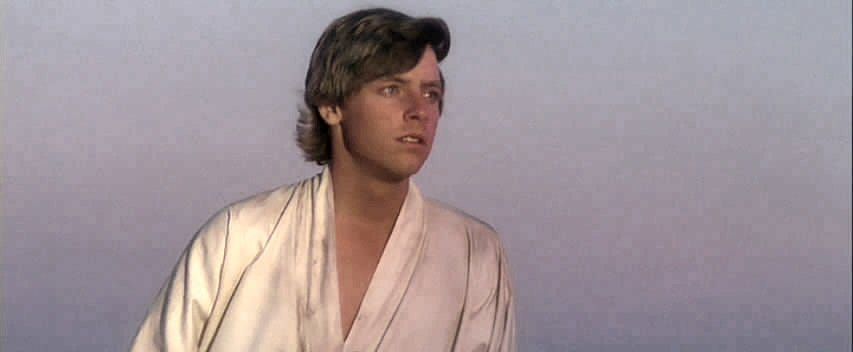
Young Luke Skywalker, stuck on the edge of the galaxy, working on a moisture farm. At the beginning of the story, he is doing anything but engaged in his grand passion. But the seeds of change lie within: He has Jedi blood coursing through his veins. And by story’s end, he finds his grand passion as he becomes in effect a Jedi, aligning himself with The Force to destroy the Death Star.
The lesson Arndt gives is a fantastic one, not only in the substance of the content, but in demonstrating how a professional writer thinks about crafting a story, engaged in looking at structure and characters within that structure. But as Arndt himself observes, “I’m not saying that all stories have to start this way.” It’s a reminder that the best stories feel organic, they have a soul and a heart, a spontaneity and surprise to them.
As Arndt points out, we have certain things we need to accomplish in a script’s first 25 pages or so, it’s hard to break away from those requirements, and there are certain patterns and paradigms we see in this or that type of story. But as the three examples Arndt refers to from Pixar demonstrate, it’s not just about an approach to structure, it’s about creating characters who make sense, who have multiple layers to their psyches, who have feelings we can understand and identify with, and who we care about enough to join them on their adventure, whether they are participating in their grand passion at the beginning, disconnected from their True Self and due for a change, or anywhere in between.
Let’s carry this conversation to comments (click on Reply). What do you think of this approach to a story’s beginning?
Michael Arndt’s IMDB page here.
Follow John August’s blog here.
Follow John and Craig Mazin’s podcast Scriptnotes here.
[Originally posted April 7 and 8, 2014]