Movie Analysis: “Nightingale” — Takeaways
Another in our bi-weekly series in which we analyze movies currently in release. Why? To quote the writing mantra I coined over 5 years ago: Watch movies. Read scripts. Write pages. You will note which one comes first. Here are my reflections from that post about the importance of watching movies:
To be a good screenwriter, you need to have a broad exposure to the world of film. Every movie you see is a potential reference point for your writing, everything from story concepts you generate to characters you develop to scenes you construct. Moreover people who work in the movie business constantly reference existing movies when discussing stories you write; it’s a shorthand way of getting across what they mean or envision.
But most importantly, you need to watch movies in order to ‘get’ how movie stories work. If you immerse yourself in the world of film, it’s like a Gestalt experience where you begin to grasp intuitively scene composition, story structure, character functions, dialogue and subtext, transitions and pacing, and so on.
Let me add this: It’s important to see movies as they get released so that you stay on top of the business. Decisions get made in Hollywood in large part depending upon how movies perform, so watching movies as they come out puts you in the same head space as reps, producers, execs, and buyers.
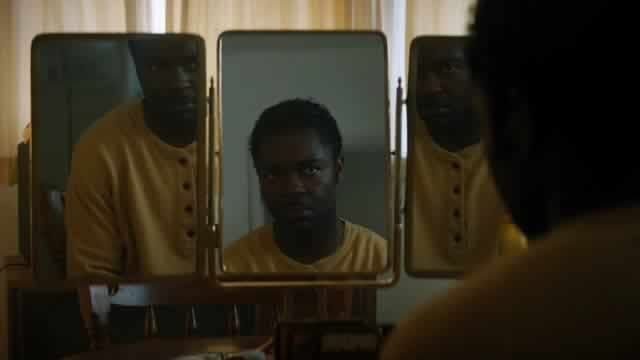
This week’s movie: Nightingale, written by Frederick Mensch.
This is a special movie for many reasons. It is the first movie produced from a script discovered on the Black List website. It debuted and currently airs on HBO. It stars David Oyelowo who played Dr. Martin Luther King in the movie Selma. And it is essentially a one-actor contained drama-thriller. Plus there’s this: You don’t have to leave the comfort of your own home to watch it. It’s an HBO original.
Remote control. Click! Boom! Movie!
Our schedule for discussion this week:
Monday: General Comments
Tuesday: Plot
Wednesday: Characters
Thursday: Themes
Friday: Takeaways
For those of you who have not seen the movie, do not click MORE as we will be trafficking in major spoilers. If you have seen Nightingale, I invite you to join me in breaking down and analyzing the movie.
A final set of questions and answers from Nightingale screenwriter Frederick Mensch.
Scott: Could you describe the history of the project, why you decided to upload your script to the website and how it wound its way into production?
Frederick: I had a different director attached for about a year, but we couldn’t put together a deal for financing. At that point I thought the Black List looked like an interesting option. In some ways I felt like Nightingale was the perfect indie script because it could be well produced for a modest budget, and it had a great, challenging, splashy role for a movie star.
I posted the script on the site and within a couple of days (less than a week), I was contacted by Josh Weinstock, who asked me if he could show the script to a director with whom he’d been working. I said sure, and Elliott Lester committed himself to the film a couple days later. He said he wouldn’t have any trouble finding the money, and amazingly enough, he was right. I posted the script in middle of February, and by middle of June we were in production.
Scott: As a writer, what are some lessons you learned in writing Nightingale and seeing it through production?
Frederick: I think I learned a lot about teamwork. As a writer I’m used to working alone, and I generally like it that way, but the filmmaking process requires a ton of collaboration. Weirdly enough, I rather enjoyed it. There wasn’t a lot of rewriting on this project but it was eye-opening to see how much additional meaning and texture people like Elliott Lester and David Oyelowo can bring to the table.
Scott: What advice do you have for writers who aspire to break into Hollywood?
Frederick: Don’t ask me! It took me 35 years to get this far. It’s worth noting, though, that Nightingale is probably the least commercial screenplay I’ve ever written, and yet it’s the first one to get made. In other words, nobody knows anything. I think we should all write passionately and fearlessly in our voices and let the chips fall where they may. Don’t bother writing screenplays that have already been written.
We should all write passionately and fearlessly in our voices and let the chips fall where they may.
That’s some pretty damn good takeaway.