Movie Analysis: “The Big Short” — Dialogue
Another in our bi-weekly series in which we analyze movies currently in release. Why? To quote the writing mantra I coined over 5 years ago: Watch movies. Read scripts. Write pages. You will note which one comes first. Here are my reflections from that post about the importance of watching movies:
To be a good screenwriter, you need to have a broad exposure to the world of film. Every movie you see is a potential reference point for your writing, everything from story concepts you generate to characters you develop to scenes you construct. Moreover people who work in the movie business constantly reference existing movies when discussing stories you write; it’s a shorthand way of getting across what they mean or envision.
But most importantly, you need to watch movies in order to ‘get’ how movie stories work. If you immerse yourself in the world of film, it’s like a Gestalt experience where you begin to grasp intuitively scene composition, story structure, character functions, dialogue and subtext, transitions and pacing, and so on.
Let me add this: It’s important to see movies as they get released so that you stay on top of the business. Decisions get made in Hollywood in large part depending upon how movies perform, so watching movies as they come out puts you in the same head space as reps, producers, execs, and buyers.
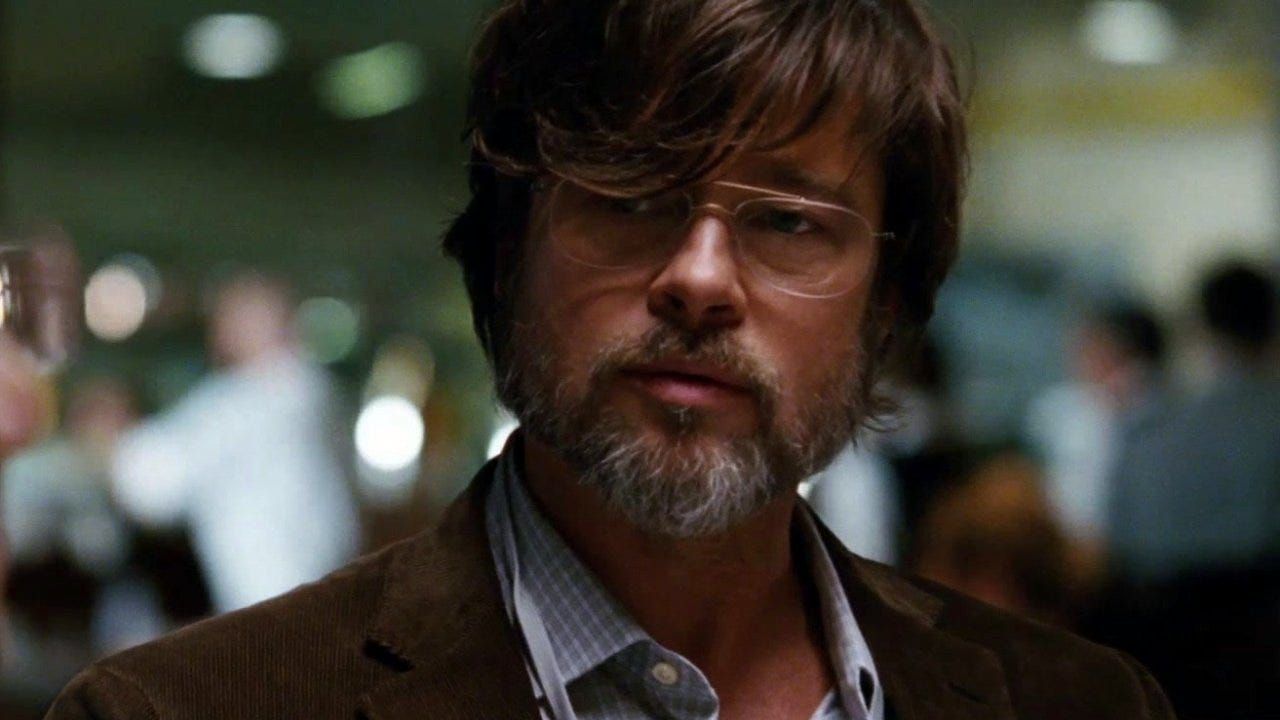
This week’s movie: The Big Short which won the 2016 Oscar for Best Adapted Screenplay by Charles Randolph and Adam McKay, based on the book by Michael Lewis. You may download the script here.
Our schedule for discussion this week:
Monday: General Comments
Tuesday: Plot
Wednesday: Characters
Thursday: Themes
Friday: Dialogue
Saturday: Takeaways
For those of you who have not seen the movie, do not click MORE as we will be trafficking in major spoilers. If you have seen The Big Short, I invite you to join me in breaking down and analyzing the movie.
There is a lot of great dialogue in The Big Short, but what I’d like to highlight here are the quotes they dropped in as title cards:
Overheard at a Washington, D.C. bar: “Truth is like poetry. And most people fucking hate poetry.”
From Haruki Murakami’s novel “IQ84”: “Everyone, deep in their hearts, is waiting for the end of the world to come.”
Mark Twain: “It ain’t what you don’t know that gets you into trouble. It’s what you know for sure that just ain’t so.”
Why these quotes? There seems to be a thread running through and that is this: We know the truth. We just don’t want to face it. And what is “it”? I would argue “it” is evidenced by the greed-heads in this movie, the callous, crash, cash-grabbers who only care about the game of manipulating numbers to their own economic benefit.
The “it” is that the companies whose products we buy and whose advice we take on financial matters are out to screw us.
The “it” is that regulations intended to protect consumers have been eviscerated and we are helpless lambs amid a phalanx of wolves.
And the “it” is that maybe what Americans have held in such esteem for generations — Capitalism — is no longer something whereby the little guy can raise himself up by his bootstraps and make something his life, but rather the game is rigged.
We know it. We just don’t want to admit it. And that’s why no one at any of the financial entities responsibility for the economic crisis of 2008 and beyond has ever been made to pay, let alone serve jail time for their criminal activities.
As I think about The Big Short, I realize it stands alongside another great satire — Dr. Strangle Or: How I Learned to Stop Worrying and Loved the Bomb. Both are commentaries on official policy which are in effect based on madness. More on that tomorrow.
What about you? What dialogue sticks out? Please head to comments to post your thoughts.