Movie Story Type: Bio-pic
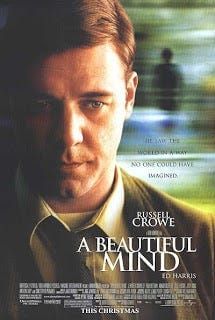
A “bio-pic” is a biographical movie of a person’s life. The person can be well known such as Patton (1970) and Ali (2001), or an unknown like Erin Brockovich (2000) and My Left Foot (1989).
They can cover every genre: historical dramas (Marie Antoinette (1936), Braveheart (1995), comedies (Private Parts (1997)), political (Nixon (1995)), sports (Fear Strikes Out (1957), or thrillers (Silkwood (1983)).
The process of adapting a real person’s life into a movie story is one of the trickiest writing jobs around. The wealth of historical anecdotes and incidents is both a blessing and a curse: Generally great material, but too much of it. I’ve read a slew of interviews with screenwriters who echo this basic point: It’s almost more important what elements you choose to omit than what you decide to keep in the final story.
Sometimes a person’s life doesn’t lay out terribly well for narrative structure. Sometimes they do. In an article in “Written By” magazine, screenwriter Akiva Goldsman said that after he finished reading the Sylvia Nasar biography “A Beautiful Mind,” he immediately saw the three-act structure: Genius. Fall. Redemption. In either case, the screenwriter works by the golden rule of adaptation: Never let the facts get in the way of the story, an adage Goldsman followed big-time in adapting A Beautiful Mind. The Wikipedia entry lists some of the key changes in the movie:
The narrative of the film differs considerably from the actual events of Nash’s life. The film has been criticized for this, but the filmmakers had consistently said that the film was not meant to be a literal representation.[22] One difficulty was in portraying stress and mental illness within one person’s mind.[23] Sylvia Nasar stated that the filmmakers “invented a narrative that, while far from a literal telling, is true to the spirit of Nash’s story”.[24] The film made his hallucinations visual and auditory when, in fact, they were exclusively auditory. It is true that his handlers, both from faculty and administration, had to introduce him to assistants and strangers.[25][5] The PBS documentary A Brilliant Madness attempts to portray his life more accurately.[26]
The differences were substantial. Few if any of the characters in the film, besides John and Alicia Nash, corresponded directly to actual people.[27] The discussion of the Nash equilibrium was criticized as over-simplified. In the film, schizophrenic hallucinations appeared while he was in graduate school, when in fact they did not show up until some years later. No mention is made of Nash’s supposed homosexual experiences at RAND,[24][28] which Nash and his wife both denied.[29] Nash also fathered a son, John David Stier (born 19 June 1953), by Eleanor Agnes Stier (1921–2005), a nurse whom he abandoned when informed of her pregnancy.[30]
The movie also did not include Alicia’s divorce of John in 1963. It was not until Nash won the Nobel Memorial Prize that they renewed their relationship, although she allowed him to live with her as a boarder beginning in 1970. They remarried in 2001.[31]
But when John Nash himself attended the movie’s premiere, he said afterward, “That was my life.” Not his literal life perhaps, but the emotional experience of his life. And in that respect, we can say that Goldsman nailed the adaptation.What are your favorite bio-pics?