“Putting the scriptwriter in the picture”
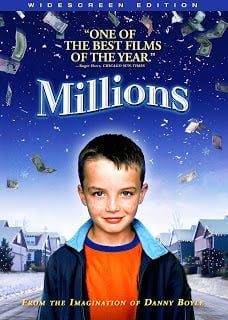
Our friend Chris forwarded a fun essay from writer Frank Cottrell published in the New Zealand newspaper The Age. Cottrell, who has written Millions (2004) and A Cock and Bull Story (2005) among many other movie and TV projects, hit upon a bit of introspection recently:
A WHILE BACK, I WAS ON BBC Radio 4’s The Film Programme the same day as Simon Pegg, who co-wrote and starred in the hit British comedies Shaun of the Dead and Hot Fuzz. We were asked what we thought of screenwriting manuals. I dismissed them as get-rich-quick compendiums of cliche. Pegg said he thought they were really useful. Our films opened that weekend. His vacuumed up money. Mine tanked. It may well be, I thought, that I’ve been missing something.
I decided to watch all my favourite movies again, notebook in hand, to figure out what made them work. Here are some of my observations. This is not a description of how I write. It’s more how I wish I’d written. A map of the rocks on which I perished.
Cottrell came up with a number of bits of insight including these two nuggets:
Read it to people
Tell people your story and watch them. Is there a bit where they check their watch? Are there bits you unexpectedly feel you want to skip? Do they guess the ending? Get it worked up into a good anecdote. This also means that if you bump into a potential backer at a film festival, you can pitch the story right there. The same applies after you’ve written the script. Danny Boyle, director of 28 Days Later and Trainspotting, makes you read your script out loud to him. It leaves you nowhere to hide but it saves weeks of second-guessing.
Do a favourite bit
No one leaves the cinema saying: I loved that character arc. They come out saying: I loved the swordfight, or the bit with the bloated cow, or whatever. The manuals emphasise the flow of a narrative but it’s better to think of a film as a suite of sequences. That’s where the pleasure is. Animated films, traditionally, had no script; rather, teams built up a series of set pieces and sequences around the story and characters — this is a great way to think. If you look at the first Godfather film, it’s really an accumulation of anecdotes held together by the moral decline of Michael. Kes also works like this: the football match, the taming of the hawk, the careers officer and so on. Try breaking your script down into a series of chapters and giving them headings.
Sounds like Cottrell has had somewhat of a ‘conversion’ experience, going from a writer who did not do much in the way of reflection and study about the craft to someone who has found some exciting insights by now doing just that. I know this phenomenon. Some of my students who stubbornly refused to work up outlines in advance of writing, suggesting that this pre-writing exercise somehow stunted their creativity, are now outline apologists.
There are those writers who will never engage in self-reflection about their writing; and indeed, for some, perhaps they should not do that. Here’s a quote from one of the best screenwriters around today Steve Zaillian:
“There’s a danger in thinking you understand exactly what you’re doing because then you start seeing patterns and repeating yourself. I try not to analyze [the process] too much. It’s important to me to discover writing all over again as opposed to trying to follow some sort of formula. I’m always terrified of those classes on how to write a screenplay. I’ve never been to one. When I’m doing my Xeroxing, I see these little brochures [advertising screenwriting seminars], and I’m terrified to even read the brochures. I haven’t noticed that there’s a trick to it, and I’m afraid if I do, I’m gonna rely on it. I purposely don’t want to know because I want to approach everything as if it’s the only thing I’ve ever done so it’ll be new to me.”
Note the fear — “terrified of those classes” — in Zaillian’s voice. For some writers, studying screenwriting must feel like opening Pandora’s Box: what if they do that, then unleash chaos into their process, risk losing the ‘magic’ of writing? For a writer like Zaillian, it’s hard to argue with him since he’s written such fine movies as Awakenings (1990), Searching for Bobby Fischer (1993), and Schindler’s List (1993).
But as the great philosopher Paul Simon sang, “One man’s ceiling is another man’s floor.” And Cottrell seems to have successfully opened his own personal Pandora’s Box. Let me close with another piece of advice he’s stumbled upon, one that sets up for the next round of 14 Days of Screenplays:
Read, read, read, read
Read other screenplays. Read wordplayer.com, which is full of discussion, advice and heartbreak. But above all, read Karoo, a novel by the late, great screenwriter Steve Tesich, who did the screenplay for The World According to Garp. It tells you everything you wanted to know — and a lot that you didn’t.