Q&A: Willamette Writers Conference
Learn about one of the country’s premiere writers conferences.

Learn about one of the country’s premiere writers conferences.
I have been invited to be a guest presenter at the 2017 Willamette Writers Conference in Portland, Oregon the weekend of August 4–6. To learn more, I emailed some questions to Orit Ofri, president of Williamette Writers, Stefan Feuerherdt, FiLMLaB chair and past conference chair, and Waka Brown, conference film coordinator.
A lot of writers groups and conferences come and go, but the Willamette Writers Conference has its roots dating back to 1965. To what do you ascribe the longstanding success of your writers group?
Orit Ofri: I think it’s a combination of self-reliance and magic.
Willamette Writers relies on its members and community, while always spreading the word, connecting further and bringing in more people. Being self-sufficient keeps us strong, so, even when things get rough, with cuts to state and federal budgets, we can still achieve our mission.
The other thing is the nature of the organization — Willamette Writers is grassroots, flat, light, and community oriented, which keeps us in touch with the needs of our community, allows us to adapt and stay relevant, and it creates a kind of magic.
I think the magic of Willamette Writers and the Willamette Writers Conference is that so many writers, very different writers, come together and find their people. You hear it all the time, not necessarily referring to the same “people.” What makes it even more magical is that the connection that people experience is at the very basic level of we are writers, regardless of where we are in our journey. The story of “I had the most wonderful chat with someone who I later found out was a New York Times bestselling author/renowned screenwriter/the keynote speaker/superstar agent” is not a rare one here; I love it, and have experienced it myself, it’s fun.
Could you describe some of the programs your organization has for its members?
Orit Ofri: We have many programs focusing on three areas: community, craft, career; most our programs touch on all three.
Our monthly meetings bring together writers at six Oregon locations to connect and learn about the craft and business of writing.
We have an awards program, and this year we are especially excited about the Kay Snow Screenplay Contest as we have a special bonus prize: the winners of the first three prizes in Screenplay Writing will be invited to have dinner with you at the Willamette Writers Conference to discuss their screenplays. Thank you for allowing us to create another magical moment opportunity.
Specifically, for screenwriters, Cynthia Whitcomb offers her screenwriting workshop twice a year, Fall and Spring. The class is six Saturdays from 9 a.m. to 3 p.m. covering everything from how to choose an idea to how to break into the business. Cynthia’s students have written many hit films including Thor, Face/Off, Child’s Play and The Mask.
We’ve also been working with Randall Jahnson on developing a new vision for our year-round programming for screenwriters. It’s shaping up to be quite an adventure which seems appropriate seeing the changes in the industry. I love the mix that we have on the stirring team. I think the combination of old timers and newcomers with the common denominator being excitement, genuine interest, and a sincere wish to help and create for our community is what’s going to take us forward. Talk to us next spring; I think we’ll have so much more to share.
Last, I’ll mention that we provide opportunities for writers who want to give back through leadership opportunities, donations, Young Willamette Writers mentoring, Books for Kids, and more.
I see there is something called the FiLMLaB Contest in which participants have the chance for a script they write to be turned into a short film. What are the details about that initiative?
Stefan Feuerherdt: We developed FiLMLaB five years ago as a way to empower our screenwriters. We knew there were plenty of screenwriting competitions out there but understood that the ultimate goal for the writer is to get noticed by industry professionals, and ultimately, to have our work produced.
FiLMLaB is unique among screenwriting contests in that it creates just such an opportunity:
- Entrants submit short scripts given thematic prompts and production-related constraints, and the scripts are judged by working Hollywood producers and managers.
- The winning writer gets to be an active participant in the pre-production and production of the short film, for which we bring in professional cast and crew.
- The finished film premieres at the Conference and is then submitted to film festivals around the country. Some of our films have gone on to win “best of” laurels at these festivals.
The program has the additional goal of educating all our writers, who can follow along with updates on the production and the practical ups and downs of the filmmaking process.
This year we have some changes coming to FiLMLaB. We’ve been proud of the Lab’s results over our first five years, but this is still a “lab,” so we’re going to be experimenting with some exciting format changes, aimed at maximizing the number of writers who can benefit from this unique opportunity. We’ll announce these changes at our kickoff event on Saturday evening, August 5th, of this year’s Willamette Writers Conference!
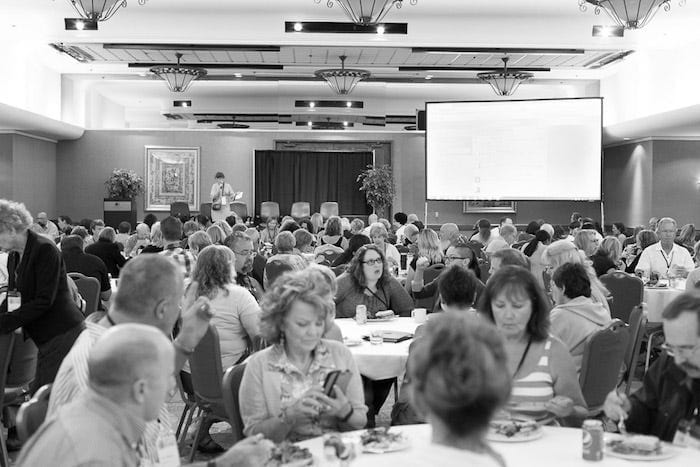
What is the key information writers need to know about the Willamette Writers Conference, the next one taking place August 4–6, 2017 in Portland, Oregon?
Orit Ofri: August 4–6 are the official dates, but we have some pre-conference programming starting Thursday evening. Your conference fee includes lunch, snacks, and mixer events.
Expect three packed days all about writers and writing. We offer classes in nine tracks. In addition to the classes, we have the bookstore interviews, networking receptions and mixers, readings, and open mic. We provide opportunities to pitch your work, find critique partners, get instant feedback on your writing and marketing, and more. Plus, practically anyone at that hotel is going to be somehow connected to the conference.
We’re talking complete immersion. Come prepared and leave inspired and motivated.
What areas of screenwriting do the WWC panels and presentations cover?
Waka Brown: The classes for the Willamette Writers Conference focus both on craft and the business side of screenwriting.
This year, we also have sessions on how writers can get their material made on their own. In terms of craft, there’s a special focus on character this year, with classes such as the ones you’re teaching (“Create a Compelling Protagonist” and “Write a Worthy Nemesis”), Marilyn Atlas’ “Navigating Emotional Corridors,” and Cynthia Whitcomb’s “The Heart of the Story.” On the business side, we have classes such as Doug Richardson’s “Swimming with Sharks: Navigating a Movie-Writing Career,” Randall Jahnsen’s “Proof of Concept,” and Danny Manus’ ever-popular “Crafting Killer Loglines and Queries.”
We also want writers to come away from the conference feeling inspired to make their dreams come true on their own without having to wait for some person or entity to give them their approval. To this end, Kaila York and Sandra Leviton (fellow 2013 Quest Participant) will be teaching “Low Budget Genre Filmmaking at Home,” and Portland’s own Director/Producer Martin Vavra will be teaching “Getting it Done in Portland.” Of course, there will be a myriad of other courses on structure, dialogue, TV writing, etc.
— too many to go into detail here, but be sure to check out the offerings on the conference site!
Is this conference strictly for Oregon-based writers or open to writers from anywhere?
Waka Brown: While many of the conference participants are from the area, this conference is open to anyone from anywhere. It’s held at the Portland Airport Sheraton (and there are a number of other hotels nearby, too) so it’s extremely convenient. And you can’t beat Portland during the summer!
Is there an opportunity for attendees to mingle with and talk to panelists and presenters?
Waka Brown: Absolutely! These opportunities actually begin before the conference officially begins on Aug. 4 (Friday).
For instance, on Thursday, there are a number of events open to anyone who has registered for any days of the conference. We have an extremely popular “Pitch for the Prize” contest on Thursday evening in which any participant can throw his/her hat into the ring for $5 and pitch to the judging panel, comprised of several of our execs/faculty/reps. Winner takes all. This year, we’re also hoping to have a “Pitches Against Humanity” contest in which we turn the tables and let our panelists and presenters create a pitch (from random elements assigned to them) and let the audience decide who wins. It’s a fun and relaxed event that gives a chance for attendees to meet some of the Film VIPs even before the conference is in full swing.
There’s also a Friday night Welcome Reception in which all Friday attendees can mingle with panelists, presenters, reps, authors, publishers, agents, and execs. Throughout the conference, while we discourage behavior such as “urinal pitching,” the sessions are relatively small compared to other conferences (we don’t pack hundreds of people into a lecture hall, for instance) and there are 30 minutes passing time in between sessions to encourage interaction between everyone.
What advice do you have for writers who may be interested in attending the Willamette Writers Conference?
Waka Brown: Be ready, be open, be normal. If you’re pitching a script, make sure it’s ready. Be open to constructive feedback and suggestions. When I first started attending this conference, I was intimidated by the faculty and all the execs and reps taking pitches, and I didn’t take advantage of opportunities to talk to and get to know many people. Just remember, no one’s forcing anyone to attend the conference. Everyone’s here for the same reasons you are, because you care about stories and want to create something that resonates with other people, too. Be normal. They’re normal. But also don’t worry about being weird. This is a writing conference; everyone pretty much understands that everyone attending is weird in their own ways. But don’t be weird about being weird. Be normal.
Orit Ofri: Yes, I agree. I think being ready and doing your homework is super important. You’re investing time and money. You’re also investing a bunch of first impressions. Know who’s coming, prepare to describe your project, then be brave.
I’d also add: ask questions, especially during your pitching sessions. When are you going to have the opportunity to run an idea by a pro at this level? Yes, your critique group is great, your mom is awesome, but these guys probably know more, so ask questions, pick their brains, get leads for comps (comparative titles), find out what you should be reading/watching, etc.
If you’re a conference veteran, I’d say challenge yourself. Do something different. Anything. Attend a class you wouldn’t normally attend, sit at a table full of strangers. And come with a question that you want to have answered by Sunday, then seek advice.
Finally this: Why should writers decide to attend this year’s Willamette Writers Conference?
Waka Brown: We have sooo many new offerings this year. This is the first time you’ll be attending (and writers here are very excited!). This is also the first year Doug Richardson (DIE HARD 2, BAD BOYS, HOSTAGE) will be teaching, and we have new executives such as John Hilary Shepherd (Cross Creek Pictures) and Angelina Chen (Energy Entertainment) who will be taking pitches for the first time. Stellar managers Kailey Marsh and Lee Stobby are returning to the conference, as well as VP of International Production & Development at StudioCanal Daniel Inkeles.
The Willamette Writers Conference isn’t just a film conference, but it also has a literary focus and as increasing numbers of screenwriters are focusing on novels and novelists are looking at how to turn their book into a movie. The literary side of the conference has a ton of other classes to offer: from memoir to fantasy, publishing to book campaigns, to magazine essays, this conference offers so much for everyone.
The most important reason to attend, in my mind, is what you’ll come away with. The Willamette Writers Conference is the type of conference in which participants come away from it newly energized from being around everyone’s dreams, support, enthusiasm, and love of story.
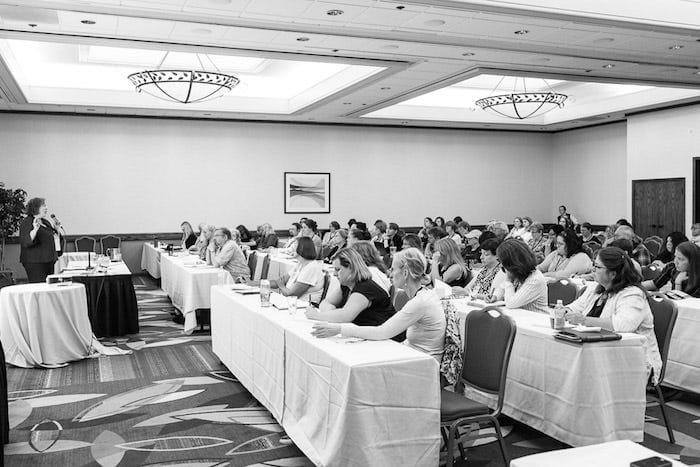
I’m excited to attend to meet a bunch of people I know from online, such as Waka Brown and Sandra Leviton who I worked with as part of the 2013 Quest Initiative, and some folks I’ve met in L.A. and other events. But the main thing is to interface with writers, both through my teaching sessions and casual conversations which naturally arise in these type of gatherings.
For more information on the Willamette Writers Conference, go here. Early early bird registration deadline is midnight on Sunday, June 11.
Hope to see you there!
Twitter: @wilwrite, @oritofri, @wakatb.