Reader Question: Are movies featuring LGBT leads destined to be relegated to indie film permanently?
Question from j_midtown:
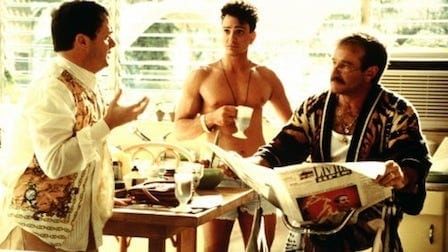
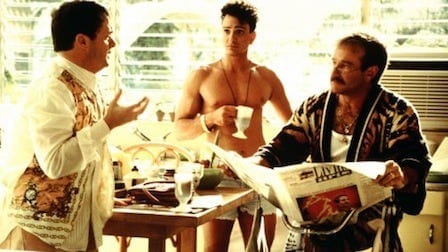
While we mourn Robin Williams’ untimely passing [last] week, among the more frequently mentioned of his credits was The Birdcage. Released way back in 1996, The Birdcage ranks as the highest-ever grossing LGBT-themed movie at $124M domestic and was released by MGM. Paramount had a couple of gay-themed releases in the years closely following, but since then no major studio has dipped their toes into those waters, despite the dramatic swing in societal and cultural acceptance of LGBT people over the same period.
Certainly, part of this can be attributed to the swing to franchise-driven, tent-pole releases at the majors and the death of the mid-budget drama and comedy productions generally, but are there other factors at work? Are studios afraid of the subject matter? Are specs with major gay characters or themes complete non-starters? Is there any hope for change or will gay cinema be relegated to low-budget, independent film permanently?
Indiewire came out with a recent article (August 5) on precisely this point: Why Don’t LGBT Movies Make Money At The Box Office Anymore. Check out these charts:
Top Grossing Films With Lead LGBT Character (1990–1999)
1. The Birdcage (1996) — $124,060,553
2. The Talented Mr. Ripley (1999) — $81,298,265
3. Philadelphia (1993) — $77,446,440
4. In & Out (1996) — $63,856,929
5. To Wong Foo (1995) — $36,474,193
6. The Object of My Affection (1998) — $29,187,243
7. Midnight in the Garden of Good & Evil (1997) — $25,105,255
Top Grossing Films With Lead LGBT Character (2000–2009)
1. Brokeback Mountain (2005) — $83,043,761
2. Bruno (2009) — $60,054,530
3. The Hours (2002) — $41,675,994
4. Monster (2003) — $34,469,210
5. Milk (2008) — $31,841,299
6. Rent (2005) — $29,077,547
7. Capote (2005) — $28,750,530
Top Grossing Films With Lead LGBT Character (2010-present)
1. The Kids Are All Right (2010) — $20,811,365
2. Blue is the Warmest Color (2013) — $2,199,787
3. I Love You, Phillip Morris (2010) — $2,037,459
4. Farewell My Queen (2012) — $1,347,990
5. I’m So Excited (2013) — $$1,368,119
6. La Mission (2010) — $1,062,940
7. Kill Your Darlings (2014) — $1,030,064
As the article notes, the numbers are a bit skewed in that we are only five-and-a-half years into this decade. Maybe there’s a Birdcage or Brokeback Mountain yet to come in the next four years that could significantly alter box office results.
[Note: Even though Dallas Buyers Club did not feature a gay lead character, the subject matter as well as some other characters did tie into the LGBT community, and that movie has grossed $55M worldwide.]
If I were a conspiracy theorist, I might be tempted to compare these downward numeric trendlines of LGBT movies to those of recent Christian theme films like God’s Not Dead [$62M], Son of God [$68M], and Heaven is for Real [$100M], which have been generating solid numbers at the box office. Do Hollywood studios and financiers perceive there is more money to be made in religious films now rather than movies featuring LGBT characters? Of course, they do not have to be mutually exclusive, however if movie companies are actively seeking religious audiences, might they be hedging their bets on LGBT projects as not to offend more conservative church-going movie fans?
I doubt very seriously if the two are connected, however the reality is the primary focus of any Hollywood film company is one thing: Profits. In this regard, a more telling fact about the chart above is that none of the movies released since 2010 has been distributed by a major studio, whereas The Birdcage [United Artists], The Talented Mr. Ripley [Paramount/Miramax], Philadelphia [TriStar], and In & Out [Paramount] all were.
Is Hollywood afraid of dealing with LGBT subject matter? That seems unlikely as there is a significant paradigm shift going on in the U.S. over the last several years. There are 19 states now where it is legal for gays to get married, a number that is sure to continue growing. Support for same-sex marriage has jumped 21% since 2003, including 61% of young Republicans. So it’s not like movies with LGBT themes would be more controversial nowadays. On the contrary from a cultural standpoint, it seems like this topic of conversation is becoming normalized.
Perhaps that’s a contributing factor to the decline in box office. In the 90s, when the subject matter in a movie would have been more controversial, the studios could generate buzz simply with the casting: Robin Williams as a gay character! Matt Damon as a gay character! Tom Hanks as a gay character! Would that generate as much noise in today’s marketplace?
Part of this shift, too, has to be tied to the studios’ bifurcated approach to business, where they spend a lot of time and money on franchise movies, heavy with CGI (Computer Generated Imagery) and little in the way of A-list actors, and low budget genre movies on the other end of the slate. In other words, they’re just not making many mid-budget dramas or comedies which is what all of those successful LGBT movies from the 90s and 2010s were.
Re spec scripts: If a writer has a fantastic story to tell featuring an LGBT lead character and they passionate to write it, my advice would be to set aside market considerations and go for it. Remember, specs are not just about sales, they are first and foremost a way to convey talent and voice to the Hollywood development community. Yes, a spec can sell. It can also get you representation. Meetings with producers and development execs. Your name put onto lists for writing assignments. A great story executed wonderfully in a screenplay can do all of that for you.
Bottom line, perhaps we are in a period where movies featuring LGBT lead characters have been ‘relegated’ to the indie world. But as soon as a gay version of The Heat or Bridesmaids comes out and does great box office, Hollywood will be all over that, to test those waters for potential revenues. If a company thinks they can get such a movie produced and make money on it, they’ll buy it… and try it.
Readers, what do you think? What sort of trend do you see for LGBT theme movies?
UPDATE: In the meantime, Love Is Strange, starring John Lithgow and Alfred Molina as a longtime couple whose lives are changed when they decide to get married, gets a wide expansion in theaters this weekend.