Reader Question: How to write “unwritable moments” in a screenplay?
Plus a question about writing montages.
Plus a question about writing montages.
From Michael Traven, a two-part question. Here is part one:
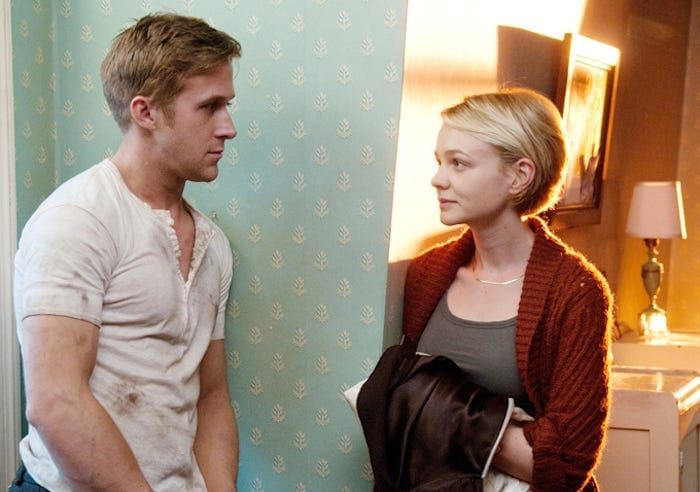
Hey Scott. Using the breakout Cannes film of last year, DRIVE, as an example, how do you write a 110-page script when portions of it (sometimes large, sometimes small) are just “silences” or hesitations, or quiet, thoughtful moments with a character driving down the road.
And if you know you want a music/driving montage to go on for a minute or two, how do you convey that? You don’t have to answer these specific questions, but I’d love to hear your thoughts on “writing the unwritable moments of film.”
Let me take on the second question first. Montages have been around a long time. You probably remember this one from Casablanca:
Seeing as WGA members voted Casablanca the #1 screenplay of all time, I’m no dummy: I went to the script to see how it handled this montage.
Rick just stares ahead as orchestra MUSIC slowly join Sam's
playing.DISSOLVE TO:MONTAGE - PARIS IN THE SPRINGA) The Arc de Triomphe from a distance.B) Rick drives a small, open car slowly along the boulevard.
He puts his arm around Ilsa. The background scenery
changes to a country road as she snuggles close to him
and puts her head on his shoulder.C) An excursion boat on the Seine. Rick and Ilsa stand at
the rail of the boat. They seem to be transported by
each other as Ilsa laughs.CUT TO:
Then it cuts to Rick’s Paris apartment where Rick offers the famous line, “Here’s looking at you, kid.”
This format has been around more or less like this for decades. Personally I prefer not to use A, B, C, or 1, 2, 3, as it looks like a damn outline to my eyes. And why would we want a reader who is involved in our story suddenly conjuring up images of their mean-spirited, cross-eyed English teacher Mrs. Bratwurst jamming the rules of outlining down their throats. Me? I prefer to use double dashes:
-- The Arc de Triomphe [etc]-- Rick drives a small [etc]-- An excursion boat [etc]
Here’s the thing about a montage or a series of shots: They almost never read as well as they come off on screen. On the page… well, even the montage from Casablanca is flat. You and I can envision Bogart and Bergman, so it looks great in our minds. But in a spec script without specific stars attached, you can’t rely on your characters and some generic travelogue to be entertaining.
So what to do? Two things: (1) Make something sharp and specific happen in each beat. Provide some punch, something with a point to it, not just generic. (2) Give the entire montage or series of shots a beginning, middle and end. In effect, you are telling a story, albeit a little one, but it should have a narrative flow to it.
Here is an example from one of my scripts Snowbirds. Some RVers have just alighted in a campsite and I wanted to convey them setting up
A SERIES OF QUICK SHOTS (HANDS/FEET IN ACTION)-- GENERATORS crank into action (loud!) --- HYDRAULIC LEVELING SYSTEM hisses and settles coach --- Yanking open BUILT-IN STORAGE COMPARTMENTS --- Removing LUGGAGE and GEAR --- THUMB pushing down electric BUTTONS --- SLIDE-OUTS sliding out --- SOLAR PANELS tilt up --- Automatic AWNING whirs into place --- POWER BLINDS rise letting in sunshine --- Atop Ed's roof a SATELLITE DISH automatically adjusts --- Ed's 42" TV drops into place from INTERIOR CEILING --- FRONT DOORS jerk opened and FEET step outside -
And the group emerges outside into the next scene. Quick images, lots of action, fast pace.
So whatever you do with a montage or series of shots, make each image specific and interesting, and convey a mini-story with a beginning, middle, and end.
As to your first question referencing the script to Drive? You’re talking about what sound like more ‘novelistic’ moments in a script. Again let’s go to the source. Here is a short set of scenes involving no dialogue, but comprises a plot point:
INT. SUPERMARKET/ ECHO PARK — DAY. 34
Tinny supermarket music plays in the background. Driver walks
past the vast selection of instant coffee brands, bemused by the
choice. Suddenly he notices something out of the corner of his
eye. At the far end of the aisle his pretty neighbor, Irene, is
browsing through the confectionery section. Standing next to her
is a young boy of six or seven, (BENICIO). He grabs a multi-pack
of snickers and puts it in Irene’s shopping basket. Irene calmly
picks it out, replaces it on the shelf, and takes a single
snicker bar for him instead. As Driver watches them, the boy
turns around and notices him. Driver heads down another aisle
before Irene sees him too, keeping to himself to himself.
EXT. CAR PARK/ SUPERMARKET — DAY. 35
Driver heads out of the supermarket with a small bag of
groceries when he spots Irene and Benicio again in the car park.
Irene sits in a battered Oldsmobile, trying to start the engine.
She tries several times then gets out in frustration, opening
the hood and peering at the engine she has no idea how to fix.
Benicio peers in too, trying to be helpful.
Driver hesitates, all his instincts telling him to continue to
his car and drive away, but as he feels Irene’s increasing
frustration he can’t help himself, finally heading over to help.
Irene looks over and sees him coming, surprised at first, then
smiling. We watch from a distance as they talk now.
INT. ELEVATOR/ APARTMENT BLOCK/ ECHO PARK — DAY. 35a
Driver, Irene and Benicio stand in silence in the elevator,
Driver clutching some of Irene’s grocery bags.
What do you do? You describe the action. And even if it’s subtle, there should be some action in it. In this set of scenes, we can almost see the wheels turning in Driver’s head. He does not want to get involved with this woman and her son, but he gets lured in by two things: (1) A human moment of a child and mother dealing with a Snickers bar. (2) Their car having mechanical issues.
You can write “unwritable moments” if there is something happening, if there is some action, some conflict, some drama, some humor, and perhaps most importantly something advancing the plot.
Note to script format literalists: Notice how the screenwriter of Drive Hossein Amini completely breaks the ‘rule’ about no more than a few lines of scene description per paragraph? Scene 34 = 11 lines. Moreover he didn’t opt for the current stylistic fashion of breaking the paragraph up into several lines like this:
Tinny supermarket music plays in the background.
Driver walks past the vast selection of instant coffee brands,
bemused by the choice. Suddenly he notices something out of the
corner of his eye.
At the far end of the aisle his pretty neighbor, Irene, is
browsing through the confectionery section. Standing next to her
is a young boy of six or seven, (BENICIO).
He grabs a multi-pack of snickers and puts it in Irene’s shopping
basket.
Irene calmly picks it out, replaces it on the shelf, and takes a
single snicker bar for him instead.
As Driver watches them, the boy turns around and notices him.
Driver heads down another aisle before Irene sees him too, keeping
to himself.
I think most of us would agree that this latter approach is easier to read. Moreover each paragraph suggests a camera shot, which allows the writer to ‘direct’ the action.
But the fact is Amini opted for the former approach. And evidently it worked. How do I know? Because they made the movie!
Is my point that we should all be writing paragraphs of scene description 11 lines long? No. My point is that there are no rules! There is this amorphous sense of conventional wisdom and we are smart to be aware of it when we write. But if for whatever reason the story requires us to write a paragraph of scene description with 11 lines in it, then we are free to make that choice.
But make sure your story requires it because any professional reader flipping through your script and seeing page after page of long paragraphs of scene description would immediately come to this conclusion: “Amateur.”
So there you have it: Perhaps the single most convoluted GITS post ever! But hey, I was trying to answer two disparate questions, one of which led me back to this whole screenwriting rule canard.
Anyhow whatever thoughts you have on any of this, see you in comments!