Reader Question: What are keys to a sparse style of screenwriting?
Do all scripts have to feature a lean, spare approach to scene description?
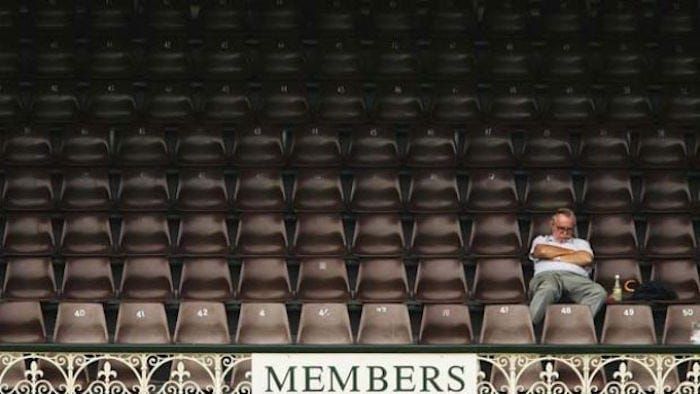
Do all scripts have to feature a lean, spare approach to scene description?
From Michael Traven. Part two of a two-part question:
If I remember correctly, wasn’t Amini’s script for DRIVE only 60 pages? (It’s on IMSDB.com, but not as a PDF, so I can’t tell how many pages). I’m reading through that script right now, so I’m sure some of it will come to me, but seeing as it’s very unconventional and breaks a lot of screenwriting standards (not only the short length, but also use of in-script camera directions and “WE DISSOLVE TO:”), I figured maybe you would have some thoughts on how to deliver a professional script but with a sparse style.
If you find scripts online, you will discover here are two types: There is a selling script and a shooting script. There are also all sorts of development drafts, but for purposes of this discussion, let’s stick with these two types.
A shooting script, like the one you read for Drive while a good thing to read is not necessarily the best example to steer your decisions re screenplay style. Why? Because a shooting script is a production draft. For example, Amini worked closely with the film’s director Nicolas Winding Refn. Since they knew they were working on a production draft, Amini was free to include all sorts of elements we would not normally expect to see in a selling script such as directing lingo and camera jargon. That’s because a shooting script has a specific function: To be used as a guide to make the movie.
A selling script, what you and I are focused on when we write a spec, also has a specific function: To get readers interested in the story and by extension us. Given current style trends and a move toward a more ‘literary’ look in screenplays over the last two decades, a selling script is almost assuredly not going to be cluttered camera angles and directing cues.
Also this: When a screenwriter is working with a director on what will become the shooting script, or it’s a script written by a writer-director, all bets are off in terms of format and style. The script is a reflection of the director’s vision, and if it comes in at 87 pages [which is the length of the 2010/09/24 draft of Drive I have], then that’s completely fine as long as it’s copacetic with the director.
Re “spare style”: There is no rule stating that all scripts have to be written in a spare, taut style. Why? Because all stories are different. All writers are different. It would be really dumb to insist on that for stories that range from horror to drama, action to comedy. That would restrict the writer’s choice in terms of Narrative Voice and as a result minimize the stylistic options to fit a given story.
For example, here is an excerpt from the Walter Hill draft of the script for Alien:
NT. NARCISSUSRipley watching the final destiny of her ship and crew mates.
A very long moment.
Then, behind her, the lethal hand emerges from deep shadow.
The Alien has been in the shuttle-craft all along.
The cat yowls.Ripley whirls.
Finding herself facing the Creature.Ripley's first thought is for the flamethrower.
It lies on the deck next to the Alien.
Next she glances around for a place to hide.
Her eye falls on a small locker containing a pressure suit.
The door standing open.
She begins to edge toward the compartment.
The Creature stands.
Comes for her.
Ripley dives for the open door.
Hurls herself inside.
Slams it shut.INT. LOCKERA clear glass panel in the door.
The Alien puts its head up to the window.
Peers in at Ripley.
Their faces only two inches apart.
The Alien looking at Ripley almost in curiosity.
The moaning of the cat distracts it.INT. NARCISSUSThe Alien moves to the pressurized cat box.
Bends down and peers inside.
The cat yowls louder as his container is lifted.INT. LOCKERRipley knocks on the glass.
Trying to distract the Creature from the cat.
The Alien's face is instantly back at the window.
Getting no more interference from her, the Creaturereturns to the cat box.
Ripley looks around.
Sees the pressure suit.
Quickly begins to pull it on.INT. NARCISSUSThe Alien picks up the cat box.
Shakes it.
The cat moans.
Compare to this excerpt from Titanic:
Then the lookout flashes his torch toward her and the light flares across the water, silouetting the bobbing corpses in between. It flicks past her motionless form and moves on. The boat is 50 feet away, and moving past her. The men look away.Rose lifts her head to turn to Jack. We see that her hair has frozen to the wood under her. ROSE
(barely audible)
Jack.She touches his shoulder with her free hand. He doesn't respond. Rose gently turns his face toward her. It is rimed with frost.He seems to be sleeping peacefully.But he is not asleep.Rose can only stare at his still face as the realization goes through her. ROSE
Oh, Jack.All hope, will and spirit leave her. She looks at the boat. It is further away now, the voices fainter. Rose watches them go.She closes her eyes. She is so weak, and there just seems to be no reason to even try.And then... her eyes snap open.She raises her head suddenly, cracking the ice as she rips her hair off the wood. She calls out, but her voice is so weak they don't hear her. The boat is invisible now, the torch light a star impossibly far away. She struggles to draw breath, calling again.IN THE BOAT Lowe hears nothing behind him. He points to something
ahead, turning the tiller.ROSE struggles to move. Her hand, she realizes, is actually frozen to Jack's. She breaths on it, melting the ice a little, and gently unclasps their hands, breaking away a thin tinkling film. ROSE
I won't let go. I promise.She releases him and he sinks into the black water. He seems to fade out like a spirit returning to some immaterial plane.
Then this from (500) Days of Summer:
INT TOM'S BEDROOM - SAMEWe watch from behind as he re-enters his bedroom. Where
Summer waits. Under the covers. Naked. SUMMER
Hi. TOM
Oh, sweet Jesus!FADE UP: "YOU MAKE MY DREAMS COME TRUE" by Hall and Oates.CUT TO:EXT DOWNTOWN STREET -- MORNINGIt's the greatest morning of all time!Tom walks down the street. Or, more accurately, Tom struts
down the street. People wave as he passes by, they clap, they
give him thumbs up. Tom points at people as he passes,
winking, doing a little shuffle. He is the man. He checks out
his reflection in a window. A YOUNG PAUL NEWMAN stares back.A GROUP of BUSINESSMEN break into a Busby Berkeley-style
choreographed dance. A whole parade is forming behind Tom.
The POSTMAN, a POLICE OFFICER, the HOT DOG VENDOR, the
MICHELIN MAN, the SAN DIEGO CHICKEN, everybody loves Tom
today. HALL and OATES themselves walk with Tom singing the
song.Cars stop at crosswalks to let Tom go by. The DRIVERS also
pump their fists in celebration of Tom's achievement last
night. He walks on, the man.We notice the sidewalk lights up every time he touches the
pavement like in "Billie Jean". CARTOON BIRDS fly onto Tom's
shoulder. He smiles and winks at them.Tom breaks off from the parade as he approaches his office.
Walter Hill uses what he calls a “haiku style” approach to scene description, breaking up each sentence into one or two lines. Cameron [Avatar] and Neustadter & Weber [(500) Days of Summer] go with a more traditional paragraph approach, but you will note the tone of their scene description is entirely different, befitting each of their respective Narrative Voices.
So circling back to you question about sparse style: You have a world of options including haiku style, five line paragraphs, break up each camera shot into separate lines, and on and on. It all depends upon your story, the accompanying style choices you make per your Narrative Voice, and what the story requires to best convey what’s going on in the most entertaining fashion.
One big obvious note: You do not need to use complete sentences in scene description. Check out the many instances of what we would call ‘incomplete sentences’ in this excerpt from Lethal Weapon by Shane Black:
On the table next to the sleeping Venus lies an open
bottle of pills … next to that, a mirror dusted with
cocaine.
She rouses herself to smear some powder on her gums.
As she does, we see from her eyes that she is thoroughly,
completely whacked out of her mind…
She stands, stumbles across the room, pausing to glance
at a photograph on the wall:
Two men. Soldiers. Young, rough-hewn, arms around each
other.
The Girl throws open the glass doors … steps out onto a
balcony, and there, beneath her, lies all of nighttime
L.A. Panoramic splendor. Her hair flies, her expression.
Rapt, as she stands against this sea of technology. She
is beautiful.
On the balcony railing beside her stand three potted
plants.
The Girl sees them, picks one up. Looks over the balcony
railing … It is ten stories down to the parking lot.
She squints, holds the plant over the edge.
GIRL
Red car.
Drops the plant. Down it goes, spiralling end over end —
until, finally … BAM — ! SHATTERS. Dirt flies. A
red Chevy is now minus a WINDSHIELD. The Girl takes
another plant.
GIRL
Green car.
She drops it. Green Dodge. Ten stories below, BAM
Impact city. Scratch one paint job. Grabs the final
plant and holds it out, saying:
GIRL
Blue car.
POW. GLASS SHATTERS. Dirt sprays. A blue BMW this
time. The Girl loves this game … her expression is
slightly crazed. She reaches for another plant —
There aren’t any. Her smile fades — And for a moment,
just a moment, the dullness leaves her eyes and she is
suddenly, incredibly sober. And tears fill her eyes as
she looks over the edge —
GIRL
Yellow car.
And jumps the railing. Plummets, head over heels like a
rag doll. Hits the yellow car spot on. She lies, dead,
like an extinguished dream. Still beautiful.
My big advice. READ SCRIPTS!!! By professional screenwriters especially those written in the last 5 years or so. The more you expose yourself to different styles of writing, the more you will learn, almost intuitively, how to write good, lean, descriptive scene description.
How about you, GITS readers? What thoughts do you have on this matter? Any advice?
[Originally posted July 12, 2012]