Reader Question: What questions should I be asking when rewriting a script?
Writing is rewriting. Here are some questions you should ask in that process.

Writing is rewriting. Here are some questions you should ask in that process.
A reader question from Robin:
I am in the process of working on my third draft of a screenplay. I know there is something still missing from the story. I just can’t quite put my finger on it. What kinds of questions should I be asking in regards to story and/or character that may help me figure this out?
Robin, you have hit on one of the biggest issues in the entire process: Rewriting. Of course we’ve all heard the adage, “Writing is rewriting.” Fine. But what to do? How to do it?
I’ve had long conversations about this with Tom Benedek, the screenwriter who wrote Cocoon and my partner at Screenwriting Master Class. Tom taught a rewrite class at the University of Southern California School of Cinematic Arts in their MFA program and is as well-versed in this subject than perhaps anybody. There are many areas to focus on, but for purposes of this response to your question, let me suggest your first order of business is to make absolutely sure that the most fundamental dynamics related to your story’s characters are in order. Here is a series of questions to help start you in that process:
- Who is your Protagonist?
- What do they want?
- What do they need?
- Who is attempting to stop the Protagonist from attaining their goal [Nemesis]?
- Which characters are the most intimately connected to your Protagonist’s emotional development [Attractor]?
- Which characters are the most intimately connected to your Protagonist’s intellectual development [Mentor]?
- Which characters test your Protagonist by switching from ally to enemy, enemy to ally [Trickster]?
- What is the arc of your Protagonist’s metamorphosis?
By “want,” I mean conscious goal, something we know by the end of Act One the Protagonist is actively attempting to achieve.
By “need,” I mean unstated goal, some aspect of the Protagonist’s inner self that represents a key part of their Authentic Being or Core Essence.
The underlying assumption here is that most stories are psychological journeys, the events that transpire in the External World (Plotline) impacting the Protagonist’s Internal World (Themeline) which results in their metamorphosis.
Oftentimes I read scripts where it’s clear the writer has little to no idea what is going on in the story’s Internal World, the script a series of occurrences that don’t tie together in any emotionally satisfying way or barely scratch the surface of what transpires in the Protagonist’s metamorphosis.
And while it’s true that in some stories the Protagonist does not go through a transformation process, the fact is in most movies, they do.
Thus if the meta point of a story is about the Protagonist’s metamorphosis, then the surrounding characters and events that happen need to service that emotional plot.
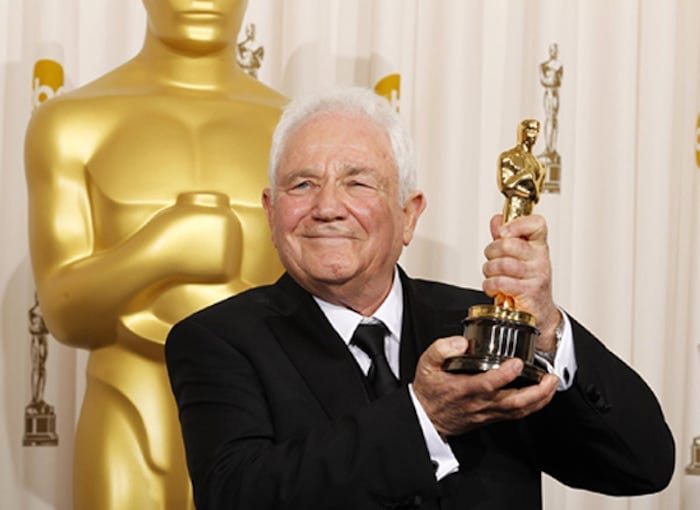
I had a terrific conversation recently with David Seidler, the screenwriter who won an Academy Award for Best Original Screenplay for The King’s Speech. We discussed how powerful a metaphor Bertie’s stuttering was. In the External World, this Protagonist had a speech impediment. But the real meaning of that condition is tied precisely to the story’s Internal World, the challenge for Bertie to find his voice to claim his right to be the King of England. Thus on the surface, there is the relationship between Bertie and Lionel, the speech pathologist, attempting a variety of methods to overcome Bertie’s stuttering. But the power of the story lies in Bertie’s psychological journey from a man plagued by the shadow of his father and haunted by the fear of his monarchical responsibilities to being thrust into a situation where he had to assume the throne.
In that process, Bertie had a Nemesis [his stuttering and at the root cause of that condition his father], an Attractor [his wife], a Mentor [Lionel], and a Trickster [his brother Edward]. Each plays a role in Bertie’s psychological journey as he moved from a state of Disunity [a member of the monarchical family who can not speak in public, who does not want to be King] to Unity [he learns how to manage his stuttering and finds his voice to become the King of the people].
In all honesty, I would say that 90% of the scripts I review that have rewrite issues, the problems go directly back to the characters and a lack of understanding about why they are there in the story, and what their respective narrative functions are.
So I would suggest you start there. Once you think through all that, then you can address the script’s structure as it relates to both the Plotline and Themeline, and so on.
GITS readers, what questions do you ask when you rewrite a script?