Report on recent screenwriter panel at the WGA
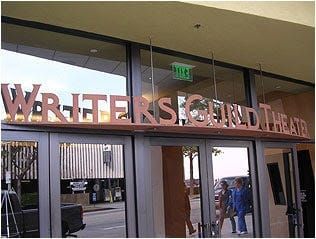
Tom, a talented writer and one of our stalwart readers, was kind enough to post extensive comments about an event recently at the WGA Theater in Beverly Hills, specifically with re to reading screenplays. I thought his report from ‘ground zero’ of screenwriting was informative and hereby reproduce Tom’s post per his permission:
At a recent WGA function, various panels of writers spoke about writing. To a person, they were all very conversant in other writers’ screenplays, old and new. Both in referring to films and in discussions amongst themselves, they cited a film’s screenplay more so than the film itself. All were huge proponents of reading screenplays, and most said that their own styles — including the breaking of formatting rules in order to make a script more readable — were heavily influenced by other writers. Just as you cite Walter Hill and William Goldman, they did too.
By the way, the writer of one of the screenplays on your list — Tom Schulman of DEAD POETS SOCIETY — was one of the writers on those panels.
Tom Schulman was rather funny talking about selling “Dead Poets Society, saying that the title contained possibly the three worst words you could use in marketing a script. He might have been joking, but he said a studio exec asked “Do they have to be dead?” Also, the film’s lead character was based on himself as a kid — shy, awkward and a rabid reader.
Three of the newer writers were Michael Brandt, Derek Haas and Simon Kinberg. Brandt and Haas are writing partners, and wrote “2 Fast 2 Furious”, “3:10 To Yuma” and one of this summer’s big hits, “Wanted”. Their big focus when writing is on the pace of the story. One of their big influences is Shane Black, who demonstrated a certain leeway to entertain in the script. In doing so, they sometimes skirt typical formatting rules in order to keep the reader entrenched in the story, ala Goldman and Hill. Sometimes, they aren’t even sure where one act ends and the next begins. They told a story about a meeting with, I think, Brad Pitt, who told them that the end of the second act needed to be strengthened. They shook their heads yes, then after leaving the meeting had to figure out where the hell their second act ended.
They also stressed the need to write for actors. At a meeting with Denzel Washington, Denzel (and I’m paraphrasing terribly here) went through the action script and pointed out that plenty of other characters had shot, been shot at, beaten someone up, been beaten up themselves, etc., before his lead character ever got to fire his gun. I think this is may be somewhat an adjunct to Billy Wilder’s rule about there being a clean line of action for the lead character. Here, the other characters were getting all the action.
Simon Kinberg wrote “Mr. And Mrs. Smith”, which was his thesis project for film school at Columbia, “X-Men: The Last Stand”, “Jumper” and a “Night at the Museum 2” rewrite, though he professed to being a fish out of water writing a comedy. As with the others, Simon paid homage to the writers and screenplays you’ve mentioned many times.
All three of the writers said a major influence in their becoming screenwriters was “Star Wars”. Simon in particular mentioned that he was at a discussion where Lucas said that when he writes, he drafts a long, involved, twisting, turning, exhaustive story. And that’s his first act. Which endeared Lucas even more to Simon, as he ascribes to the same style of writing.
I can’t remember which of the writers said this, but when asked what mistakes they often see in scripts, one of them said that too often, a writer starts a story and/or a scene TOO late. This is in direct conflict with that rule about entering and leaving scenes as soon as possible, but maybe because enough writers have scene this rule, it’s now being taken to an extreme. This writer thought that spending a little time to develop a connection between the reader and the character would be time and pages well-spent.
Anyway, all of this is paraphrased and possibly a little inaccurately remembered. But ultimately, your advice about reading as many scripts as possible was followed by all these successful writers.
Thanks, Tom. And those of you who live in SoCal, there are frequent events sponsored by the WGA that are open to the public. You can check here every month for a calendar of events.