Screenplay Moments
Think of your screenplay as a continuous series of events and reactions.
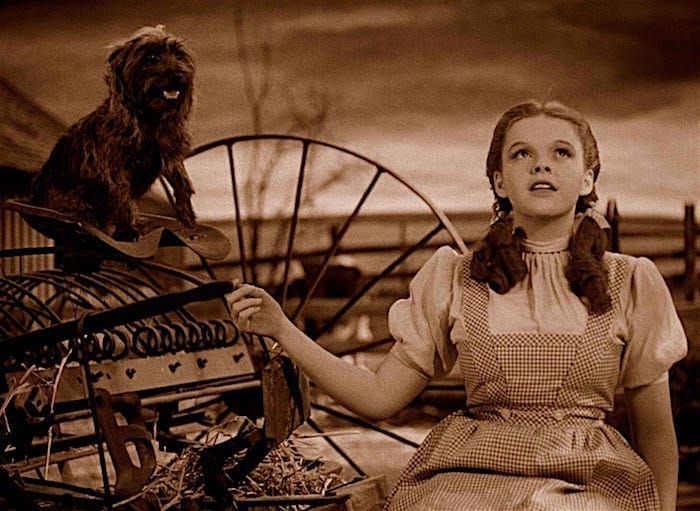
Think of your screenplay as a continuous series of events and reactions.
I’m currently teaching the Screenwriting Master Class one-week online course: Create a Compelling Protagonist. We just started on Monday, but have already gotten off to a rousing start with some terrific message board conversations.
For example in Lecture 1 as we considered how critically important the Protagonist is to most stories, I posed this question:
So why is it in Hollywood development circles and the online screenwriting community, discussions about Protagonists often play out largely on a surface level? Specifically these two oft repeated suggestions:
· Make him more sympathetic.
· Give her a flaw.
Sympathy. Flaw. Any writer who has worked in Hollywood knows the prevalence of these two topics in script meetings. Indeed it can seem that this is the industry’s default mode of handling Protagonist character development.
The focus of the class is to push writers beyond surface level writing by immersing themselves in the lives of their characters, especially the Protagonist. It’s a process I call Inside-Out writing:
The Outside-In approach is, as noted, where the writer stands outside the story universe and applies a flaw or sympathy element into the Protagonist.
The Inside-Out approach is where the writer goes into the Protagonist, immersing one’s self in that character’s psyche and personal history so that Disunity elements emerge out.
Do you see the distinction?
The Outside-In approach is writer centered.
The Inside-Out approach is character centered.
The Outside-In approach exists on the character’s surface.
The Inside-Out approach exists within the character’s soul.
The Outside-In approach can come across as manipulative, thin, and inauthentic.
The Inside-Out approach can come across as honest, rich, and authentic.
To riff off a line near and dear to me, “Go into the characters, and find the animals.” The animals are in this case the many and varied aspects of a character’s psyche. This psychological journey of the writer into the characters, and especially the Protagonist, reveals a story with multiple layers of depth: who the character is, how the character is, why the character is, and what the character is.
I asked the writers in the class to share how they went about developing their characters and got some insightful responses. Here is one from Ellen Waitt which resonated with me:
When I’m thinking of each character I try to go by this quote:
“There are moments that mark your life, moments when you realize nothing will ever be the same. And time is divided into two parts, before this and after this.”
So I try to think of what those moments might have been for each character in their life, how those moments have directly affected who they’ve become and in turn how that character will react in the story because of these moments. It’s not so much about focusing on the before or after of the moment exclusively but also the change that occurred in between. They could be big moments like the death of a loved one or small moments, as long as a change occurred. Everyone has those moments in life and I think that’s ultimately what defines us. Your upbringing plays a part in it as well. I try to keep the plot and theme in mind though so I don’t stray too far in. I’ve just always been intrigued by moments in life that are irreversible.
My response:
Ellen, your comments reminded me of one of my favorite writing quotes, from Anne Beattie: “People forget years… and remember moments.” That’s totally my experience with movies. Ask me what I did last year for my birthday? Not a clue. Ask me about a movie I’ve only seen one time like Planes, Trains, and Automobiles, and I can call to mind 10–15 moments just like that. I think a lot of people tend to connect to movies through moments. So your instincts are sounds.
Even more, from a story-crafting perspective, this idea of zeroing in on moments and seeing what impact they have on a character is very much aligned with what I teach and preach: Character Based Screenwriting. Indeed your comments are completely in sync with today’s Lecture 2: External World and Internal World.
There is the event which happens in the moment: External World / Plotline.
There is the reaction which happens in response: Internal World / Themeline.
A movie is — in a way — simply a continuous series of these event-reactions / moment-responses. And they aren’t just random, rather each event causes a character to respond and in so doing change. So you can look at the series of event-reactions and see an arc. In most movies, a positive one where a Protagonist goes from Disunity to Unity.
The moments may be big (we call these plot or Plotline Points) or small (something which happens in virtually every scene), but each of them nudge, prod, or shove both the Plot forward and the Protagonist’s psychological metamorphosis.
Think of The Wizard of Oz. Here is an off-the-top-of-my-head over of event-reactions:
E: Dorothy comes home complaining about Miss Gulch, but the adults don’t really listen to her
R: She sings “Somewhere Over the Rainbow” expressing her discontent (Disunity: She doesn’t really feel like her home is a home)
E: Miss Gulch takes Toto
R: Toto escapes
E: Toto comes home
R: Dorothy runs away with Toto
E: Dorothy meets Professor Marvel who ‘sees’ Auntie Em in his crystal ball, worried about Dorothy
R: Dorothy runs back home
E: Tornado
R: Taken up to Oz
E: The house has killed a wicked witch
R: The Wicked Witch of the West vows to steal Dorothy’s red slippers
E: The Good Witch tells Dorothy to go to Emerald City to seek help from The Wizard
R: Dorothy and Toto take off (Dorothy’s goal: To get back to Kansas)
E: She meets Scarecrow, Tin Man, and the Cowardly Lion
R: Dorothy invites them onto her journey (Note: They go on to become her friends)
E: There is some back and forth between Wicked Witch and Dorothy group
R: With some help from Glinda the Good Witch, the group makes it to Emerald City
E: Wizard sends them off to retrieve the Wicked Witch’s broom
R: Off they go on another adventure
E: Wicked Witch has Dorothy and Toto captured by flying monkees
R: Dorothy separated from her friends who set off to rescue her
E: Dorothy sees Auntie Em in Wicked Witch’s crystal ball
R: Dorothy desperate to get back to Kansas
E: Rescue effort
R: Dorothy douses Wicked Witch who melts
E: Group goes back to Wizard
R: Toto reveals that Wizard is no wizard, but a fraud
E: Wizard provides awards to Scarecrow, Tin Man, and Cowardly Lion
R: “But what about Dorothy?” (Note: The trio of friends show off their loyalty and concern for Dorothy)
E: Wizard flies off in balloon
R: Dorothy hearbroken — she’ll never get home
E: Glinda: “You’ve known all along”
R: Click heels and repeat the mantra
E: Dorothy wakes up back at home
R: She vows never to leave again / “There’s no place like home”
Each of these events (moments) moves the plot forward, but also edges Dorothy’s psychological transformation forward, going from Disunity (she doesn’t feel like her home is a home) to Unity (there’s no place like home).
One big key: Bonding with Scarecrow, Tin Man, and Cowardly Lion who are her Attractor characters. By making that emotional connection, they serve as a bridge to home via their alter egos (Hickory, Hunk, and Zeke). Also the emotional connection Dorothy locks onto: Missing Auntie Em.
When it comes to character development, we do whatever we can to engage our characters and learn about the key moments in their past as well as the various layers to their psychological being. Moving forward into the plotting process, that material can suggest narrative elements which emerge into a coherent whole, the events in the External world connected to responses in the Internal World, a continuous string of impactful moments.
How about you? How do you develop characters? Does the idea of a story told in moments connect with you? Click on RESPONSE and let me hear what you have to think.
For more information on Screenwriting Master Class, go here. My next class begins on April 10: Write a Worthy Nemesis. Like Create a Compelling Protagonist, it’s a lecture, discussion, and workshop class where we focus on the characters in your story who provide opposition to the Protagonist.
Hope to see you there!