Screenwriting Meta View: Return
In writing a screenplay, we go into the story. That’s critical in order to connect with the characters and immerse ourselves in the story universe. But we also need to balance that by stepping outside the story universe and take a meta view of the narrative.
I like to do that by thinking of five ‘passages,’ broad movements in the Protagonist’s or key characters’ experience. Those are:
* Life before FADE IN
* Separation
* Initiation
* Return
* Life after FADE OUT
The middle three come straight from Joseph Campbell and his articulation of the Hero’s Journey:
“The standard path of the mythological adventure of the hero is a magnification of the formula represented in the rites of passage: separation-initiation-return.” — Joseph Campbell
There is Life Before FADE IN, whereby all the characters in the story, but particularly the Protagonist have lived out their lives 24/7/365. That is what writers call backstory. The more we immerse ourselves in and understand those events and dynamics, the better we can know our story’s primary characters, and the story itself.
There is Separation. That assumes we set up the Ordinary World, all the key characters, narrative elements, psychological forces at play. Then something happens which acts as a Call To Adventure. Reluctant or willing, this sets the stage for the Protagonist departing the Ordinary World and crossing the threshold into the New World.
There is Initiation, a series of tests and ordeals, equal parts forcing the Protagonist to shed old behaviors and beliefs, and incorporate authentic aspects of their psyche evolving into a New Self. This middle part of the journey is a powerful experience that contributes mightily to the character’s metamorphosis.
But that is not all. The Protagonist needs to prove all they have learned and who they have become has taken hold, then go back to the Ordinary World and integrate into that environment as a transformed Self.
Return
In order to return home, the Protagonist must endure a final struggle, one almost always tied to their conscious goal.
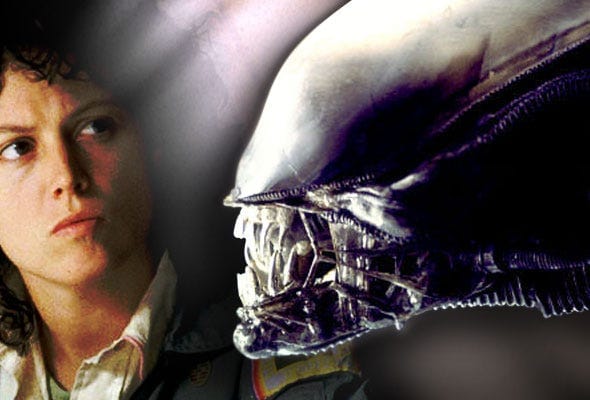
In taking on the Final Struggle, the Protagonist’s only chance of success is to be fully united, Want and Need, Body and Soul, and through their success mark the full emergence of the New Self.

Then and only then can they return home. Oftentimes victors. Sometimes not. And sometimes the Unity state they achieve derives only through physical death.

The Protagonist has passed through fire and emerged a transformed individual, now freed from the shackles of their Old Self:
“Freedom to pass back and forth across the world division, from the perspective of the apparitions of time to that of the causal deep and back — not contaminating the principles of the one with those of the other, yet permitting the mind to know the one by virtue of the other — is the talent of the master. The Cosmic Dancer…” — Joseph Campbell
To be a Cosmic Dancer is an expression of a fully realized self. Speaking psychologically, the Protagonist begins their journey as a child, then separates from that stage, and their initiation marks a shift into adolescence, then their return is symbolic of their emergence as an adult.
We see this pattern over and over and over again in movies, multiple, even endless variations, reflective of the ubiquitous nature the Hero’s Journey.
Tomorrow: Life after FADE OUT.
Comment Archive