SFX vs. drama
A recent post sparked an interesting conversation including this comment from Jeff Shear:
“I was watching “10,000 BC” tonight thinking about dead heroes when all of a sudden it dawned on me that movies have substituted special effects for drama… Who needs drama when you can cut a good car chase?”
I think each of us can sympathize with this sentiment where all too often movies dominated by CGI (Computer-Generated Imagery) translate into the viewer’s experience of “Can’t Generate Interest.” After all, an elaborate car chase without interesting characters involved in a compelling situation is nothing more than a masturbatory exercise in directing and editing.
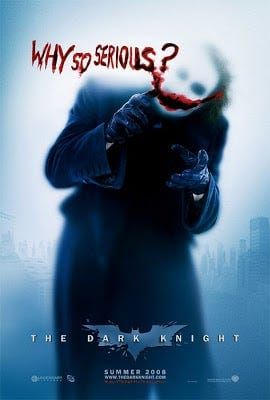
Then along come movies like Wall-E and The Dark Knight, proving that as long as the filmmakers care enough about characters and story, big SFX movies can make for good drama.
Consider this analysis of Wall-E by NY Times political columnist Frank Rich in today’s Week In Review section. In it, Rich confesses to an increasing frustration at the silly and pedantic tone of both Presidential candidate’s campaigns, so much so that he escaped by going to see Wall-E:
Indeed, sitting among rapt children mostly under 12, I felt as if I’d stepped through a looking glass. This movie seemed more realistically in touch with what troubles America this year than either the substance or the players of the political food fight beyond the multiplex’s walls.
While the real-life grown-ups on TV were again rebooting Vietnam, the kids at “Wall-E” were in deep contemplation of a world in peril — and of the future that is theirs to make what they will of it. Compare any 10 minutes of the movie with 10 minutes of any cable-news channel, and you’ll soon be asking: Exactly who are the adults in our country and who are the cartoon characters?
Wall-E succeeds in part because of its amazing animation, interesting approach to camera shots and angles, and all the other technical wizardry. But it soars because of what the filmmakers have done with the characters, imbuing robots, especially the Protagonist, with complex yet identifiable personalities. Honestly, how can one not adore Wall-E? He’s curious, cute, an underdog, a fish-out-of-water, and an incurable romantic who has given himself utterly over to love. The movie also soars because the story universe that begins with a simple premise — what if the Earth became so cluttered, abused, and run down that humanity was forced to leave it behind to survive? — is explored deeply into some thought-provoking possibilities. In sum, Wall-E succeeds as a fable, a morality tale, and good drama.
Then there is The Dark Knight. I know the movie hasn’t been released yet (it opens on July 18), but it’s difficult to avoid critical praise from people who have screened it. Plus, considering the track record of the movie’s director Christopher Nolan (he co-wrote the screenplay with his brother Jonathon Nolan), why not allow ourselves to get excited.
In today’s LA Times, there is a feature on Christopher Nolan and The Dark Knight with particular attention paid to the work of actor Heath Ledger. His portrayal of The Joker has generated enormous buzz. From the LA Times article:
Nolan was in Los Angeles that evening to screen some early completed footage from “The Dark Knight,” the second film in his reboot of the Batman mythos, which has Ledger in the role of the Joker. In super-hero cinema, the difference between a good film and a great film is the villain, not the hero, and it’s telling that the six-minute sequence that Nolan brought with him did not include a single solitary frame of the franchise’s caped crusader, who is again played by the lean and lupine Christian Bale. The screening audience of industry types and journalists were agog over Ledger’s wicked and scabby character and, in the cocktail lounge after, Nolan was all smiles. “I really cannot wait,” the filmmaker said, “for everyone to see the finished product.”
Interesting point about the importance of the “villain,” although I think it extends beyond “super-hero cinema.” What about Hannibal Lecter in Silence of the Lambs, Norman Bates in Psycho, or even Hans Gruber in Die Hard?
If The Dark Knight is anywhere near what critics are saying, it might be the most significant proof yet that SFX-laden movies can also be good drama.
UPDATE: The Daily Variety’s review of The Dark Knight is out and raises expectations even higher:
An ambitious, full-bodied crime epic of gratifying scope and moral complexity, this is seriously brainy pop entertainment that satisfies every expectation raised by its hit predecessor and then some. That should also hold true at the box office, with Heath Ledger’s justly anticipated turn as the Joker adding to the must-see excitement surrounding the Warner Bros. release.
UPDATE #2: In a lengthy article on Anne Thompson’s Variety blog, there is this comment by Chris Nolan on the scripting process for The Dark Knight.
“We did it the same way we wrote “Batman Begins.” David S. Goyer and I spent 2–3 months working on the story, working out the main beats on index cards. We sent Jonah [Nolan, Christopher’s brother] off to work on his own because I was working on another film so he had 6 months to do that first draft and he would show me stuff as he did it and I would look at it before he shared it with anyone else including Chuck [Roven] and the studio. After the studio read the first draft Jonah spent another couple months working on it and then I took it over when I finished the other film and over the course of 6 months in pre-production, Jonah and I still worked heavily on it through that time. One of the reasons the film is 2-and-a-half hours long is because we tried everything we could on paper to make the story shorter but that was the story we had. In the end we compressed it to the point where it was dizzying so then we had to flesh it out a little bit. We tried different versions and pulling out different story elements so we probably spent a year and a half working on the script.