“Tentpole” movies
Business practices ebb and flow in Hwood, but with rare exception each of the major movie studios consistently subscribes to the importance of “tentpole” movies. What are they? Big, brash, expensive movies around which a studio can build their release schedule. Typically slotted in the two big box office season — November throug December (holidays) and May through July (summer) — tentpole movies are often based upon pre-existing literary material (e.g., Harry Potter, Lord of the Rings, Iron Man, Spiderman) or pre-existing original movies (e.g., Star Wars, Indiana Jones). The reason they’re called “tentpole” movies is that their primary function is to hold up (do well) at the box office, typically raking a lot of money in a short time, and by doing so balance out the rest of a studio’s slate of movie releases.
For the last several decades, no studio has been more closely identified with tentpole movies than Warner Bros. This recent Daily Variety article takes a look at the current regime’s attitudes toward tentpole movies — nd because of various contributing factors, Warner Bros. is peering into 2009 and even 2010 with fewer than normal huge budget tentpole movies:
With a worldwide gross of $700 million (and still counting), “The Dark Knight” is exactly the kind of film Warner Bros. likes to make.
It’s a tentpole whose supersized budget for top talent, lavish action sequences and special effects can pay off big time by selling a helluva lot of tickets — and raking in the dough for other divisions, including TV, homevid, merchandise and vidgames.
If Warners got its way, it would have at least four of those blockbusters a year. Yet the studio is light on tentpoles next summer. Make that most of 2009.
Thanks to the addition of New Line and the shuttering of Warner Independent and Picturehouse, the studio has a glut of films to release — but not necessarily the kinds of films WB is used to distributing.
It will still release 25 films annually, as normal. But a majority of the films on the slate next year are made up of comedies and genre fare — less expensive projects it was able to turn around quickly because of the writers strike. It looked like traditional superheroes and fantasy epics would be no-shows, until Warners late last week decided to move “Harry Potter and the Half-Blood Prince” from November to July 17.
One of the biggest factors was the recent WGA strike:
“We were impacted, there’s no denying that,” Horn says. “We really needed screenplays and we were just dead in the water. It hurt (tentpoles) the worst.”
That’s “Horn” as in Alan Horn, President and COO of Warner Bros. Entertainment. When someone in that position of power speaks, it pays to listen.
While the typical route to a tentpole movie is, as noted, pre-existing literary or original motion picture, at some point a writer came up with a great idea, wrote a book or script, and that evolved into a hit franchise (e.g., Lethal Weapon, Die Hard, Shrek). So if you’re the kind of screenwriter who can think and write ‘big,’ it behooves you to spend at least some of your time brainstorming potential tentpole movies — because that’s the single most important type movie the studios are looking to find, develop, and produce.
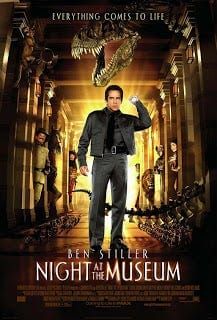
By the way, there’s no hard and fast rules or scientific approach to generating tentpole movies. For example, who would have guessed that Night at the Museum (2006) would have become the success it’s become, generating $574M worldwide? At the time, it seemed like a typical mid-budget, high-concept movie starring a solid, but not A-list piece of talent (Ben Stiller). But now, at least as far as its studio, 20th Century Fox, is concerned, this is a tentpole movie, spawning at least one sequel (Night at the Museum 2: Battle of the Smithsonian), and depending upon how that movie does, perhaps more.
Tentpole movies. Do you have one in your imagination?