The benefits of reading your script aloud
I’m teaching a 1-week online class called Scene Description Spotlight: Express Your Voice. It’s been great as we’ve really drilled down into one of the most basic aspects of what we do as screenwriters and TV writers: Write scene description that is not only effective and entertaining, but also an expression of our own writer’s voice.
Apart from 7 of my lectures, I also include writing tips each day. Here is the tip from Day 5: Read Your Scene Description Aloud:
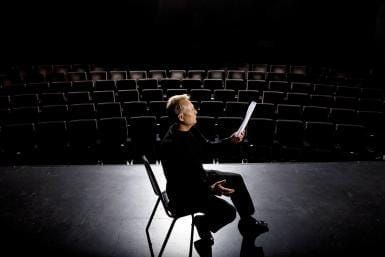
You’ve probably heard or read this advice: Read your script aloud. It’s great advice. Start from FADE IN, then go through it, line by line, all the way to FADE OUT. I do this several times in the latter part of my final edits for each draft.
However there are other ways to use this same technique to your benefit.
For example in my Core V: Dialogue course, we discuss how you can read aloud the dialogue in two different ways.
First, just read all of the dialogue, no scene description, for each scene, from the start of the script to the end. This allows you to focus on the back-and-forth interplay between characters.
Second, read aloud one character’s sides in their entirety. From start to finish. Here you are focusing on the flow and feel of that individual’s sides. You’re looking to see if there are any verbal habits unique to that character. Do they tend to end their sentences with a question? Do they use a lot slang? Are they prone to interrupt other characters or themselves, stop-starting topics? Do they swear a lot? And so on. Read aloud one character’s sides, all the way through the script. Then pick another character and do the same thing. Do this with every character. It’s a great way to look for distinctive verbal traits. And if you’re not finding them, that is every character sounds the same, then you will want to spend more time with each character — their background, family, work, education — how collectively those might be reflected in the way they talk, then go through their sides, massaging their lines to reflect their distinctive personality.
Here’s another way you can use reading aloud to help you: Scene description. Just scene description. No slug lines. No dialogue. Go through the entire script and read the scene description out loud. A few things to bear in mind:
* The sensibility you bring to screenwriting style, what I call Narrative Voice, should be consistent. That’s the first thing you look for in this exercise. Does your scene description sound like it’s coming from the same narrator, scene after scene?
* Just as dialogue will have a feel and flow to it, so, too, scene description. Be particularly mindful of this as you track what happens through a variety of scenes. If it’s a intimate interaction scene, does your scene description support that, slow things down, allow the characters to breathe, feel the moment? If it’s an action scene, does your description support that, pick up the pace, provide more pop and punch?
* If one of the things you do in reading dialogue aloud is to catch any lines which sound clunky or difficult for you to say — which suggests they’ll be hard for an actor to recite — similar thing with scene description. Readers can stumble over poorly written scene description, too, so you want to craft description that fits your genre and style, and develops a kind of rhythm and pace to it with zero interruptions caused by an awkward line.
Of course, reading scene description aloud is a great way to reflect on every verb. Can you find a better one? A stronger, more active verb? Same with descriptors. Is this the very best way to bring the visual you have in mind into the imagination of the reader?
So read your script aloud, all of it. But you can also use this exercise to break down the script into component parts to see how things are going with your dialogue and scene description.