The Power of “What If” Strikes Again!
An interview with ‘Zootopia’ writer-directors reveals inspiration for story.
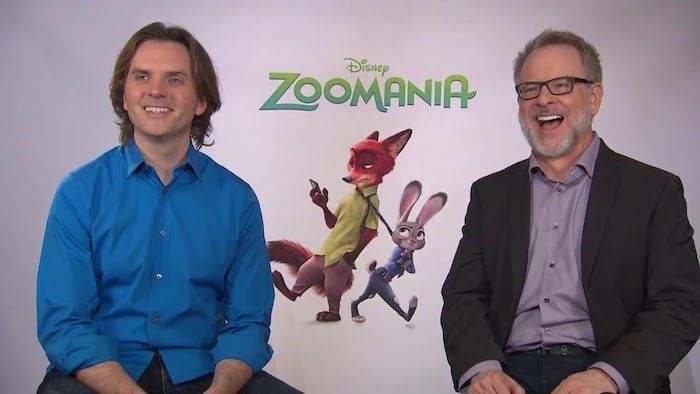
An interview with ‘Zootopia’ writer-directors reveals inspiration for story.
When a movie generates $1B in worldwide box office, it’s a good idea to study it to see what we, as storytellers, can learn from it. With Zootopia, we have been doing just that.
In November, we looked at how the movie worked with universal themes to connect with a wide audience, delving into primal cultural issues: bias and discrimination, and behind that, as one of the film’s writers and co-director Byron Howard said, how “every human being wants to feel safe.”
Just last week, we engaged in a week-long script reading and analysis of Zootopia — you can read the entire series of posts here — and in that discussion, we explored related themes such as stereotypes and individualism.
Now we can add something else to the mix: A recent interview with Howard and co-writer / director Rich Moore. In it, the pair reveals what lies at the heart of the story’s inspiration:
Zootopia came out earlier in the year, but it’s still stuck around around and in people’s minds.
RM: I was afraid that people would forget about us. It came out in early March and some people were like, “Zootopia, wasn’t that last year?” The making of the film feels like a really long time ago for me. As the award season kind of starts up and I’m watching the movie again, it feels like so much has happened since it came out, politically. And a lot has happened. It makes me feel like the film is still relevant. It’s relevant to the things that are happening, even more so than just eight months ago when it came out.
BH: This year has gotten crazier and crazier.
RM: Just when I thought that things couldn’t go one more step, they have. To be part of a film like this … I think that it’s unusual that an animated film takes on subjects of racism and bias and discrimination. And it’s really an honor to be a co-director with Byron on this film that takes on those very topics. It’s humbling to be part of the conversations in a way that animated films usually aren’t.
Was there any hesitation in constructing this whole allegory and wondering whether or not it would work?
BH: It’s funny, when I think it first occurred to us, it did seem that well this seems super risky to try to make a Disney comedy about bias and stereotypes and racism was going to be a good idea. But it evolved very naturally from our research into animals. We were in Africa and we were watching these animals around the watering hole and we saw this lion drinking next to these zebras, which it normally eats. But everyone is behaving and we thought, That’s just like a city, like a human city where two groups — predator and prey — don’t get along sometimes but they have to find a way to coexist [emphasis added]. Wouldn’t that be great if we thought of this as a 21st-century fable that talks about bias and discrimination and marginalization and personal empowerment? It got deep very quickly. We had an amazing professor named Dr. Shakti Butler who really took us into the depths of understanding the real roots of bias, and not just bias, but modern bias. It feels different today than it did back in the civil rights era or even back in the ’70s or ’80s. Bias can be very subtle sometimes. It’s not always the stuff that’s in your face that’s the most dangerous. When the film really started to deal with that, that’s when it started to feel very contemporary.
Watching animals around a watering hole. A lion drinking next to a zebra. Predator and prey coexisting. What if…
we thought of this as a 21st-century fable that talks about bias and discrimination and marginalization and personal empowerment?
Out of the single moment and those two words — what if — sprang the phenomenon which is Zootopia.
I’ve written about ‘what if’ before, but as Zootopia reminds us, there is real creative power in those words.
In case you missed it, Zootopia won the Critics Choice Award for Best Animated Movie in 2016. My bet: It wins the Oscar as well.
For the rest of the Howard and Moore interview, go here.