The primary function of a Nemesis: Opposition!
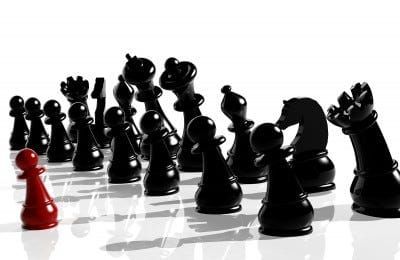
In my current one-week online Craft class — Write a Worthy Nemesis — this is where we began our ongoing forum discussion:
At their core, the main function of a Nemesis is Opposition. If the Protagonist represents forward energy, moving toward a goal, the Nemesis (or Nemeses) oppose that forward energy, push back, threatening to squash the Protagonist’s chances of attaining his/her goal.
There are so many excellent narrative elements which arise from this construction:
— Conflict: P v. N, conflicting goals, conflicting energy, conflicting personalities.
— Raising Stakes: The P may have a long journey in front of him/her to reach the Goal, but with an active Nemesis character(s) working directly in opposition to the P, that increases the odds against the P, which in turns raises the stakes of the story.
— Final Struggle: If the P has a Conscious Goal… and the N opposes the P in reaching that goal… almost invariably this sets into motion the culminating events of the story’s last sequence, a Plotline Point I call Final Struggle. Everything comes down to P facing his/her biggest challenge yet to overcome the N’s negative power / energy / dynamic, all with the Goal in sight.
There’s also this: A great Nemesis can be a role a name actor will want to play, an important real world consideration in trying to get a movie green lit.
So who is the Nemesis? Ask yourself these questions:
— Who or what is providing the most active opposition to the P?
— Who or what is involved in the Final Struggle with the P?
— Who or what exhibits negative energy / dynamic?
As we will discuss, there can be one Nemesis or plenty of them. They can be part of one ‘team’ or the mask of the Nemesis can be passed along from one character to another like a baton in a relay race. A Nemesis doesn’t have to be a human or sentient character, it can be a physical object like the ocean in Cast Away. It can be a psychological condition like cancer or a self-destructive mental dynamic.
But the key is who/what provides the main opposition to the Protagonist. That’s almost assuredly a Nemesis figure.
We have covered a lot of territory so far this week including why I prefer the term Nemesis to Antagonist, the Nemesis as a possible projection of the Protagonist’s shadow dynamic, how zeroing in on a Protagonist’s fears can help inform inform our understanding of a Nemesis, plus a set of insider tips to crafting a Nemesis including making sure they have a plausible world view and the importance of humanizing this key character.
Why so much focus on the Nemesis figure? The reality is that in most movies, the Nemesis is second only to the Protagonist in terms of their importance — to plot, themes, tone, everything.
If your story is lacking drama or edge, take a look at your Protagonist’s path. Are there characters providing opposition? If not, why not? If so, are you maximizing that opposition?
You would do well to spend as much time digging into and developing your Nemesis character(s) as you do the Protagonist. See if you can surface some emotional / psychological connection between Protagonist and Nemesis, then exploit that for dramatic purposes.
If you have a question or concern about the Nemesis / Antagonist character, I’m happy to take up the subject in comments.
Comment Archive