The Theology of Screenwriting, Part 6: Guilt
Last week and this, I am exploring theological themes in relation to screenwriting, considering them metaphorically because in my view, we see these themes in movies all the time. By understanding them, we can use these theological themes to enhance the meaning and depth of our stories.
For background on the general subject, you may read my introductory comments in Part 1 here.
Today in Part 6: Guilt.
Technically speaking from a theological perspective, guilt is being responsible for wrongdoing. It exists as a state, a consequence of having broken some sort of religious law. It is both a legal condition and an emotionally based one.
In his book “Wishful Thinking: A Theological ABC,” Frederick Buechner describes guilt this way:
The danger of our guilt, both personal and collective, is less that we won’t take it to heart than that we’ll take it to heart overmuch and let it fester there in ways that we ourselves often fail to recognize. We condemn in others the wrong we don’t want to face in ourselves. We grow vindictive against the right for showing up our wrong as wrong. The sense of our own inner brokenness estranges us from the very ones who could help patch us together again. We steer clear of setting things right with the people we have wronged since their mere presence is a thorn in our flesh. Our desire to be clobbered for our guilt and thus rid of it tempts us to do things we will be clobbered for. The dismal variations are endless. More often than not, guilt is not merely the consequence of wrongdoing but the extension of it.
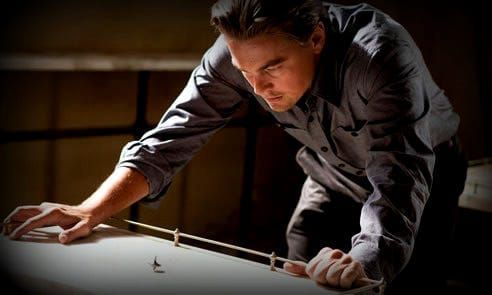
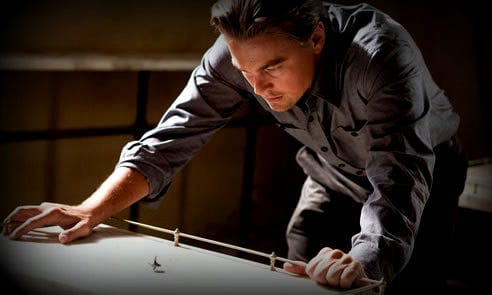
We do not have to get too metaphorical with this concept to see its relevance in terms of movies. Characters screw up. Or they have screwed up [in backstory]. That becomes a key to their state of Disunity, necessitating them to deal with the cause of their guilt. Movies like The Shawshank Redemption, The Verdict, and Inception to name but a few traffic in this arena.
Pixar uses guilt as a dynamic in many of their movies:
* In Toy Story, Woody feels guilty about his part in Buzz being knocked out the window of Andy’s room, setting into motion the attempted rescue of his astro-rival.
* In Finding Nemo, Marlin feels guilty twice over: for the death of his wife and all of their eggs [save one — Nemo], and Nemo getting lost, creating the need for his hero’s journey.
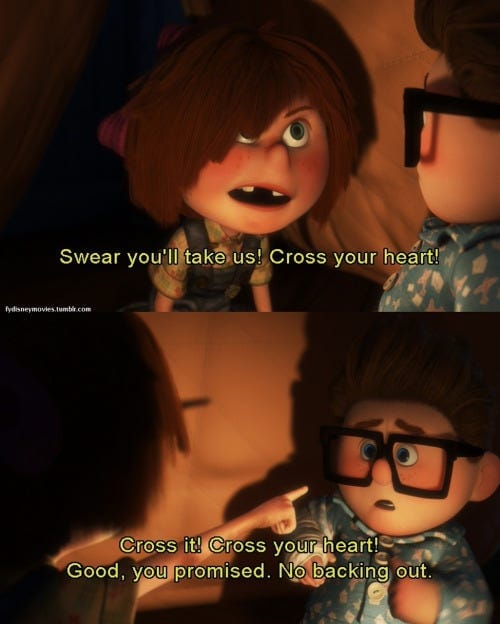
* In Up, Carl feels guilty for having never fulfilled his promise to Ellie, instigating his airborne trip to Paradise Falls in South America, the later for his role in Kevin’s capture.
One reason this is such a viable cinematic theme is how powerful guilt is. In The Silence of the Lambs, Clarice feels guilty for a heinous act — the murder of her father — an event with which she has zero culpability. That is logically. But in my view, Clarice assumes guilt over the incident because the other alternative — that the universe could be so random as to slaughter an innocent man who just happens upon a robbery in progress — is too frightening for a child to comprehend. That type of chaos, a child can not comprehend. Guilt is something they can own. Clarice does and projects the murderous fate of her father onto the slaughter of the lambs on her uncle’s Montana farm. Indeed I think the primary unconscious reason she goes into law enforcement in the first place is to create circumstances in which she can do something to redeem herself of the guilt tied to her father’s death.
What other movies can you recall in which guilt plays a significant part? See you in comments to discuss.
For Part 1: Sin, go here.
For Part 2: Conversion, go here.
For Part 3: Predestination, go here.
For Part 4: Salvation, go here.
For Part 5: Doubt, go here.
Tomorrow: Another theological theme in screenwriting.
Comment Archive