The Way In
A guest post from Tom Benedek, screenwriter (Cocoon) and co-founder of Screenwriting Master Class:
I have been working on a rewrite of a feature script. I am in the planning stagings — criticizing, brainstorming, second guessing. I am trying to crystalize so many important things to help make this story work. It’s getting there. The thing that really helped me the most is that I went into outlining all over again. I read through all the exercises and writing prompts from the Prep class Scott’s designed for Screewritingmasterclass.com. I teach this 4 times a year or so I should be familiar with it!
After going through the questions, I began to rethink my project, to brainstorm so more. And BOOM. HALLELUJAH. I made these leaps. I now understand why I am writing the script — what matters to me about the story. And what matters most to the characters in the story. From personal experience, I recommend our Prep class. Thank you, Scott Myers, for formulating this brilliant “way in” for all of us.
It came down to the situations of my characters, of course. And what matters most to them. Not just in the story, at this particular time, but to their cores. What they want may be the mechanics of the story, the here and now. What they need has to relate to their personal eternities — inner most fears, desires, the shapes of the lives they have lived.
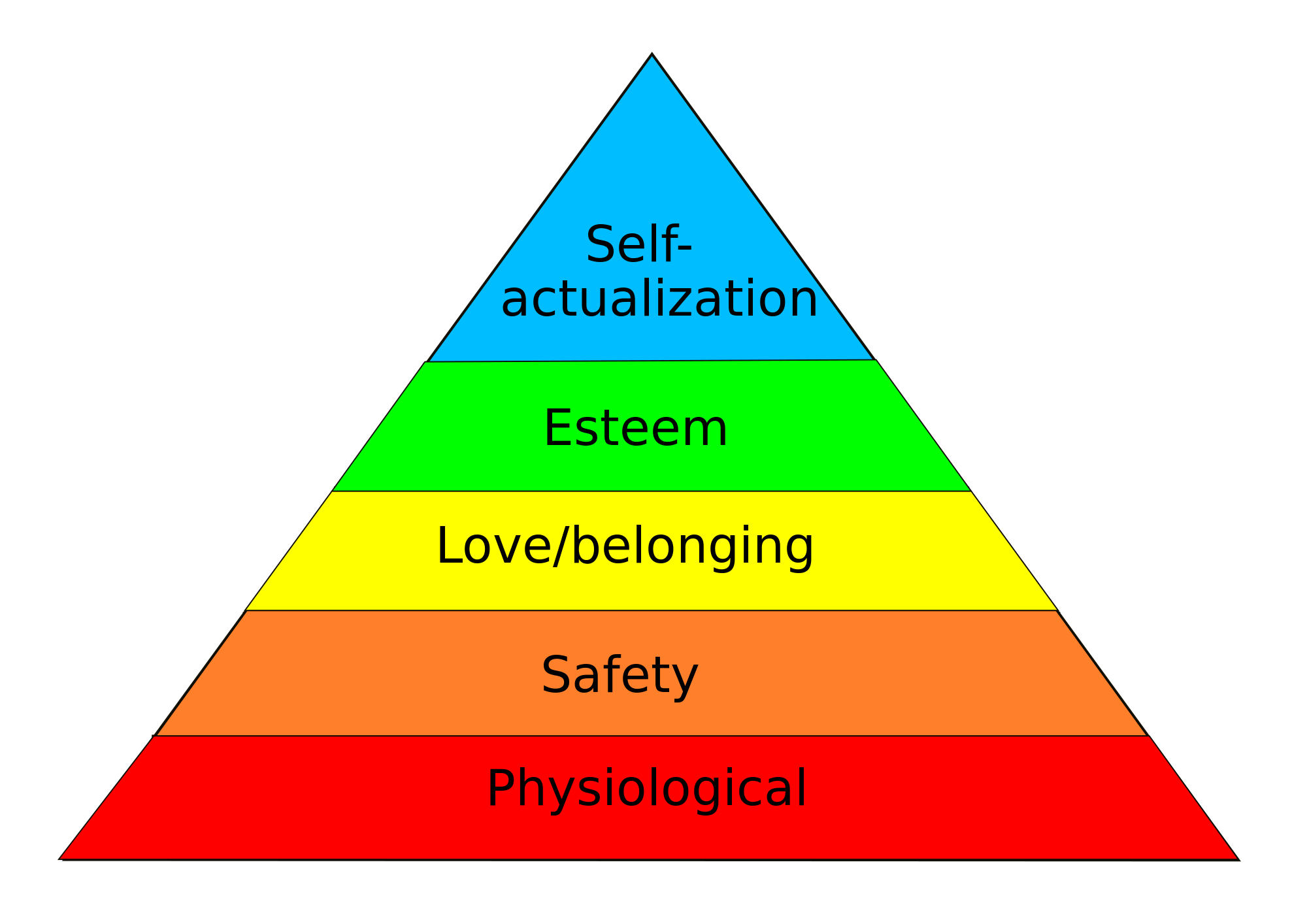
This message brought to you by… Maslow’s Hierarchy of Needs.
Read on if you want to get a bit wonky with all this.
The American psychologist, Abraham Maslow was not a screenwriter. But he had some things to say about want and need. He calls them deficiency needs and growth needs. His deficiency needs have to do with survival. His growth needs are all about the internal.
“Maslow called the bottom four levels of the pyramid ‘deficiency needs’ because a person does not feel anything if they are met, but becomes anxious if they are not. Thus, physiological needs such as eating, drinking, and sleeping are deficiency needs, as are safety needs, social needs such as friendship and sexual intimacy, and ego needs such as self-esteem and recognition. In contrast, Maslow called the fifth level of the pyramid a ‘growth need’ because it enables a person to ‘self-actualize’ or reach his fullest potential as a human being. Once a person has met his deficiency needs, he can turn his attention to self-actualization; however, only a small minority of people are able to self-actualize because self-actualization requires uncommon qualities such as honesty, independence, awareness, objectivity, creativity, and originality.”
So our characters work through the plot and have personal depth to climb up on the pyramid and grapple with those growth needs. Wonderful. I have a Prep class starting at Screenwritingmasterclass.com this Monday. It’s NOT a psychology class, but we may be drawing some story pyramids for a few minutes. Join me!
For more information about Tom’s upcoming Prep: From Concept To Outline online workshop which begins Monday, June 6, go here.