Interview: Lindsay Devlin (“Devil’s Due”) — Part 3
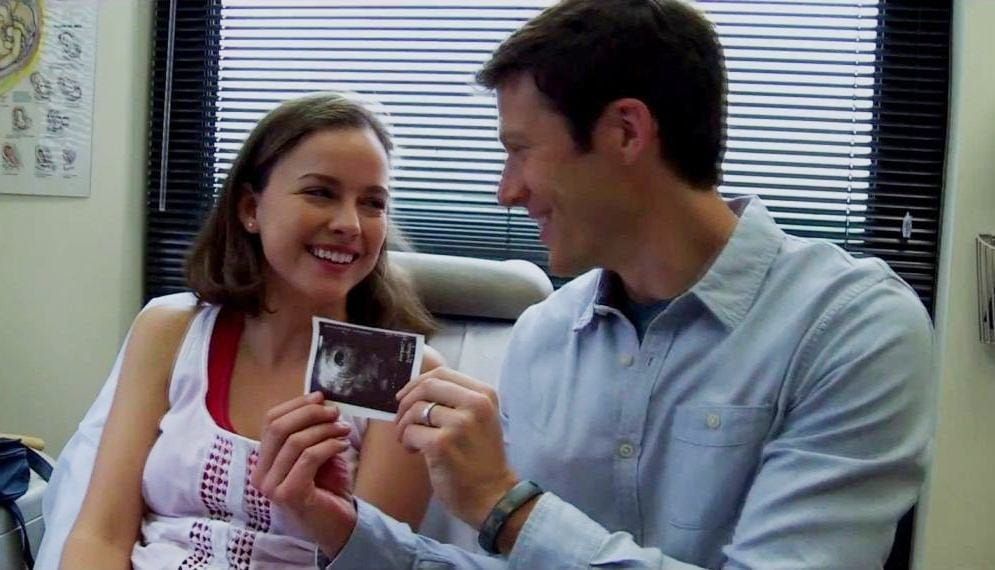
January has turned out to be a reliable month for Hollywood with regard to one genre in particular: Horror. This year was no different when Twentieth Century Fox released Devil’s Due, a movie that thus far has brought in over four times its production budget in box office revenues.
The movie’s success is one reason I was excited to interview its screenwriter Lindsay Devlin. Another reason is her extensive background working in Hollywood on the story development side of things.
Lindsay and I had a terrific conversation, and I’m pleased to share her many insights into the craft of screenwriting and the movie business, along with her creative process with the film Devil’s Due.
Today in Part 3, Lindsay talks about the challenge every screenwriter faces: How to wrangle Act Two, the middle of the story and the rationale behind the found footage aspect of Devil’s Due:
Scott: That’s so interesting what you were just saying, because you’ve got this great set‑up, which is due to this mysterious set of circumstances on the honeymoon. Samantha comes back and discovers she’s pregnant, which is shocking to her because she wasn’t expecting it, being on the pill. Then, almost immediately thereafter, there’s some clues for moviegoers where, well, this is may not be your normal pregnancy.
You’ve got that going on. Then you’ve got the ending, which inevitably is something to do with the delivery. Then there’s this whole middle part, which is always the challenge.
Hearing you talk there, it sounds like a part of how you structured that was thinking through that psychological dynamic of how each of them, and then the couple together, was starting to understand, or trying to cope with, what was going on as she’s getting more and more pregnant.
Lindsay: Yeah. Like I said, he switches from worried, to slightly paranoid, to full‑blown wanting to stop whatever is going on. For her, she instinctively, as a mother and as a woman, knows a little bit sooner that there’s something really wrong. The wedge that starts to happen between them is something that really fascinated me, too.
It’s heartbreaking, because you see how much they love each other from the beginning, but this other, this truly third party has taken over. It’s the elephant in the room, and she is trying so hard to understand it. At the same time, as you see throughout the middle part of the movie, she’s actually not fully conscious of some of the things she’s doing. Whether it’s eating the raw meat, or killing people. That’s not her in her conscious state, so there’s something terrifying in the fact that she’s lost control to that degree. Allison had a challenging role because she has to go through such physical turmoil and raw emotional states, and she did it with incredible grace.
Zach is just trying to be reassuring, but of course beneath that is like, “Oh, fuck. Something’s really wrong with my wife.” I thought their performances were wonderful and everything I hoped for when I was writing it.
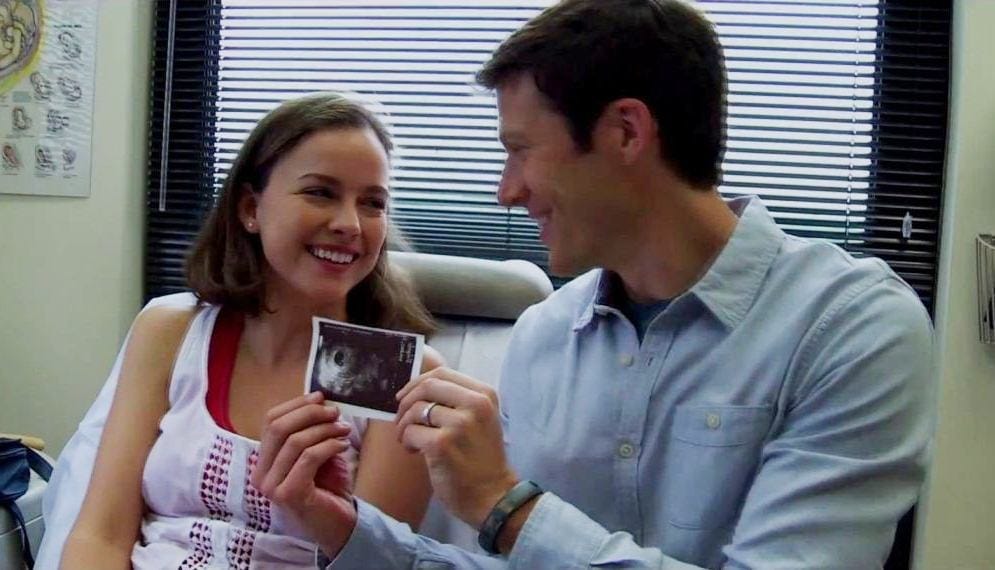
Allison Miller, Zach Gilford
Scott: That middle part again, what struck me about it is you took all those conventions about having a baby — fixing up the baby’s room and buying baby stuff and going to the OBGYN and baby showers — and explored them in the context of a horror thriller movie.
How much of that were you just going down the laundry list of, “OK, what are things that happen when you get pregnant in terms of preparing for the baby,” and used those and then spun them with this conceit that there’s something wrong with this pregnancy?
Lindsay: A hundred percent. That’s actually how I ended up approaching it before I even went to draft, was writing up a list of all those ubiquitous pregnancy things. All kinds of stuff that every expectant parent does.
It was a lot of fun to take especially things that should be joyful, like registering or the baby shower, and turning it into something terrifying. Yeah, it was actually one of the most fun things to do, is take all the joyous things and basically twist them into something a little bit perverse.
Because, I think, underneath it all there is, even in the joyous moments of pregnancy, there’s still the anxiety of, “Can we do this? How are we going to do this? How are we going to afford this? How are we going to survive this?” We tried to keep it always grounded in real life anxiety. But, knowing obviously that there’s a Satanic principle to this movie, we had license to go a little crazy, which was fun.
Scott: You mentioned earlier, you’re really more of a fan of psychological thrillers and supernatural dramas as opposed to horror. I would think that one of those challenges you would face particularly in the middle of the story is, “How do I build the tension? How do I sustain that?”
As a writer, how conscious were you of that, what horror fans might be anticipating and their need to have something go “whammo” every five or ten minutes, versus your own instincts where you’re drawn more towards psychological thriller?
Lindsay: I think it’s a balance. I definitely credit the directors for helping push me, because I developed several drafts with them. I certainly would say they helped push me maybe a little bit past my comfort zone. They would know, of course, visually what would work better than I would.
But ultimately, just like I would say about Paranormal Activity, I still think it is more psychological. You don’t have a ton of body count, a ton of blood. It truly still lives and breathes in this couple and in the tension and in the atmosphere. I’m sure people call Rosemary’s Baby a horror movie as well, but that movie is actually very slowly paced, very psychological.
I think it gets clumped into horror because the name Devil’s Due and because there’s a Satanic principle to it, but I still would stand by the fact that I think it’s largely a psychological thriller with horror elements to it.
Scott: It certainly builds toward a big, compelling ending. I’d like to discuss the whole found footage angle. First of all, did you always know you were going to write the story using video from available sources to tell it, and if so, what appealed to you about that?
Lindsay: Yeah. Actually, after I first had that dream and started playing with the notion of it. I did feel that it should be found footage, because I felt it was most authentic to the way couples are documenting their pregnancies and I felt like it had that modern twist.
Also, to be honest, I was conscious of the fact that no matter how we approached the story, there would be the inevitable comparisons to “Rosemary’s Baby”, and if it was just done as a straight narrative it would feel, obviously, more similar to that.
I felt this was a fresher, more modern, more youthful take on a pregnancy. I felt like it was very true to the way I had seen my friends document everything from ultrasounds to baby showers to the birth. I thought it lent itself to found footage.
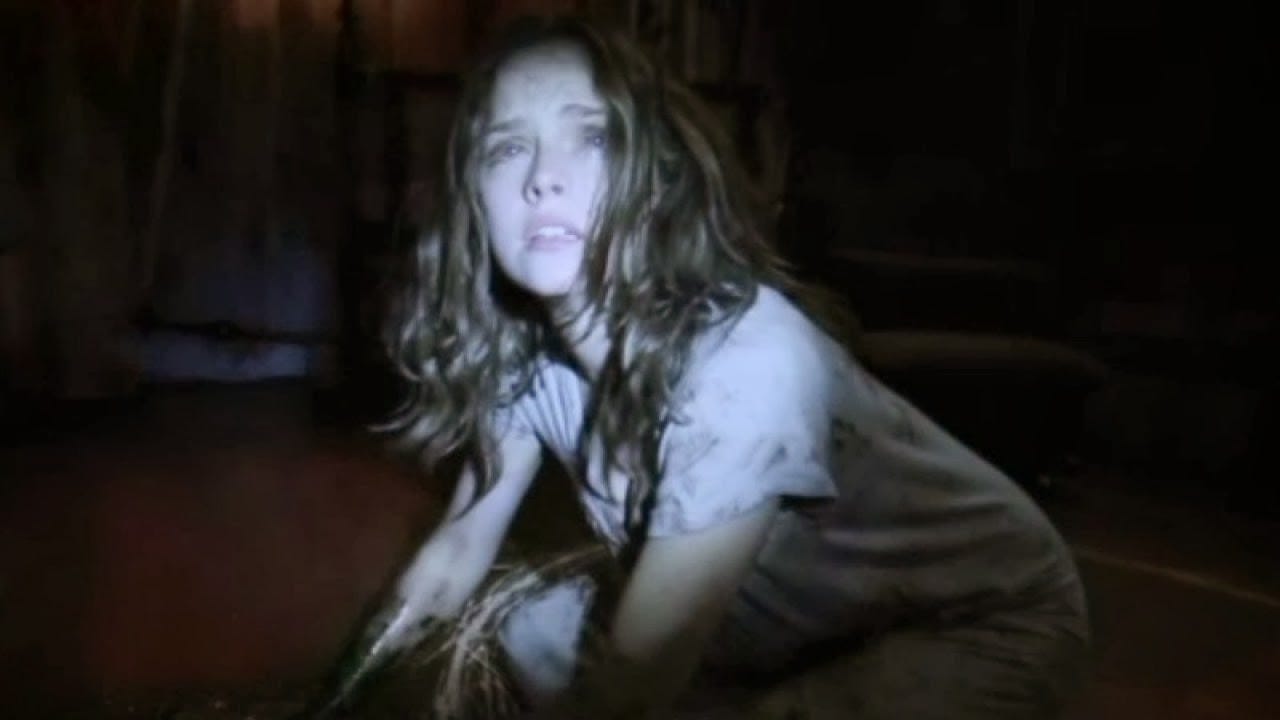
Scott: I’ve got a chicken and egg question here for you. You said earlier that very early on in terms of Samantha’s character, you had this idea that she didn’t have a family, she bounced around from foster family to foster family. That became the basis of this idea of them filming what they call a family history.
As I was reading the script, I was thinking, that’s really smart to give her that background, because that creates the internal logic you need for these found footage things, which is like, “Why are they taking all this video?”
I’m wondering which came first. Was it that you knew all along Samantha was going to have a background where she didn’t have the personal history that then set into motion this video thing? Or did you say, “I need to have a justification for why they’re doing this videotaping,” and go back and give that personal history to her?
Lindsay: It’s actually kind of a hybrid of the two. Because my instinct was to do it found footage, I think that I felt like documenting a pregnancy was a strong enough reason anyway. But I did feel like it would be better if there were a truly emotional component to why there might be this amount of coverage.
I also really felt like I wanted her to have a very specific and possibly surprising take on motherhood, not your normal, very eager-to-have-a-baby woman. I thought it was more interesting, and would be a psychological progression for she went into it not very excited ‑‑ grew excited ‑‑ and then it all turned on her. I was truly searching for a good character dynamic for the two of them, and I felt like this was a little bit unexpected, and I like that.
Tomorrow in Part 4, Lindsay wraps up some thoughts on found footage and lets us in on some other projects on her slate including a personal one that is likely to be her most important production.
For Part 1 of the interview, go here.
Part 2, here.
Lindsay is repped by UTA and Mosaic.
Twitter: @DevlinLindsay.
Comment Archive