Movie Analysis: “Casablanca” — Takeaways
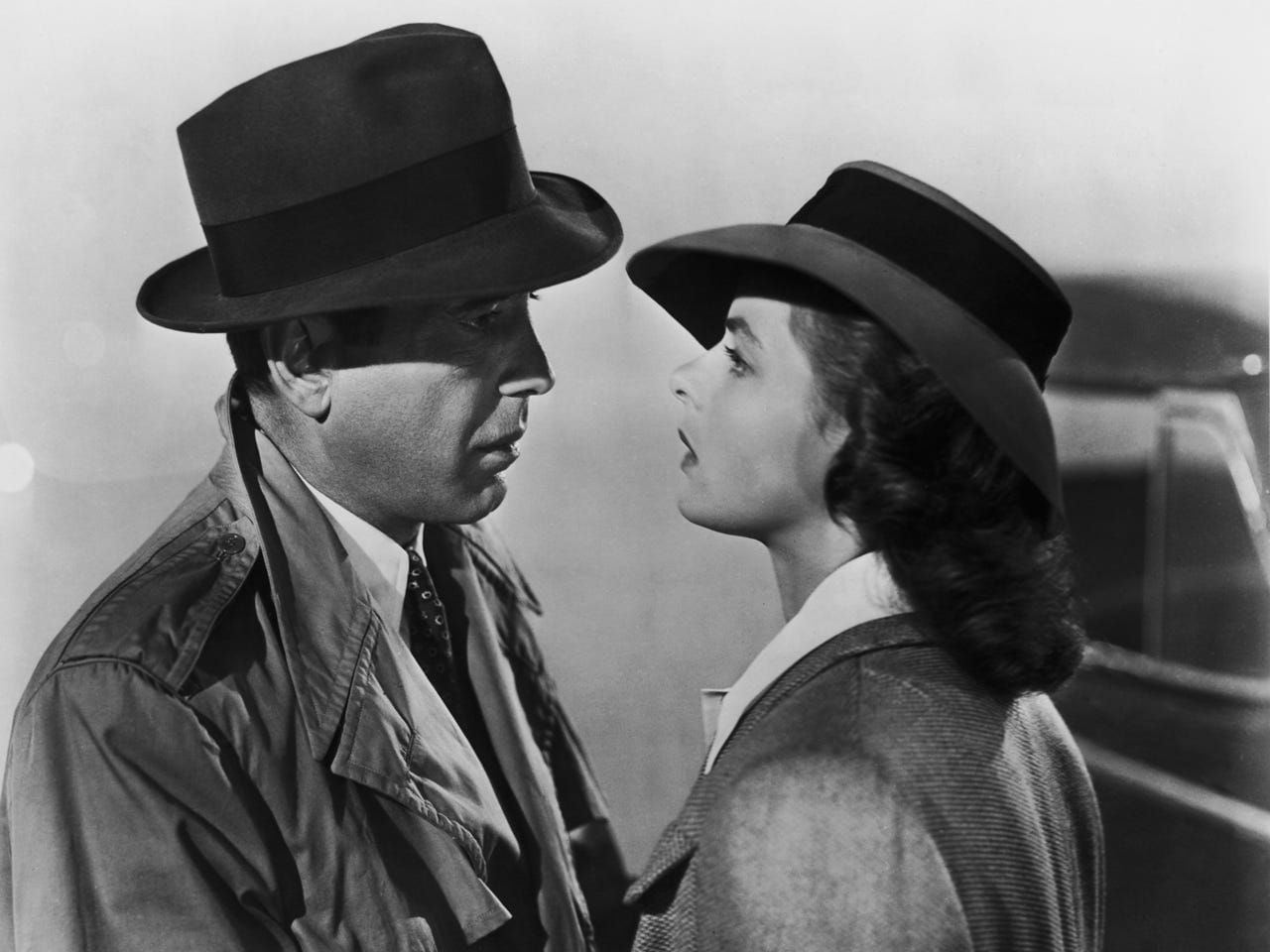
Another in our bi-weekly series in which we analyze movies currently in release. Why? To quote the writing mantra I coined over 5 years ago: Watch movies. Read scripts. Write pages. You will note which one comes first. Here are my reflections from that post about the importance of watching movies:
To be a good screenwriter, you need to have a broad exposure to the world of film. Every movie you see is a potential reference point for your writing, everything from story concepts you generate to characters you develop to scenes you construct. Moreover people who work in the movie business constantly reference existing movies when discussing stories you write; it’s a shorthand way of getting across what they mean or envision.
But most importantly, you need to watch movies in order to ‘get’ how movie stories work. If you immerse yourself in the world of film, it’s like a Gestalt experience where you begin to grasp intuitively scene composition, story structure, character functions, dialogue and subtext, transitions and pacing, and so on.
Let me add this: It’s important to see movies as they get released so that you stay on top of the business. Decisions get made in Hollywood in large part depending upon how movies perform, so watching movies as they come out puts you in the same head space as reps, producers, execs, and buyers.
This week’s movie: Casablanca, screenplay by Julius J. Epstein & Philip G. Epstein and Howard Koch.
IMDb plot summary: Set in Casablanca, Morocco during the early days of World War II: An American expatriate meets a former lover, with unforeseen complications.
Our schedule for discussion this week:
Monday: General Comments
Tuesday: Plot
Wednesday: Characters
Thursday: Themes
Friday: Takeaways
For those of you who have not seen the movie, do not click MORE as we will be trafficking in major spoilers. But seriously, if you haven’t seen Casablanca, stop whatever you’re doing and watch it! If you have seen Casablanca, I invite you to join me in breaking down and analyzing the movie.
So many takeaways from this movie. Let me start things out with a seemingly minor, but telling bit of craft from the filmmakers: While the main characters are well-drawn as distinct individuals, so, too, the secondary characters. Here are some of them:
Signor Ferrari
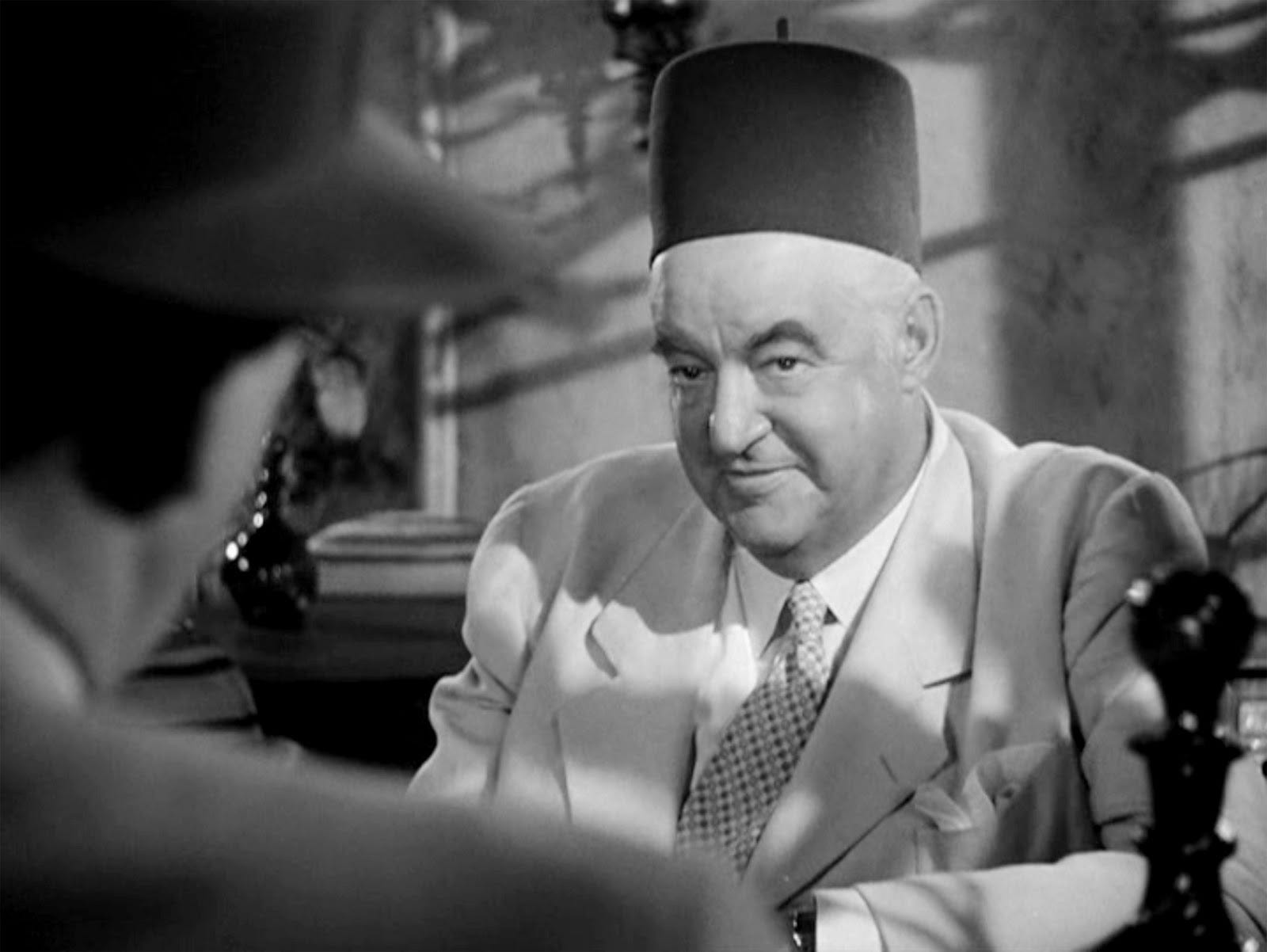
“Might as well be frank, monsieur.
It would take a miracle to get you out of Casablanca,
and the Germans have outlawed miracles.”
Ugarte
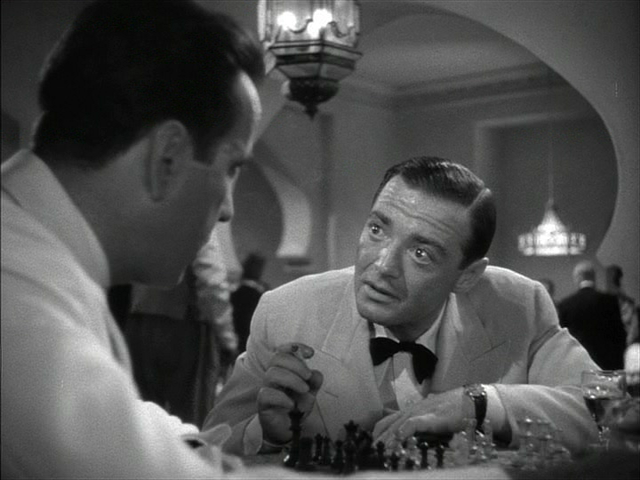
“Rick! Rick! Hide me, Rick!”
Carl
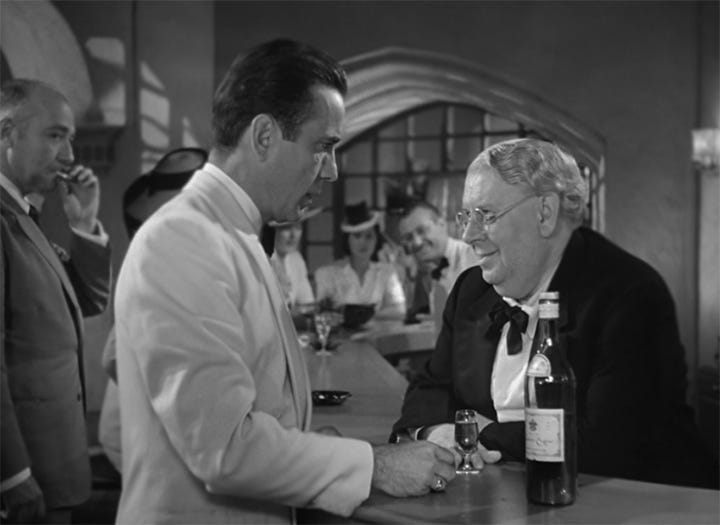
“I have already given him the best,
knowing he is German and would take it anyway.”
Yvonne and Sascha
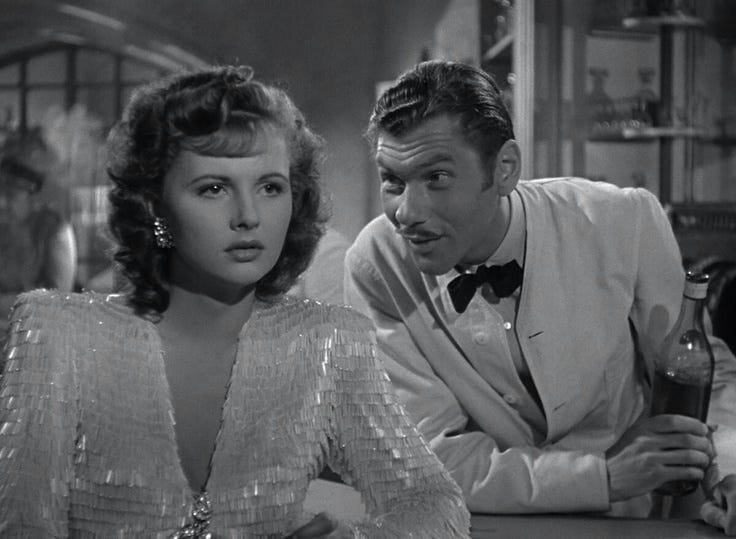
Yvonne: Don’t listen to him, Sascha. Fill it up!
Sascha: Yvonne, I loff you, but he pays me.
And of course…
Sam
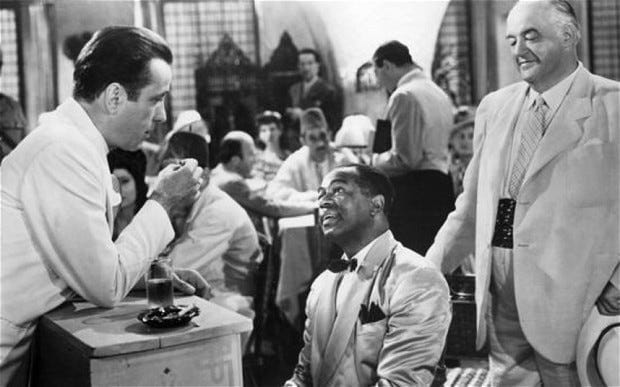
Sam: Boss, ain’t you going to bed?
Rick: Not right now.
Sam: Ain’t you planning on going to bed in the near future?
Rick: No.
Sam: You ever going to bed?
Rick: No!
Sam: Well, I ain’t sleepy either.
Each of these characters is distinct. Each is memorable. Each has their own subplot. Each has some notable dialogue. And each is entertaining.
Takeaway: In every script we write, we should strive to make all characters well-drawn ones, even the secondary characters.
What takeaways do you have from watching Casablanca?
Comment Archive