A Story Idea Each Day for a Month — Day 2
Another reason for you to be generating story ideas: The only way to find a great story idea is to work your way through a bunch of crap ideas. Ira Glass (“This American Life”), arguably one of the most knowledgeable people around today re storytelling, said this:
“You have to record and get rid of a lot of crap before you find something special.”
Same thing with screenwriting: You have to generate a bunch of crappy ideas before you find something special. Still don’t believe me? How about the wisdom of Linus Pauling:
“The best way to have a good idea is to have lots of ideas.”
And Linus Pauling should know, one of the few people to win multiple Nobel Prizes.
There are many ways to generate story ideas. This month, I focus on one: Looking for ideas in news sources. Each of the items I’ll be posting for the next 30 days comes from a news item.
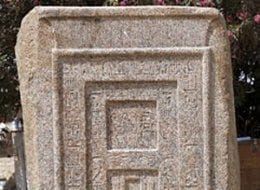
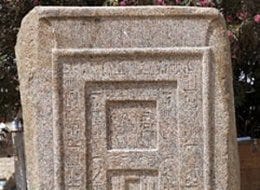
Today’s story idea: Ancient Egyptian ‘door to afterlife’ found:
CAIRO — Archaeologists have unearthed a 3,500-year-old door to the afterlife from the tomb of a high-ranking Egyptian official near Karnak temple in Luxor, the Egyptian antiquities authority said Monday.
These recessed niches found in nearly all ancient Egyptian tombs were meant to take the spirits of the dead to and from the afterworld. The nearly six-foot- tall (1.75 meters) slab of pink granite was covered with religious texts.
The door came from the tomb of User, the chief minister of Queen Hatshepsut, a powerful, long ruling 15th century B.C. queen from the New Kingdom with a famous mortuary temple near Luxor in southern Egypt.
User held the position of vizier for 20 years, also acquiring the titles of prince and mayor of the city, according to the inscriptions. He may have inherited his position from his father.
Viziers in ancient Egypt were powerful officials tasked with the day-to-day running of the kingdom’s complex bureaucracy.
There have been the hugely successful recent Mummy movies:
The Mummy: Tomb of the Dragon Emperor (2008)
So as you brainstorm this initial story conceit, you have to be mindful of those. But you could make the door of any origin you want, not Egyptian (e.g., Mayan, Chinese, Nordic, unknown).
The bigger point: What if this door allowed a person to enter an actual afterlife?
And perhaps start your thought process with this question: What would you do if you could visit the afterlife?
You can go in a bunch of directions per the type of afterlife you choose to create for a screenplay. Staying away from the Egyptian angle because of the Mummy series, look at what believers of the ancient religion Zoroastrianism believed about the afterlife:
Zoroastrianism states that the urvan, which is the disembodied spirit lingers on earth for three days before departing downward to a kingdom of the dead, which is ruled by Yima. For the three days that it rests on Earth, righteous souls sit at the head of their body, chanting the Ustavaiti Gathas with joy, while a wicked person sits at the head of the corpse, wails and recites the Yasna. Zoroastrianism states that for the righteous souls, a beautiful maiden, which is the personification of the soul’s good thoughts, words and deeds, appears. For a wicked person, a very old, ugly, naked hag appears. After three nights, the soul of the wicked is taken by the demon Vizaresa (V?zar?ša), to Chinvat bridge, and is made to go to darkess (hell).
Yima is believed to have been the first king on earth to rule, as well as the first man to die. Inside of Yima’s realm, the spirits live a shadowy existence, and are dependent on their own descendants which are still living on Earth. Their descendants are to satisfy their hunger and clothe them, through rituals done on earth.
Rituals which are done on the first three days are vital and important, as they protect the soul from evil powers and give it strength to reach the underworld. After three days, the soul crosses Chinvat bridge which is the Final Judgment of the soul. Rashnu and Sraosha are present at the final judgment. The list is expanded sometimes, and include Vahman and Ormazd. Rashnu is the yazata who holds the scales of justice. If the good deeds of the person outweigh the bad, the soul is worthy of paradise. If the bad deeds outweigh the good, the bridge narrows down to the width of a blade-edge, and a horrid hag pulls the soul in her arms, and takes it down to hell with her.
Misvan Gatu is the ‘place of the mixed ones’ where the souls lead a gray existence, lacking both joy and sorrow. A soul goes here if his/her good deeds and bad deeds are equal, and Rashnu’s scale is equal.
Perhaps the Protagonist can go back and forth between this life and the afterlife. Or you can amp up the stakes by allowing the Protagonist to enter the afterlife, but not be able to return — unless they can do [insert goal here], akin to the spec script Hellified that sold last year — where a group of soldiers is killed, then their souls are sent to Hell in order to accomplish a goal.
Or do you go more of a fantasy route where the Protagonist’s appearance in the afterlife creates some sort of disequilibrium that could impact what happens there — and on Earth (perhaps a dual track story).
Of course, there have been comedies dealing with the afterlife such as Heaven Can Wait (1978), so is there a way to spin this to mine some humor? A buddy comedy or Judd Apatow treatment of a group of man-children accidentally stumbling into heaven, hell, or both? Here’s your pitch: “It’s The Hangover meets Defending Your Life!”
Or do you go the family-adventure route: The Goonies in Heaven?
Or imagine what Charlie Kaufman would do with something like this — the door a variation on the portal into John Malkovich’s mind in Being John Malkovich (1999) crossed with parallel realities from Eternal Sunshine of the Spotless Mind (2004). Would it work as a quirky relationship dramedy?
Action, thriller, comedy, drama, supernatural — you can go a lot of different ways.
What would you do with this story conceit? Where does your imagination take “Afterlife’s Door”?
Tomorrow another story idea pulled from the news.