Go Into The Story Interview: Omar Al Dakheel and Elie El Choufany
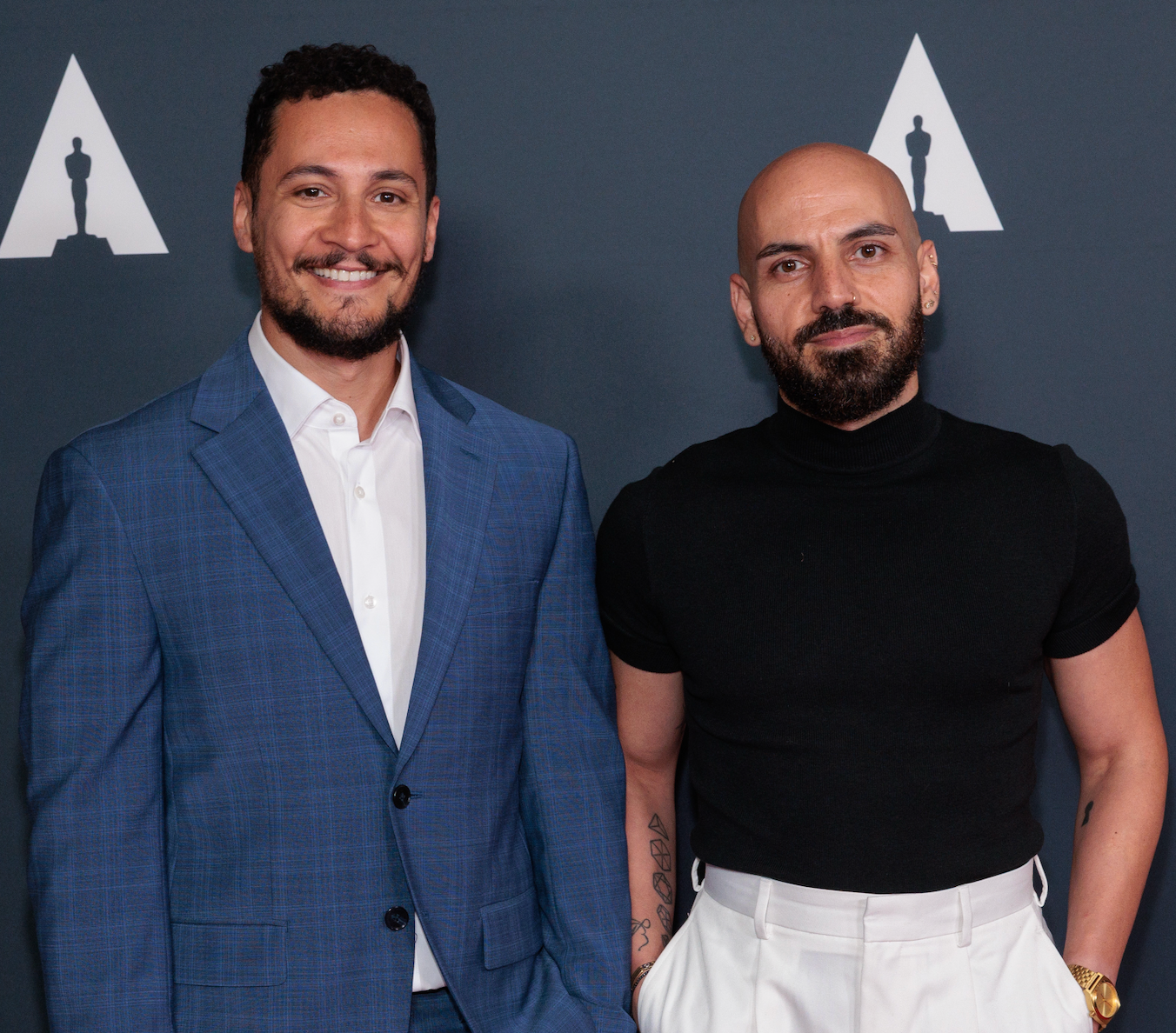
Omar Al Dakheel and Elie El Choufany wrote the original screenplay The Washroom which won a 2025-2026 Nicholl Fellowship in Screenwriting. I had an hour-long conversation with the pair exploring their creative backgrounds, analyzing their Nicholl-winning screenplay, and a discussion of key aspects of the screenwriting craft.
Here is my Go Into The Story interview in its entirety.
Scott Myers: Congratulations for being named Nicholl fellows this year. I'd like to begin our conversation just getting some background on each of you. Elie, let me start with you. I believe you grew up in Lebanon, is that right?
Elie El Choufany: Yes. I was born and raised in Lebanon until I was 20. And then I actually came to LA for eight months and did a couple of workshops, writing and directing workshops at New York Film Academy. And I thought at that time that I wanted to be a director, but after I did the workshop, the writing workshop, I realized that writing's where my heart is. I applied to the London Film School, and I got my master's degree in screenwriting there and then after I graduated, basically I got an opportunity to work on a feature film with Lionsgate. So, I packed my bags and came here.
Scott: Let's jump back a little bit here. You're growing up in Lebanon. There was a civil war going on.
Elie: Yes. up until I was, like, five and a half years, my family and I lived in an underground bunker, basically. It was, like, the neighborhood shelter. And my parents owned a VHS store literally right above that shelter. So, I figured out where they hid the keys, and I would wait for everyone to fall asleep, and I would go upstairs, and I would watch movies and it was one of the safest places that I found during my childhood.
Yeah. And I even remember one of the first movies that I saw was 2001: A Space Odyssey. And, I saw the potential of going to space, and I was like I want to do that. I want to be there." That really spoke to me and set me on a course to find myself in film.
Scott: And how amazing it is that movies can transport us, completely take us out of our lives. Here you are in Lebanon, a civil war going on. You could go upstairs, pick out a VHS, pop the tape into the VCR, and boom, you're in a different environment.
Elie: I think that's the rare piece of magic that still exists in, in the world is art and cinema has the ability to not just transport you to a different world but shows you really the potential of what it means to be human.
And I think that's what is captivating to me is that I genuinely didn't think it was possible to live anywhere outside of war, and fear, and violence. And movies showed me the potential for fear to become strength for violence to become kindness and being able to not just change, transform how you see yourself and how you see the world around you
Scott: Very well said. Thanks for sharing that. Omar, I think you're from Kuwait originally.
Omar Al Dakheel: Yeah. Kuwait born and raised, and I came to the US, I was almost 18 when I came here. I came here for college. I got a scholarship from Kuwait. For undergrad, I studied broadcast journalism and theater at the University of Miami, and I loved both. In my last semester, I took a documentary class, and at the same time I was a production assistant for my friend’s short fiction film. I realized I loved the production side of it, but I also loved directing and story. I think that's, when you're growing up young you don't know what exactly attracts you about the whole craft. You don't know what directing is. You don't know, when you're a kid, you don't know what any of these things are. You just see something and you like it.
My family were not fond of cinema or movies or anything, but I had a cousin that was obsessed, and he would have a lot of those VHS tapes, and we'd watch a lot of movies. A lot of them are random films. And you know what's interesting is a lot of the films that I saw were, like, independent small films.
Or maybe they're not that small, in relatively speaking, they're not franchise. What's Eating Gilbert Grape, that was one of the movies that I really loved. It was just about this boy who's stuck in a small town taking care of his family, which in many ways is like The Washroom. It was the first time I saw Leonardo DiCaprio, and as a kid I genuinely thought he was a person with an intellectual disability. I didn't realize he was acting. The performance felt that real to me. It was incredible, so I was really fascinated about that.
Another film I saw around the same time was Dead Man Walking. I was probably too young to be watching it, but I loved the moral complexity between this nun and this inmate who's on death row. I was always captivated by this style of acting that feels almost like a documentary. It doesn't really feel like they're acting. So yeah, those are the kind of films I grew up with.
Watching movies stayed with me very much. And after I did journalism and I did theater, I was like, "Okay I do like the production aspect of it. I like the story aspect of it." And even when I was taking the acting classes, a lot of times me and the whatever, the acting partner, I would tell them what to do and the professor's “No, you can't do that. This is not your job." And it's like maybe that should be my job.
And so somebody that I met, he was doing film, and he's "You want to come on set?" And when I came on set, I was like, yeah, this is it. Because in my mind was being on set was a huge thing, but when you see it in one location on one day on one's little story, you realize, oh, this is actually doable.
And then I was like, okay what are the film schools, top film schools? And I applied for USC, got into the MFA in production program. And at USC, that's when I think I found my voice, which is as a Muslim man growing up in Kuwait. I grew up in Kuwait in the aftermath of the Gulf War, and later experienced another period of war in the region. That history was always part of the background of my childhood. I felt like there was a void, a lack of authentic stories told by people like me and Elie. And at USC, the shorts that I've done are what really opened the door for me in many ways. We can talk about more what, where it took me after that, but I think that's the best thing I found at USC.
It's not just a good film school or the best film school or whatever. I think it's the film school that I found to support everybody's voice and really want you to find your voice and who you are. I think that's the best thing that I got out of USC. The second-best thing was the people that I met.
But the first best thing is to have the courage, and it takes a lot of courage to be who you are, and I think that's the best thing that USC gave me.
Scott: Elie was thinking, "I'll be a director, but wait a minute, maybe I really want to be a writer." And Omar, you are more, you wanted to be--
Omar: I was like, I want to I thought I was going to be a I wanted to be either, like a reporter or as an actor. I liked those. I liked the journalism, I liked the news, but I also liked acting. But then I realized I like telling the story but telling it in a visual way. So at USC, that's when I found directing.
Scott: How did you two meet?
Elie: We actually had short films competing in the festival circuit, and we kept bumping into each other in different festivals. And it would be either my movie would win or his movie would win or my movie would win.
And we just kept bumping into each other over and over again. So, we ended up connecting and we realized that we actually live two blocks away from each other in LA. We started developing a relationship and decided to work together.
Omar: I just loved Elie's writing and the story that he wrote Towards the Sun and I remember seeing it at Austin Film Festival, and I it was very powerful. What I liked about it is it doesn't have a lot of dialogue, but it says so much visually, and that's the kind of storytelling I love.
And then after I did the shorts that I did at USC, Ablution, which is a little short about a Muslim father and his son, and it did really well in the festival, and I wanted to expand it. And then there was this thing, big thing in my community, the Muslim community, about burials, and, that my community was struggling to find plots, and I'm like, "Why?"
Then I dug into it, no pun intended, and I started researching it and learned about the difficulties some Muslim communities in America have faced trying to establish burial grounds that accommodate Islamic practices.
And Islamically, you have to bury right away. Basically like a green burial, no casket, no embalming. You bury right away and, you wash and you wrap the body. And Islamically it has to be facing Mecca. And the case that fascinated me was in Texas.
Now in the actual film, we do not talk about that specific town or anything because it is not just that town. When you do the research, it is in Virginia, it's in Ohio it's in many places. In Pennsylvania. It's in so many places where it's the Muslim community is working against the clock to bury, and they don't have place to bury because many American burial systems and practices weren't designed with Islamic burial traditions in mind.
Even though in the Constitution there's freedom of religion and supposedly should be everybody, practice their rituals according to their own faith. I was fascinated. Then I was like, "Okay what if I combine these two?" But I didn't know. It was just an, a vague idea.
And then I was like, "Elie, wanna grab coffee?" And then it was like a brainstorming session. I was like, "There's these things that are happening," and Elie, was thrilled, and then we started writing.
We put pen to paper, and we're not going to show you the first draft because it was a big mess. But the characters and what we were trying to say was always the same.
Elie: We have, I think, dozens of drafts. At this point, we've been writing the story for, I think five years now. But I think what has always been clear to us is that this is a story about identity and about belonging and about what the meaning of home is. And what we really have been trying to do is tell a human story that transcends religion, that transcends culture even though it is set in a specific space with a specific culture and a specific religion, but it really speaks to human nature.
The idea has always been to put our lived experience. I grew up queer in Lebanon and, besides the war and everything, that was like an internal war happening in my life. Oh, and trying to translate that onto the page where hopefully we can, relate what it means to be yourself.
Like Omar was saying, like it is the hardest thing to do because it takes a lot of courage. And the process of finding yourself is a painful process. That's what has always been clear to us for The Washroom is how do we get Waleed to go through the process of finding himself in a community that asks him not to.
Scott: Let's jump into it. The Washroom, the script you wrote that you won the Nicholl on. Here's a logline.
"In a small Texas town, a young imam fights for his community's right to bury their dead while hiding a forbidden love that threatens to cost him everything."
I think, Omar, you were the one who discovered this storyline that was in Texas, is that right?
Omar: The burial story that first fascinated me was in Texas, and because I come from a documentary background, I started researching the issue more broadly. But we're not, again, we're not talking about that specific case. No. What fascinated me about Texas was that people were fighting over this small piece of land in a state with so much space.
I thought that was ironic, and I thought the same thing about places of worship that speak of mercy and compassion, where there can still be little room for queer love. To me, the story is about space physically and also spiritually, metaphorically.
Scott: When did the queer aspect of the story emerge? Was that right there from the beginning?
Omar: Yeah, the queer aspect was there from the beginning.
Elie and I sat down and, And again, I did a short called Ablution, which was a very a very a very early seed about this disabled Muslim father and his son is closeted, and he takes care of his father, but then the father finds out, and then he has to choose between his son or God.
But what if your son is the only way that you can worship God because of your disability? And so that was an early seed. Elie already knew about that short, and then I told him about the setting in Texas. And then we started brainstorming.
I was like, "Okay what if, the person actually fighting for this cemetery or, this piece of land is actually closeted Muslim man." So he's, he's fighting a battle from outside and inside. It's about belonging externally. Internally, it's about belonging in life and in death.
And also, like Elie said, it's also about home because the thing about cemeteries and burials, once you put a headstone, that's home. That's where the place you're connected. That's home. That's where your ancestors are. And when Muslim communities encounter resistance around something as fundamental as burial, it raises a much bigger question: are we being given the space to truly belong? Because once you bury your family somewhere, once you place a headstone there, you're saying: this is home.
So it becomes bigger than a dispute about things like drainage or land use. For us, it becomes a question of belonging.
Elie: I would also say on a writing level, we were both, wanting to write a story that scares us a little bit because there's the best stories are the stories that scare you because there's a level of vulnerability-.
In it that doesn't, that pushes you to face some of your own fears, some of your own experiences some of the stuff that has been holding you back. And we've had discussions about what it really means to write a story like this.
Like once, once it's out there, it's going to have an impact on both of our lives for sure.
So there, there is something to be said about again, it's, and now we are brave enough to be ourselves, and we need that extra bravery to write a story like this and set it to the world.
Scott: That leads us to your story's protagonist, Waleed. Could you talk about that character and where he starts his journey at the beginning of the story?
Elie: In the beginning of the story, Waleed wants to be a dutiful son. He grew up in a space where a big part of him actually belongs. He loves the mosque. He loves his town. He loves the community. He loves his dad. So, he's coming from a place of love, but, But he's also in love with his childhood best friend. And that comes in direct conflict with what it means to be part of the community, what it means to be his father's son, what it means to be a Muslim man in Texas. In the beginning, he is hiding part of himself.
He is hiding his relationship with Hassan, and he cannot come to terms with what it means to be seen. That's where the story starts.
Scott: You could have set this in northern California or in Chicago, both welcoming environment for people of varying gender identities and sexual orientation. But Texas is a really interesting choice because of the state’s right-wing politics.
Omar: Texas has a large and deeply rooted Muslim community, and that was important to us. I also understand why people from the Middle East might feel at home there. The climate, the landscape, the oil culture, even certain aspects of the social culture, can feel surprisingly familiar.
And that's what makes it interesting dramatically. These aren't people saying, ‘We hate Texas, let's leave.’ They built their lives there. They love their communities. So the question becomes: can you deeply love a place and still struggle with the parts of it that don't fully make room for you? That's also Waleed's relationship with his Muslim community.
Scott: The way you introduce Waleed at the beginning of the script. The first two scenes, he's fixing a light fixture in the mosque. Then in the next scene he's trying to deal with a water leak in the women's section. That sets into motion two storylines. One is that there's a financial concern. The mosque doesn't have the financial means to deal with an issue that they've got with not having the property to do the burials because the cemetery is full.
But that it also deals with the issue of the women. So, talk about that. How did that come about in the terms of the writing?
Elie: The narrative of the women's section always belonged in The Washroom because I think what we find most interesting is the idea that two truths are always cohabiting, and it's not just Waleed is fighting to belong, but the women are fighting to belong in the same way. And both things are happening at the same time. And there's also the idea of how gender plays a role, not just sexual identity within the community. And what is interesting, too, is that there are these fights for belonging and identity happening all over.
And through Waleed's eyes we begin to see it a little bit more. And it just sheds a little light on how everyone is the same. Everyone's fighting the same battle. Everyone's wanting to be seen. Everyone's wanting to be loved in different ways. And choosing to see it and do something about it makes all the difference.
Scott: I was struck by, like literally these are the first words in your script. He’s in mosque, prayer room.
"Bends a sea of intricate carpet woven with deep blue and gold, stretches beneath a domed ceiling of stained glass. Sunlight filters through, fracturing into a mosaic of shifting colors, a celestial painting cast onto the floor."
Very visual writing, right?
"Above, sweeping Arabic calligraphy encircles the dome. Quranic verses flowing like waves and gold leaf tracing the curve of the heavens."
Quote, "Indeed, with hardship comes ease."
And doesn't that describe Waleed’s journey?
Omar: It is exactly that. That's one of my favorite verses in the Quran, إِنَّ مَعَ الْعُسْرِ يُسْرًا. It's a beautiful verse. Every time you feel like life is getting really tough, it gives me solace to think of that and be like, when it becomes really hard, that ease will come.
You just have to go through it. And, Yeah, there's a lot of things that we were trying to show about the beauty of Islam and the beauty of the Muslim community because we don't want this story or this film to be like, "Okay, why don't you just leave?”
When someone says, ‘Why don't you just leave?’ I always think: leave what exactly? Your faith? Your country? Your family? Your community? It's not that simple. It's more complex than that. I think the idea that we all circle around is belonging. And to me as a Muslim man just because I disagree with a lot of the things in my community, which is Scott, what you mentioned earlier, we're trying to show from the woman's section and from the fixer and all of that what the, what we're trying to say, the, the subtext is that there is issues internally within the mosque.
They're fighting the battle with the outside world, with the cemetery and everything, but there's issues like the women’s section, and so even when the plumber comes in, it's like, this place is--
Scott: It’s rotting.
Omar: Yeah. If you let it, it's going to be destroyed from inside. So that's what we're trying to say, is that there's issues internally and you have to fix them. The same thing mirrors the Waleed's journey, is him fighting for other people and carving space for other, literally space, physical space for other people while denying space for himself in this journey and hiding who he is until the end.
And unfortunately, that denial ultimately has devastating consequences. I think that verse is really beautiful and there's a lot of things in the story, even in the sermon and other things that also we're trying to exemplify the beauty of Islam. We never wanted this to be a judgment of Islam, Texas, Christianity or any community. We wanted it to be a complex human story. And if there's hope at the end, it's the possibility that there can be space for everyone.
Scott: You're talking about identity.
Omar: Yeah.
Scott: I'm going to jump to the end. Waleed is by himself and the very last line is, "He lets himself be."
Omar: Yeah.
Scott: That reminded me of Carl Jung who said, "The privilege of a lifetime is to become who you are." It's not the doing, it's the being, right? And I was struck by that in this story. It’s specific to Waleed, but it does speak to this, the universal truth of how each one of us is tasked with just discovering our own self.
Elie: There were a lot of decisions that we consciously were trying to make in order to tell the story without it being political or centered around religion. I think one of the biggest challenges is how to tell the story without it being a cast of judgment on any shape or form of culture, religion, sexual identity, and stuff like that.
And we toyed with the idea of him running away, what that would look like. We toyed with the idea of him staying. We really tried to explore how best to bring about his becoming.
And what resonated the most was taking a breath and allowing, existing in the present and allowing yourself to breathe because in our shared experience when you are holding yourself back from fear, it feels like you're holding your breath.
And it feels like you're suffocating, and you do it long enough, you no longer recognize that you've been suffocating. I think it was important to us to have him breathe at the end to let go all of the things that he's been holding back. And that's our way of us showing that the answer is not the running, it's not the escaping. It's the becoming, like you said.
Scott: Let's pull a little more context on this. I don't want to give away key plot twists, but let's look at some of the other characters. You mentioned there is a father character, Khalid, who's described as “60s, wheelchair-bound, presence undiminished.”
Could you unpack the relationship with his father.
Omar: His father is the founding imam of this community, and Waleed's mother died when he was very young. And again, this is all the backstory of how the family couldn’t bury her according to their traditions, and that's when Khalid started building this whole community with his son. They're both very integral to this community. They're not on the sidelines. There's also expectation--
Scott: Get married and have kids…
Omar: Yeah, exactly. As Elie said, Waleed's deepest fear is being seen, especially by his father.
And he loves his father because his father is the one who took care of him, who was the one who raised him, who was the one who, defined him. And I think we all can relate to these things about our own fathers. At the same time, Khalid is physically dependent on his son because of his disability.
There are many things that make Khalid vulnerable and sympathetic: he's a widower, he uses a wheelchair, he's aging, and Waleed is his only son. There is also an interesting tension in that Khalid is physically dependent on Waleed, while Waleed feels emotionally trapped by Khalid's expectations.
Scott: There's a lovely scene in the washroom when he's bathing the imam who's died…
Omar: Yeah.
Scott: Khalid was saying, "You need to be really careful with this." It counterbalances the guy just basically saying, "Get married. Have some kids."
Omar: The father character is in many ways traditional, but in many ways is unconventional, too. We didn't want the stereotypical authoritarian Middle Eastern father. We wanted someone sympathetic, vulnerable and funny, but still strong and deeply rooted in his beliefs.
Scott: You set up the expectation, because Khalid is in such poor health, that he is going to die.
Omar: That's what everybody expects. It's easy to be cliche or to be predictable. But I think the story, which without giving it away, I think the way we end it, I think that's the most effective way in terms of telling the story that we want to tell. A lot of queer men struggle with this idea: ‘When my parents pass, then I'll live my life.’ But by then you've lost years of your own life. You'll miss life in between, and your parents are important to you. And I think you'd rather have an authentic real love, which is what the whole sermon in the beginning is about.
Scott: Oh, the original imam's sermon.
Omar: Yeah. That's the whole theme of the film. That's what we're trying to say. Real love has to exist when somebody sees the raw and real you, and not just the very crafted version.
Scott: Talking about real love leads us to another character: Hassan. This is a childhood friend, but more than a friend. Talk about that relationship between your protagonist Waleed and Hassan.
Elie: I think Hassan is the only person that's ever truly seen Waleed. And that is the basis of their relationship and their friendship, and they are both in a space where they are expected to fulfill their duty. They are expected to hold responsibility. And that goes in direct contradiction with what they want. If they uphold their duty, if they fulfill their responsibilities towards their parents and their community, then by default they can't be together. And I think this is not, I don't, I wouldn't say this is a strictly queer experience, but a lot of queer people grow up with a real fear of not being able to love the person that you love because it goes against what your parents expect from you or what your community expects from you. And that fear directs the rest of your life. And both of them, what I love about the story is that we can see that fear play out in different ways with Waleed and with Hassan, and they go in different directions with how that fear plays out. And we see the consequences of where that takes them eventually.
Scott: The scene where Waleed talks to his father about his feelings for Hassan. And his father is like, "Don't. You don't want to do this. It's going to ruin your life," right? You talk about courage. At that point in the story, Waleed has gotten to that point of courage, getting in touch with his true self, and confessing that to his father.
Elie: It goes also, it goes back to Jung like you mentioned before. Jung also says that fear is the adventure that the hero must take. And at the end of that adventure is a loss, and for Waleed, that loss is the mask that he's been wearing. It's not just his love. But he does lose the mask that he's been wearing his adult life.
Scott: I want to talk about water as a visual motif in the script. First, there's the leak in the women's section, the washroom itself, the ablutions. A big thunderstorm in the middle. And then at the end, the tranquil waters. Was that a conscious thing in the writing?
Omar: It was very conscious. Water represents cleansing and purification, but one of the ideas in the film is that there are things you cannot, and should not, cleanse away, including who you are.
Water also comes organically from the world of the story. It's part of ablution, the washing of bodies before burial, the cemetery's drainage issues, the leak in the women's section, the storm and ultimately Tranquil Waters.
So rather than imposing a symbol onto the movie, all of those images already existed naturally in the world. We just became very intentional about when water appears and what it means each time.
Scott: You had a lot of subplots at work there in Act Two. You've got the mosque and the cemetery. You got the mosque and the women's section. You got the Waleed and Hassan relationship. You got Noor, a woman who actually has feelings for Waleed. You’ve got a storyline involving the town’s mayor. A guy Christopher trying to scam some of the mosque’s property. How did you figure out all those subplots and wrangle the story structure?
Elie: We had a really strong understanding that what we wanted was a, a story about a community that's, that we explore through Waleed's eyes. So that we wanted to make sure that we make space for the community to live and act to. In terms of actually tracking we basically wrote down a version of the story from each character. And choice because, consequence, cause. Choice, cause, consequence, cause. And we were able to move Waleed through each of their narratives without breaking flow. It took a couple of tries to get it there. The tricky thing to do is when you see the story through each character's eyes, you're like, "Oh, but this is also important, and this is also important," and we had to kill a bunch of darlings and scenes that we loved to ultimately bring it to the bare bones and only to keep what is in service to Waleed's narrative. But while paying keeping the weight of each character's arc.
Omar: Also, if you notice, like it's always, like the POV of Waleed. We want to show just enough of the other characters to know that they have their own storylines. Like the mayor has an election to go through, Christopher’s expanding his farm, the women fixing their section at the mosque, too. We didn't want any of them to feel like caricatures.
But Waleed is leading a community, so by default he's constantly putting out fires. That allows us to glimpse all these other people's stories while remaining firmly in his point of view.
Scott: I think the script’s ending lands just right. It’s one of those stories where the ending really is the beginning of the Protagonist’s new life.
Elie: One of the things I love about film is when the movie ends and you leave the theater, wanting to talk about, “Oh, what's gonna happen? Where is he gonna go?” Oh, and having opinions about it, because it's not really close-ended. It doesn't give you a definitive answer as to- ... what's going to happen. And it opens up room for conversation.
That's really one of the best experiences about leaving a theater and watching a movie is having conversations about it, and I think that and, we again fought really hard to keep that end open because we had a lot of notes from different people being like, "Oh, but give us something," and we were always sure that it was going to be that.
Scott: Open-ended. Do you have an idea where Waleed is five years, ten years from now, or have you thought about that at all?
Omar: We thought about it, but we don't have to talk about it. Sequel.
Scott: Sequel. There you go. Thinking with your producer’s cap on! It’s an excellent script and I look forward to watching the movie in a theater. Congratulations. Let’s talk about your Nicholl experience. What was that process like?
Omar: This year it was different. It used to be it used to be an open submission and you submit, and then it goes through, I think, three rounds of readers. But this year the Academy decided that they have Academy partners that you have to go through their partners.
So for us, we went through Urbanworld, which was a fantastic screenplay contest that that we were a part of before. And what happens is that each one of these partners can submit one script from previous alumni and so we honestly, we didn't think much of it. Months later, "Oh, congratulation, you were selected, Urbanworld will submit your script to the Academy." Then we got an email about what was it? I forgot. Anyway we got an email about to make sure some sort of just like information about the script. And we're like, "Okay that's interesting. Maybe that means we're officially in the running."
And then the last thing is when they called us and they were like, "Okay, you got it," and then we couldn't believe it. Honestly, it felt like a shot in the dark because it is the most competitive screenplay contest in the world.
Elie: And I think they opened it to all branches of the Academy.
Omar: The first time they’ve done that. Not just the Writers Branch at the Academy, it's all nineteen branches. And it was the highest number of readers this time from previous years. So it was really incredible. It was surreal meeting everybody at the ceremony.
Scott: How was your Nicholl week in Hollywood?
Elie: It was really good, and really insightful to see what all the other winners wrote about, what kind of stories they're telling, where, what, how they brought their lived experience into their scripts, and it was really great to connect. And now, we have built relationship with all of them. Hoping to keep pushing each other to write and develop our stories.
Omar: It's also good to learn about the Academy, too. It's not just like people think of the Academy, the Oscars. There's a lot of things. We went to the archive, we went to the museum, we went to the library. It's like the resources and all the people that work there, it is really incredible to see that and this, big organization and the work that it does. To become a small part of that through the Nicholl Fellowship was incredible.
Elie: And then one of the most surreal moments was seeing our script in the library. because they add script to the library, and that was a real moment for us.
Scott: Very good. Congratulations again. Let me ask you a few craft questions starting with this: How do you come up with story ideas?
Omar: For me, ideas often come during late-night walks. Usually there are several things sitting in the back of my mind, and then something suddenly clicks. Elie is usually the friend I call and say, ‘Okay, I think I have something.’
I also come from a documentary background, so sometimes it starts with something real like a headline, an event, or person, that provokes a strong reaction in me. If something keeps bothering me or keeps me up at night, I try to follow that feeling and see what's underneath it. Usually there's a story there.
Elie: For me it always starts from my lived experience. I go to cinema wanting to understand something about myself or the world that I am struggling with. And I think the most compelling stories always hold contradictions in them. Oftentimes I look at what I'm struggling with and the two truths that I'm holding. Like for example, how can I love my family but also I can't be with, myself with them? How can I love other people but I don't love myself? And there are so many contradictions, and I think the most compelling stories always start from a character who is struggling with two truths that don't align. And I go from a character always. And I put some of my lived experience in there, not necessarily the actual experience but the emotional truth, right? Which is a great starting point because if I know what the emotional truth is, I know my theme, I know the end. And it's easier, for me it's easier to reverse engineer than it is to move chronologically.
Scott: In your script The Washroom, you’ve got a Nemesis character Arshad. You've got a Trickster character in Christopher. How do these characters end up in your script? Do they just bubble up naturally, or are you thinking "Oh, we need to have characters who provide this function"?
Elie: For me, supporting characters are almost always a reflection of the Protagonist and the journey that they’re going on, but it explores a different aspect of that journey.
That's how I can explore a theme fully. Because you know, like Noor, like Arshad, like Christopher, they're all trying to belong. They're all trying to find themselves. They're all trying to cement their identity. They're reflections, a different side of the coin. And to get the full picture you need to see both sides. So, all these supporting characters are reflections of Waleed and different aspects of the theme that make it rich and make it whole, otherwise it would be one-dimensional.
Scott: Let's talk about theme. This is one of those questions I ask, and a lot of writers say they don't think about it, themes just emerge. Then there are other writers who need to know the key themes of the story right up front. What about you, your thoughts about theme?
Omar: From the beginning, as soon as you're telling a story about people being denied the space to simply be, you're already talking about belonging. You can't tell Waleed's story —a gay Muslim man trying to remain within the community he loves—without confronting identity and the cost of being seen. So, I think it was very clear from the beginning what the theme is just by the world.
Elie: I would also say that a lot of our work almost always centers around identity and belonging and home.
Omar: Yeah.
Elie: It is second nature to always tell stories about identity, belonging, and home. It's actually the thing that drives us in a way because it's the thing that motivates a lot of our struggles in life.
Scott: You think of The Wizard of Oz. That's what Dorothy's journey was about. She doesn't feel like she belongs in Kansas, and she has to go on this journey to come back to a place she now calls home. Does that feel like an apt comparison to The Washroom?
Omar: I love it. Put that in the interview. Belong, that word, like The Wizard of Oz, there's a belonging. What a great comparison. Thank you for mentioning that. That is such an honor that we're compared to a classic like that.
Scott: Okay, last question: What single piece of advice do you have for people who are trying to grow as writers and storytellers?
Omar: Don't overthink it. Just write. We put so much pressure on the first draft to be good, when its job is really just to exist. Write the scene you see. Write the idea down. Keep going. Eventually you have sixty or seventy scenes and you realize, ‘Oh, I have a movie.’ Then you can make it better.
The advice I'd give my younger self is to pay attention to what scares you. Pay attention to what provokes you. Don't worry too much about what the market wants or what you think might happen if you tell the story, because the market changes constantly and most of the consequences you're imagining probably won't happen the way you think they will.
Follow your heart and write the story that nobody else can tell.
Scott: Elie?
Elie: I was going to say, if you're afraid, you're in the right place. But what I would also say is, I'm a big fan of intuition and that gut feeling. I think we tend to over-intellectualize and overthink. What I've been learning is to listen to that gut feeling and trust my intuition, even if it feels like I am moving in the dark. I'm definitely going to discover something new. Follow your gut feeling, follow your intuition wherever that takes you. And hopefully it takes you to a, a scary place that, that's a double whammy.
I have interviewed every Nicholl winner since 2012. You may read those interviews here: LINK.