Interview (Written): Suzanne Allain A Black List blog interview with Suzanne Allain: Her script MR. MALCOLM’S LIST was just chosen as the finalist from our most recent partnership with Warner Brothers. Suzanne has signed a two-step blind deal with Warner Brothers as a result of opting her script in on the site.
Daily Dialogue — May 16, 2015 “Pull my finger.” — Children of Men (2006), screenplay by Alfonso Cuarón & Timothy J. Sexton and David Arata and Mark Fergus & Hawk Ostby, novel by P.D. James The Daily Dialogue theme for the week: Famous Last Words. Trivia: Michael Caine based his performance on John Lennon. Dialogue On
The primary function of a Nemesis: Opposition! In my current one-week online Craft class — Write a Worthy Nemesis — this is where we began our ongoing forum discussion: At their core, the main function of a Nemesis is Opposition. If the Protagonist represents forward energy, moving toward a goal, the Nemesis (or Nemeses) oppose that forward energy,
How To Write A Screenwriting Book John August (@JohnAugust) tweeted a link to a blog post by Anthony Giambusso who wrote this nice piece of satire: How to Write a Screenwriting Book. I contacted Anthony and he agreed to allow me to feature it here. Do you have the dream of writing a successful screenwriting book,
Script Analysis: “Enough Said” — Part 5: Takeaways Reading scripts. Absolutely critical to learn the craft of screenwriting. The focus of this weekly series is a deep structural and thematic analysis of each script we read. Our daily schedule: Monday: Scene-By-Scene Breakdown Tuesday: Major Plot Points Wednesday: Sequences Thursday: Psychological Journey Friday: Takeaways Today: Takeaways. This
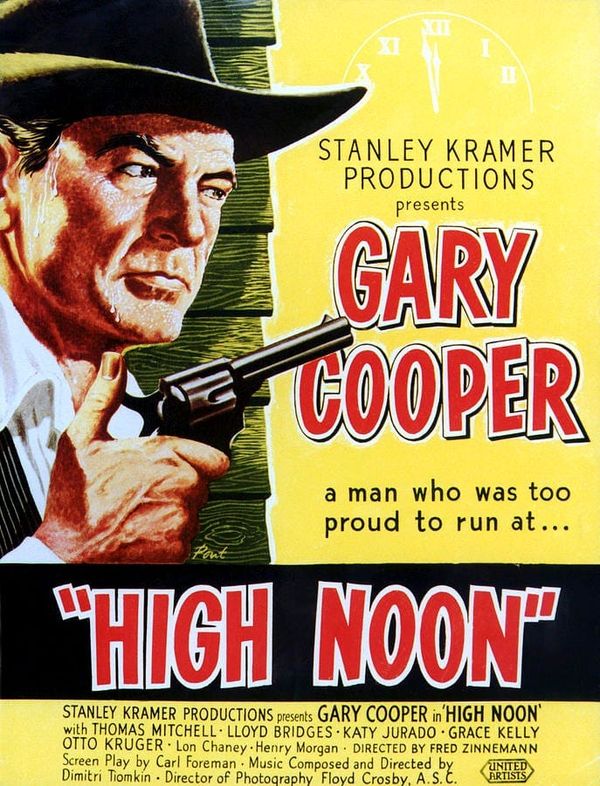
Classic 50s Movie: “High Noon” May is Classic 50s Movie month. Today’s guest post comes from Jeff Messerman. Title: High Noon Year: 1952 Writers: Carl Foreman (allegedly based on a magazine story called “The Tin Star” but that’s not entirely accurate…more on that later) Lead Actors: Gary Cooper, Grace Kelly, Lloyd Bridges,
Austin Film Festival Screenplay & Teleplay Competition From the good folks at the Austin Film Festival: Austin Film Festival Screenplay & Teleplay Competition Final Deadline: May 20 All submissions must be received or postmarked by 11:59PM PST on Wednesday, May 20 AFF’s Screenplay & Teleplay Competition is one of the most respected writing contests in
Daily Dialogue — May 15, 2015 “I hope that when the world comes to an end, I can breathe a sigh of relief because there will be so much to look forward to.” — Donnie Darko (2001), written by Richard Kelly The Daily Dialogue theme for the week: Famous Last Words. Trivia: The movie takes place in
Everything that’s new is old… everything that’s old is new Whenever we generate ideas or work on assignment, invariably the story has echoes of previous stories. Indeed, I don’t think I’ve ever seen a movie or TV show, read a book, perused a logline, or heard a pitch where one or more associations didn’t spring to mind.
Twitter Rant: John Gary on How He Used Query Letters to Find New Representation Tweetstorm: John Gary on How He Used Query Letters to Find New Representation If you are an aspiring screenwriter, Twitter is an amazing resource. For example last week, production executive Jeff Willis tweeted all about query letters. Soon thereafter, screenwriter John Gary posted a series of tweets about his own
Script Analysis: “Enough Said” — Part 4: Psychological Journey Reading scripts. Absolutely critical to learn the craft of screenwriting. The focus of this weekly series is a deep structural and thematic analysis of each script we read. Our daily schedule: Monday: Scene-By-Scene Breakdown Tuesday: Major Plot Points Wednesday: Sequences Thursday: Psychological Journey Friday: Takeaways Today: Psychological Journey.
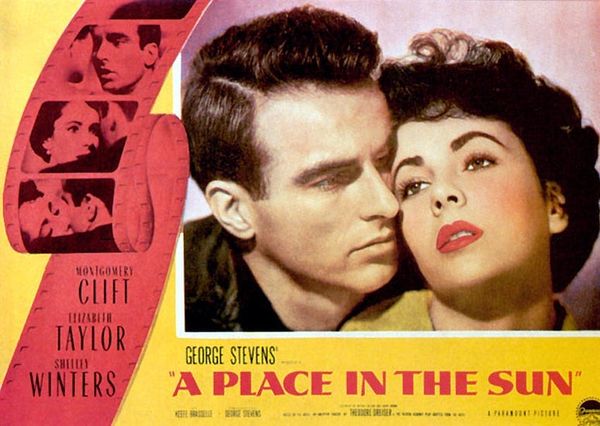
Classic 50s Movie: “A Place in the Sun” May is Classic 50s Movie month. Today’s guest post comes from Zach Jansen. Movie Title: A Place in the Sun Year: 1951 Writers: Based on the novel An American Tragedy by Theodore Dreiser and the Patrick Kearney play adapted from the novel; Screenplay by Michael Wilson and Harry Brown
The Business of Screenwriting: Everything you wanted to know about specs [Part 7] Spec scripts, that is. I’m guessing that perhaps 90% of the people who follow this blog at some point in their lives will write a spec script. And the other 10% are involved in buying and selling them. In light of that fact, last year I interviewed a top
Daily Dialogue — May 14, 2015 “No! I don’t want to die! Oh, please! I don’t want to die! Oh, please! Don’t make me burn in hell. Oh, please let go of me! Please don’t kill me! Oh, don’t kill me, please!” — Angels with Dirty Faces (1938), screen play by John
Creative Spark A guest post from screenwriter Tom Benedek (Cocoon), co-founder of Screenwriting Master Class. I had never done a workshop with kids before. The Academy of Motion Picture Arts and Sciences sent a request for mentors for the Spark program they run. Wednesdays from 2 to 4PM for 10 Weeks.
Spec Script Deal: “Pale Blue Dot” Fox Searchlight acquires drama spec script “Pale Blue Dot” written by Brian C Brown and Elliott DiGuiseppi. From Variety: The story follows a successful female astronaut who, after coming back home from a mission in space, starts to unravel when confronted by her seemingly perfect American dream life. The story
Script Analysis: “Enough Said” — Part 3: Sequences Reading scripts. Absolutely critical to learn the craft of screenwriting. The focus of this weekly series is a deep structural and thematic analysis of each script we read. Our daily schedule: Monday: Scene-By-Scene Breakdown Tuesday: Major Plot Points Wednesday: Sequences Thursday: Psychological Journey Friday: Takeaways Today: Sequences. A
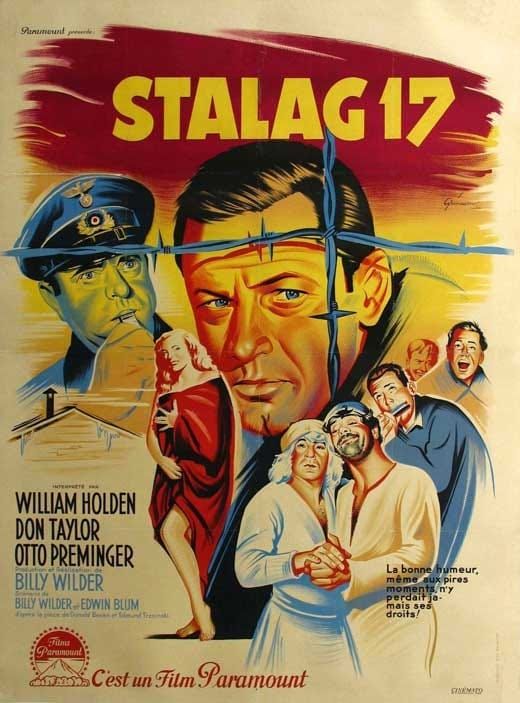
Classic 50s Movie: “Stalag 17” May is Classic 50s Movie month. Today’s guest post comes from Jim Schramm. Movie Title: Stalag 17 Year: 1953 Writers: Billy Wilder and Edwin Blum based on a play by Donald Bevan and Edmund Trzcinski Lead Actors: William Holden (Oscar winner), Otto Preminger, Don Taylor, Peter Graves Director: Billy
A Story Idea Each Day for a Month (2015) For the 6th consecutive April, I featured A Story Idea Day for a Month. Here are links to the 30 story ideas posted last month: Day 1, Day 2, Day 3, Day 4, Day 5, Day 6, Day 7, Day 8, Day 9, Day 10, Day 11, Day 12, Day
Daily Dialogue — May 13, 2015 “Daisy, Daisy, give me your answer do. I’m half crazy all for the love of you. It won’t be a stylish marriage, I can’t afford a carriage. But you’ll look sweet upon the seat of a bicycle built for two…” — 2001: A Space Odyssey (1968), screenplay
Sunday, May 17, 8PM EDT: I’m on #scriptchat This Sunday at 8PM EDT (U.S.), I will be the guest on the weekly #scriptchat conversation. What is #scriptchat? Go here to find out. Suffice to say it is one of the most vibrant communities in the online screenwriting world. Sunday’s Topic: Keys to Developing Characters. For 1
Twitter Rant: Jeff Willis on Query Letters Last week studio executive Jeff Willis went on a Twitter rant on the ins and outs of query letters. Reprinted in its entirety by permission. This morning, @BrendonUdy asked specifically for some insight on querying, so that’ll be the focus of this week’s series. https://twitter.com/jwillis81/
Script Analysis: “Enough Said” — Part 2: Major Plot Points Reading scripts. Absolutely critical to learn the craft of screenwriting. The focus of this weekly series is a deep structural and thematic analysis of each script we read. Our daily schedule: Monday: Scene-By-Scene Breakdown Tuesday: Major Plot Points Wednesday: Sequences Thursday: Psychological Journey Friday: Takeaways Today: Major Plot
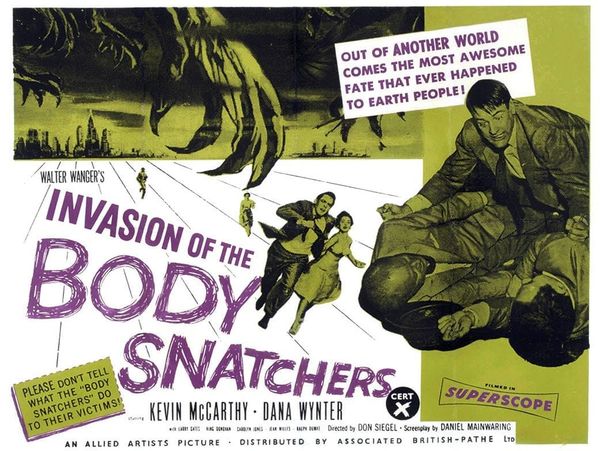
Classic 50s Movie: “Invasion of the Body Snatchers” May is Classic 50s Movie month. Today’s guest post comes from Rick Dyke. Movie Title: Invasion of the Body Snatchers Year: 1956 Writers: Daniel Mainwaring (screenplay), Jack Finney (Collier’s magazine serial), Richard Collins (uncredited) Lead Actors: Kevin McCarthy, Dana Wynter, Larry Gates Director: Don Siegel Plot Summary: A
Screenwriting 101: Susannah Grant “My goal in the first draft is to create, for the reader, the emotional experience that watching the movie will ultimately deliver. When you get around to actually making the movie, you need to break it down technically — add slug lines, more detailed descriptions. But in the early stages, all