“‘Deadpool,’ ‘Arrival,’ ‘Zootopia’ Scribes and More Discuss Breaking Convention”
Revealing comments from seven 2017 top award contending screenwriters.
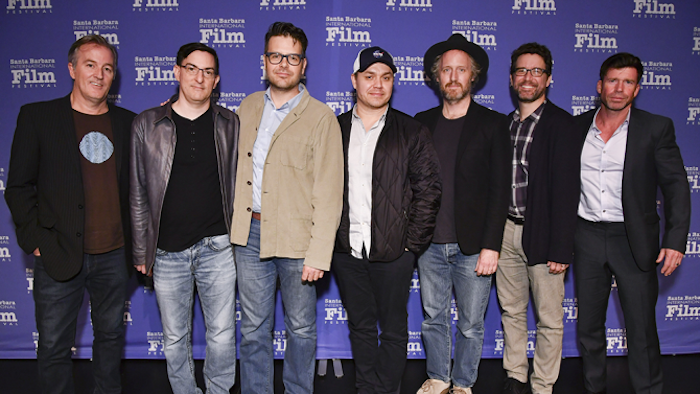
Revealing comments from seven 2017 top award contending screenwriters.
Every year, the Santa Barbara International Film Festival hosts a panel featuring a number of the year’s most lauded screenwriters. This year was not different with a lineup which included Luke Davies (Lion), Phil Johnston (Zootopia), Eric Heisserer (Arrival), Theodore Melfi (Hidden Figures), Mike Mills (20th Century Women), Taylor Sheridan (Hell or High Water), and Rhett Reese (Deadpool). A few excerpts from a Variety article covering the event:
For Eric Heisserer (“Arrival”), it was the emotional, visceral reaction he had to reading Ted Chiang’s short story “Story of Your Life” that forced him to work through the material as a screenplay. “I was in tears,” he said. “I hugged everyone within walking distance, took a long breath and thought, ‘How can I get this to more people and broadcast it to a larger audience?’”
He went to the major studios with a passionate pitch, but everyone turned him down. Still, he couldn’t let it go. “I ended up just writing this on spec and everyone said, ‘This is the definition of a waste of time,’” he said.
Theodore Melfi, who also participated in the festival’s producers panel earlier in the morning, was working from a book proposal and a draft that writer Allison Schroeder had previously written. Like the irreverence of “Deadpool,” or the unconventional science-fiction of “Arrival,” it was a project that strayed away from the safe Hollywood path.
“It has everything in a movie you’re not supposed to do in Hollywood — female leads, math, the female leads are black,” he said. “It’s all these things where they say, ‘You’ll never make money.’”
The comments of Heisserer and Melfi echo observations from award-nominated projects from years past: How no studio wanted to make their movie. This year, it’s an especially impressive list: Arrival, Deadpool, Hidden Figures, La La Land. Each flies against convention and Hollywood studios stray little from what’s worked before because they are so risk averse. That’s why it’s a great reminder to movie execs when four titles like these above gross well over $1B in box office revenues: Sometimes you can take chances which pay off big time.
I was also struck by this comment:
Taylor Sheridan (“Hell or High Water”) said he learned how to write by taking note of what didn’t work. And he confessed, as a former actor, that he had plenty of practice working through bad material.
“I spent most of my time on TV shows kind of spewing exposition,” he said. “When I write I almost never use dialogue to move the plot forward because I understand painfully the traps. I try to have the lines tell you something about the character.”
The “traps” to which Sheridan refers are, I suspect, largely about the fact that nothing can slow down a story or cause a script reader’s eyes to glaze over more than reading a scene or scenes chock full of exposition: setting, information, data, backstory. I am reminded of David Mamet’s infamous memo to his writing staff on the TV series ‘The Unit’:
THERE IS NO MAGIC FAIRY DUST WHICH WILL MAKE A BORING, USELESS, REDUNDANT, OR MERELY INFORMATIVE SCENE AFTER IT LEAVES YOUR TYPEWRITER. YOU THE WRITERS, ARE IN CHARGE OF MAKING SURE EVERY SCENE IS DRAMATIC.
THIS MEANS ALL THE “LITTLE” EXPOSITIONAL SCENES OF TWO PEOPLE TALKING ABOUT A THIRD. THIS BUSHWAH (AND WE ALL TEND TO WRITE IT ON THE FIRST DRAFT) IS LESS THAN USELESS, SHOULD IT FINALLY, GOD FORBID, GET FILMED.
IF THE SCENE BORES YOU WHEN YOU READ IT, REST ASSURED IT WILL BORE THE ACTORS, AND WILL, THEN, BORE THE AUDIENCE, AND WE’RE ALL GOING TO BE BACK IN THE BREADLINE.
Seems a good opportunity to promote my upcoming one-week online Screenwriting Master Class course Handling Exposition, a class I created precisely to explore techniques, tips, and tricks to help writers avoid the curse of the boring Talking Head scene, and transform exposition into entertainment. As one of the many writers who have taken the class and benefited from it said:
“This is a MUST take course. An easy tell for Readers/Agents/Managers between amateur and professional screenwriters is how they handle Exposition. Enlighten yourself.”
~ Traci Nell Peterson
The class begins Monday, February 13. To learn more, go here.
For the rest of the Variety article, go here.