Go Into The Story Interview: Aaron Chung
Aaron Chung: Nicholl Fellowships in Screenwriting winner.
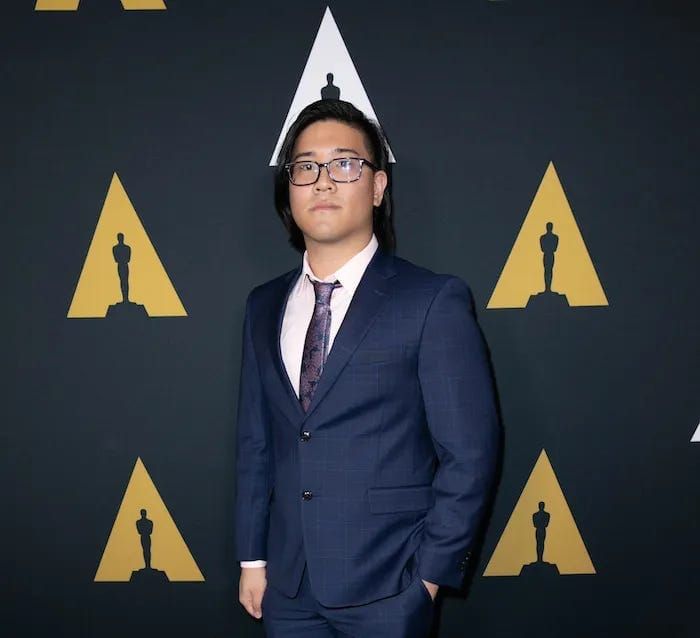
Aaron Chung: Nicholl Fellowships in Screenwriting winner.
Aaron Chung wrote the original screenplay “Princess Vietnam” which won a 2019 Nicholl Fellowship in Screenwriting. I had the opportunity to chat with Aaron about his background as a screenwriter, his award-winning script, the craft of screenwriting, and what winning the Nicholl Award has meant to him.
Scott Myers: You were born and raised in Tampa, Florida, South Korean parents and an older sister. Growing up, how important were stories to you and your family?
Aaron Chung: I know that my parents loved telling personal life stories. They would always talk about their family history.
That would interest me because I was always willing to hear more about who we were and where I came from and the unique and strange experiences that my parents and their parents, and then their parents…All the people that are oceans away from me, but still…Have all these unique moments and memories.
I would say that I grew up watching everything. I would watch all sorts of movies and TV shows. I would play with my toys and then invent stories around them. My dad, bless his heart, he didn’t have a filter to what he would show me. [laughs] We would watch R‑rated movies all the time, and not have any sense of what I’d be seeing.
Some things would inspire me as a kid, wild action movies, and some things would traumatize me, like a lot of horror films. In any case, stories have always been a part of me.
Scott: When you say you play with your toys and make things up, at some point did you transfer the storytelling instinct to writing?
Aaron: I don’t know. It’s a question that I often explore myself because even I don’t know where it started. The earliest memory that I can think of where I would really want to write a story was, I was in elementary school.
I believe around third or fourth grade. It was crafting fantasies that got to me. It’s me who wanted to write my own fairy tale when I was a child. I never really got the chance to do that. That curiosity and interest grew and grew and grew until finally, I decided to pursue writing itself in the most basic form in college.
Scott: You went to Florida State University which is a very well‑established and well‑known film school. You got a BA in both English Creative Writing and Media Communications studies. What were you writing there?
Aaron: I was mostly writing short stories. I was writing my own YA novel, but it’s not very good. I need to slip back on that someday. I just really want to learn how to perfect storytelling in general. I don’t consider myself a good writer per se, like a short story writer. I’m not very well‑versed and thorough. I’m certainly not very good at poetry.
I eventually leaned into screenwriting because screenwriting didn’t demand poetry. Not in the sense that we expect from well‑versed authors and novelists. Screenwriting has its own technique where we need to simplify that language and yet capture a visual image. That’s all I can ever think of when I craft stories, what does it look like.
Scott: Movies and TV, primarily a visual medium. You got an MFA from Florida State. How important was that master’s program, your teachers and writer cohorts in developing your voice and learning the craft?
Aaron: Very, very, very important. I think that program really solidified what I want to write and who I want to be as a writer. It’s not just the teachers and the professors. There were lots of people around me. My classmates helped me develop that voice. I’ve made some very good lifelong friends from that.
The school, the program itself really does well in what the industry is like and what people are looking for in screenwriters. They prioritize mostly the self, and that is what I enjoyed most about the program.
Scott: Typical advice for a writer trying to break into Hollywood is to focus on one genre, but as I understand it, you’ve written several scripts across multiple genres. Is that more about you were simply writing stories you were just interested in, and they just happened to be different genres, or perhaps is that a conscious choice on your part to try and develop your voice by exploring different genres, or maybe both?
Aaron: Yes to both. I would say that as a general lover of stories and a person who really wants to explore everything, I don’t like the idea of being pigeonholed into a specific genre, because I feel like that would just tire a writer out.
I feel like I just need to explore every avenue as possible in my growth, because I’m still a young guy, and I’m still figuring things out for myself. I think I’m going to do that for the rest of my life and my career path.
When I want to write a specific story, no matter what the genre is, I just want to write it. Genres always become a blend to me. They never become a specific thing. If it’s an action movie, it’s going to be an action comedy. If it’s a sci‑fi, it’s going to be a sci‑fi comedy. If it’s a horror, it’s going to be a horror drama, etc.
Scott: In your Nicholl acceptance speech, I was especially struck by these comments. You said, “I want to connect everyone’s problems and struggles and conflicts, and show that we have a lot more in common than we believe. We have this amazing superpower to empathize and connect and understand each other in ways no other living creature can.”
That’s a beautiful sentiment and a really powerful one for writers to embrace. Where do you think that comes from via your own life experience? Were there any key events, or was it just the familial and social upbringing that you had that led to that personal philosophy as a storyteller?
Aaron: That’s a good question. When it comes to the matter of empathy and how I approach not just my writing, but my life with it, it doesn’t come from one singular moment or memory.
In all honesty, it’s something I had to learn and develop and teach myself because, years back, I didn’t connect well with others. When I was younger, I was saying and doing rotten, inappropriate things without thinking twice. I stumbled and made so many stupid mistakes that it wasn’t until college that I finally got my shit together and learned how to be more thoughtful of others.
A lot of it, also, has to do with the stories I saw and read, and like you said, the social upbringing I had. I think a lot of minorities can understand when I say that we often follow along with characters who look nothing like us, and even though there’s that distance, we still connect with those characters. It came easy for me to empathize with Spider-Man, Sarah Connor, Elle from Legally Blonde, that my curiosity and perspectives grew, but that also meant I felt more and more alien.
If I recall from my speech, I mentioned that it was a shame that many of us didn’t use empathy more often, especially when it comes to approaching stories starring a woman or a minority, or anyone who doesn’t look like ourselves. Stories are the best way to understand another person’s experiences and emotions and tribulations, and yet we don’t make an effort to connect with them.
That’s why I love writing stories with protagonists who look nothing like me, to expand what I know and don’t know and try to understand the people who have so much distance between us.
Scott: Because the reason I was so struck by it, not only just personally, because I tell my students all the time that now more than ever, we need stories that put a human face on the other, so that we can empathize with people…
Aaron: Yes.
Scott: …and live their experiences vicariously through storytelling. I was struck by it, because in reading your script, it really is there. That sensibility is quite self‑evident in your script Princess Vietnam.
The themes of empathy, connection, and understanding ‑‑ they run throughout that script. The logline: “In 1980, a lonely Vietnamese girl befriends and falls in love with an imaginative Irish girl as they struggle against racial prejudice in their small town.”
Let’s begin at the very beginning. What was the inspiration for this story?
Aaron: I would say there’s two major inspirations to me taking on this project. One of them is my own growth. I was a very self‑isolated child growing up. It’s hard enough that I felt and looked so alien compared to the other kids that it was hard for me to open up socially.
In my self‑isolation, I would often escape into daydreams and fantasies and be that weird kid who would be kind of quiet in the bus ride and just think up stuff. That sentimentality served these two characters who also daydream a lot, and they also want to fantasize and wish for something better and through that, they found each other and found love and found something that I think we’re all searching for.
As for the other inspiration, there is a short personal essay that Cherelle Higgins wrote, which was all about living in Margaret Thatcher’s UK and how there was a rise of a skinhead movement in her neighborhood
Scott: I don’t know if you saw that movie Blinded by the Light. Are you familiar with that film that came out in the summer?
Aaron: Yes. I watched it, and I really liked it.
Scott: Yes. Same period of time, like 1980, I believe. Right?
Aaron: Mm‑hmm.
Scott: These two central characters in your script, you have a personal connection to both. Let’s talk about Fable and Aisling. As you crafted the story, did you consider Fable to be its protagonist, or are they co‑protagonists in your mind?
Aaron: I would consider them both co‑protagonists. I mean, when I first crafted and outlined the story, I considered them both to have equal amounts of screen time and equal amounts of development and arcs to go through.
Scott: That’s obviously one of the major signs of a protagonist character, a character who goes through significant transformation. Let’s talk about Fable. This is how you introduce her in the script. “Fable Su, 16, Vietnamese American, underweight, drags her feet on the sidewalk, her head pointed at the ground. She hugs her backpack like a stuffed bear. The torn strap dangles. The school uniform’s beat to hell.”
How would you describe this character and her lot in life at the beginning of this story?
Aaron: Someone who’s just been through hell and is still going through it, someone who takes pain quietly, and someone who’s in the path of adulthood, but is still trapped in her own childlike demeanor.
Scott: That hell ‑‑ what are the key elements, the dynamics that she experiences in her life that lead to that kind of hellish kind of experience?
Aaron: Well, it’s being beaten, punched, tortured, and isolated because of something that’s beyond her control. She was born as someone who’s different, and she can’t change that.
Because of that, there are people who want to get her, who feel that she’s lesser and insignificant, and she’s reminded of that every day until, I don’t know…It’s something that I think a lot of especially Asian American children around my generation feel. They can’t feel like they’re a part of a certain group, and they beat themselves up because of it.
Scott: That’s an interesting choice of words. She experiences a physical abuse on the part of these bullies who we’re going to talk about in just a bit, but then she also beats herself up psychologically. Is that right?
Aaron: Yes, I would say that’s correct.
Scott: Let’s talk about Aisling, this other co‑protagonist here. Here’s how you introduced her in the script. “Fable scopes out the cafeteria” ‑‑ this is at school ‑‑ “then stops at Aisling Walsh, 16, Irish American, tomboy, looking in Fable’s direction, a pale girl with natural red hair. She wears a leather jacket over her uniform.”
Let’s talk about this character. How would you describe her life circumstances at the beginning of the story?
Aaron: Tough on the outside, but definitely a facade, a very apparent facade that she has built herself around. Actually, in my newer draft that I finished, I described that leather jacket that she wears as an armor to her. I think that’s very much telling of who Aisling is, is a person who likes to wear layers, who likes to wear armor, and guard herself from other people and even her own emotions.
Scott: Both have challenging family situations. Could you describe Fable’s relationship with her mother?
Aaron: They’re very close, I would say. They’re close, but there’s always that divide that Asian American children have with their parents. Asian American kids will have this distance when it comes to culture, language barriers, perspective, because Asian parents are so… they’re rooted in who they once were. Both Fable and her mother, there’s that divide, but at the same time, there is the fact that they are the only two Vietnamese people in this small town, so they have to rely on each other.
Scott: She’s also got a complicated relationship with the male figures in her life, both of which are no longer living. Could you unpack that a little bit?
Aaron: One of Fable’s biggest arcs to overcome is her feelings of hate towards people, because love and hate’s a huge theme in my protagonists, I would say, and Fable’s hatred towards her stepfather, who she only sees as this soldier, just this Vietnamese killer, and she kind of ignores who this man could have really been and why he did certain things.
Because at the end of the script, she realized that much as she wants to hate her stepfather, she can’t, because he brought her and her mother to the safety of America. Even though Fable’s mother was already pregnant by the time they met, he still found love in her and found ways to protect her. That’s what Fable kind of learns at the end.
Scott: How about Aisling’s relationship with her mother, Maude, and father?
Aaron: I would describe Aisling’s relationship with her mom as her best friend, her boss and her mother, in that order. I think Maude is a young mom who is in a state of arrested development where she…It’s the kind of parent who wants to be best friends with their child, but not know how to raise them or know what they need in certain situations.
As much as Aisling wants to feel close to her mom, she starts to see all the shortcomings her mother has, which is the fact that, like Aisling herself, Maude is very guarded and is very childish, and is very irresponsible in certain senses.
Especially when it comes to Bill, who Aisling starts out seeing as this monster who he met from a vicious floor and has these night terrors. Makes a lot of noises and keeps a gun next to him and is scary to be around because you don’t know how volatile he can be.
At the end of the script she starts to see his vulnerabilities, his need of someone else to be there for him and his fragility. In that he’s not a monster, he’s a man whose also been broken by the system he lives in.
Scott: He was in Vietnam as well?
Aaron: Yes, he was a war vet.
Scott: I know Aisling says at one point to Fable, “My dad was in the war. He came back home all fucked up in the head.” We’re looking at, I guess you could say Post Traumatic Stress…
Aaron: Yes, he does have PTSD.
Scott: He says something interesting to Aisling, which I think contributes to Aisling’s complicated feelings toward Fable as their friendship develops. At one point he says to her, “If there’s anything I can give you, know that the people you love stop loving you back. Understand?”
Was that a seed that’s planted in Aisling that contributes to her fear of getting into a committed relationship?
Aaron: Yes, I would say so. I think it’s part of her problems, confronting her own feelings and emotions.
Scott: Those layers that you said. So they’re not only defenses against other people, it’s probably defenses for herself to even feel things.
Aaron: Yes.
Scott: You set the story in 1980. I’m guessing the major reason was because it puts it in close proximity to the Vietnam War, which ended officially, I guess, in 1975. Throughout your script, it’s like the war plays a ghost.
There’re military vets on street corners. There’s military vets in the hospital. The PTSD we just mentioned of Bill. There’s phobia toward Fable and her mom. Could you unpack what attracted you to work with the Vietnam War as such a significant narrative element?
Aaron: There are a few reasons. I’ll tell you the top ones off the top of my head. One was because the Vietnam War was a significant event in American history where we do see a divide cracking. Essentially there’s very pro‑war, anti‑war.
It really strengthened this binary system that we have, and it caused, like I said, it caused this crack, this division. Around the ’70s and ’80s we did see this rise of fascism, the neo‑fascism. That’s where the skinheads came into play.
I wanted to introduce that element as well. Where we see this birthing of this extremist movement, and in a way a pseudo answer to how that happened.
Scott: Yeah, that probably out of the frustration that some people were feeling about the resolve of the Vietnam War, which I think no matter how you look at it, we considered it a defeat on the part of the United States.
That leads right to Eric, who at the beginning of the story, he’s a high school kid, skinhead. He’s the leader of this group. He is a boyfriend to Aisling, and she breaks that off pretty quickly. Did the appearance, the presence of Eric and that group to skinhead, functionally speaking form a narrative standpoint, a storytelling standpoint, they exist in order to basically physicalize that kind of racism and xenophobia?
Aaron: It’s not just the physical representation of the xenophobia. I think it’s the total representation of it. It’s the idea being promoted.
It did get born from teenagers essentially. Like punk‑rockers and people who sought a way to free themselves from this broken system and rebel and do that rebelling, and they found extremism which is ironic.
Scott: And an escalating sense of threat as the story moves along of this dread that things are going to go south, and it plays out throughout the story very effectively. The central through‑line of the story is this developing relationship between Fable and Aisling.
I’m imagining that that was probably there at the very beginning, or toward the very beginning of your story crafting process.
Aaron: Yeah, them as a looming threat was very much…It wasn’t always a central conflict when I first started writing, but I knew that they were going to be the time bomb that would eventually go off. What corrupted hate, unchecked hate would eventually do by the time push comes to shove.
Scott: So that as Fable and Aisling develop a friendship, Eric becomes jealous and you can see that there’s going to be a problem there. As a writer you made several interesting choices. Maybe they weren’t even conscious, maybe they emerged in your writing process, I’d like to look at them.
First, there’s your approach to the story structure and the pace of the narrative. In conventional Hollywood storytelling, I’m not saying it’s good. I’m noting that’s the way they do things out there. Development executives seem to feel most comfortable when the story’s got a single protagonist with a clear objective goal, that it’s this character attempting to achieve that goal, and that provides the story with a narrative drive. Princess Vietnam goes in another direction, especially in the first half of the script. It feels more like the movie Boyhood.
It’s a string of moments. It’s like one ends, another begins. There’s a definite thread to the scenes and they advance the plot, but they do so in, I guess I’d call it almost a naturalistic pace. First of all, do you agree with that take? If you do, was that an intentional choice, or was that something that arose out of your creative process?
Aaron: That was not conscious. Before I wrote Princess Vietnam, I did write other screenplays that did adhere to the formula more. Which is OK, I think formulas have a usefulness to them.
I would never look down on it, but with Princess Vietnam, I had to. If I wanted to tell this in the most honest way I could, I had to approach it in a different way. The way you described it, it very much…It’s very much not a conscious choice, more as me writing what I thought was best and what I felt was best for these characters.
Scott: Yeah, it feels very much like a character‑driven story.
Aaron: Yes. I wanted them to take me on a ride, as opposed to the other way around.
Scott: But surprise, at the end of this naturalistic slice‑of‑life string of scenes, there are three animation sequences involving these two characters. It circles‑back to your thing about when you were a kid and fantasies and whatnot with the princess character, who is basically the representation of Fable and the knight who’s Aisling.
You drop them in at page 27, page 40 and page 67, so they’re playing out throughout Act Two pretty much. Those three stories together create their own mini‑arc. Not only in terms of character developments, the characters themselves, the Princess and the Knight, but also the artwork. The animation evolves, too.
I’m curious how early in the story crafting process did you hit on that idea? What were you going for with those animation sequences?
Aaron: The animation sequences were always there. I always wanted to do that. I always wanted to blend this fantastical world and juxtapose it with what’s happening in real life. Again, that’s how I approached my growth as a child, to have things in a fantastical sense.
What was the second part of the question again? I’m sorry.
Scott: What was your intention? I guess you just answered it basically. You wanted to explore via fantastical world.
Aaron: Yeah, it’s delving into how they want to do things, as opposed to what they can really do. It’s the whole idea of power versus powerlessness. It’s something I wanted to…Let the audience clue in on what these characters are thinking and feeling at the moment.
Scott: That brings me to something I saw was a central theme running through your script: the power of story. This script, it not only tells a story, but it’s a story about stories. It begins with Aisling in voice‑over asking someone, who turns out to be Fable, about a story that Fable had told Aisling.
Later on, we see Fable’s drawn to the book “The Lord of the Rings.” Aisling’s drawn to a comic book collection and superheroes, so that’s a story world. You’ve got the animation sequences. There were two locations that were featured in the script that are involving story universes.
There’s A Bookshelf, which is a bookstore, and The Ironside Theater, which features movies. That’s where Maude and Aisling work. They see a Charles Bronson movie that has an interesting impact on them. Indeed, the protagonist is named Fable which is, of course, a kind of story.
There’s also the stories the characters tell and have told about each other. Some of them, as you noted upfront, particularly with regard to Fable, she’s going to have to unpack the story in order to see someone differently, that stories can distort the perception.
The story about stories, I thought that there were these two counterpoint themes here. Stories have the power to inspire, and empower, and awaken one’s imaginations and new possibilities, but they also have the power to ensnare one’s beliefs, and faults, and narratives. Does any of that resonate with you?
Aaron: Yeah. Stories are one of those rare universal languages that anyone in any culture or any language can latch onto. Like I said earlier in the interview, I held onto stories. I was surrounded by stories.
I was surrounded by family memories, and television shows, and movies, and novels, and comics, and video games, and all sorts of different stories that I keep obsessing, and loving, and fantasizing about. It is also like you said, that this ensnaring oneself into a story can also be dangerous because you’re trying to live out something that has dire consequences.
That’s what happens when Aisling lashes out and burns Eric’s car. There was a severe consequence to that. It’s not like a fantasy world where there are villains who need to be defeated. Now it keeps going. It’s a cycle. That’s what real life is like. To me, the parallel story, when done correctly, ignites everyone more than ensnare or divide.
Scott: I won’t give away the ending, which is quite moving and is a story, itself, and involves a character telling another character a story which becomes not another animation sequence. It’s more realistic. It’s kind of a grounded fantasy. It’s very effective.
How did that ending emerge in your creative process? Did you always have that in mind, or was it something that grew as you were working with the characters?
Aaron: Without giving away too much, I would say that I always had the ending in mind when I first started. I always try to approach projects with a definite way to end it. With this one, I knew that I needed to have that ending where, yes, it did end on one last story. It was a very loving, affectionate, vulnerable story to show the growth of one of the characters but to also inspire hope.
Scott: You mentioned one of these things that happened with Fable toward the end that marked her transformation. I’d like to circle back to that comment again that you made at the Nicholl ceremony. “We have this amazing superpower to empathize, connect, and understand each other in ways no other living creatures can.”
Fable has series of these breakthroughs and what she sees other characters in a different light. The first is an interchange with Aisling’s father, Bill, who earlier had been…He was in Vietnam. He’s essentially a racist toward people from Vietnam. Of course, that was directed as a threat in a way to Fable.
You write in the script, when Fable intersects with him at some point late in the story, Fable lowers her guard. He isn’t some monster, just a pitiful man clawing for his last thread of human connection.
Then with Eric, who would earlier had tormented her and just generally bullied her, there’s a moment where in the scene description, you say, “Just like Bill, Fable really sees what Eric is, a rotten little boy who sorely misses his father.”
Then finally, the one you mentioned earlier, she asked her mom to go visit Roger’s grave. She had very complex feelings about this guy because he was a soldier fighting in the side of the United States. Of course, that meant he was killing Vietnamese people.
She’s very emphatically, as you noted, said, “I hate him. I hate him,” earlier. Then she has this wonderful monologue. I just want to excerpt part of this here. She’s talking to Roger in the grave.
“The truth is that I don’t want to see, but I know I have to, is that you brought us here. You brought a pregnant Vietnamese woman who could barely speak the language right here. And I wanna be thankful. I am. I really, really am. So even though I’ll never say the words ‘I love you,’ I promise I won’t say ‘I hate you’ either because it’s not always one or the other, is it?”
Those three, they do represent her gaining empathy. Isn’t that fair to say?
Aaron: Yeah, that’s very fair to say. The reality is that of these racist people, of the xenophobic, neo‑Nazis that we see even today is that when you boil down to who they are and you look at them, and I mean look at them and what they’re saying, as venomous and as evil as it may be, it’s also sad where they are. It’s very sad.
It always raises my curiosity about these people. How did you get here? What led you to this path? What circumstances made you think this way? That’s the same kind of thoughts and questions that Fable asks herself when she sees this man is, “What happened to you?” Once she starts to figure that out is, “Oh, you’re just sad. You’re broken. You’re miserable.”
Scott: I’m not sure if you’ve ever heard of this Jewish philosopher named Martin Buber. He was German. He wrote a book called “I and Thou.” He talked about the two natures of relationships.
One is an inauthentic relationship where you deal with the other person as an it. It’s an I‑it relationship as opposed to authentic relationship which is I‑you where you recognize the shared humanity of the person. In some respect, that is, in many ways, the arc of these two characters with regard to some of the other relationships they have.
Aaron: Yeah, it’s really interesting. Even Fable, herself, was kind of a hypocrite in that moment, has the I‑it mentality, but she later has to accept the I‑you. I’m not familiar with that book, but I definitely want to check it out.
Scott: Last thing I want to talk to you about with regard to Princess Vietnam is how your story manages to thread the needle in terms of melodrama or, to use another metaphor, could’ve easily fallen off the razor’s edge into a pit of overwrought emotions, but you avoided that. How concerned, if at all, were you about not lapsing into the melodrama?
Aaron: People always treat that word as such a horrible thing. I don’t have a bad opinion about melodrama. Melodrama, as manipulative as it can be, can also be a gateway to let people understand what a character or a human being is feeling.
As much as that flood work of tears can often roll their eyes, it can also emphasize that, “This is sadness. This is pain.” As opposed to avoiding melodrama, I would say that I observed how I and the people around me and people I grew up with would often react emotionally.
It’s surprising to me the amount of people who constrain themselves and fight. Even I, myself, fight my own emotions. I can’t just let myself cry or get mad. I have to fight it back and stifle it, but 9 times out of 10, it always fails. As these very vulnerable creatures, we always have to let ourselves feel. I love that about humanity.
In that way, I wrote the drama, the script to be like that, to be constrained and tightened until finally they can’t keep it in anymore. To me, it feels more real.
Scott: The thing that struck me the most was where the characters ended up were definitely emotional places, but there was an honesty about what they were saying to each other. Sometimes screenwriters will say, “The best dialogue is subtext,” but sometimes it’s like, No, saying what’s right there, just like that monologue excerpt that I quoted earlier when she’s talking at her father’s grave. That’s very simple, very honest emotion.
Let’s transition into some wonderful Nicholl experience for you. As I understand it, is it true that this was the first screenwriting competition you entered?
Aaron: I won’t say it was my first. It was definitely my third, but it was my first time submitting to the Nicholl Fellowship. I think somebody misquoted me on that, but that’s OK. I guess it’s part of crafting the fantasy of being a winner. This was my first time submitting to the Nicholl Fellowship. It was my first time also submitting the script in any competition.
Scott: What was it like, the whole Nicholl thing?
Aaron: Surreal and still surprising.
Scott: What’s the status of the script on? You just said the latest rewrite. Is that something that you’re doing on your own, or is that under the direction of a producer, or an agent, or a manager?
Aaron: I did it on my own, mainly because when I got the news that I became a semifinalist of the Nicholl Fellowship, I thought that was it. I reread the draft, that one. This is one of the curses of being a writer. I’m sure you understand. I didn’t like what I was reading.
I was like, “Oh man, this is…Yeah, I’m going to be here in the semifinals. I’m not going to advance. I got this far. Let’s rewrite it. We work it and make it better for next year.” Then, lo and behold, I won.
I’m still glad I rewrote it because now I know I am, in the comfort of my own mental health, that there is a better draft that exists.
Scott: Have any managers or anybody reached out to you?
Aaron: I’m still going to meetings. I’m about to decide on a manager this week. As of this interview, I’m going to decide on one this week.
Scott: Congratulations on that. We’ve got time for maybe some craft questions. People enjoy reading about how writers create a process. You’ve written across all these genres. I would imagine if you’ve done genres like action or comedy that perhaps the stories have a bit more in the way toward like a high‑concept type thing. How do you generally come up with story ideas?
Aaron: Good question. How do we all come up with story ideas? First, it has to boil down to either character. I have to envision a really strong character first and then craft the story around them and what they’re going to do, or it would be an issue that I would see today that’s happening in our society, in politics or anywhere in the world.
I want to tackle it in a way where…It comes back to my intentions of going to connect everyone to our problems. I want to tackle these issues that are happening in our world, put a mask of entertainment over it, have to be fun but also be meaningful. I will say that will be my personal mission statement for writing.
Scott: How do you spend time in prep? I know you said you outline. You made that reference earlier. What aspects of breaking a story do you tend to devote the most time to? How do you get to that one?
Aaron: I’m going to tell you something that I think a lot of people should not listen to…should not take my advice on this. I hate outlining. [laughs] I hate the prewriting phase, but it’s so useful. I know it’s so useful. Any aspiring writer out there needs to outline. I do it reluctantly, but I do it.
To me, the way I write, I’m a very transformative writer. Things that I write in my outline will not happen on the page. I would always keep coming up with new ideas that I want to try out or feels better than what I’ve already written.
I’m in this constant state of rewriting. Sometimes, it’ll take me a while to finish something. Most of the time, it’ll push me through to the end. That’s the reason why I just cannot outline for the life of me.
Scott: I tell my students, I say, “Look, there’s a difference between breaking a story and finding a story.” Break the story in prep, but once you move into the writing phase, you want to feel your weight through each scene and open yourself up to the possibility where the characters are going to take you. Does that feel like the way you do things?
Aaron: That’s mainly the reason why I have to outline is, as I said, to find the story. It’s to figure out the trajectory of my character arc, where they start with and how they are going to end with. It always boils down to how is the character going to grow as opposed to what are the scenes going to be like.
Scott: Right. There you go. Now you’re talking my language.
Aaron: Yeah, exactly.
cott: What do you think about when you’re writing a scene? Do you actually consciously say, “Oh, beginning, middle, end. What’s the conflict?” How do you approach scene writing?
Aaron: For scenes, as I said, there was always that beginning, middle, end. There is always that idea. I have to approach the scene of what each character wants. Characters can’t start a conversation out of the blue. They always have an end goal in mind, right? That’s how people talk. We have this other thought in the back of our heads as somebody else is talking.
For me, scenes always need to have a conflict. They always need to have something happening that progresses either a situation or introduces a new one. If two characters with different ideologies are in the same car together and are driving towards a destination, how will they fill that silence?
How will they try to get to know each other? Are they going to do it in a way that makes them instant best friends? Of course not. They’re different. They’re too different for that. How are they going to find common ground is the big end goal in mind.
Scott: When Kiwi Smith introduced you at the Nicholl awards ceremony, a couple of times, she said that your script felt so poetic. In reading your scene description, I get what she was talking about. There’s a minimalism to it.
One of the best mantras I heard in that is “Minimum words, maximum impact.” Yet, you do have a very visual and sense of the present, the moment in your writing. Is that just something that you worked on, or is that you feel more like an innate thing?
Aaron: I don’t know about worked on. I feel like it’s more innate. I know it sounds…I know it’s useless to say, but because I do want to help aspiring writers as much as I can when it comes to developing voice.
That’s really all there is. It’s developing your voice and my voice across that script. If people found it to be poetic, then great, I’m glad they did. I don’t. I thought it was very, like you said, I try to find ways to be minimal but effective.
That’s what good screenwriting is, it’s always minimal and always effective. Today, people’s patience levels have gone down to the point where they can’t read blocky paragraphs on a page anymore.
Scott: That’s completely true. I say to my students, “Let’s read this script from the ‘50s.”
Aaron: Oh yeah, those are novels.
Scott: It’s 25 lines of scene description with all these camera shots. Nowadays it’s like one line, two lines, one line.
Aaron: Have you showed your students the Taxi Driver script?
Scott: Oh yeah, yeah.
Aaron: Character description alone for Travis Bickle is astounding. Informative, but astounding.
Scott: You said you wanted to provide some advice to aspiring screenwriters. That’s something you’re going to be hit‑up on, I guarantee you as you move forward in your career. What advice can you give?
If you had to give one or two things that contributed to becoming who you are as a writer, maybe setting aside the specifics of going to an MFA program or whatnot, but what advice would you offer to aspiring screenwriters?
Aaron: I’ll give them two pieces of advice, just somewhat interconnected. First one should be a common one. I think should fall into any corners of life and career paths, and it’s to be patient. Be patient with yourself, with your career, and your writing.
I think reading a lot of amateur scripts in my life, as part of my job, I realize that people send out rough drafts too much. Usually, I can tell it’s a rough draft because of how many grammatical errors there are, or how some story points don’t make sense.
It’s very easy to tell when the script is a first draft. You should not be sending out your first draft. You should be sending out your second, third, fourth ones, and the ones that are better. I guess there’s a lot of impatience for success. I want to say to aspiring writers, “Be patient. Keep working,” and you’ll know when it’s ready.
My other piece of advice is to find something that’s important to you, as much as we all want to write the next big franchise or blockbuster or next big horror film. I respect those goals. I admire those goals. I, too, want to write my next big action movie. I also want to work for Marvel one day.
You also have to find something that speaks to you, that says something. Once you find that, once it becomes important to you, you will write it till the very end. Your voice will spark out. That’s how you develop your voice, it’s finding that important story.
Here is Aaron with his Nicholl Fellowship acceptance speech.
For my interviews with every Nicholl Fellowships in Screenwriting winner since 2012, go here.