Go Into The Story Interview: Alan Roth
Alan Roth’s original screenplay “Jersey City Story” won him one of five 2013 Nicholl Fellowships in Screenwriting.
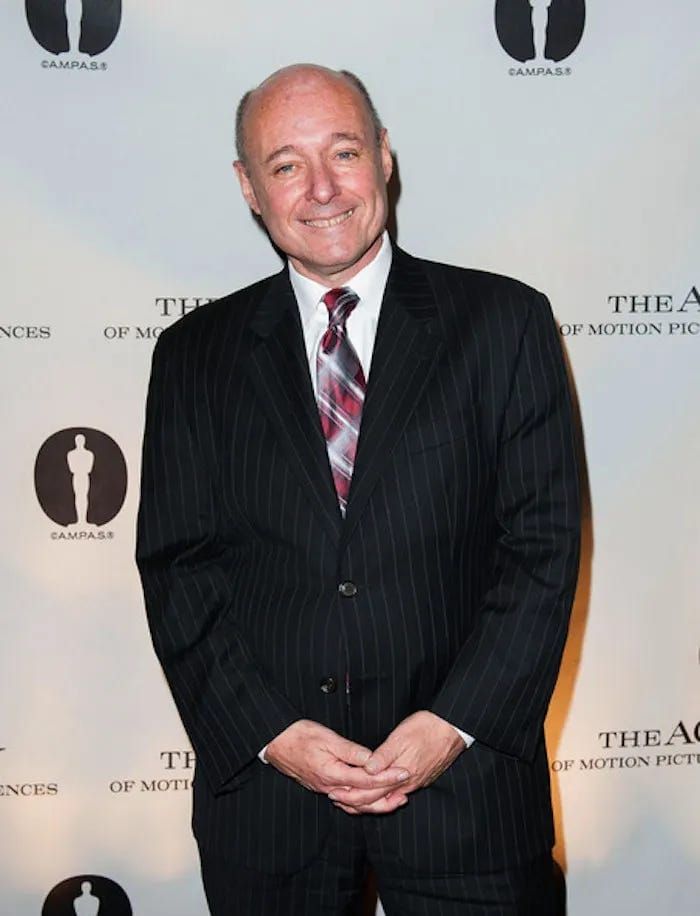
Alan Roth’s original screenplay “Jersey City Story” won him one of five 2013 Nicholl Fellowships in Screenwriting.
In this Go Into The Story interview, Alan talks about his background, how for years he has balanced working in the family business and his commitment to writing, and the inspiration for his Nicholl-winning script, a compelling true life incident.
Scott Myers: Let’s start at the beginning. Where did you grow up? How did your interest in writing emerge?
Alan Roth: I was born in Brooklyn, New York. While I was still very young, we moved to northern New Jersey, which is where I was raised, and where I still have family.
I grew up in a family of readers. Maybe it was because of my father’s admiration for his favorite authors that writers became my heroes. In the same ways some kids might wish to be Superman, Batman, or their favorite baseball hero, my aspiration was to be the next Tolstoy or Hemingway.
I started writing short stories in high school . The tone and language were very poor imitations of the authors I read. Making it worse, the authors were the classic English Victorian writers. And I chose themes way beyond my own personal experience. It had to be painful to read my work. Then a teacher gave me some advice. Write what you know, and with your own voice. That was an important early lesson.
I found that writing was a way to put my feelings down on paper. To this day, if there’s something on my mind, I really can’t put it to rest until I write it out, even if it’s a note to myself.
Scott: You attended Fairleigh Dickinson University. Did you pursue writing there?
Alan: No, I was a history major, but there was a third generation family business that it seemed inevitable I would join. And I did. But I kept writing. And intuitively, I felt like a writer. I loved the family business, but I held onto my dream.
Scott: I’m assuming, since you wound your way to screenwriting, that at some point, movies became an important part of your life.
Alan: Yes, and I had my dozen or so favorite movies, and those were the films that inspired me.
I kept watching them over and over, and committing the dialogue to memory.
Scott: What are some of those movies?
Alan: Movies like The Natural, He Got Game, and Nothing In Common, a Tom Hanks film from the 80’s, with compelling father-son themes, and movies with strong, but conflicted men, like Local Hero, are ones that resonate with me. Local Hero…you’re familiar with it, too, I can tell.
Scott: Absolutely. I’ve blogged about it quite a bit. In fact, people know how much I love that movie. When I was at the Austin Film Festival last year, a writer and longtime Go Into The Story follower brought me a hard copy of the script.
Alan: That movie hits me on every level. If I could count how many times I’ve seen it, it would be an embarrassing number.
Scott: You received an MFA in creative writing from Emerson, yet at some point, you found yourself working in the printing business. How did all that work out?
Alan: I went up to Boston with the vague notion that maybe I would pursue writing. There was a very hot comedy scene there at the time, and I started writing for some stand-up comics. I published a monthly satirical newspaper that received attention. But there were some issues in the family that prompted me to return to New York and join the family business. Writing had to take a backseat.
Scott: When in all this did you discover and start to write screenplays?
Alan: As time went on I felt that I needed to start writing again, if only for myself. I began with a series of short stories, and some were published.
Then a close friend of mine passed away. I was his son’s godfather. In an effort to take his mind off everything I took him to a game where his favorite player would be signing t‑shirts afterward. We waited in line for an hour and when our turn came I explained to one of the public relations people that my godson’s father had just passed away, and it it would mean a great deal if the player could say a few words to him.
But I was told that the player was just signing shirts and not interacting with the public, and they needed to keep the line moving.
We took our t-shirt and started to walk away. What I didn’t realize was that the player had heard my conversation with the public relations person. We heard this big booming voice from behind, and turned around. It was the player summoning my godson.
My godson looked up at his hero and walked over.
The player knelt down and spoke to him for a couple of minutes.
When my godson turned around he was glowing. The conversation sustained him over the next few months. It was almost transformative and what the player had shared with my godson was his own experience of losing his father at a young age.
By the time we were in the parking lot the whole thing was playing like a scene from a movie in my mind. I knew my godson had been affected in a great way.
And I wondered if the player in sharing this story with him had been affected as well. I couldn’t get the whole scene with the t‑shirts out of my mind. As I mentioned earlier, I can’t really let go of a thought unless I write it down, so I finally wrote it down as a scene from a movie.
Then I wrote a few scenes around that and suddenly a screenplay started to take shape. That ultimately became “Jersey City Story”.
Scott: One obvious lesson there is keep your eyes and ears open; there are stories all around us.
Alan: There are, if we’re open to them. I find that I cannot walk down the street and look at the faces passing me by without stories suggesting themselves to me.
And I’d add that when you write from personal experience it’s more powerful than writing about something you haven’t lived through.
Scott: If I understand this correctly, you hadn’t really ever thought about writing a screenplay, per se, until you had this experience with your godson and his basketball player. This scene emerged in your mind like a movie. Was that the impetus, then, for you to start to explore screenwriting?
Alan: Yeah, it was. When I was finished with the script I wasn’t quite sure what to do with it. I decided, finally, that I would send it to a screenplay competition, and then I’d have at least a feeling of accomplishment and closure.
I sent it along to one of the major screenwriting contests, and it finished second. It attracted some attention, and I got a manager.
I started to learn everything I could about the craft, and the industry.
I wrote another screenplay, and it was optioned. And then the first one, “Jersey City Story”, won the Nicholl.
Scott: When you say studying the craft, were you reading books? Attending seminars? Tracking blogs like John August’s?
Alan: Yes to John August’s blog. A story about that. In one of his podcasts, he’s asked what the best path is to breaking into screenwriting. His answer was along the lines of “it’s easy, have an uncle in the business, or win the Nicholl.” My wife heard that, and said, “Well, we don’t have an uncle in the business, so just win the Nicholl.”
Anyway, I started to learn how to work with the producer’s notes and handle calls and meetings. Finally, I reached a point where I thought to myself, “I can do this.”
Scott: You’re doing all of this as an avocation. You have another job. Were you still working with the family business or had you moved on to something else?
Alan: We were in the printing business and our clients were migrating to other forms of corporate communications. We transformed the company into a video production and multimedia company. The work that we started to produce for our clients took the form of marketing videos, TV commercials, employee videos, as well as print collateral work. We expanded our horizons.
The company that I am still a partner in today is an iteration of that family company.
The screenwriting has really started to take on a life of its own. That is a direction that I’m really committed to.
In the meantime, the notoriety that comes with winning the Nicholl has been a very positive factor in feeding the production company with new opportunities.
Scott: Let’s jump into the script “Jersey City Story.” Here’s a description of the plot: “A professional basketball player is reluctantly drawn back to his old Jersey City neighborhood when he receives a letter from a young boy who lives in his ‑ the basketball player’s ‑ old room in a public housing complex building.”
In the script there are five major characters, and all of them, it would seem, derive from that experience you had with your godson.
First is John Poe, the successful NBA star who plays for the then New Jersey Nets. How would you describe his character?
Alan: He was a bright, deeply sensitive boy who grew up in a very punishing environment. Basketball was a means to an end. He used it to escape the neighborhood. But some things you can’t leave behind. His early experience left him a bitter, angry and disillusioned adult.
He has no faith or trust in people. In fact, he’s a misanthrope. He’s lost his humanity.
But he’s someone who, through his own pain, could sense the pain and suffering in others.
Scott: It’s interesting because for the first 40 pages or so of this story, he’s almost relentlessly taciturn, even surly at times and really committed to his personal solitude. In fact, you said that he likes it alone. There’s a line where he says, “All I need is to be left alone. Alone is good.”
Yet, as you mentioned, he’s got some depth to his personality. We see these glimpses of other plays of his life. For example, he loves quotes. He has almost an encyclopedic knowledge of them, and that’s a trait that turns out to have a really intriguing payoff with a surprising revelation down the road.
Let’s talk about the thing about quotes. Where did that specific bit of business come from in your character development work?
Alan: That was a little bit of me in there. Growing up, I always loved reading quotes from the great writers. If I read one that was particularly relevant at the moment, I’d put it in my wallet, and refer to it as I coped with whatever life situation I might be dealing with at the time. Sometimes my wallet overflowed with scraps of paper with quotes written on them. Finally I found one that quote that took the place of all the others, and I carry it in my wallet to this day. You might say it’s serviceable for every situation.
In the script, great literary quotations are a device that convey Poe’s capacity for understanding and feeling. It works out well at the end of the story.
Scott: Poe is also a keen observer of other people.We see this with several of the characters, particularly when he notices people who are in, as you were talking about, pain.
We may have some stereotypes about professional athletes, but here’s this character who’s got these quotations, he’s very observant. It’s like you’re suggesting to the reader look, hang in there. This character’s got some depth to him. He’s going to emerge as a multidimensional character.
Is that what you were playing around with there with those first 40 pages where he was really very strikingly wanting to be alone and didn’t want to deal with people?
Alan: Right. He was nearly an unlikable character. He goes right up to the edge, but doesn’t quite step over the line. The audience roots for him to save himself.
In the first 40 or so pages, as isolated and as tough an exterior as he seems to have, there is the suggestion of vulnerability. It was a delicate balance.
Scott: There’s a second key character in the story, Ed Shenkel. In his 40s, a Pulitzer‑Prize‑winning author who, when we met him, can no longer write. His life has been stalled, essentially, due to a family trauma in his past.
Obviously you’re a writer. How did that feed into the origins of this character?
Alan: I’m Shenkel. But there was no family trauma — I had a happy childhood, and my parents were perfect in every way that was important. But there were other things, and I learned how difficult it is to carry on with your normal work when everything else is blowing up around you.
The key to it can be an external catalyst that you can grab onto. Shenkel and Poe were each other’s catalyst.
Scott: So I’m reading the story’s setup and I’m thinking, “Shenkel’s going to get involved in Poe’s life, and through their interview slash friendship process, that’s going to break down Poe’s emotional defenses.” But in one of the most inventive dynamics in the story, you reverse it.
Instead of Shenkel playing armchair psychologist and eventually breaking through to Poe, it’s Poe who opens up to Shenkel because he needs Shenkel to do one task for him, then another task, then another task.
It’s a very interesting twist in the narrative. Where did you hit on that idea?
Alan: That was organic in the story. Poe needed Shenkel to free him from the entanglement with the boy living in his old room. So he sends Shenkel to meet with him, and in the meantime watches Shenkel’s son. He senses the boy’s profound pain, and understands the source of it, as only someone who had suffered greatly could.
Scott: Yes, you mentioned Shenkel’s son, Danny, who, like his father, has been hugely influenced by this tragic event in their lives. Am I safe in assuming that your godson was, in some ways, an inspiration for Danny’s character?
Alan: My godson was the inspiration in parts for both Danny and Paulie, the boy living in Poe’s old bedroom in the projects. My godson lived in Jersey City projects. His father, my friend, passed away, and I became a fixture in his life.
I was able to protect him from a lot of things, but I couldn’t protect him 24 hours a day from some of the ugliness of life that he saw on a daily basis, once his father had passed away.
Scott: Let’s talk about Paulie, because he’s the fourth major character in the story, who lives in the exact same room in the projects where Poe grew up. He’s the character that, much like the story that you had, from your own personal life, wants to get this autograph of Poe.
It’s interesting, because you have Poe at some point talking about the psychological phenomenon of projection. I use that when talking about characters in stories. I oftentimes look at the protagonist and the characters around them, and I’ll say, “These characters can at some level be looked at as projections of the protagonist’s own psyche.”
For example, I look at Paulie, and he feels like a projection of the innocent child Poe was before certain things happened to him which robbed him of his youth. As a result, when Poe looks at Paulie, he sees a young, unscarred version of himself. Does that resonate with you?
Alan: Yeah, Scott, that’s a really great insight. One of the reasons Poe ultimately decides to be part of Paulie’s life, and part of the reason he decides he’s going to help fix Danny is that it’s his way of reversing time.
He wishes he could reach back and change the past, so that things could have turned out differently for him. But he can’t, so the deep seeded humanity in him compels him to try to change the fate of others.
Scott: Then, there’s a fifth character. Those four seem to really spring from that one moment in time that you had had. There’s a fifth character, Dr. Kelly, who probably emerges in a more indirect way.
She’s the woman who’s appointed by the courts to be Poe’s behavioral therapist after there’s an incident that he has. She has an interesting function in the story, in that she not only intersects with Poe, but there’s an eventual payoff with her, with regard to Shenkel.
I’m curious about how you came up with that character. Was that more of a functionality type thing, where you saw a need for that type of character? Again, how did that character evolve?
Alan: In some ways, she was a means to an end. Poe heals everyone around him, but he can’t help himself. He can help Paulie, and he can help Shenkel, and he can help Danny. He has the insight to even help Dr. Kelly, but he isn’t able to help himself.
So often, we are myopic about ourselves, and yet we have deep insights to those around us. We give advice, but don’t follow it.
Dr. Kelly was necessary, in terms of Poe’s anger management counseling, but she was also serviceable in demonstrating Poe’s vision into human nature.
Scott: I’d like to talk about some of the themes and dynamics in the story. For example, let’s talk about the use of quotes. If I’m not mistaken, all the quotes mentioned in the story come from historical literary figures, except for one: “What is the measure of a man’s greatness? By where he stands at the end of life’s race, or by how far he has come from whence he began?”
In the story, that’s attributed to Shenkel from his Pulitzer‑Prize‑winning book. I’m curious. What’s the derivation of that quote?
Alan: That one is mine. I spent a lot of time polishing it. I knew there was no margin for error there. It’s a piece of a longer VO. It was supposedly coming from his PulitzerPrizewinning book.
Scott: There’s another quote in the story. “Man’s courage is never so tested as when he’s pitched in battle with himself.” I’m going back to the beginning of our conversation, where I asked you some of the favorite movies.
And you said, The Natural, Local Hero. You’re drawn to conflicted male characters who have come to grips with things in their own life.
This quote would seem to fit very comfortably there. It applies to Poe. It applies to Shenkel. It applies to Danny. It even applies to Kelly. I’m assuming this was a pretty central theme for you, that you were consciously embracing, when you were writing the script.
Alan: Yes, very much so. One of the most courageous acts that a man can undertake is to look in the mirror and embrace the truth. It’s a lonely moment and possibly a very painful one. There’s a great piece of writing by Oliver Stone in the original Wall Street: “Man looks in the abyss, there’s nothing staring back at him. At that moment, man finds his character. And that is what keeps him out of the abyss.”
There’s a moment in the script where Poe has to make that decision. There’s a moment in Shenkel’s life that he has to make that decision, too. The greatest act of courage is facing yourself.
Scott: In a typical Hollywood movie, there’s a protagonist and an antagonist, easy to understand why because that creates a central conflict for the story. Yet in your script, there’s a lot of conflict, yet there’s not an official living, breathing nemesis.
So is it fair to see about “Jersey City Story,” the antagonist function is more internally driven, that these characters have to resolve things that existing in their inner psyche?
Alan: Yes, it is. The characters need to overcome their own inability to move on. It is one of the most difficult things to do.
Scott: Two more questions about the script. Here is something I found really interesting. You know how people involved in Hollywood sports movies will always say, “Well, this isn’t really a sports movie.”
Your script is literally not a sports movie. Other than a shoot-around scene on a basketball court, there are no other sports scenes. Why did you make that choice?
Alan: Any basketball action would have been incidental to the messages in the movie. I only needed basketball action merely to establish that Poe could play basketball, and even that scene was not critical to the narrative.
Scott: Final question about your script. In the end, it turns out Shenkel’s broken through his writer’s block. In the scene previous to that, he notes the key to how he did it. He said, “I forgot the secret of great writing. Tears in the writer. Tears in the reader.” Do you believe that to be true about your own writing and writing in general?
Alan: Yes, I do. For a story to resonate with an audience, a writer must draw on personal experience. Hemingway said, “There’s nothing to writing. You just sit down at a typewriter, open a vein, and bleed.”
Scott: Let’s move to some happy talk, winning the Nicholl Fellowship. What has that experience been like for you?
Alan: Appropriately I was driving on the New Jersey Turnpike when the call came in, and I heard the five words so many screenwriters dream of hearing. “Hi, this is Greg Beal.”
Getting the phone call is really a moment of a lifetime. The first call is to let you know that you have placed in the top 10, which of course means you now go out to Hollywood and the Academy, and you’re going to be trotted out to the industry. That was good enough. I was very excited about that.
Then, when I received the call that I’d won the fellowship, I was again on the New Jersey Turnpike. This time, I was told there were a number of luminaries seated around an oval table in a conference room at the Academy.
I pulled over and listened as I was told that I’d won the fellowship.
Scott: Tell us about the Lexus award that you received.
Alan: For the first time, the Academy worked with a partner, Lexus, to give one of the fellowship winners an opportunity to have a shortened version of their Nicholl script produced. The writer would also be given an opportunity to direct. It was the chance of a lifetime. When I received the call, it was like winning the Nicholl a second time. Now began the very arduous task of taking a 116‑page script and bringing it down to around 30 pages. That reverse‑engineering was a very valuable experience in learning how to stick to the core of your story.
I worked very closely with a really wonderful producer that Lexus and it’s advertising agency assigned to the project, Chris Salvaterra, who’s been instrumental in some pretty big films. In equal measures he was a taskmaster in terms of making sure I brought the script in at the proper length, and vigilant that my original vision was kept intact. Everybody seemed to be very happy with the work, and we went into production. Right now we’re in post, and should have a rough cut shortly.
Scott: Let’s jump into some craft questions here. Obviously, that idea, for “Jersey City Story” came from a real‑life experience, but other scripts you’ve written, how have you come up with those story ideas?
Alan: Very much the same way. There’s some personal experience, or some kernel of a moment that has great meaning to me, and from that acorn a tree goes, and then a whole forest.
The story evolves in directions that I never would have imagined when I had the initial inspiration. I often write about locations that I’m familiar with, and that means New Jersey, where we have an infinite variety of characters and personalities.
Scott: How important do you think the story concept is to the overall viability of a screenplay?
Alan: It’s very important. If we indulge ourselves and work with concepts that our audience is not going to relate to then we do ourselves a disservice, because it’s just not going to resonate.
Scott: Let’s talk about prep‑writing. What aspects of prep do you tend to devote the most time and focus to?
Alan: I would say most of my prep time is spent in outlining. I outline, and I revise my outline, and revise it again. My outlines are very detailed, painstakingly so. In many ways, it is the part of the process that I love the most, because I’m building my story.
By the time I write my screenplay, I have a very, very detailed blueprint that I’m able to follow. I’m able to write very quickly, once I have my final outline to follow.
Scott: What about developing your characters? Do you have any tried and true techniques or tools that you use to develop them?
Alan: There’s always a real model that I am following. I deviate from the model, but the model’s always my starting point.
And there’s always a voice I have in my head, and a physical image I have for that character. It’s almost always drawn from someone I know.
Scott: That dovetails into this question, which is about dialogue. In your script, it’s terrific.
Alan: Thank you.
Scott: You have a great ear. Maybe drill down a bit on that. How do you go about finding your characters’ voices?
Alan: My characters speak to me, and I write down what they say. That might sound like an affectation on my part, but it really is true.
Scott: Indeed, there are a number of fairly long monologues in your script, which is unusual for contemporary screenwriting.
Alan: This is what I think. Be guided by convention, and mindful of the rules of the road. But do not be imprisoned by them.
Scott: What do you think about when you’re writing a scene? What are your goals?
Alan: My goals is that something needs to be accomplished in each scene, it has to move the story along. If it doesn’t, it’s probably an indulgence.
Also, any scene of more than a few beats has its own three part structure. Beginning, middle, and end.
Scott: When you finish a first draft, and now you’re faced with the inevitable rewriting process, what are some keys for you?
Alan: Most writers have their own personal readers that they’ll give the script to before they make the leap and send it out, even to their own manager.
I have a few readers whose opinions I trust. My wife, and a teacher friend from college, they get the first draft.
I use that time to step back, and hopefully gain some objectivity about the draft myself.
Scott: What about your actual writing process?
Alan: I write every day. I’m extremely disciplined about it. Only on the rarest occasions will I write for less than three hours a day. The deal I make with myself is that it doesn’t matter what three hours it is. It can be cumulative. Of course, sometimes the three hours turns into five or six. I know I’m preaching to the choir here, but a writer has to write.
I love writing in coffee shops and diners. It’s useful to have some ambient, some noise around me, but nobody talking at me.
Scott: Here’s a fun question. What is your single best excuse not to write?
Alan: My single best excuse not to write is to spend time with my daughters. All considered, spending time with my kids is never time that I regret or I feel like I’ve wasted. Even my screenwriting career is in some ways inspired by them. I want them to know that you never stop chasing your dream.
Scott: Didn’t they go off to university this year?
Alan: Yes, they are both freshmen in college. I’ve been in L.A. the past month shooting the Nicholl script, and it’s easier knowing they aren’t at home anyway.
Scott: Do you think it behooves you to consider relocating to Los Angeles?
Alan: Yes, no question. We may open up a business office in L.A., which would facilitate it all.
My family’s behind me and that’s the most important thing.
Scott: So 5 to 10 years down the road, perfect world, where is Alan Roth?
Alan: Five to 10 years from now, I’m directing my own films. Might as well say I want to jump over the moon too, right? But if anyone asked me to set odds 12 months ago on winning the Nicholl, and then being selected for the Academy’s Lexus grant, I probably would have said I had a better chance of jumping over the moon.
Scott: Final question, and this is one that I’m sure you’re going to be asked more and more as you advance along the way. What advice can you offer to aspiring screenwriters about learning the craft and breaking into Hollywood?
Alan: I had lunch with a producer today. We were talking about me making the full transition to Los Angeles. He said something that a lot of writers don’t hear from producers, agents and managers.
He said, “If you really are committed to this, you have to throw away your B plan. There’s no plan B. Nothing to rely on, nothing to be able to fall back on if plan A doesn’t work. It’s plan A or it’s nothing at all. You have to go all in.”
You have to be completely focused on it and ready to put everything else to the side. If you’re not willing to do that, you’ll be competing against other writers who are willing to do that.
That goes for even the most talented of writers, because there are many extremely talented writers out here, who are ready to pay the price. So the given ‑‑ the given ‑‑ is that you have to be willing to go all in and pay the price.
For my interviews with every Nicholl winner since 2012, go here.