Go Into The Story Interview: Alisha Brophy & Scott Miles
Alisha Brophy and Scott Miles: Nicholl Fellowships in Screenwriting winners.
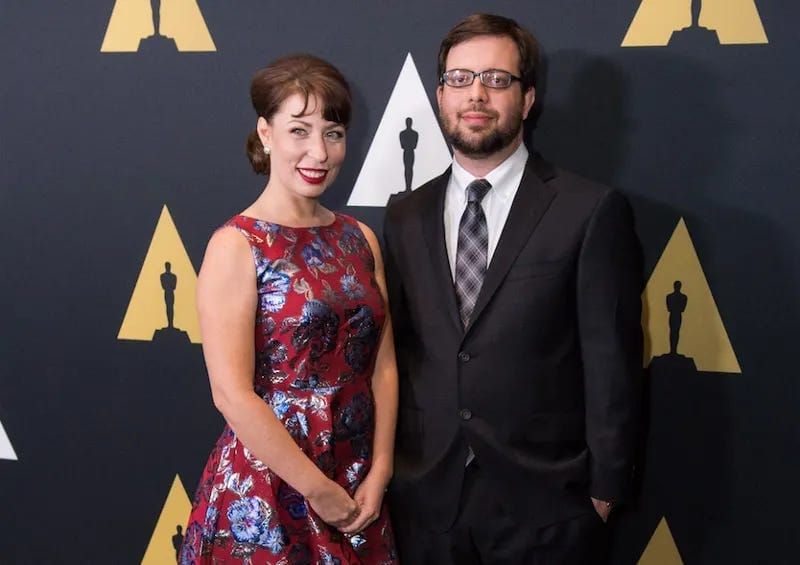
Alisha Brophy and Scott Miles: Nicholl Fellowships in Screenwriting winners.
Alisha Brophy and Scott Miles wrote the original screenplay “The United States of Fuckin’ Awesome” which won the duo a 2014 Nicholl Fellowship in screenwriting. Here is my in-depth conversation with them.
Scott Myers: Where did each of you grow up, and how did each of you find your way into writing as an interest?
Alisha Brophy: You want to go ahead, Scott?
Scott Miles: Sure. I grew up in pretty deep East Texas. It’s a fairly rural area of Texas, and there’s not a lot going on.
When you’re a teenager, there are two paths. There’s the, “I’m going to go out drinking and partying” path, or, “I’m going to stay in and watch movies with my friends” path, and I chose the movies path.
Alisha: — They’re not mutually exclusive.
Scott: [laughs] I got pretty obsessed with movies early on. I know a lot of people my age were really into Star Wars. A lot of my friends were, but I was the weird kid who was really into Raising Arizona and the Coen brothers when I was 10.
I would find those weird obscure movies, and that’s what set me down this path. Then when I was in high school, that’s when I suddenly made that leap to, “Oh, someone writes these movies,” and got really interested in the writing part of it.
My senior year, I took a class where you were able to work with a mentor in your chosen field. Obviously, in East Texas there’s not a lot of filmmakers, so I did a mentorship with a local TV station, but even just that really sold me on the idea of making short films, and writing to that direction.
After high school, I got my undergrad at a small liberal arts school in East Texas, Stephen F. Austin State University, where they had a really small but scrappy film program. What I liked about it is that the film program was part of the art department. It was not part of communications, which it is at most schools, so they really stressed film as an art form. I was taking film classes alongside painting classes and things like that.
We had a camera in our hand on day one. We were shooting on actual film. I did a short film where I got to blow up a car, which I don’t think you would get to do at a lot of larger universities. It was such a small program that we got away with all kinds of crazy stuff.
Alisha: Scott, tell them about when you went to get the stuff to blow up the car.
Scott: Oh, yeah. I was just telling Alisha this the other day. I needed the gunpowder to build the bomb to blow up the car. We had the fire department there. It was all a very controlled thing, but I still had to purchase the supplies.
It was just me, this 18 year old kid, showing up at a gun supply store asking for enough gun powder to blow up a car. But it’s East Texas, so no one bats an eye.
I originally was going to go the writer/director route, but then in the ensuing years I realized that writing was my actual strong suit, and so that’s what I decided to pursue.
Myers: How about you, Alisha?
Alisha: My whole life, people around me, family, friends, teachers, always assumed that I would be a writer. I had a little bit of a rebellious streak in me, and so the more people told me that, the more I decided I was going to be anything but a writer.
I grew up in a very small town in upstate New York. I was taking some college classes my high school senior year, and I was just over it. Where most people use college as their escape from a small town, I was already burnt out on college, yet I still needed that escape.
After high school, I actually ran away with a carnival and traveled through many states up through the New England area, going from small town to small town working for the carnival. Obviously, it turns out that it’s not much of a small town escape at all if you’re just going on to the next small town.
Once I got that out of my system, I traveled around a little longer, and then realized that I very much wanted to go to college. I ended up doing my undergrad at UC Berkeley. I was an English major, and started writing small creative non‑fiction essays, and thought that that would be my writing path.
I ended up catching a cold and I took a bunch of that daytime cold medicine. I don’t even take vitamins. I don’t take anything, and so it hit me really hard and I couldn’t sleep for like two days.
While under the influence, I sparked on a movie premise. I started talking really fast and I was like, “I got this idea for a movie. I’m going to write a movie.” And I did. In a couple days in this daytime cold haze I wrote almost an entire movie, and it was the worst thing ever. It was exactly what you would expect someone to produce who has no idea what they’re doing and has taken too much cold medicine.
But it gave me something to work on and explore. I started studying screenplays, reading books, learning about screenwriting and thought, “This might be something that…well, it’s less words than a memoir.”
I ended up spending a year rewriting it and used it as my sample for grad school. But, I was still not sure if I was going to be a screenwriter or a creative non‑fiction writer. I applied to programs in both and I actually accepted an offer at Columbia in New York City for their creative non‑fiction program. A memoirist in New York City. That was going to be my life.
But, at the last minute, I decided to go to UT Austin for grad school in screenwriting.
Really, that was my crossroads. I’ve been focused on screenwriting ever since, and that grad program is where I met Scott.
Myers: That’s what I wanted to get to next. I know it’s a very prestigious program, UT Austin. How was it you two found each other ‑‑ not like literally, but as writing and creative types, that you said, “Let’s start writing together”?
Alisha: The actual screenwriting graduate MFA program is only seven people a year. So we were —
Scott: — A pretty tight little crew right from the get‑go, and so just being in workshops for two years you would develop relationships. You know what other people’s strengths are. You already have developed a shorthand just in doing workshops with each other.
After grad school, we realized, “Oh, maybe we should give this a go writing together.”
Myers: So you hadn’t written anything together at UT Austin? You just figured afterwards that you were going to give it a shot?
Scott: We had just been fans of each other’s work in the program.
Myers: Both of you were writing primarily comedies?
Scott: No. I was writing primarily comedies. Alisha was writing more dramas and grittier TV pilots, like “Breaking Bad”‑almost‑style of grittiness.
Myers: What year did you all graduate from UT Austin?
Scott: In 2009.
Myers: So you’ve been writing together since then?
Alisha: Yes.
Myers: Outside of film school, are there other things you’ve done to facilitate your learning of the craft?
Scott: I’ve written and directed short films and web series. I also, and this has probably been more helpful, I started doing web comics on the side. I had a day job at a big company, so I started doing a comic strip making fun of big corporations. A “Dilbert”‑esque thing, but more from the point of view of a sociopathic CEO.
Having to tell jokes in just three panels really made me focus on how to structure jokes and the economy of words, which I definitely think has helped my screenwriting out, as well.
Myers: How about you, Alisha?
Alisha: I taught screenwriting at UT Austin after I graduated, and I found that teaching is one of the best ways to learn because you have to understand a concept thoroughly to be able to teach it to someone else.
And all the pre-writing that your screenwriting teacher insists you do, if you’re the teacher you actually have to do it yourself when it comes to your own projects.
For instance, we are really big outliners. We will outline a project forever.
Myers: Scott, you live in Austin, is that right?
Scott: That’s correct.
Myers: Alisha, you’re in California?
Alisha: Yeah, I’m in Los Angeles.
Myers: How did you make that decision, Alisha, that you needed to go or that you wanted to go? How did that come about?
Alisha: I wanted to be in television. Austin is such a lovely city. But, I realized that I needed to move to Los Angeles and give it a go because if I stayed too much longer in Austin I would never leave. I was very happy there, and would love to get back at some point.
Myers: Yet, you still continued to write together?
Scott: We did. Partly because when we finished our first feature it had a little bit of heat so we were like, “Oh, we should definitely keep writing together,” and it’s snowballed from there to the point where I’m going to be moving out to LA, actually, to continue this further.
Myers: That’ll be an interesting experience. Of course, you’ve had Alisha there to cut a trail for you.
Scott: Exactly. I feel like I’m more fortunate than a lot of people who are just making the jump without that.
Myers: How many scripts have you written together at this point?
Scott: We’ve finished two features and, I think, three or four pilots together. 30 minute, single camera pilots.
Myers: In your Nicholl acceptance speech, you mention an LA writer’s group. What’s the story behind that?
Alisha: Yeah. I made a friend, Nick Scown, at Austin Film Festival, and he lives here in LA. When I moved out, his writer’s group had just lost a person, and they invited me to submit a writing sample and accepted me. Then Scott and I began writing even more together so Scott came into the fold.
Scott: I was grandfathered in. [laughs]
Alisha: It’s very small. There’s only five of us. We won’t let anyone else in because we’ve been giving each other notes for years, and we have our own shorthand within the group. It’s really a lovely thing, and I feel that everyone, as a writer, needs to have this, a place where you can show others your first draft.
We also have this same trust with some of our old UT Austin cohorts. We’ve all graduated years ago yet we still workshop our material with our friend Matt Dunn as if we were still in class together.
Having readers you trust, you can show them the worst things you can put on the page and they still think that you’re amazing, because they see what the project will eventually be, and they give you notes and help you figure out the things that you’re not figuring out on your own.
We’ve been, like I said, doing this for each other for years, and it’s starting to really pay off. In fact, one guy in the group, Matt Murphy, won the Nicholl three years ago with a script that we had workshopped, and then Scott and I won this year. Now the pressure is really on Max Lance, and Nick Scown for next year’s Nicholl.
Myers: [laughs] Let’s move to your movie, the script, “The United States of Fuckin’ Awesome.” Here’s a description of the plot:
“When Thomas Jefferson finishes writing the Declaration of Independence, George Washington and Ben Franklin take him out to celebrate. After a night of debauchery, they realize the document’s missing. If they can’t find it in time for the Continental Congress there won’t be an America.”
I’ve seen the story’s been described as The Hangover meets “Drunk History.” What was your inspiration for this idea?
Scott: The first screenplay that Alisha and I wrote together was an indie feature called “Manic Pixie Dream Girl,” looking at the trope of the manic pixie, but from her point of view.
In the third act of one of the early drafts, the manic pixie had, in her quirky way, decided to recreate the American Revolution, and it was big and there were fireworks and horses. But she was also getting her history all wrong, so people like Genghis Khan were showing up. It was historically crazy.
We wrote it and thought, “This does not work. This is horrible,” and completely cut it out of the script. We said, “You just can’t make the American Revolution funny. It doesn’t belong in a comedy.” But then it’s one of those things where, with our personalities, once you say something can’t be done that’s all we want to do —
Alisha: — We were going to figure out how to make the American Revolution funny.
Scott: Right. The big notion of that idea had been rumbling around for a while in our heads, then we just built it up from there. Once we settled on the outrageousness of it like, “Oh, it’s like The Hangover,” then it really started falling into place.
Alisha: Scott is not taking enough credit here. The premise was something that he pitched to me one time and then immediately decided it shouldn’t be done, and I was adamant that we do it. That’s pretty much every project we do. Something where Scott kind of throws his own idea under the bus and then I latch onto it and think it’s the most brilliant thing ever and then insist that we write it.
Scott: Right. It’s like, “A period comedy? No one’s ever going to want to see that,” and then she says, “We must do this.” I need to listen to her more often is the lesson to be learned.
Myers: Alisha said she had that rebellious nature saying, “I’m not going to be a writer. Everybody says I’m going to be a writer.” That rebellious nature actually comes in handy here in your creative side, right?
Scott: Yes, very much.
Myers: I was curious, do either of you remember taking American history classes in school or did you like history or not?
Alisha: My history class was right after lunch so I slept through it.
Scott: I wouldn’t call myself a history buff. I haven’t dived in as deep to be called that, but I do love history quite a bit. I have a memory of my seventh grade history teacher telling us, “Look, there’s a lot of stuff I cannot tell you about the Founding Fathers, but come back when you’ve graduated high school and I will give you all the dirt that I cannot tell you here in middle school.”
Sadly, I never went back and took her up on that, but it always stuck with me that these are actual people with interesting lives that they cannot teach you in school.
Alisha: My father got me hooked on Howard Zinn. That’s basically how I caught up on my history lessons after school. So, when we started writing the first draft of this we realized that we had too many historically accurate, but obscure, history jokes in there.
Scott: Referencing specific battles that had taken place prior to the events in our script, and it was just too nerdy.
Alisha: So, I went to the library and took out a stack of children’s books about the American Revolution. We basically used those books as a litmus test for jokes. That way, we were making sure that joke‑wise everyone would get to enjoy the script and it would be broad and anyone with a fifth grade level of history education could still enjoy the comedy of it.
Myers: Let’s talk about the three primary characters because I want to get your take on how you developed them: Ben Franklin, Thomas Jefferson, George Washington.
How would you describe Benjamin Franklin’s persona in the script?
Alisha: Accurate.
Myers: [laughs] Party guy?
Scott: Yeah, and Franklin really was. I think he was the one that we had to add the least amount of our own work, just because Franklin is such an over‑the‑top character already that we could just have a lot of fun with him. He is the guy who’s in his own world. He doesn’t really have a character arc. He’s Franklin at the beginning and still crazy, party guy Franklin at the end.
Myers: Yeah, that’s exactly right. I noticed, of the three characters, he really doesn’t go through any change. In fact, he’s more of a change agent, like a trickster. He’s constantly getting into trouble because of his appetites, both for women and alcohol.
Scott: Definitely.
Myers: In comparison, let’s talk about George Washington. How would you describe his character?
Alisha: He has no self‑awareness, and he thinks of himself as a leader. His character arc is getting to the point where instead of demanding respect he’s earned it and can actually go forth as a leader, becoming the president that we all know him for later on.
Myers: How did you come up with his voice? He’s so funny.
Alisha: If you were to read an old draft of this script he’s not funny at all. We fell into what we called the “hall of presidents” version. Because he’s so iconic, we all share a memory of this man as stoic and honest and all these things that it couldn’t help but bleed into the dialogue and voice we gave him, and it was boring.
Once we realized the mistake we were making, we talked through what his character arc was, realized where we have to start him, and that put us on the path of the fun Washington we have now.
Myers: See if I get this right. You said, “OK, we know where he needs to go. He needs to become this leader so let’s start him, essentially, 180 degrees away from that, where he doesn’t have self‑awareness, he thinks he’s a leader but doesn’t really have that.” How did that take inform the development of his comedic voice?
Scott: It was definitely trial and error. We would take a couple of Washington‑heavy scenes and maybe try it a few different ways. Then we said, “This is a big, broad, ballsy comedy. Let’s just push it as far as we can go,” and we tried a few lines in the style we have now. We just laughed so hard at that and thought, “This is crazy, but let’s try it on another scene,” and it worked there too.
Myers: As I was reading, I could hear John McClane from Die Hard, that sort of bravado, blue collar guy. You’ve got Rooster Cogburn, overly profane. Even a splash of Jeff Lebowski because he throws in a “dude” every once in a while. He’s like this profane, blue collar, bravado dude.
Scott: I think that’s pretty accurate. That’s who we need as a president, I think.
Myers: Let’s get to Thomas Jefferson. Interestingly enough of the three lead characters, it seems like he went through the most significant transformation.
Alisha: It really is his story. People say, “This broad, raunchy comedy,” but for us, it’s a character study. The whole thing is wrapped around Jefferson’s character arc.
Myers: Could you describe his starting place and endpoint?
Scott: Once we hit upon the idea of retrieving the stolen Declaration, we learned about the relationship between Jefferson and John Adams, which was true. They really did have a contentious relationship.
Maybe it’s just as writers we gravitate toward the writer in the story, wanting to see him get confidence enough to see this through.
Alisha: Also, you have to remember with the three, Franklin did not have any character arc. We gave Jefferson and Washington, basically, the opposite ones. Washington is someone who demands respect and hasn’t earned it. Then we have Jefferson who —
Scott: — He’s earned it, but he doesn’t demand it yet.
Myers: Of course, he has a little bit of writer’s block there, too, writing the Declaration of Independence. I think part of his journey is to get in touch with his righteous anger and indignation. That whole sewer scene, essentially, where he’s really getting into the spirit of writing the Declaration of Independence.
You mentioned this idea of them losing the Declaration of Independence, which sets up, essentially, this investigation which becomes the backbone of this second act. How long into the process did that idea come to you, that sort of Hangover idea where they’ve got to recover something they lost?
Alisha: That really was at the very, very, very beginning because I remember early writer’s groups talking about other versions of this idea, and we just were not going to let that part of it go.
Myers: With that, I’m assuming that you also hit on this idea of a compressed time frame. Essentially, this story is going to take place very quickly, over the course of 24 hours?
Alisha: Yeah.
Myers: There’s a certain advantage to that because you can really sustain pace.
Alisha: I hope no one fact checks us. If they were to actually sit down with a map of New England and starts timing out how long it takes to get from place to place… We may have fudged that a bit.
Myers: Let’s talk about the first page of your script. I tell students one of the things they need to do in a script is convey the genre and the tone to the reader as quickly as possible just to help them get oriented. You do that wonderfully in your script, the contrast between the contemporary way you introduce it, the stuffy, grammatically sealed Declaration of Independence with this nerdy guy talking about it.
Then you cut to July 4th, 1776 where you have this description. “On the steps of the courthouse stand Thomas Jefferson, George Washington, and Ben Franklin bloody, bruised, wearing only underwear. Jefferson is half covered in tar and feathers.” Right there you’re saying to a reader this is not a biopic.
You put a cherry on top with this little cliffhanger when Jefferson says, “We’re all going to die,” setting up some pretty significant stakes.
I always try to end my first page of a script with a cliffhanger, some sort of something, big or small, to motivate the reader to go to the next page, start that forward momentum. And there at the very bottom of your Page 1, you’ve got title over black ‑‑The United States of Fuckin’ Awesome. That first page says so much and does so much. I’m curious how long you slaved over that first page or did it just magically come out?
Alisha: I do remember the moment when we started our first page, and Scott wrote the word “nerd‑boner.” That is from the very first line and it’s like the one line of the whole script that never changed. I thought it was so brilliant because it immediately says, “Hey, this is not some historical drama. We’re starting with the word nerd‑boner.” That’s always been there to set the tone.
But then we did slave over the first page forever because we were so determined to have all our main characters on the first page, to have a cliffhanger, to show how crazy the script will get if you stick with us for the first opening pages of set up and to be able to juxtapose the bland world of the Declaration of Independence now with what we want to explore. We had to get all that on one page. It took forever.
Myers: Let’s talk about tone, because there’s broad and then there’s broad. Were there things you included originally in the script that you felt, “It doesn’t work.” How did you determine the tone? How did you determine what was going to stay in and what had to get cut?
Alisha: It’s funny because at the Nicholl’s ceremony, the scene that they had the actors read aloud was the brothel scene which was fun. It was a perfect choice. But, a lot of the rest of the script is more action, adventure, and less raunchiness. In fact, most of the raunchier lines are in Act One, establishing this world, and then we go on the fun journey through it.
We don’t try and ever push the raunchiness to just be edgy. Our goal is purely to be funny.
In fact, we cut things that we felt fell a little outside of our comfort zone, including some old‑timey sexual devices that may have be lying around in that brothel scene in earlier drafts. It didn’t add to the humor for us. We also never do…I can’t say it —
Scott: — Scatological.
Alisha: We never try and see if we can outgross anyone. Any of the raunchiness is purely for the comedy.
Myers: The humor, yeah. Part of that, too, is not only the tone, but also you created this screenplay universe, you have certain rules or physics of the universe. There were couple of times, for example, there’s a scene where you’ve got topless working girls. Each set of boobs boasts a colony sash, Miss Delaware, Miss Vermont, all 13 of them. Which is funny. But it stands out because that’s like a 20th century beauty contest thing.
Scott: We only allowed ourselves a few of those such moments. We obviously are staying away from most of the anachronisms, but stuff like that, we thought, “Well, it’s a really funny joke to us and as long as we give ourselves only a handful of those and they are more subtle and you can argue it either way then let it stay.”
Myers: We all know about how each scene is supposed to move the plot forward, but you have some moments that just seem to exist simply because they’re entertaining. Like where Ben Franklin’s been counterfeiting money…
Alisha: Oh, yeah.
Myers: These three Founding Fathers compare counterfeit bills…”You put yourself on the 100‑dollar bill?” Jefferson’s on the two and Washington’s on the one. I thought that was so clever.
Alisha: Right.
Myers: And it doesn’t really add anything to the plot per se. It’s just a moment between these characters strictly to entertain.
Alisha: That’s the thing. Once the characters were solidified, this is what they would argue about. How can you take these three guys and have a scene where you put them in a strip club, basically, where there’s going to be money thrown around. How do you not go for that kind of joke and that kind of conflict?
Myers: Let’s talk about this the old adage, “Give them a big ending.” Your script certainly has that. It sounds like that the roots of it go back to the Manic Pixie Dream girl thing.
Scott: Kind of. Yeah.
Myers: In some ways the ending might have been there even before you had committed to writing the script.
Scott: I think we knew we wanted it to be this big thing with fireworks and we’ll bring back all the characters that we’ve seen throughout the movie, have them part of that big finale.
Myers: How many drafts of the script do you think you wrote before you submitted it to the Nicholl?
Alisha: Each time we write together, we get more and more outline‑heavy. There were many drafts of the outline before we ever hit pages. It’s a little hard to answer just because our outlines get really, really detailed. They’re almost like a script without dialogue.
Myers: Double space them, and put the dialogue in, and you got a script.
Alisha: Yeah.
Myers: You submit this to the Nicholl. Describe that process and how that all unfolded.
Alisha: Scott and I had already landed on the Hit List with the script. And we had been a semifinalist with it the year before. The Nicholl is so prestigious and having a friend have won it you see, first hand, how life changing it is.
So, it wasn’t even something we talked about. It was just, “Oh, look. Nicholl deadline is coming up. Let’s throw USofFA back in the mix and see what happens.” You don’t have to win the Nicholl to have it affect your career.
In fact, Manic Pixie Dream Girl placed pretty high in the Nicholl. Just the script placing high and the log line getting passed around town got us our manager, Ashley Berns at Circle of Confusion. So, the Nicholl was already affecting our career long before this win.
Myers: You’re finalists at this point, right?
Alisha: Mm‑hmm.
Myers: That was big news.
Scott: Right.
Myers: Then you got the call. What were the circumstances there?
Scott: I was sitting in traffic when I got the call, which was perfect. Stuck in my car with nowhere to go, having just come off of a really long day at work. Definitely a great place to have such a life‑changing call. I was like, “Maybe, I won’t have to be sticking in this traffic much longer.”
Myers: How about you, Alisha?
Alisha: For me, I was at work boxing up a room of books. Los Angeles was in the middle of a heat wave. I was moving heavy boxes of books down a staircase to my car when I got the call.
I was standing outside a coffee shop. I did this crazy, little dance, and made some weird noises… the patrons definitely took note. It was the best feeling. I called my mom, and then called Scott, and then realized that I still have to unload that entire car full of books.
Myers: Irony!
Alisha: [laughs]
Myers: And your experience at the recent Nicholl Award ceremony in Los Angeles?
Scott: Amazing.
Alisha: It was the best night of my life.
Myers: What’s the status of the script at this point?
Alisha: It’s still available. The way we see this is we don’t see it as a period comedy in earnest.
We see it more as Drunk History or Monty Python, where part of the humor comes from doing it on the cheap, and letting that be part of the joke.
Myers: Like Monty Python and the Holy Grail?
Scott: Exactly!
Myers: Let’s jump into some craft questions here. How do you come up with story ideas?
Scott: We have a whole list, a running document that we’re constantly adding ideas to it. I’d say we have 20 on there now. Some are just a one sentence log line that’s in no way fleshed out.
Alisha: The pilot that we’re writing now is a version of an idea that’s been on that document for years. We just talked through a new fun way of breaking that story.
I highly recommend people keeping lists, because what doesn’t work now, a version of it three, four, five years down the road might be a really brilliant project.
Myers: Are you actually proactive on this? Are you every day trying to think of ideas?
Alisha: To be completely honest, Scott and I have both been working jobs all of these years, and then writing nights and weekends. Our output has been, unfortunately, very limited based on the fact that we had to keep a roof over our heads.
So, what’s been happening is that when we do have a project done, people get excited about it, and we have a bunch of meetings around town. The town asks, “What’s next?” And then we start pitching projects we haven’t written yet.
So, people get excited and then we get excited about how excited they are. We’re like, “Oh, man!” That cycle tends to inform what project we’re working on the most.
Simultaneously, we’ll have one that is in pages, one that is in outline form, one or two that are purely like, “Oh, we’re still trying to crack this. It will be something like…”
Fortunately, because of the Nicholl, Scott was able to quit his full‑time job. And I’m able to work around our writing schedules. So, we’re now really turning out material a lot faster.
So, we’ll add to the Google docs, but we are not in there trying to break any stories until we get another project off our current plate.
Myers: How important do you think the story concept, the high concept or the conceit of the story is to the overall strength and commercial viability of specifically a spec script.
Alisha: Recently, we spent months working on a feature that took us, I’d say, a paragraph to explain to people, because we’d go into the reason why we wanted to write it, and what we were exploring with it, and the gist of it.
We wasted months spinning our wheels, and then one day realized that this side character who’s only in two scenes was more interesting than anything else we were doing with this project.
We said, “Screw it.” Scrapped the whole feature. Started a new idea that was based on this one character because it was instantly like, “Oh, it’s this!” There was a single log line idea about this guy.
Now this is our favorite project. It’s so easy to pitch in one sentence. The writing, it’s coming more easily because the one simple log line gives you the through line for the whole project. When you’re writing the pages as long as you’re sticking to that through line, it’s sticking to the promise that you made in that log line. You’re golden.
Scott: I think for a spec, it’s crucial to have that clarity if you can. One, to help you actually finish it, but two, to help the readers know instantly what it is before they even pick it up.
I’ve got ideas floating around my head that I would never try to write on spec because, like Alisha says, it takes a paragraph just to do the set up and explain all that. It’s just not a commercially viable strategy. Not in the current climate.
Myers: Both of you mentioned something that most people will think of log line in terms of its marketability, trying to get the idea out and communicate the story to someone, a buyer or what‑not.
But you mentioned something that’s also important about the story concept. It becomes a touchstone for you, doesn’t it? It helps steer the entire creative process. If you’ve got something simple and fundamental that you can always have in place as you’re writing the script that can really help guide your process.
Scott: Definitely.
Myers: It’s a dual value.
Scott: It helps us keep everything straight, helps us finish the project. It has the added bonus of it being readable and more —
Alisha: — Pitchable.
Scott: And exciting for the creative execs to read.
Myers: You’ve talked about how in‑depth your outlining process is. I’d like to pry into that a little bit more, your process in prep writing. How do you go about developing characters? Are there any specific tools you use there?
Alisha: Right now, we’re writing a feature. Our outline is 30 pages long, single‑spaced, and has morphed into a beat sheet. We have it all scene by scene.
The very first page is every main character, who they remind us of, maybe actors that would fit the bill. We put down their goal in the film. We put down their external want and their internal need. We keep putzing with it until those are opposite of one another. We also put down the theme of the project.
Myers: How much time do you spend brainstorming and what type of brainstorming do you do?
Scott: That’s pretty much our entire process because the nice thing about having our setup on Skype is we just talk through each scene. We may have a vague idea of our beginning, middle and end, but then we just go through scene by scene and brainstorm, “How does this look? What are things that we can do? How is this keeping on our theme and what our characters want?”
We’re also always looking for those setups and payoffs, so we may towards the end of a script be talking through a scene, realize, “Oh, wouldn’t it be great if we had this here?” Then we’d jump back up and find a way to layer that in in a clever way so that it doesn’t seem like a setup. We work backwards in that way.
Alisha: What’s great about having a writing partner is that what goes on the page is never a true first draft. Because if you’re talking about something, you’ll be like, “Oh, what if blah, blah, blah,?” Then the other person says, “Oh, yeah, but what if it’s blah, blah, blah.”
By the time you’re like, “Yeah, write that down” it’s at least the third option from where you started. Everything that hits the page for us feels more like a third draft than a first draft, because we’re already talking through better versions before we type anything.
Myers: You mentioned theme. Are you the type of writers where you start off with a theme or themes, or do they emerge as you go along in the writing process?
Alisha: It definitely is something we solidify before we go to pages, but it usually comes out maybe a couple of drafts into our outline. With USofFA, it was very much about maturity and respect.
With the project we’re working on now, it’s all about control and who controls you. We have this fun, big broad concept about controlling the world. But, our character is all about, “Should he get married?” He’s fighting that because he feels like marriage is giving up all his control to someone else.
Myers: It sounds like you use that as a touchstone as well. That theme to align yourself to what’s going on at any given moment?
Alisha: Yeah. Your theme, and your character tend to be very —
Scott: — Closely aligned.
Myers: What do you think about when you’re writing a scene? Do you have any specific goals in mind?
Scott: I see it as us trying to make each other laugh while still not pushing the jokes so far out of what the character would actually do that it’s a joke for no reason. It still has to be character‑based. That’s the nice thing about comedy. We know, instantly, if it’s working or not.
If I write a joke, and she doesn’t laugh, it’s time for me to go punch up that joke.
Myers: That gets into this idea of your writing process. I’m sure people will be curious. You do Skype, but do you have a set time that you do? Do you work every day? I know now the job situation’s changed a little bit.
Alisha: Scott has been amazing over the years, and his wife, too, for putting up with his schedule. So, he would commute an hour to work. I’m going to tell everybody your life schedule, Scott.
Scott: Yeah, go for it.
Alisha: [laughs] He would commute an hour to work. Put in a full day at this insurance company, commute an hour back. Write with me for an hour and a half. Go have dinner, spend time with his wife. Come back online and try and get one more hour in, if we were lucky, before bed. Weekends, we would try and fit writing in around our lives as best we could.
Now we have our new schedule which is 10 to 4pm, writing straight through. It is amazing how much faster and better the ideas and pages happen, when it’s not having to come after a full day’s worth of work and frustration. When you can start the day fresh with your cup of coffee and dive into a scene, it is magical. I want this to never change.
Scott: That being said, I mean even when I had that crazy schedule, the only reason we were able to get so much done is because we stuck to that schedule pretty rigidly. It was pretty rare that we would take off time because we didn’t feel writing. That’s another nice thing about having a writing partner is that you feel, “Oh, I don’t feel like writing,” but the other person is so jazzed. So I’ll think, “I don’t want to let them down. So I’ll go write a few scenes.” Then once you get on the flow, you’re loving it just as much.
Having that checks and balances of, “Nope, I’m definitely writing tonight because the other person is waiting for me.” Without it, it would be too easy to just say, “Well, I’m not writing tonight. What’s on TV?”
Alisha: Though, I would like to point out that, the writing schedule was also a great litmus test whether a project is worth exploring and if you should continue working on it. That last feature that I said that we scrapped? We’d been working on the outline for months.
Our writer’s group told us, “It’s ready. Go to pages.” And it was. It would have been a perfectly acceptable, fine studio comedy. It worked on the page.
The truth was for about, I would say for about four days, I kept coming up with excuses as to why I couldn’t write that night. I just couldn’t bring myself to dive in. We finally just talked through why, and it turned out he wasn’t feeling it either.
We realized if we’re going to write for free, this is on spec, so no one’s paying us, we have to want to do it. It just wasn’t a strong enough project to keep us writing.
Fortunately, from that we have the feature we’re writing now that we love. As soon as we get off of Skype with you, we’re diving right back into our pages. We were already working on it this morning.
Myers: I like to ask writers, “What’s your single best excuse not to write?” What you just said there, Alisha, I think is quite interesting that oftentimes, our gut, our instinct is the most important thing we can bring to a project.
If for four days in a row you are finding excuses not to write this, you are smart enough to say, “You know, there must be something not working here.” I guess sometimes, you can look at those excuses or putting off the writing is actually being a way of yourself trying to tell you something important.
Alisha: Yeah.
Myers: Scott, you’re going to move out to LA?
Scott: Yup.
Myers: I know you’ve written together before or at least with your program at UT Austin, would you still be inclined to do the Skyping out there once you’re both in the same city?
Scott: Yeah. It’s funny because I’m still not sure where exactly I’m going to be moving.
She is on the Eastside and says, “Look, you can move to Santa Monica, you can move to the valley, we’ll just keep Skyping. It doesn’t matter.”
Who knows, if I’m within walking distance of her place, then we’ll maybe get together. But, the Skype works out so nicely that we could be a block away and we still might just stick to Skype.
Myers: Well, given the traffic in LA…
Scott: Right.
Alisha: I would like to add that there’s a great program called, “writerduet.com.” It’s a free program. It has all the correct formatting for a script. But, it also has double cursors. We write in that. We have our little video up in the corner. And we have our two cursors going on the page simultaneously.
For anyone that is in a writing team, it is so efficient, so lovely to be able to just work on the documents simultaneously, not have to read changes aloud to each other as one person has a master copy, which is how we had to do it before WriterDuet.
Our writing process actually had to go through a change when we stopped doing our old system of sending pages back and forth.
Up until WriterDuet, he would write a reel, I would write a reel. Then we would trade it, edit it. He would write the next reel, I would write the reel after that, trade it, edit it.
What that meant was that you would have three or four days by yourself to constantly edit and change your first draft before the other person ever saw it. By the time they read pages you were confident that you had something you could show your co‑writer and he’s not going to run for the hills. But, when we started with Writer Duet the other person can look at their screen and watch your little blinking cursor, which means that they see you put your very first attempt of a line on the page.
That is terrifying. So we had a really open conversation about it when we first started with that program like, “Hey, I trust that your line’s going to suck, but I also trust that, down the road, it’s going to be amazing and the final version of this will be even more amazing. No judgment.” Once we had that conversation, it has been full steam, two cursors going, and no comments about the initial bad lines that are thrown up there.
Myers: OK. Let’s jump to this thing I mentioned earlier, what do you love most about writing?
Scott: At least for me, having the early exposure, writing and directing films, and then getting to screen those films in front of an audience. I’m writing comedy, so hearing the audience laughter is so addictive. Alisha found this out the other day when we had the live reading, that, at least for me, that’s what it is. Writing something and feeling pretty confident that it’s going to get laughs.
Obviously, on the page I don’t see the final version, but that’s always what I’m aiming for is that final audience reaction.
Alisha: Yeah, I was definitely laughing harder than anyone else in the Samuel Goldwyn Theater the night of our ceremony. Listening to those actors do the most amazing job with that scene. I can see what Scott means by that audience reaction becoming addicting.
For me, I think my big realization of what film can be was a reaction to Harold and Maude. The first time I saw it was on a small TV, and I was blown away. I just remember crying, all by myself, watching this movie, and falling in love with it. Since then, I’ve watched it many, many, times and it’s always moving, but it’s not the same, because I know what’s going to happen in the end.
A couple years ago a book festival was doing a celebration of the ’70s. And so the Alamo Drafthouse showed Harold and Maude in their theatre.
I thought, ‘This is such a fun thing for all my friends to do together.’ We all get there and get our popcorn. I’d say we were only about 10 minutes into the movie and I started crying my eyes out. Did not stop crying the whole movie. It was really embarrassing because I had no idea how much larger the connection and emotional impact a story can have when the image is blown up to the size of a theater screen.
That, for me, is what I want to be a part of, and I want to put out there. We obviously haven’t had that yet, but the idea of how much I giggle and he laughs just working on the pages, I can’t wait for it to be on the big screen, and hopefully the material, comedy‑wise, has the same effect. Not crying. The laughing.
Myers: In that respect, the fact that Scott laughs, you giggle, and if you can make each other respond that’s a small version on a daily basis of what you hope to have happen when the movie comes out.
Alisha: Yeah.
Myers: Finally what advice can you offer to aspiring screenwriters about learning the craft and breaking into Hollywood?
Alisha: Take daytime cold medicine.
[laughter]
Scott: When you’re writing a spec script, I think it’s so important that you’re not chasing a trend, that you’re not chasing what you think Hollywood wants. My whole life I’ve been writing weird, little projects. I’d say “USofFA” is no different.
As Alisha said, originally my first impulse was, “Here’s this fun idea, but we can’t write this as a movie. It’s too weird. We shouldn’t even bother speccing it.” She’s like, “No, let’s go for it.”
Obviously it’s worked out for us, and I think, if left to my own devices, I might say, “Oh, let me chase this more commercial thing,” or, “Let me find something a little bit less obscure or weird to write about,” and then, either get frustrated and not finish, or it doesn’t have my heart and my voice in it because it’s not that weird, passionate thing that I love so much.
I would just advise people that it doesn’t matter how strange or bizarre your idea is, if you can find a way in and really put your voice and your passion into it, it’s going to find a home eventually.
Myers: How about you, Alisha?
Alisha: I would probably say find a way to settle in, because it’s going to take so much longer than you think. I’m probably still wrong in my own head of how much longer I have ahead of me. It is such a slow process, this town, that you just have to find a way to settle in and find ways to enjoy the process of it.
I love the day‑to‑day writing with Scott. I love my writer’s group. Hanging out and trading notes with them is quite literally hanging out with my friends, and doing something fun.
If you can find a way to love each part of the process, and each part of the process is being productive, if you can find the fun in it, or the way of socializing or connecting with others, it’s going to make it a lot easier than if you come here and think of it as work. Some people think you just have to work harder and more, and you’ll get there faster. You’re not going to get there faster, so just enjoy the process.
Here is Alisha and Scott’s acceptance speech at the Nicholl ceremony.
For my interviews with every Nicholl winner since 2012, go here.