Go Into The Story Interview: Allan Durand
Allan Durand’s original screenplay “Willie Francis Must Die Again” is an amazing real-life story and a script that won Allan a 2012 Nicholl…
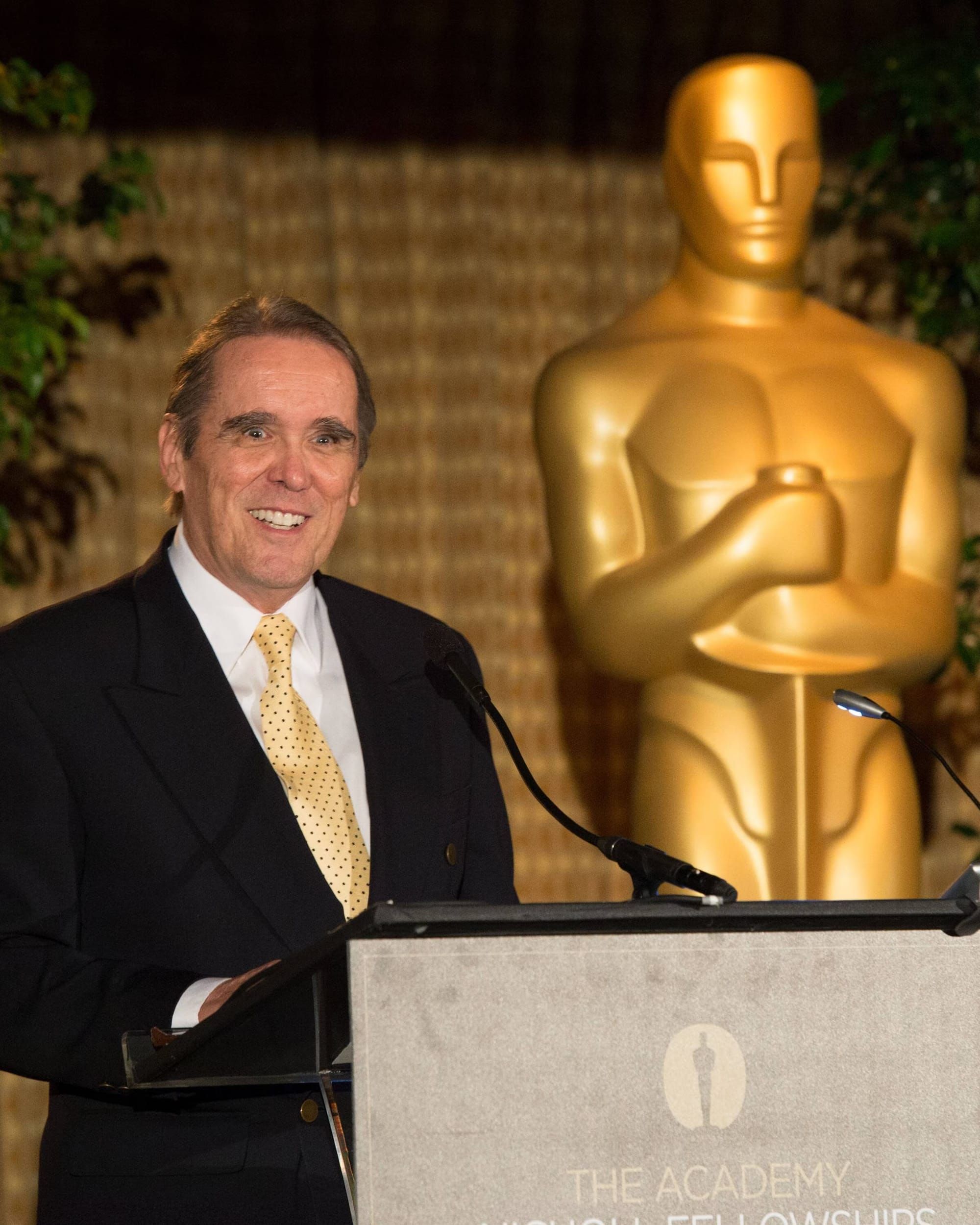
Allan Durand’s original screenplay “Willie Francis Must Die Again” is an amazing real-life story and a script that won Allan a 2012 Nicholl fellowship.
The story behind the story is also quite remarkable, one I’m happy to share with you through this interview.
Scott: Congratulations on the Nicholl.
Allan: I don’t think there’s a thrill ride anywhere around like the Nicholl.
Scott: First of all, I understand you’re a lawyer. Is that correct?
Allan: That is correct.
Scott: What type of law do you practice?
Allan: I have a master of law in taxation, and I do some tax work, but it’s pretty much a general civil practice with an emphasis on tax and litigation.
Scott: You’re in Louisiana, is that right?
Allan: I am in Louisiana.
Scott: Born and raised there.
Allan: That is correct.
Scott: You were involved in the 1986 movie, “Belizaire the Cajun.”
Allan: I produced it, and we ran out of money before we finished hiring all the actors, and me and the director flipped a coin and I lost, and so I had to play the priest. [laughs]
Scott: Did you have an acting background?
Allan: No. Well, I’ve stood up in front of a lot of juries. I don’t know if that counts. [laughs]
Scott: How’d you get involved producing that movie?
Allan: The writer/director Glen Pitre ‑‑ P‑I‑T‑R‑E ‑‑ he had helped me make a short film five years before that, based on an unpublished novel that I had written, based on a portion of it. The deal was, he was going to help me make my short film. I was going to do the legal work and help him get his next film made, which was going to be a big budget film, like $100,000. That turned out to be “Belizaire.” We worked a couple years, really wasn’t getting anywhere. Then out of the sky came the long hand of Robert Redford. The Sundance Institute picked us up for the Sundance June Film Lab back then. We went out to Sundance for the month of June and worked with Sydney Pollack and Mr. Redford and Robert Duvall, a bunch of people who had volunteered their time.
We went out and made “Belizaire the Cajun,” which I think was the only American film that was the official selection that year to both Cannes and Sundance.
Scott: Did you catch the movie bug at that point?
Allan: No, I was born with it. I don’t ever remember not having it. I called it my disease and my addiction. When the Nicholl thing came out, my local TV station was interviewing me, and the reporter was talking about my obvious passion for screenwriting. I said, “No, look, let’s be honest. Passion is a virtue. What I’ve got is some damn addiction. I can’t help it, I can’t not do it.” That doesn’t mean I want to live in an attic while I’m writing, so that’s why I kept my day job.
Scott: After 1986 when “Belizaire” came out, did you have any further involvement in the film business?
Allan: Yeah, “Belizaire” cured me of wanting to work with actors. After that, I started making documentaries for public television. I’m on my third one, working on my third one now. I had written a sequence of scenes for “Belizaire,” which turned out to be the opening of the movie, when “Belizaire” is in the confessional and the priest gives him five rosaries for penance. He starts negotiating with the priest in the confessional, trying to get his penance lowered, and I enjoyed it. Then I tried my hand at writing a screenplay, then another one and another one and another one.
Actually, first I made a documentary (“Willie Francis Must Die Again”) for public television about five or six years ago. At the same time, I had written a screenplay, thinking that the documentary was going to get noticed. I won three or four film festivals with it. I thought that was going to get it noticed enough that then somebody was going to want to say why don’t we make this into a feature film, at which point I jump out from behind a tree and say, “By the way, I’ve got a script.”
But it never happened, so I started entering screenplay contests, and it was a finalist in the Austin film festival screenplay contest, and it was a silver award winner in the Page Awards contest. It was second in the American Screenwriters Association contest. Then two years ago, in 2010, it was a semi‑finalist in Nicholl.
I said I’m going to give it one more shot before I quit. I tweaked it and made some changes, and then reentered it in the Nicholl in 2012, and got lucky.
Scott: Based on these competitions, you tweaked the script?
Allan: Yeah. I was always going back to it every few months and starting at page one, and tightening up this and changing that, taking out a scene I didn’t really think worked. Really, in the last two years, added another character that I think helped a lot. I just kept fooling with it until we got it right.
Scott: Let’s go back to the roots of the story for “Willie Francis Must Die Again.” It’s set in Louisiana in 1946‑1947 and based on a true story, including the protagonist, a lawyer named Bertrand, to whom you’re actually related in real life. Could you fill us in on those details?
Allan: Yeah, he was my grandmother’s youngest brother. Their grandfather had been a Justice on the Louisiana Supreme Court. He was a lawyer, and at the trial, Willy was represented by two court‑appointed attorneys who didn’t make an opening argument, didn’t ask any questions, didn’t offer any evidence, didn’t cross‑examine any witnesses, waived closing argument. They did as much good as a nice potted plant would’ve done. I don’t know, maybe you would’ve gotten some shade out of a potted plant so they did less than a potted plant. Surprise, surprise, he got convicted.
After this first unsuccessful execution, his father went looking for somebody to try to save Willy’s life and that’s when he went to my uncle. My uncle agreed to take the case and ended up getting paid a grand total of 2 pounds of sweet potatoes.
Scott: How did you hear that story? Was this the lore amongst your family or did you know your great uncle?
Allan: Both. Actually, nobody in my family ever talked about it. Not in a negative sense. I was born and raised and still living in St. Martinville so it was something that I grew up with my whole life. As I got older, especially as I got interested in film making, I knew I was never going to get my hands on a better story than this, or at least I was pretty sure I wasn’t. My great uncle didn’t like to talk about it, but as he got older, he became a little more open to it, started sharing some things with me that I was able to put into the film.
Scott: Other than your personal connection, what about the story made you think this would make a great movie?
Allan: Primarily, it was something that had happened only once in the history of the United States. Since we’re the only country in the world that had electrocution as a method of capital punishment, it only happened once in the history of the world and something that could never, ever, ever happen again. It was plenty unique. Then you add in the fact that he was innocent, that it goes to the Supreme Court, and not only he was innocent, but they knew who did it. It was a deputy sheriff. It goes to the Supreme Court. The Supreme Court votes five to four to allow a second execution, and then Justice Frankfurter, who cast the deciding vote. He goes to work behind the scenes trying to get it commuted to life in prison, after he has cast the deciding vote.
That is the only time in the history of the U.S. Supreme Court that there’s any evidence of a justice of the Court working behind the scenes to try to undo a decision that he cast the deciding vote on. And then, once I stumbled across Arthur Miller’s book about it ‑‑ not the playwright Arthur Miller, it’s a law professor at Georgetown. I think he and an associate professor went into all of the private papers of Frankfurter and all of the other justices at the time.
It turns out that there was this huge, raging battle behind the scenes in the Supreme Court where they were trading votes right and left. They had started off six to three in favor of allowing a second execution. Then a month later, there’s only two votes in favor of it. So the Chief Justice jumps in there, it gets tied at four to 4.
After that, with Frankfurter being the swing vote, then nobody can pull Frankfurter over to their side, and Frankfurter finally falls off the fence. After they had decided to allow a second execution, the week before the second execution, my uncle’s having coffee with a friend of his, who tells him, which I put in the book, word for word the way it happened.
He said, “Well, it’s terrible about that kid you defended.” He said, “Yeah, I’ve shot all my bullets out. I can’t think of anything else to do.” He said, “Oh yeah, that’s terrible. What I’m talking about is the two executioners being drunk.”
My uncle said, “What in the hell are you talking about?” He said, “You didn’t know?” He said, “Yes, the two executioners were so drunk they could hardly stand up.” My uncle gets the affidavit, borrows money from my grandma, flies back to the Supreme Court. They won’t stop it, but they put in motion the language telling the District Court to stop it.
He goes there and Willie tells him, “No, they’re going to kill me anyway. I can’t keep doing this to my mother, and it’s going to kill her, and my uncle…that he’ll regret it for the rest of his life.”
There’s all those twists and turns in there, and another thing that appealed to me was there were no clichés. There wasn’t this town full of rednecks screaming for blood. World War II had just ended, people had been backing the government, and here was the government saying, “This guy is guilty and we’ve got to execute him.” Except for the victim’s family, there was really nobody in St. Martinville that really thought it was a good idea.
But there’s no mechanism in place to stop the machinery of government when it starts rolling. And so, you had this one guy with his thumb in the dyke, my uncle, hoping and praying he could stop it, and it just seemed to me to have numerous elements of the story that you don’t run across very often.
Scott: That’s amazing. It sounds, then, from what you’re suggesting, that much of the story that’s in the screenplay is based on historical fact. How much creative license did you take to shape it in terms of the narrative?
Allan: Well, I think I took a lot of creative license, but I won’t tell anybody where it is. Every time I pitch it I pretend like it’s all true. Don’t tell anybody. But no, I mean, what I think are all the significant elements are true. Obviously, I don’t know what everybody said to everybody at every step of the road, so I took some license in there. But a lot of the stuff is just like walking along and taking dictation. It’s what really happened.
Scott: The choice to do the cross‑cuts between Bertrand DeBlanc and the Supreme Court in Washington, D.C., where you’re going back and forth between them, did you know originally, “I’m going back and forth between those two locations”?
Allan: Well, yes I did. I worried about whether I’d made the right choice until I got the call telling me I had won the Nicholl Fellowship, because I always felt that was intensely interesting to me, but I knew it was interesting to me in large part because I was a lawyer. At least I thought it was in large part because of my legal background. I worried incessantly that it just wouldn’t seem that interesting to anybody else. But I don’t think anybody…I don’t think 99.9 percent of the population, when they think of the U.S. Supreme Court, they think of these scholarly arguments in the back room over cases and precedent and constitutional amendments. They really don’t see two guys sitting right there drinking coffee, saying, “If you can vote for me on this, I think I’ll be able to vote for you on the other.”
You don’t think of the Supreme Court as your eighth‑grade classroom, where you agree to vote for me for president if I agree vote for you for vice president. But that’s at least in that one instance, that’s how it worked. I thought that was just fascinating.
Another thing, of course, being a lawyer, clients never understand how emotionally involved lawyers get in cases. I thought it would be interesting to show at the Supreme Court level, the dissenting justices, how strongly they felt about it. They were willing to go to bat and slash and burn, lie and cheat and do whatever they had to do. It was like it really was a member of their family.
I thought that was really interesting. I didn’t know whether it was too much for an audience of non‑lawyers, which is every movie audience in the country.
Obviously, where I got lucky is that the people who judged the Nicholl competition are very, very sophisticated folks in terms of story and that kind of thing. I didn’t know it until the night of the Nicholl awards when Gale Anne Hurd, the chairman of the committee, was introducing everybody and everything.
She said when you cut it down to the semi‑finalists, that last 100 to 110, the group of people who cut it down to the 10 finalists include 35 screenwriters, all of whom have either won or been nominated for the Oscar for best screenplay.
You talk about not your average movie audience. I was lucky in the level of education and sophistication and experience and all of those things and intelligence of the people who were judging that competition were probably higher than your average cross‑section of the population.
Scott: Your choice to do cross‑cuts between Louisiana and the Supreme Court and then the eventual intersection of Bertrand with the Supreme Court was smart because it allowed you to track two parallel story lines, bouncing back and forth between them, which makes it more interesting than just following one.
Also that narrative technique underscores that point you made: it’s not just the law, it’s about these people, these characters, the Supreme Court justices becoming emotionally involved in this case.
Allan: Absolutely, because they didn’t almost embrace him, they embraced him. In fact, that’s literally what happened. It shows when you read their papers and how much time they devoted to it. That’s a fact. I guess the moral of that story is, you can bounce back between two different stories as long as they’re both really interesting stories. The trick is to either find two interesting stories or figure out how to make them interesting.
Scott: I have done a couple of adaptations myself, and I certainly have talked to a bunch of writers and read, to know that doing real‑life stories or adapting books is perhaps the single‑most challenging form of screenwriting there is. Because people’s lives don’t normally lay out in beginning, middle, and end plus there’s just so much content. Oftentimes, the more difficult issue is not what you include but choosing what to omit. Did you find that to be a challenge for you, like there was a lot of content that you just said, “I just can’t figure a way to put this in,” or making those choices about which subplots or characters or scenes to put in?
Allan: The way I did it is every five to 10 pages, I wanted a big fist to come out of the screenplay and punch the reader right in the gut. I wanted them to take a bite at the whole apple. I just wanted something to come out of it. I picked all of those what I thought were the elements of the story that really shook you, rocked you, and got you dizzy, and made sure all of those were in there, and just figured out how to link them. There are probably some things that were interesting to me or that I might be able to put in, but at some point, you’ve got to stick to the spine. So far so good, it worked out.
Scott: As far as Bertrand is concerned as a protagonist character, what about him? I know you knew this person as a real person, but as a protagonist, as a narrative figure, what about that character did you find yourself connecting to?
Allan: The human side. The fact that when you start a football game, the band’s playing and everybody’s on their feet cheering, and then you get in the middle of the third quarter and you’ve been getting your butt kicked around for two‑and‑a‑half quarters. Everybody’s going to the concession stand or the bathroom and nobody’s cheering anymore. You’re so tired you can hardly stand up. Just the fatigue of fighting a long fight, especially this kind of thing. He was in a battle where he knew he was right, and it would be almost impossible to win.
He was taking care of that case instead of taking care of his family. No matter how noble or well‑intentioned you are, at some point, that’s going to start wearing your ass down. That’s something that I tried…I don’t know if I portrayed it, but just the humanness of it, the fact that people get worn out, and doing the right thing can be tiring. It’s not always a joyful, uplifting thing that keeps you smiling and whistling 24 hours a day. Sometimes, it just wears your ass out.
The enormity of the sacrifice you’re making is real. Big sacrifices are real. They’re noble, but boy, they are tough. I don’t see that a lot in films, and I just thought that it’s a fact, and it’s real. When in doubt, go with what’s real. That’s my two rules‑when in doubt, go with what’s real, and my second one is, don’t ever let the facts stand in the way of a good story. [laughs]
Scott: Yeah, well, that second one, absolutely. That’s one of the golden rules in Hollywood, right?
Allan: Absolutely.
Scott: I have to ask, because it’s one of my top five movies, were you inspired as a boy or as a young man by “To Kill A Mockingbird,” the book and the movie?
Allan: Oh, yeah. Every time I see it since I’ve been out of law school, it reminds me that is the ideal that you should strive for. Just because you’re right don’t always mean a lot. But that’s something that it’s like the St. Christopher statue on the dashboard of your car to remind you to be careful. It’s just a beacon out there. For any lawyer, it ought to be a beacon out there. If you’re doing like that, you’ve done it right.
Scott: Let’s talk about what’s happened in your life in terms of the Nicholl. First of all, how did you find out that you got into the round of 10, and your experiences when you were out in Los Angeles?
Allan: Well, I realized in September that it was about the time to hear from the Nicholl folks. Having been a semifinalist once, I know you get the “close but no cigar” notice by email. I kept looking for it every day and realized it was time. I was walking out of my office one afternoon, and the phone rang. I looked at the caller ID, and it said the Academy of Motion…the whole thing wouldn’t fit on there.
When I saw that…I just went right through the roof, because I knew they weren’t calling all 100 people to tell them they lost. That’s how I found out I was a finalist. I said, “Well, you’re a finalist. Be happy with that. You’re not going to win a fellowship. Don’t get your hopes up for that.” Sure enough, two or three weeks later, I got the call, and I was one of the winners.
It’s like being the ugliest girl in the class your whole life, then you wake up one day and you’re Cindy Crawford. All of a sudden, your email box fills up with agents and managers, and people want to read your script. You were a dummy on Monday, but man, you’re a genius by Friday. It was a hell of a thrill.
Scott: What’s the status on “Willie Francis”?
Allan: “Willie” has been optioned, and the company that optioned it asked me to keep it under wraps. Because the agent for a major star has recommended to him that he direct it and star in it. He is going to read the script over the Christmas break and the company wants to hold off on making an announcement, because if they can get him, they can announce all at once that they’ve optioned it and that he’s agreed to do it, to star in it. That’s pretty exciting. As a matter of fact I got an email this morning. There is another agent at one of the other two or three major agencies who read it and likes it and has it recommended to one of his star clients, that he direct it. That doesn’t mean any of that’s going to happen. But boy, when you’re waiting around, and it’s among the possible, it certainly is exciting.
But the screenplay has been optioned, and I’ve also been hired by Film Engine to adapt a book for them. As a matter of fact, when I get off the phone here, I’m going to sit in my recliner, put my laptop on my lap, and keep on going. I’m almost at the end of the first act.
Scott: Congratulations. That’s great news.
Allan: It’s nice to be wanted. Not only that, it’s nice work at last.
Scott: Who did you end up signing with for representation?
Allan: I’m managed by Adam Kolbrenner and Chris Cook at Madhouse. I think I’m represented by Holly Jeter at William Morris, at WME. I’m working with them as manager and agent.
Scott: As part of the agreement with the Nicholl, you are committed to write a script for them.
Allan: That’s correct, and they have a very, very practical and very helpful approach to it. That is, since I’ve been hired to write this other screenplay, my year to write one for the Nicholl doesn’t start until I finish with that one. It doesn’t take me long to write. It takes me long to rewrite, but it doesn’t take me long to write. But I probably won’t even need any extra time. My fetish is for true stories, but this is a fiction one that popped in my head that I can’t get out of there, so I’m going to have to write it to get rid of it.
Scott: What’s your writing process like?
Allan: Nights and weekends are usually when I get started. I get on a roll and I write a few days in a row at night when I get home from work. I owe a lot of my successes to the fact that network television is so bad and there’s really nothing to watch on television at night. But there’s nothing else to do. And then, weekends. Before, airplanes used to be my favorite. Going out to Los Angeles, that’s three hours where the phone can’t ring and nothing else can happen. But I’ll go in spurts. I’ll write a few days in a row and then I’ll stop for few days and I won’t. I’ll write a few days in a row again and at some point, I can’t stop. I just can’t wait to get home to get back to it when it’s really flowing good.
But if I can give advice to any screenwriter, I’d say don’t do it like me. There’s no rhyme or reason with me. I have a shotgun approach to it and I do it when I can and when I feel like it. That’s not the way to do it, but I’ve been toying with it off and on for 30 years now. So far, so good. If I spent more time, I would probably have had more success earlier and all that.
I was very fortunate. I got to take a creative writing course here at the local university. I was already practicing law. Teaching at the time was Earnest Gaines, who wrote “The Autobiography of Miss Jane Pittman” and several other award winning books. His six rules of becoming a good writer were read, read, read, write, write, write. I think that’s probably as well as you could synthesize it.
Scott: I guess screenwriters could add watch, watch, watch, as in movies, right?
Allan: Yeah. When you pass by church, light a few candles, because luck never hurt anyone.
Scott: In your comments at the ceremony when you accepted the Nicholl Fellowship, you asked a really great question: “When did age and experience become a negative for screenwriters?” Could you elaborate on that?
Allan: My good friend Glen Petrie is members of the Writers Guild, and he had told me about that true story that I mentioned about being a writer, you have this program for disadvantaged minority writers, and one of the minorities was anybody over 50. I wouldn’t have any luck pitching anything, and I just started wondering, is that a fact? I went and talked to a very good friend of mine at a [TV] network. A good friend of mine who is in development, and I asked him. I said, “I’m in my 50s, am I wasting my time here? Is it that bad?”
He said, “If you work in television, yes, you’re wasting your time at your age.” He said, “But in feature films, I don’t think it’s a factor.” I just was looking for something to bring up to distinguish myself from the other four people who were…five people getting up there and all saying thank you very much. I was looking for a chance to be a smart aleck, is what is was. [laughs]
Scott: It’s a legitimate point. And you mentioned David Seidler [screenwriter, The King’s Speech]. I talked to him about this subject, too, and I think your friend is right. The TV side of things, it’s a younger person’s field. But the feature side does seem to have more openness toward older writers.
Allan: Yeah, because on the television side, you’re looking, from what I understand in the industry, but you’re looking to get a job working on a show. In the feature film business, if you can get somebody to read your script, if it’s a great script and they love it, it’s a great script and they love it. They’re not looking at you to direct it or star in it or dance the first dance with them at the prom. I do believe it’s a whole different thing.
Scott: The Nicholl this year bears that out. You’re from Louisiana, and over 50. Another Nicholl winner Sean Daniels is from South Africa. They say it all the time in Hollywood. It just comes down to writing a great script.
Allan: Bob Broden is old as me with as much gray hair as I have. Certainly, in the Nicholl competition, they don’t care. If it’s good, you win. If it’s not, you don’t.
Scott: Are there any parting words of wisdom you want to send out to aspiring writers who will be reading this?
Allan: Based on my limited experience, understand that your chances of ever getting hired to write something or ever selling something is something less than one percent, and that’s just math. When you look at how many people are out there, but if you’re good and if you’ve picked a good story and you enter it in enough screenplay contests sooner or later it’s going to pop up and somebody’s going to see it. I have never tried the inquiry method, where you send an inquiry to a bunch of agents and managers and ask them to read your stuff. I just thought that the…I don’t know…I believe that that’s tough.
There’s a lot of screenplay contests out there and these guys pay attention to who wins them. If you want to break out of the pack, I think that’s probably far and away the best way to try to get it done.
For my interviews with every Nicholl winner since 2012, go here.