Go Into The Story Interview: Ashleigh Powell
My conversation with the 2012 Black List screenwriter.
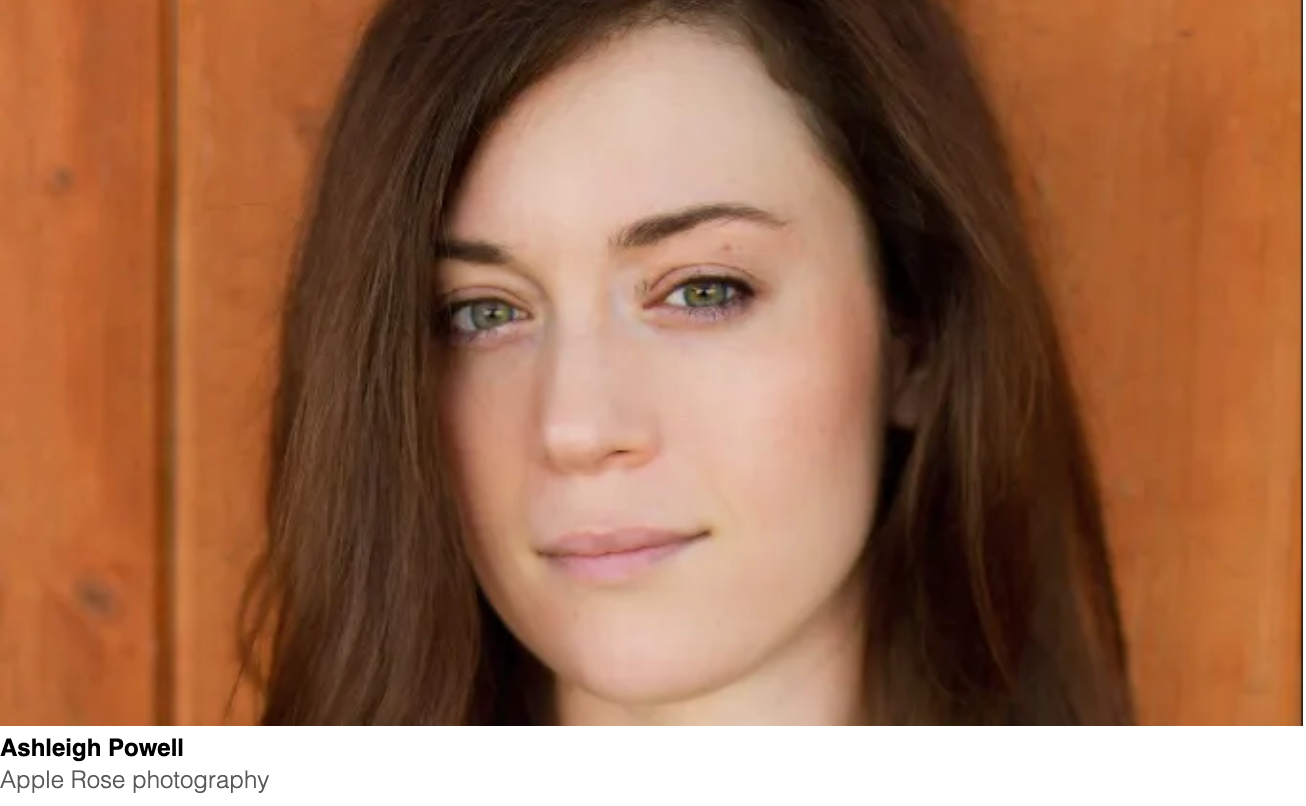
My conversation with the 2012 Black List screenwriter.
Ashleigh Powell hit it big in 2012 when she sold her dystopian thriller “Somacell” to Warner Bros, officially marking her entry into the ranks of professional screenwriter. The script was also named to that year’s annual Black List.
Here is my interview with Ashleigh.
Scott Myers: When did you catch the movie bug?
Ashleigh Powell: I grew up watching movies in my family…that was just something we did. I have a younger sister, and my mom used to show us all of the musicals, from back in the day. Like Camelot, and West Side Story, and Carousel, and all of those things. I grew up thinking that was normal, and every kid had that frame of reference. It turns out, that’s not the case.
But I also grew up with Star Wars, and Indiana Jones, and Jurassic Park, which was a huge, formative movie, in my childhood years…so I’ve always been a big fan.
Scott: I believe you went to college in Virginia?
Ashleigh: I did, yeah…I’m born and raised in Virginia. I went to James Madison University.
Scott: Is that where you developed an interest in screenwriting?
Ashleigh: It is, yeah…I had been writing stories, pretty much since the second grade, and they were short stories, and prose, and fiction…that sort of thing. I wrote a novel in high school, and a novel in college, and no one will ever see either of those, because they were just terrible. I was an English major in college. I took the one screenwriting class that was offered, as part of the creative writing curriculum. Because we didn’t really have a film program up there at JMU.
I just fell in love…I fell in love with the structure of it, and I think what drew me to it was…because before, I had spent two years each, just getting that first draft, of each of these novels, and they were hundreds of pages…it was exhausting.
The idea that you have to tell this complete story in 120 pages or less, and follow this very definitive structure…it was just this moment of epiphany for me, where I was like yes, this sounds like something much more manageable. So that’s how it all came together for me.
Scott: So you take that one class in college. What were some of the resources you found along the way that you used to learn the craft?
Ashleigh: I took a UCLA Extension online class on script coverage after I graduated because I knew that I wanted to move out here. I wanted to get a job in the industry. And that class actually taught me so much about structure and just the craft of screenwriting, because we had to read a bunch of scripts and break them down and discuss why certain things worked or certain things didn’t, and that was really helpful. And then apart from that it was just a matter of seeing what resources I could find on line, what I could check out from the library or that sort of thing. And then once I moved out here and I became an assistant at a production company, I read so many scripts and that was immensely helpful too. Especially reading a ton of bad scripts and learning what not to do, that was a great resource.
Scott: How did you segue to Hollywood and get that gig as an assistant?
Ashleigh: Before I moved out there, I was working this soul crushing corporate cubicle job, saving up money, writing in my free time and taking that coverage class so I could have examples of coverage. And I was trying to apply for internships and very quickly realizing that you have to actually be in LA in order to get interviewed for those things. You can’t get them preemptively. So I just made the leap. I moved across country with my then fiancé now husband and was able to get a couple of internships right off the bat which was great. Then I followed that up with my first paying job out here as a script assistant on the “Doctor Phil” show, which was just insane. It was very cool showing up to work every day on the Paramount lot and feeling like I was really in the middle of Hollywood and everything that was happening.
On my summer hiatus from the show I got a job as a reader for a production company, and I stuck around until a desk opened up so I could become an executive assistant.
Scott: If you’re working as an executive assistant, 80 hours a week is probably the norm. It’s stressful, hectic. How’d you manage to find time to focus on your writing?
Ashleigh: Oh, yeah, it was insane. It was a crazy amount of hours. What worked for me is, because I’m a morning person, I would wake up really early every morning. I would wake up at 5:00 a.m. I would go to my computer and sit down and I would write for two hours or something before I had to start getting ready for my day. That way, no matter what else happened during the day, I would always feel some sense of accomplishment, because at least I got my writing done. I got that out of the way, and I could just now go about my regular business.
Scott: So you did script coverage. What are some of the key lessons you remember from all those scripts you analyzed?
Ashleigh: Oh, man. Maybe the biggest lesson was just making sure your story is interesting and has an audience, because there are some scripts, no matter how well executed they are, it’s just, the story doesn’t feel like one that’s going to sell, that’s going to feel captivating to enough people to actually get it made. I think part of it has to be a certain taste level, if that makes sense. What else? Figuring out what point of view to tell the story from, who your main character should be, which storyline or storylines you should be following, where to start your story, where to start the scene. I think you always want to start as late into a scene as possible, and then get out as quickly as possible. When you read these 10‑page scenes that are just talking heads and straight dialogue, it’s a pretty big wakeup call for what not to do.
Scott: When aspiring screenwriters ask me about screenplay competitions, I tell them about the Nicholl Fellowship or the Austin Film Festival, and that’s pretty much it. But you used another screenplay competition to get representation.
Ashleigh: I did. I used Tracking B. It was something that I came across as an assistant. What was great about it, what really set it apart, at least it in my mind was, they weren’t offering any kind of cash prize or anything like that, but all of the judges in that competition were up‑and‑coming agents, managers, young executives. So they were people who were actively looking for new writers and new voices. That seemed really important to me. I wrote a pilot script for ‑‑ they have an annual TV pilot competition as well as a feature competition ‑‑ that got to be a finalist, and one of the judges was Daniel Vang at Benderspink, who said, “How would you like a manager?” It was great. I highly recommend that competition.
Scott: Isn’t that interesting that you wrote a TV pilot, and that’s what got you your manager, and then you were able to segue into feature films. It’s kind of a thing nowadays because agents and managers can tell if someone can write based on an original pilot as well as a spec feature.
Ashleigh: I think that’s true. I think especially these days there’s a big push for writers who try to do both film and TV, because why not get into as much as possible, and TV is such a rich landscape these days and in some cases might even be easier to break into than features. I think also, writing a TV pilot is such an interesting thing, because first of all you have to tell a complete story, but then you also have to show that you have an engine for a larger story, a larger mythology. The fact that you have to write toward act breaks, where you have a climax or a cliffhanger every certain amount of pages, I think that can really be helpful in showcasing, this is a person who understands pacing, this is a person who understands conflict, that sort of thing, in a way that maybe is a little bit more difficult in features.
Scott: Let’s move to your script “Somacell” which made the 2012 Black List. How many scripts do you think you wrote before you got to “Somacell?”
Ashleigh: At least a dozen. And no one will ever see those. The TV pilot that I wrote was the first thing I really felt comfortable showing to people and really putting out there as a sample of my work. “Somacell” was the first feature I wrote after that. It took a long time to get to that place where I felt ready to share my work. Because you only get one chance to make an impression.
Scott: Safe to say, though, if you hadn’t written those 12 scripts which won’t see the light of day, you wouldn’t have developed the chops to write “Somacell?”
Ashleigh: Oh, absolutely. I feel like, hopefully I got a little bit better with each one, and I definitely learned a lot with each one, especially in terms of just establishing a voice and figuring out what types of stories I like to tell, what types of stories I’m good at telling, that sort of thing. I couldn’t have done “Somacell” without doing all of those other terrible, terrible scripts.
Scott: I think I read something that you said in an interview that basically quantity leads to quality. Do you remember saying that?
Ashleigh: That sounds like something I would say. [laughter] I think writing multiple projects, trying out new things, developing as many stories as possible, helped me establish a voice, rather than, say, focusing on a single opus that I was going to constantly tweak for years and years until I got it right. For me that feels a little bit counterproductive.
I’m always of the opinion that I’m going to try something and see if it works out, and if it doesn’t I’m going to move on to the next thing and see if that works out. For me, I think it’s just been helpful in terms of keeping a steady pace and always having something to work on, and always making sure that I am working, if that makes sense.
Scott: Absolutely. Particularly if you’re working in the realm of TV, but especially feature films, you make a living by moving from one project to the next, and so you have to develop those chops to do your best work on one thing and then move on to the next.
Ashleigh: Yes. I think that’s true.
Scott: Here’s a logline for “Somacell”: “A female prison guard finds herself caught in a conspiracy surrounded by inmates who are undergoing a rehabilitation that uses virtual reality.” What was the genesis of that idea?
Ashleigh: I had TV pilots I was getting passed around, and I was originally trying to come up with ideas for other TV shows. I was playing in kind of the “Prison Break” space. Initially this was an idea about a detective who has to go undercover in a prison to extract information from some convict who is there, knowing that he has someone on the outside who can help him get back out quickly. Then at the last second, everything goes wrong, his contact falls through, and suddenly he’s stuck in this prison with all of these very dangerous people, probably some of them that he’s helped put away. That was the initial seed of the idea, and I just kept thinking about it, and it wasn’t weird enough to get me really excited about it. I really like writing sci‑fi, supernatural type of stuff. I couldn’t get into it. I couldn’t get interested. I kept just toying with it, and then I latched onto this idea of virtual reality.
Then very quickly it came together after that, and I realized, “OK, this isn’t a TV idea. This could be a feature idea.” I was looking for a feature gig, because I wanted to get a spec out there. Then of course, I always think stories can be made more interesting if a traditionally male role is converted into a female protagonist.
Scott: Let’s talk about that. I’m sure you’re aware that even with movies like Hanna, Salt, Kill Bill, and the Hunger Games, a preponderance of action, action thriller, sci‑fi movies feature male protagonists. Your lead character, Delaney, is a female. Did it concern you that writing this type of script with a female lead would restrict it’s marketability, given Hollywood’s default mode regarding male leads?
Ashleigh: Yeah, it’s something that I was very aware of, as I was developing, because I’ve heard so many times that you can’t tell the story with a female lead, because the stars just aren’t as bankable as male stars, and that sort of thing. But it’s something that I feel strongly about personally.
I feel like you can layer even greater emotional depth in a female character maybe a little more easily than a male character. It’s something that I wanted to try. I wanted to put it out there and just see what the response would be, and then if I ever had to get to that point where someone was like, “We want to make your movie. If your protagonist is a guy,” I would cross that bridge when I got to it.
Scott: Hopefully projects like yours will turn the tide on this thing so that we can have much more interesting, diverse lead characters in movies.
Ashleigh: I’m hoping. I feel like it’s something that’s happening, maybe not as quickly as it could be, but I would love to be a part of that shift, if possible.
Scott: I’ve done some work on the heroine’s journey in comparison to the hero’s journey. There are a lot of different theories, but one thing they tend to focus on is that the heroine’s journey has more of an internal dynamic to it in some ways than the hero’s journey, more of an internal focus to go with the events and actions that go on in the external world. A generalization, I know, but perhaps true. Is that what you were talking about when you were saying the richer opportunities for richer characterizations, when you’re dealing with a female protagonist?
Ashleigh: Yeah, I think that’s right. I remember hearing something…and I can’t remember where I heard this, but some article, or something, was talking about how men externalize violence, where as women internalize violence…that sort of thing. So men are more likely to go out and pick a fight with a stranger or vandalize something, or do something destructive to an external presence. Whereas women are more likely to internalize, act self-destructively or engage in self-harm, or take out their frustrations on immediate family members, rather than strangers.
I don’t know if that’s true, but I think it’s a very interesting perspective. There might be something to that, where women are more likely to internalize than men, and in a psychological thriller, I think that makes them a better fit for a protagonist role…it makes their journey that much more deeply personal.
Scott: Yeah, because it seems like then, the story is in essence about projecting those internalized conflicts out into the real world, forcing the characters to deal with them.
Ashleigh: Right. Yes, I think that’s true.
Scott: And in your story you’ve got the central theme, which is rehabilitation. Obviously it works on one level, which is, the premise is, that they’re using these virtual reality experiences to help criminals get rehabilitated. Taking them back into these various scenarios, and working through these levels of their consciousness, and whatnot. There’s that, but it’s also a rehabilitation working at other levels, too, in your story, as a theme. A wounded individual seeking repair, that kind of thing?
Ashleigh: Yes, I think Delaney is a wounded character, or a broken character, in a lot of ways. In trying to help other people and putting her focus on helping these convicts she’s ignoring her own problems. She’s helping others and she’s not really taking the time to examine what’s wrong in her own life until she has no choice and is forced to confront those things.
Scott: This idea of using virtual reality scenarios, basically to take these prisoners through these things, and to redirect or alter their consciousness, it’s interesting. It’s sort of like the other side of “Minority Report” in a way. That was anticipating crime, this is like, “OK. After the fact, let’s see how we can deal with it.” Is that a fair assessment of what you’re doing in “Somacell?”
Ashleigh: Absolutely…yeah, and Minority Report was a big influence as I was writing “Somacell.”
Scott: And that is a really interesting idea, because as I’m reading it, it reminded me of the concept of reincarnation. Were you thinking about that at all when you were…
Ashleigh: Oh…that is very interesting…I like that. I don’t know if I was conscious of that, but I would love to take credit for it!. But yeah, it makes sense, because it’s giving you a chance to atone for your mistakes.
Scott: Yeah, I thought it was like that basic Buddhist notion that you’ve got to work through your negative aspects, over and over again, until you reach a point of having gotten it together. Then on a universal level, aren’t you playing around with that wish fulfillment, how we’ve all messed up in the past, right, we’ve all made mistakes. I wish I could go back and change that, or I wish I could somehow make that better. Were you consciously aware of tapping into that sensibility?
Ashleigh: Oh, absolutely…that’s such a universal idea of wishing you could go back and change events from your past. Although this technology never changes the fact that they actually did these horrible things — what’s been done can never truly be undone — so it’s kind of a way of saying…it’s a wish that can never really be fulfilled.
Scott: And yet somehow, maybe, at least put it into context, and process it, or something like that.
Ashleigh: Right.
Scott: I don’t want to give away the plot, but there’s a conspiracy element at play in the story. Why do you think movie audiences like conspiracy stories?
Ashleigh: That’s a good question. I think on some level, it makes the protagonist an underdog. We all root for the underdog…I think we all feel a little bit like there’s certain things in life that are out of our control, out of our hands. Like on some level, there are forces that may be conspiring against us in different ways. It’s a basic David and Goliath story, where you have one person up against something much larger than themselves.
But it becomes this structuring task of fighting to break free from that.
Scott: Besides the underdog dynamic, that you just talked about, were there some other aspects of working with a conspiracy story that interested you?
Ashleigh: I’m such a sucker for conspiracy theories…I believe them all every time that I hear a new one.
Scott: As long as we’re talking about these themes, another key narrative element in the script, is the question of what is reality? What about that interested you?
Ashleigh: I love the idea that, what we think of as reality is…it’s what we can notice using our senses. Things we can touch, things we can see, things we can hear… which is such a simplistic, fragile way to understand the world around us. And I think there’s something terrifying about the idea that suddenly you can’t trust your senses to know what reality is. I like the idea of taking common-place, little inconsistencies — things like a flickering light, which happens all the time — making something as mundane as that intentionally a sign that this world is all just some elaborate construct. I think that could be really cool if, if nothing else, the audience leaves the theater remembering just that single moment. Then, the next time a light flickers in their house , hopefully it gives them a moment of pause.
Scott: Yeah. You had that glitch, right, that happened?
Ashleigh: Yeah. Right.
Scott: That’s very cool. At one point in the script, Delaney’s talking to a key character named Bo. They had this exchange. Bo says, “You preach this to me all the time, it’s not just the action that counts.” And Delaney interjects, finishing the sentence, “It’s the motivation.” How does this idea manifest itself in your story?
Ashleigh: I think it’s something that I believe too — that you should choose to act a certain way because you know it’s right… not because you know it’s acceptable, or because you know you’ll get away with it. It’s about doing something because of the consequences, versus doing something because of the moral imperative that’s inside yourself. I don’t know if that makes sense.
Scott: I think it does. You’re saying we’re in the external world. There are people maybe watching you, so maybe you make a choice like that. But Delaney’s suggesting, “No. It’s the motivation, going inside and saying that’s the more authentic way of being a person or making a choice or presenting a choice.” Does that seem inaccurate?
Ashleigh: No, you’re right. I think all too often people have these personas that they like to present, but which are very different from who they are or how they act in private. It’s something we’re all probably guilty of.
Scott: It’s like we wear masks. Right?
Ashleigh: Yeah.
Scott: Something struck me about that sentence: It’s not just the action that counts, it’s the motivation. I thought, “That’s a great writing mantra.” It gets us to look at our characters and dig deeper, beyond the surface level of what they do, to find out why they do it.
Ashleigh: I love that! I think I might adopt that as my writing mantra.
Scott: I’ll tell people they ought to print that out and post it on their desk. “It’s not just the action, it’s the motivation.”
Ashleigh: Absolutely. I’m sold!
Scott: What was the single most challenging aspect of writing “Somacell?”
Ashleigh: First of all, it was making sure that everything tracked, making sure it all made sense and it was coming across on the page in a way that even if readers didn’t necessarily know what was happening at the moment, they didn’t ever feel lost. And then figuring out how to get that ending just right. There’s a final twist that I really enjoyed. I knew it would probably be a point of contention, but I thought was important to the story and could make it really memorable.
Scott: It did. It’s a really surprising and, in a dark way, satisfying ending.
Ashleigh: Good. Personally, I like dark endings.
Scott: So you write this script. How did David Goyer get involved and what was the process whereby it ended up selling?
Ashleigh: I wrote the script. I was going out to a handful of producers that I had already met and had a relationship with. We gave it to an exec I actually knew from my assistant days — we were both on desks at the same time and were always scheduling meetings and calls for our respective bosses. He read it and liked it, but ultimately it wasn’t right for his company. But he passed it on to his wife to read… and she just happened to be David Goyer’s Creative Executive. So that’s how it got into his hands. Which was amazing. I was just thrilled for that. Then, simultaneously, Warner Bros. somehow ended up with it. No one on my team even knew they were reading it, and one evening they called up my agents and said, “Hey, we want to make a deal on this script tonight.” It was shocking moment. It took us all by surprise. It was just a random confluence of events.
Scott: Boy, does that speak to the power of writing a great script.
Ashleigh: It’s been really fun for me to hear that people are passing the script to their friends or to other executives on their own, without any intervention from my manager or agent or anything like that. It’s just working its way around. I’m thrilled.
Scott: Precisely where were you and what were you doing when you found out that Warner Bros. made an offer on the script?
Ashleigh: I was at my apartment. I was in the middle of doing laundry. I got this phone call. It’s everyone on my team. They’re like, “Ashleigh, sit down. Warner Bros. wants to make an offer on this script tonight. Hang tight and we’ll call you back.” That’s it. And then I paced around my apartment for a couple hours after that, frantically cleaning anything I could find, just to keep busy. Just staring at my phone and waiting for that phone call. But I think by seven o’clock that night, it was official. This crazy thing had actually happened and my life had changed forever.
Scott: Continuing in the good news vein, how did you find out you’d made the 2012 Black List?
Ashleigh: First of all, this was something that, back when I was an executive assistant and I first learned that the Black List even existed… It was a life goal for me. I was determined that I was going to make it on this list one day. So it’s been amazing to be included on it. This year. It really is something I can check off my bucket list, I guess. I didn’t find out until the morning that it was announced. My manager had said he thought that I might have a chance of making it on it. Apparently, I learned after the fact, my team already knew. Because I guess someone from the Black List had called to verify my information or something. But no one told me. So I was up early in the morning, on Twitter, watching as all of the names were tweeted at random. I learned in real time. It was a lot of fun.
Scott: Of course it happens right at the time when Hollywood shuts down for the holidays. But have you noticed a bump in activity or interest in you and the script since it made the Black List?
Ashleigh: Yeah. Since it’s sold I’ve been inundated with a bunch of general meetings, which has been a blast. It’s been really fun getting to know a lot of interesting people. I’m doing the water bottle tour. For a while there it was two meetings a day. I needed time to actually be productive and write, so now I’m down to one a day and I’m not sure that the end is in sight, yet. I’m definitely making my rounds.
Scott: OK, got to ask it. For aspiring writers out there who may have an opportunity like yours, what’s one lesson you’ve learned about the whole meet and greet tour?
Ashleigh: It took me a little while to be able to effectively communicate my point of view as a writer, to explain who I was and the type of material like to write. I think you want to pigeon‑hole yourself, which can counterintuitive for a lot of writers. For me personally, I’m interested in so many different types of stories, there’s a part of me that wants to say, “I want to write everything!” But that’s not helpful for an executive to hear. They don’t want a jack of all trades, they want a master of one. I think it’s just being very specific about how to sell yourself.
Scott: That’s true, I think. They’re very busy people, and so they do tend to lump writers into various genres or types. So that’s pretty smart to be thinking about what type of material you want to be known for. What type of genre do you want to write?
Ashleigh: I’ve learned to say, “grounded sci-fi and supernatural” stories. I like creating mythologies and building worlds, but keeping them relatable and recognizable; the world as we know it, but one thing is a little bit off.
Scott: You’re with Benderspink and Gersh?
Ashleigh: Yeah.
Scott: How’s that been working with your representatives?
Ashleigh: It’s been great. I have nothing but good things to say about all of them and I think they’re incredibly smart people, but also just genuinely nice people. It’s such a relief to hear, when I walk into a meeting, more often than not the executive will say, “Oh I know so-and-so and they’re just lovely. They’re actually good, caring people. They’re a pleasure to work with.” I think that goes a long way.
Scott: How about some craft questions?
Ashleigh: OK.
Scott: How do you come up with story ideas?
Ashleigh: I don’t know. It’s different all the time. Sometimes it will start with a character that comes to mind that I think could be interesting, or a basic premise that might be fun to explore. Also, I was an English major, and I was a total bookworm growing up. So I’ve read a lot of stories over the years and I’m fascinated by this trend of taking classic mythologies or classic stories and finding new ways to reimagine them or reinterpret them. I think there’s something very cool about that.
Scott: Like genre bending something, right?
Ashleigh: Yeah, absolutely. I think that’s really fun.
Scott: You’ve been a script reader so you’ve experienced that side of the desk. And you’re a writer, so you’ve been on that side of the desk. How important do you think the story concept is to the overall marketability or strength of a screenplay?
Ashleigh: I think it’s probably the most important thing, apart from execution. If you’re starting with a premise that inherently isn’t marketable then you’re fighting an uphill battle from the very beginning. A lot of those early scripts I wrote, they were incredibly esoteric and they were very interesting for me personally but I just don’t know that they would ever actually find an audience. So I think that’s a big concern.
Scott: How much time do you spend on prep writing, brainstorming, character development, plotting, research, outlining and so on?
Ashleigh: It’s different with every project. Usually I’ll start with a one page synopsis, just the basic beats of the story. Then I go to note cards, and then I go to a full outline. What I’ve discovered recently, now that I’m able to collaborate with people on projects and I’m not just writing in a bubble, is that the outlining process can be very, very, extensive. It can take months and it can involve a 10 to 20 page beat sheet where every single moment is right there on the page. Whereas if I’m writing a spec and working it out on my own, then I might stop after a 4–5 page basic outline of the story and then just dive in and start writing and make discoveries in the draft as I’m going through.
Scott: It sounds like you’ve developed the ability to approach writing screenplays in two different ways. One is working within the system, where they want to see pretty much the story before they commit to it. Then the other, when you’re doing it on spec you have a little more opportunity to dive in and discover the story along the way.
Ashleigh: Yeah. It’s straddling those two different approaches.
Scott: How do you go about developing your characters?
Ashleigh: For me, how my characters speak informs a lot about who they are and how they see the world. Really nailing down that voice helps me shape their character traits from there.
Scott: That leads to dialogue. Do you think that’s a talent writers are born with or is it something that can be developed?
Ashleigh: It can be developed to an extent, but I think it’s something that some people just have a natural ear for, so that makes them ahead of the curve. I’ve read so many scripts where that’s not the case that I think it’s probably, in large part, something that can only be cultivated so far.
Scott: What do you think about themes and how do you work with them when you’re writing?
Ashleigh: Theme is something that has always felt very elusive and intimidating to me. Maybe it comes from reading a lot of literature, having to dissect and analyze and write serious essays on the importance of “THEME” in a story. But I recently read a piece of advice… this comes from Tawnya Bhattacharya from the Script Anatomy blog… that has really struck with me: “Theme is the opposite of your main character’s flaw.” You start the story with the main character’s flaw, you show how that character is transforming over the course of their journey, and by the end of it they’ve completed an arc and realized the theme. I think there is something beautifully simplified about that approach.
Scott: What do you think about when you’re crafting and writing a scene? What questions do you ask?
Ashleigh: So many things — how late into the action can I start, and how early can I get out while still conveying all the necessary information? Where is the conflict coming from? I’m a big believer that every scene should include some element of conflict to make it dynamic. What else is going on besides dialogue? Whenever possible, I try to give my characters something to do while they’re talking — something that gives insight into who they are, how they’re feeling, what their relationship is like with the character they’re speaking to… something. Or maybe there’s something going on near where our characters are talking. I like the idea of diverting focus in a scene in a way that makes it more informative without being distracting.
Scott: That goes back to action and motivation, so you’ve got these dual levels of things going on in every scene, right?
Ashleigh: Exactly. It keeps things interesting, keeps the story moving, keeps the audience engaged.
Scott: Having read so many scripts and having written so many, obviously scene description is critically important in terms of a read. What keys do you have to write entertaining scene description?
Ashleigh: I try to be as brief and straightforward as possible. I try not to get bogged down in over-description unless there’s something very specific or important that needs to be highlighted. Above all else, I want to keep the pacing moving forward.
Scott: When you finish a first draft, you’re faced with the inevitable rewriting process. Are there some keys for you there, in terms of rewriting your scripts, and how to approach that process?
Ashleigh: I have a writers group that is really helpful, in just getting people to look at the story with new eyes, and come at it from a distance. A lot of times they can see things that I can’t, or they can come up with solutions to problems I’ve been stuck on. I think putting distance between myself and the script is also really important. I might need a couple weeks, or I might need a month away from the story, so that I can come back and look at it objectively, with fresh eyes Too often, if I try to dive into a rewrite as soon as I finish the first draft, the changes needed aren’t immediately evident.
Scott: What about your actual writing process?
Ashleigh: I write every day. I’m a morning person — creatively I’m pretty much worthless after 6pm every day –so I start when I wake up, and I write straight through, usually until lunch time. I have a little home office in my apartment, and it’s very quiet. These days, I usually have meetings in the afternoons but, if not, I’ll continue after lunch for as long as I can. Until my brain just shuts down and says, “No more!” Typically that’s around 6pm or so.
o three pages every day. If I can do more then I feel really good about myself. [laughter] But it’s usually about two to three pages of an actual script, and then after that I’ll dive into whatever outlines, or pitches, or stories I’m currently trying to break. I always start with whatever script I’m in the process of actually writing. Because that’s the top priority.
Scott: Here’s a fun question I like to ask writers: What is your single best excuse not to write?
Ashleigh: Oh God, there’s so many. The single best, I think, is that nothing’s coming, or I don’t have an immediate solution to whatever problem I’m facing, so I’m going to put it off for later. I think it’s a misconception that it should happen easily — if the answer doesn’t come quickly, then it’s not going to come. A lot of times I think it’s easy for me to get defeated, if I don’t know right away what the solution is…I’ll usually end up putting it off. Which is admittedly not a good process to have.
Scott: What do you love most about writing?
Ashleigh: I like telling stories. It’s something that I’ve enjoyed my whole life, creating these worlds in my head and playing around in them. It’s great fun and the fact that I can do it professionally is just amazing.
Scott: Five, ten years down the road, where’s Ashleigh? What’s your ideal world?
Ashleigh: I think I’m still doing what I’m doing. I think, hopefully, I’ve found a way to bridge the gap into TV as well. Mostly, I just hope I haven’t run out of stories to tell by then.
Scott: And finally the proverbial question: What advice can you offer to aspiring screenwriters about learning the craft and breaking into Hollywood?
Ashleigh: I think you have to be out here. I really do. I think immersing yourself in the industry is really important, especially for making contacts. I think keeping with it, writing every day or writing as much as you can, as often as you can, is so important. That “10,000 hours of practice” rule exists for a reason. And just trusting yourself to take that leap of faith… Just over a year ago I quit my job so I could . It was the most terrifying thing I’d ever done but it’s a chance that I took that I feel like has actually paid off.
Scott: That brings to mind Joseph Campbell who said “Follow your bliss and the universe will open doors where before there were only walls.”
Ashleigh: I love that. It sounds magical. But that’s what storytelling is all about, isn’t it? Creating something out of nothing.
For my interviews with dozens of other Black List writers, go here.