Go Into The Story Interview: Barbara Stepansky
Barbara Stepansky’s original screenplay “Sugar in My Veins” won the filmmaker a 2013 Nicholl fellowship.
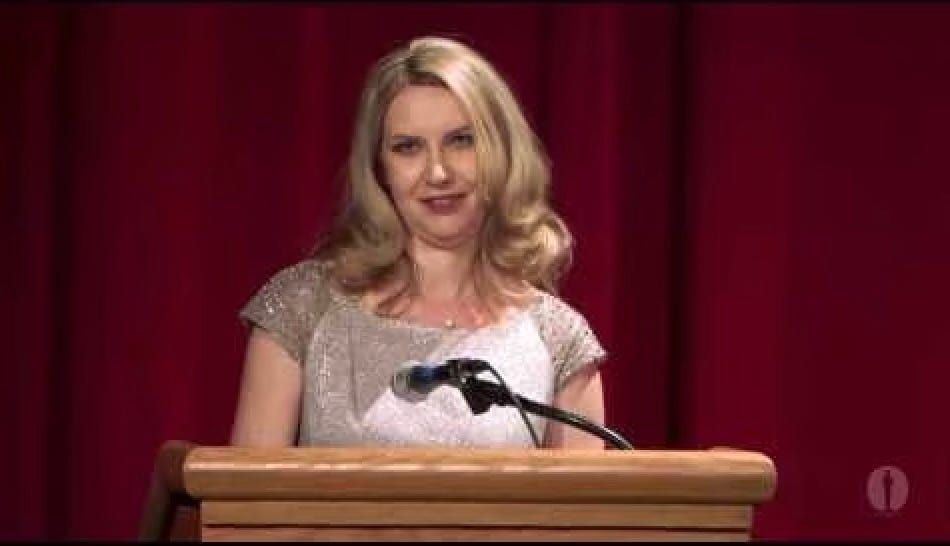
Barbara Stepansky’s original screenplay “Sugar in My Veins” won the filmmaker a 2013 Nicholl fellowship.
Barbara Stepansky’s original screenplay “Sugar in My Veins” not only won the filmmaker a 2013 Nicholl fellowship, it also landed on the 2013 Black List, so I was excited when she agreed to do an interview to see what we could learn from this talented young filmmaker.
Scott: As I understand it, you were born in Poland and lived in Germany.
Barbara: That’s correct. I was born in Poland. My father’s involvement with Solidarity at the time was frowned upon by the Communist Party, and so we had to leave the country. We moved to West Germany, and that’s where I pretty much spent my formative years.
Scott: At some point you were a projectionist at a local movie theater?
Barbara: Yes, I was, at the local cinema in our small town, Lennestadt. I knew pretty early on that I wanted to make movies, about around 15, 16, but I didn’t really know how to go about it. I just tried to do anything that had something to do with cinema.
I became head of the drama team. I was directing plays, and I wrote a lot. Then, of course I thought what better to learn about movies than projecting them? [laughs] I actually worked as an ice cream girl at the cinema there first. Because in Germany at the time you had these girls that come in, and they sell you ice cream in the break between the commercials and the movie. Then, I made the switch to projectionist, which I had to beg my boss for because no girl had ever done that before.
This was the time where reels were super heavy because it was all film. You had to lug around pretty much your weight from one theater to the other.
Scott: When you were doing the projectionist work, does that mean you were watching the same movie over and over again, night after night? If that’s the case I’m wondering if that may have helped you in terms of more deeply understanding movies, because you’re analyzing them seeing them so often.
Barbara: Yes, definitely. I didn’t have to watch them repeatedly. You could start the film and walk away, but sometimes when it was a movie that I really admired, or I wanted to see again I would just stay.
I saw a lot of beginnings that way, which is now funny to me because I’m really good at beginnings of movies, when I write them. Everybody has problems with the second act, but I sometimes wonder if my affinity towards beginnings is because I’ve watched a lot of them. [laughs]
Scott: Is it true that when you were around seven years old you rewrote The Wizard of Oz in German?
Barbara: I did, I wrote a kind of Wizard of Oz meets Narnia version. I read it out to my parents out loud. They thought it was cute.
Scott: Your roots in movies go way back, then. If you were seven years old and writing stories.
Barbara: I was always fascinated by movies and all these amazing stories. I would make up my own, and would create versions of stuff I saw, but I never thought that it was going to become a profession. I never thought that it was something that you do as an adult. It was just something I did.
Scott: You went to the University College London. Is that where you began to study film seriously?
Barbara: No, actually. When I graduated high school I knew I wanted to be a filmmaker, but I also had been really sheltered and lived in a small town all my life. I didn’t really feel like I had much to say yet to the world about life, because I hadn’t lived it. I thought it might be a good idea to just do something completely unrelated to film for a few years.
I actually went to London to study History and Philosophy of Science. It’s kind of an obscure subject, but it gave me a lot of insight into the workings of the world. I got to analyze. I got to argue. It was a perfect education for me. Then, on top of that, I was away from home for a few years and got to live life independently.
Scott: Did you then proceed directly to the USC School of Cinematic Arts or did you take some time off?
Barbara: After UCL I applied to any film school that I could speak the language of. I got accepted into two film schools in Germany and USC in LA. I went to the Munich Film School for a semester but, ultimately, I left for Los Angeles because I just really like the way film was taught there.
Scott: How do you feel your education in film studies helped prepare you as a filmmaker?
Barbara: To each their own. I don’t think you necessarily need to go to film school, as we have seen from numerous examples of working professionals.
I enjoyed it because it gave me license to make mistakes, and to learn with other people that would become my team later on. I did a second Master of Fine Arts degree at AFI for two years, and met many of my collaborators there. The UCLA Master Class was once-a-week kind of thing that I did on the side very recently.
Scott: Looking at your IMDB page, you’ve got over a dozen film credits as a director, a writer, editor, even actor. Most of these are short films. How important has it been for you, in terms of your writing, to actually get out there and be involved in the actual production of the movies?
Barbara: Honestly, it’s been amazing. That’s been helping my writing tremendously. You can have very strong intellectual ideas about character and dialogue, but when you get on set, it’s a completely different world sometimes. I’ve learned so much from actors just telling me, “I can’t say this.” [laughs] “I don’t know what this is.” “What are we actually trying to get at?” Collaborating with actors has been most valuable for my writing dialogue and intention.
Scott: In your acceptance speech for the 2013 Nicholl Fellowship you won, you mentioned the support of your writers group. Can you describe what that is and how that got started and what exactly you do with that group?
Barbara: The writer’s group I mentioned basically became an extension of a UCLA master’s class. Because we all got along really well, we wanted to keep it going. We bring in 10–12 pages per week. We read it out loud and then we discuss them.
You get a really thick skin very soon because none of us are actors so our dialogue reads aren’t Oscar worthy. So if it works with us it’s probably fantastic, because a good actor can mask bad writing very well.
Every week we go though material and then we bring it back next week, either a continuation of the material or rewritten pages. This is where “Sugar in My Veins” really began properly, got brought back, rewritten, brought back again. It was quite a process.
Scott: In your comments at the Nicholl Award ceremony, you tell a wonderful story about being at the Sundance Film Festival and an important exchange you had with writer-director Karen Moncrieff. I wonder if you could describe that incident? What happened there and how it inspired you in your writing?
Barbara: Well, I was at the Sundance Film Festival. I think it was 2002. I had just done my intermediate project at USC. I was very, very green and I watched Blue Car and just absolutely loved it, loved everything about that movie — the story, the writing, the acting.
I thought I wanted to keep a piece of that for myself so I went up to the writer-director, Karen Moncrieff, and asked her for an autograph. As I said in my speech, I really had never asked anyone for an autograph before and never again after. She signed my crappy student postcard with the words, “To Barbara. You can do it, too. Karen Moncrieff”. I had the postcard for the last 10 years, and I had kind of forgotten about it until I started writing “Sugar in My Veins” again, and I pulled it out and put it up on my wall.
I would look at it and it would give me encouragement because the material was very similar to what I was writing, also a coming of age drama. I was inspired by Karen. She made it happen and I believed that maybe I could, too.
Scott: “You can do this, too”. And of course you did. What was the process like in discovering that you won the Nicholl Fellowship?
Barbara: Oh, it was an amazing time. The Nicholl Fellowship moves in phases of quarter finals, semi-finals, and then finals. Every time I got one more phase further and I got the letter from Greg Beal that I’m in this round and then the next round, I was just so ecstatic and happy.
I remember telling my parents that I made the quarter finals of the Nicholl Fellowship, and so I’m the top 392 people. They didn’t understand what that meant so they were like, “That doesn’t sound great. There are 391 other people”. I said, “No, no. You don’t understand. It’s the quarter finals of the Nicholl! There’s like 7,000 scripts I’m competing with…”
I really wanted to get into semi-finals. And then I knew that the drop off was going to be really harsh, from 130 scripts to 10 so. I wasn’t holding my breath because my material was challenging. When I got the phone call that I’m a Finalist, I couldn’t believe it. I actually didn’t believe it. I didn’t tell anybody until I got the email the next day, because I wanted to make sure that I didn’t make it up.
Scott: What has winning the Nicholls done for you professionally?
Barbara: Professionally, it’s been a really big jump in my career because I was very much working under the radar as a director-for-hire. I’ve been doing well, but I really wanted to move up a notch. That’s what the Nicholl Fellowship allowed me to do — to meet more people, to get awesome representation, and to actually make it a legitimate profession. Which it sort of had been, but nobody knew about it.
Scott: Let’s talk about your Nicholl winning script “Sugar in My Veins”. Here’s the logline: “When a mutual attraction blossoms between a 13-year-old violin prodigy and her sister’s much older boyfriend, it leads to a risky, forbidden affair that has both liberating and disastrous consequences for their lives.” What was the inspiration for this story?
Barbara: There’s nothing personal that ever happened in my life that even comes close to that. I’m not a prodigy. I’m not really attracted to older guys. I don’t even have a sister that I lived with. It wasn’t based on a personal experience.
I love forbidden love stories and I wanted to tell a really good one. I wanted to tell a story about true connection that has the unfortunate, star-crossed element of an age difference to it that is almost impossible to bridge.
I reverted back to my teenage years when all you want is for somebody to just get you and look beyond outer shell there is, and I think that’s the yearning that story was born from. I also was a fan of Nabokov’s “Lolita” but I always felt like that Lolita was a bit dumb and coy. I wanted a girl character like that could kick ass.
Scott: Let’s talk about your key characters. Jillian is the protagonist. How would you describe this 14-year old childhood prodigy?
Barbara: She’s incredibly intelligent. She’s super headstrong and has this strong will of making things happen percolating inside of her. At the same time, she’s a very quiet girl. She doesn’t talk to that many people, and has no friends.
Scott: How about Sarah, her older sister? How would you describe her?
Barbara: Sarah is more like your typical next-door-girl type character. She’s kind and romantic. She wants the fairy tale romance. She hasn’t realized her potential yet. Sadly enough in the script, she really doesn’t. Some people are doomed to remain a certain way, and Sarah just never believed in herself enough.
Scott: How about Ray?
Barbara: Ray is also intelligent, but kind of emotionally stunted. He never had a long-term relationship and may have some intimacy issues. The idea was that here comes this grownup character, but emotionally he matches her age. He also went through some trauma in his early teenage years, an accident that pulled him out of commission for about two years. So he feels like he’s always still playing catch-up.
Scott: Jillian and Sarah’s parents are Norbert and Ellen. How would you describe them, and their function as characters in this story?
Barbara: To me, Norbert is pretty much your antagonist in this story but I tried to write him so that you could understand where he was coming from. He thinks his daughter has emotional issues. He wants the best for her, but he has also no artistic ambition or ability to recognize that. He doesn’t support her talent and his political career is the thing that he cares about the most at the moment.
Very early on in Jillian’s childhood, Ellen makes a big mistake of making that truce with her husband of not especially supporting her and her abilities, because they both want a normal childhood for her. She has the biggest regrets about that at the end.
Scott: Ray’s mother is Charlotte. She is basically into a pretty advanced stage of Alzheimer’s. How would you describe her?
Barbara: Her character is almost like the person that Jillian could become if nobody helps. She helps us understand where Ray is coming from and that he’s actually a really nice guy. He takes care of his Mom.
So she fulfills two functions in this story of helping us out with sympathy towards Ray, but also giving perspective to a young girl that has the same potential she once had.
Scott: Finally, there’s Tyler. He’s this younger fellow, who he seems to be setup as a potential love-in for Jillian.
Barbara: Tyler is the guy you would like to see her with, because they’re a perfect fit age-wise and even intellectually. You could see them together, a cute teenage couple. At the same time, he’s not what Jillian wants at all. Look, I not to spoil the read but I just didn’t want Ray to take her virginity. I needed somebody else to do that job so that it didn’t feel like such a big breech when they finally have sex.
Scott: How did that particular cast of characters emerge in your story crafting process?
Barbara: The triangle of Jillian, Ray and Sarah were always were there, as were the parents. Charlotte and Tyler were very new additions, mostly because I needed characters to fulfill a plot or emotional function whenever something wasn’t working.
It’s never a good idea to add more characters to fix plot problems but in this case it worked. I needed their lives feel a little richer. The script went through a lot of changes. There’s a draft where Ray was actually in a rock band. So there was a whole band of characters to introduce, because they were all playing together.
However, that band was taking over the plot to such an extent that I couldn’t leave it in. I didn’t want it be a music film only, and that’s what it would have become.
Scott: How long did it take you to write the script that you actually submitted to the Nicholl’s Competition? How many drafts do you figure you wrote in that time?
Barbara: I think this was my fifth draft. It took me about one and a half years to write it, including all the rewrites. I wasn’t happy with it until I submitted it to the Nicholl Fellowship. The kernel of the idea I’ve had for a long time. There’s actually a 2002 draft lying around, that I just didn’t touch for nine years.
Scott: Several of the characters in this story have some sort of physical injury or debilitation. Ray suffered these back injuries related to this daring physical risk he took when he was younger. Charlotte’s got dementia. Jillian has an artificial body of her own doing. I’m curious, were these physical issues for you of these characters symbolic in a way of the kind of broken psychological nature of the characters?
Barbara: Oh, yeah! Absolutely! I had this notion that these people should be both broken in a way. They’re like broken toys. It makes them understand each other better and they had something to bond over.
The mind-body experience is really interesting to me, and I like to play with it. What does that mean if you disregard yourself so much that you’d poke your eye out? That your spiritual well-being, i.e. being able to play music or experience an adrenaline rush, is more important than your body to you? I’m not sure I’ve figured it out yet, but it still interests me.
Scott: There’s several interesting themes in the story. One of the most obvious ones right in the title is “Sugar.” The very first thing that Jillian eats a lot in her young life, I think she’s like three or something, is a packet of sugar. She pours several packets of sugar into her milk and other drinks. Ray drinks a lot of sugar. In fact, he even called her “Sugar.” What’s going on thematically for you with regards to this idea of sugar?
Barbara: The sugar was always an element from the start. They just both liked to drink a lot of sugar. I thought that was a cute kind of a connection point and it allows us to get into their belief systems a little.
Sugar is terribly bad for you. It’s like their relationship, an obsession, almost like a drug addiction. They’re both playing with fire from the get-go, even though at first it’s just sugar. I have a lot of discussions with people about sugar, and how we should all stop consuming it altogether. I completely agree but it fit so well, I couldn’t leave it out.
Scott: Interesting. Then there’s the composer Mahler. Ray introduces Jillian to his music. He suggests that “Mahler is the musical equivalent of living in the moment.” Then Mahler becomes kind of an obsession to Jillian in a way. Why Mahler, and what were you going for in terms of choosing him as a point of connection?
Barbara: Well, at first I was just looking for a festival that actually exists, and found Mahlerfest in Boulder. It just was a perfect fit for me in all respects. Boulder is a mid-size college town that has everything I wanted for my these characters, politically and educationally. And of course Mahlerfest every year in May.
I needed to research on Mahler, and so I found out about his heart condition and about what people were saying about his music. I thought that all that fit perfectly what I was going for and what my characters were going through.
Scott: A nice bit of synchronicity?
Barbara: Yes.
Scott: As Julie gets closer to Ray, she makes this really pointed confession. Talking about her violin, she says, “When I play, I get to forget about me, who I am, where I’m from. That’s all I ever wanted. I just disappear, and then I hate myself a little bit less.” Her desire to disappear, that seems pretty apparent because she’s so different from her peers, and discovers early on that her peers don’t really like her because she doesn’t fit in. But a sense of self-hatred emerges, too. Where did that come from?
Barbara: This came from the experience that if nobody cares about you or nobody loves you for who you are, you fade away a little bit. Loneliness is a big factor in Jillian’s life, and loneliness can cause some of the biggest psychosis and psychological breakdowns that I’ve ever seen, once you dig around. Loneliness is a bit of a killer.
Jillian is a very lonely character at the beginning. She doesn’t think she’s lovable and she doesn’t think that anybody will ever understand her, so she begins to hate herself as a result.
Scott: You mentioned that the material was quote “challenging,” in part because the character has these negative feelings toward herself, but also this forbidden love dynamic that you’re talking about. She’s only 14 and she ends up having a sexual relationship with Ray who’s precisely twice her age. I know you talk about Nabokov and that being an influence. How did you put yourself in the mindset of a 14-year-old girl and a 28-year-old guy as they conducted that affair?
Barbara: This is hard [laughs]. It’s hard. It’s my job to make sure that everything tracks emotionally from each perspective. You do the pass where I say, I’m just going to focus on the girl. When you’re seeing everything through her eyes, you will know if everything is sound in every scene. And you start to really understand what the character wants.
Then you do the pass where you just focus on the guy. You ask yourself, I have a girl that’s really pushing for this relationship to happen. How am I going to react as a 28-year-old guy if this happens to me? I need to push her away and it needs to feel emotionally right.
What happens is this interesting push and pull that you’re creating within yourself. It’s hard. I hope that response explains it a little bit.
Scott: That speaks to the challenging nature of the material.
Barbara: Yeah, and it’s so easy to fall into flirtation. When we’re just writing romantic material, you can do the standard banter. There was so much I had to pull back on, because he was coming off as a pedophile right away. [laughs] There were many times where I had to concede he can’t say this. Or he would never say this, even though I’d want him to. That’s not him. That’s the writer. What the writer wants doesn’t matter. It’s what the character wants.
Scott: One of the most evocative moments of the script is a very cinematic one, where Jillian’s on stage performing Mahler And Ray, who works at the concert hall, he’s managing the lights that are trained on her.
It’s almost a magical moment in a way, this sense of connection though they’re separated by this distance. How did that come about?
Barbara: That scene always existed. It was always a deciding moment for Ray through completely nonverbal communication. Especially with music, there’s something so visceral about that performance that it pulls you in.
I really wanted to capture that. In the scene before Olsen tells her to find something to say. So she does. She wants to say that she loves him, that’s the intention. It becomes very clear to him without them having to talk about it. At that point Ray gives up, which I always thought was just such a poignant moment for him.
Scott: It’s almost like cinematic foreplay.
Barbara: Yeah, absolutely. That’s putting it very well.
Scott: You mention this comment that Olsen makes. He’s the conductor. He says, “Find something to say.” It’s interesting because Jillian, when she was born, didn’t cry out. She didn’t speak until she was three years old, if I recall correctly. How much of this story is about Jillian finding her voice?
Barbara: Everything. Everything about the story is about finding her voice. It’s a classical pursuit of happiness arc for her. She starts out very unhappy and through the love of somebody else, she realizes what it means to be happy. That gives her her voice, it makes her realize what she wants out of life.
Scott: The violin, is that part of her finding her voice, part of her expression?
Barbara: I always saw the violin as her best friend character. She doesn’t have anybody to talk to so after a bad day at school, she goes and plays violin.
When Ray comes into the picture, the violin almost isn’t good enough anymore. It’s still her mode of expression, but this new connection to other people informs her music at the end.
Scott: There are some surprising twists and turns in the plot toward the end. Was that the ending you always had in mind, or were there other possibilities that you explored?
Barbara: I’ve explored other possibilities, but I’d always come back to this ending. It’s not a completely happy ending, but her getting out of Boulder and going to New York was just such a rebirth for me, and she needed to do this alone. She needed to be independent.
In terms of Ray, I’ve debated back and forth about what to do with him, but I just didn’t want him to go off and get together with another girl. [laughs] That wasn’t going to happen. Also, he could have probably survived if they didn’t have sex, but with everything that happened, this felt like the right closure to me.
Scott: What’s the status of the script?
Barbara: I’ve written this project for myself to direct, so everybody who gets involved knows that that’s non-negotiable. We’ll see what happens.
Scott: I’ve got some craft questions for you here, Barbara. How do you come up with story ideas?
Barbara: That’s a good question, especially now since I have to come up with a bunch. I read a lot. I surf the internet a lot. If there’s a post that interests me I think about it and see if there’s a story there.
I start to pitch ideas to people once a kernel comes in. I’m not very shy about that. I don’t care if people steal my ideas because most of the time, they don’t. When I meet my friends, I usually talk about an idea.
It helps me see if the idea is bigger than just a short story or what the possibilities are. Then I write them down and I keep them in an idea file, and see if I want to explore anything after a while.
Scott: How much time do you spend in prep writing?
Barbara: Probably the most time I devote to is character. I think that plots develop out of character needs and wants. I think the most fun comes from watching people do something and spend time with them.
Once I have a kernel of where I want the story to go or the kind of movie I want to tell, I ask myself who is it that propels this plot forward the most.
Scott: Let’s get into that a little bit more, if we could. You’re talking about developing characters. Are there any specific techniques or tools or approaches that you use when you go about digging into your characters and developing them?
Barbara: First I start out with archetypes in my brain. Is it a drunk from South Glasgow or the bitchy rich girl? But then there’s the digging. You know the stereotype is not the end of the story, because even though they’re fulfilling a certain type of person that I need, they’re still a person and I need to know where they’re coming from.
So sometimes characters completely change on me once I dig in deeper. I start out as archetypal as I can to keep it simple but then I go in and I answer these long and involved character questions.
I start to get a sense of the bigger story behind that person. I described her as bitchy. What does that mean? What is she angry about? Where is that chip on her shoulder coming from?
Sometimes those character traits that I’m coming up with as I’m digging deeper become story points as you realize what their agenda is. How do they change? What do they need for catharsis?
Do they need to cast aside their anger? Who do they need to confront that’s keeping them from achieving something?
Scott: It’s interesting, isn’t? Curiosity is so key to developing characters. It’s asking questions and digging into them, right?
Barbara: Yeah, exactly. There’s so many great screenwriting books that contain, e.g. “100 questions to ask your character”. You have to actually answer them. Most of it you know you’re not going to use, but you’ll know what they’re like as people.
Scott: Speaking of that, what they would say, let’s talk about dialogue? How do you go about finding your characters’ voices?
Barbara: I used to be really, really paranoid about the way people talk. “People need to sound different on the page”, that kind of a thing. Right now I’m doing that approach anymore. For me, dialogue is now a result of what people want, and what they tell other people to go about getting it.
Our words aren’t all that distinct. Maybe if you’re writing a story with a big difference in social standing, then maybe it’s different. I’m mostly writing about people that live in the same social bracket, so for me, it’s not about having to make them sound different anymore, but it’s important that their wants conflict.
Scott: How about theme? How important is that to you? Do you start with the idea of a central theme or themes that you’re going to be working with or do those evolve over the course of writing your story?
Barbara: It really depends on the script. Sometimes I have a very clear theme in mind and I know this is a story about these people discovering a certain aspect about life. Then every scene has to be geared toward that.
Then sometimes, like with “Sugar in My Veins,” honestly no, I never spend much time on theme with “Sugar in My Veins.” I just wanted to tell this particular story and so it didn’t bother me that thematically, it wasn’t that clear in my head at the beginning. It became much clearer later on.
Scott: What are you thinking about when you’re writing a scene? Do you have specific goals in mind?
Barbara: Normally, when I write scenes, I want to make sure that it drives the plot forward. If it’s just two people talking and we’re revealing character, that’s great, but if it’s not doing something at the end of that scene that makes sense for why the next scene now needs to happen, then it’s not a necessary scene.
Obviously you have your characters, but now you need to actually tell a story with them, and that means need causality. If a scene doesn’t have a cause and effect built into it, it doesn’t make sense to have it. I’m very radical with my scenes. [laughs] You have to make it essential enough that without that scene, the next scene couldn’t exist.
If you’re doing a B- and C-plot, you can plot them around each other and you don’t see the track so clearly, but the tracks are there.
Scott: You talk about the rewriting process, and of course that’s that whole thing. Writing is rewriting. When you finish your draft and you’re faced with the rewrite, are there some keys that you discovered to rewriting a script? If so what are they?
Barbara: There’s no easy solution to rewriting. For me writing the first draft is much easier than going back and rewriting it. You see all your flaws of your first draft, and you actually have to sit down and think about what you did there. Whereas before, you kind of do the vomit draft and you give yourself the liberty of not thinking about it, just to getting it on the page to see what’s going on.
Then the second draft gets much more in depth and it takes longer, because now you’re really thinking. I never had a first draft that was perfect, but I had perfect sixth drafts. First I go back focus on the big picture problems. Then I do the drafts that focus on specific characters or a specific issue.
The script that I just wrote, I took the entire main location out after my first draft because it wasn’t working. It was a big picture rewrite, because I literally had to go into every scene and change everything.
I’m trying to think of techniques of rewriting, but it’s literally just like slave work for me. It’s sitting there and really figuring it out.
Scott: What is your writing process?
Barbara: I write every day apart from weekends. I do treat it a little a job, where you start it in the morning, and then you have lunch and then you write again until I’ve put in a good six to eight hours. I have an office, I work from home. I personally can’t work with complete silence, so I listen to music, sometimes even TV shows running in the background. HDTV is incredibly helpful.
Any binge-watching shows on Netflix, also very helpful. Part of my analytical brain gets distracted to a point where I can be actually more creative, because I’m not double-checking everything.
Scott: How about this: What’s your single best excuse not to write?
Barbara: What’s your single best excuse not to write? There is really no good excuse not to write unless you actually don’t want to be a writer. There is no excuse. Maybe it’s best to figure out early that as nice as it sounds to be a writer, maybe you’re not. Then why waste the time and energy. But if that’s what you want to do, you just have to do it.
Scott: What do you love most about writing?
Barbara: What I love most about writing is when I get into a Zen state of being in the moment with characters, and they suddenly do something I didn’t expect and it’s as if you’re taking dictation. That’s my favorite, when I can get into that zone.
These days, when I have trouble with a character, I’m always say, “She’s not speaking to me.” [laughs] Then I have to try and figure out what it is that’s not working. But I just love when they kind of spout out their opinions.
Scott: What were you doing when you discovered you made the 2013 Black List?
Barbara: I was in Germany and it was already quite late in the evening, when looked down at my iPhone and I noticed I was getting all these new Twitter followers. I couldn’t figure out why. Then I checked my emails and realized what was going on. I don’t think I slept much that night.
Scott: What does it mean to you to make the Black List?
Barbara: Making the Black List is a huge honor. My script made the rounds quite late in the year so I never thought it would be possible. My name is on the same list as Tom McCarthy’s and that’s cool. You’re sharing the space with screenwriters who have worked professionally in the industry, whose work you’ve already admired, and so it’s a wonderful, warm, fuzzy feeling. And now, well, now I just have to do it all over again!
Scott: Where do you see yourself in five to 10 years? In an ideal world, what are you doing?
Barbara: In an ideal world I would have made “Sugar.” I would have moved on to other critically acclaimed movies. As a filmmaker I would like to establish myself as a writer-director. I would like to go to Sundance. I would like to see myself making movies that I admired other filmmakers making in the past.
Any time I walk out of a cinema thinking that, “Wow, I feel like I just read a really good book.” That’s what I want. I want to make those kinds of movies.
Scott: Finally, what advice can you offer to aspiring screenwriters about learning the craft, breaking into Hollywood?
Barbara: Of course you need to do your writing by yourself in a room or coffee shop, but I think what I’ve learned, is that writing in a vacuum for a long period of time isn’t healthy. Especially for screenwriters. I don’t know about novelists. I’ve never written a novel.
I feel like sharing the work with a group or supportive readers has helped me tremendously to not be so precious about the material. It can always be better. People are smart. They give good advice. Generally, they have your best interest at heart. I think you can grow you craft significantly with the help of other people around you.
Here is Barbara’s acceptance speech at the Nicholl ceremony.
For my interviews with every Nicholl winner since 2012, go here.