Go Into The Story Interview: Chris Roessner
My conversation with the 2012 Black List screenwriter.
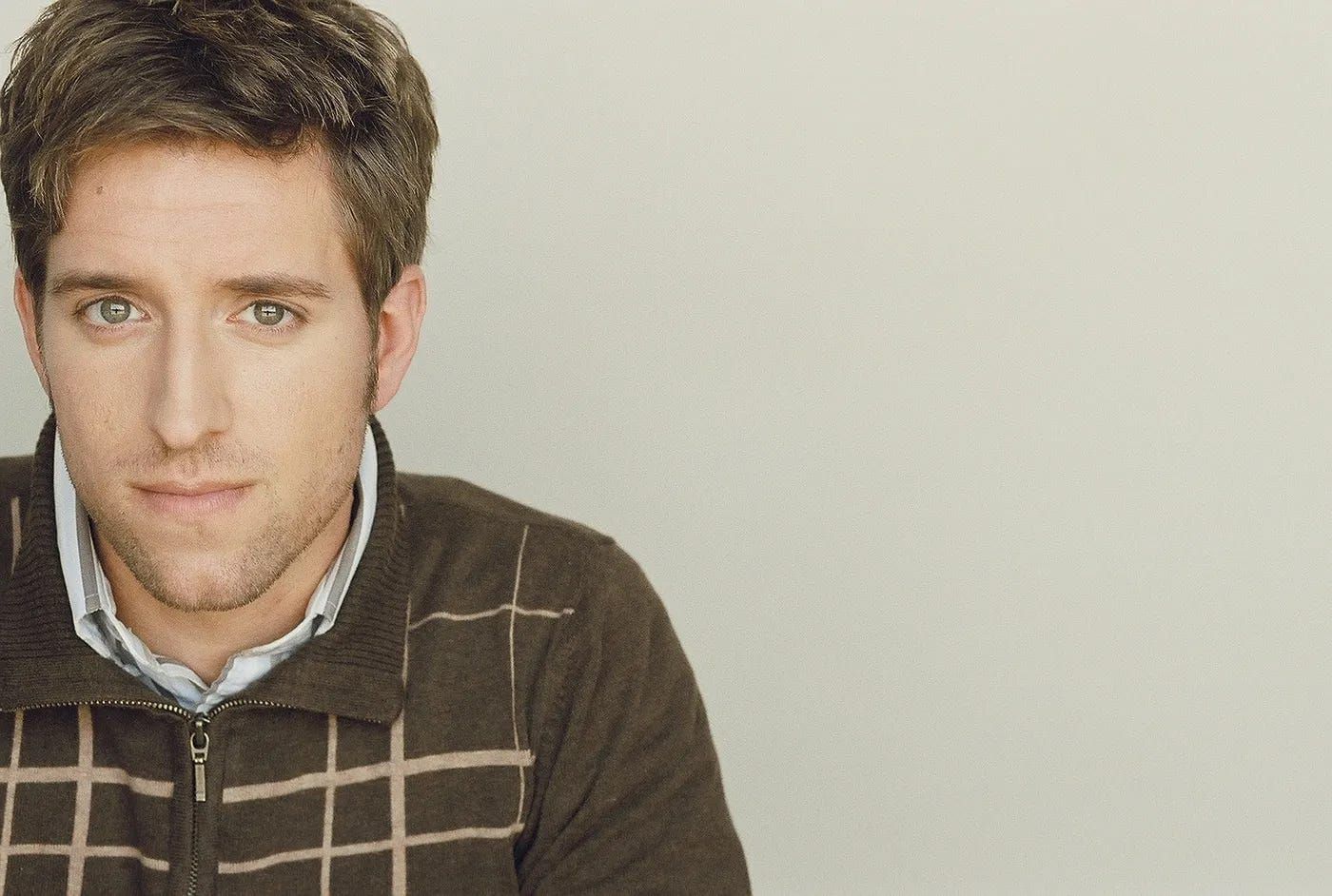
My conversation with the 2012 Black List screenwriter.
Chris Roessner has made quite a journey to professional screenwriter. His debut screenplay “Sand Castle,” which made the Black List in 2012, is a compelling story that takes us into a world few have experienced: Post-invasion Iraq. It’s a world Chris knows well as you will soon learn in my interview with him.
Scott Myers: First of all, congratulations on writing a great script, “Sand Castle” that made it onto the 2012 “Black List.” Your life is also a great story. Growing up in Texas, you joined the Army. You served as a machine gunner during the 2003‑2004 invasion and occupation of Iraq, then you went onto college and eventually grad school in the area of filmmaking.
Let’s start at the beginning. Have you always been a movie fan?
Chris Roessner: I have. I think I caught the bug when I was eight. My mom started dating my stepdad, who I did not get along with very much at first. One of the things we did to bond was on Sunday mornings open up the newspaper and see when movies were playing, what time the showings were.
We would go to the local theater, buy a ticket for a movie at 10:00 AM then theater hop one movie to the next. It was one of the ways he could bond with me but wouldn’t really have to say anything.
Movies are the thing that most helped me bond with my stepdad, who I have a very great relationship with now. That’s when my love for film started, stealing movies with him. It was the best way to spend a weekend, especially back then because we didn’t have any money. [laughs]
Scott: What kind of films were you drawn to when you were younger?
Chris: I loved action films. Still do. I think there is, within every grown man, the 13‑year‑old boy who loves seeing things explode and seeing things get shot to shit
Scott: Did your love of action films play any part in your motivation to join the Army?
Chris: To be quite honest, my motivation to join the army is something I’m still trying to figure out. I joined the Army when I was 17. I’m 29 now. I’ve had all this time to think and still don’t have a legitimate answer. That’s one of those questions I spent a lot of time thinking about in writing “Sand Castle.” In the script, the main character comes to realize that one of the reasons he joined the military, went through this war experience, was to, in a way, earn the love of a father he never met. That’s very much my story. I didn’t meet my dad until I was 27. My dad was a career military guy, was an Army Ranger, was a Special Forces guy, and was very much that guy. He’s a very tough person.
What I discovered in writing “Sand Castle” was that my motivation to join the military had something to do with him. I created, over the years, a hyper realized image of him and allowed it to bully me.
I don’t think it’s an accident that I met him after my war experience, and not before.
Scott: You say you met your dad when you were 27. Did you know he was a military man before you enlisted in the army yourself?
Chris: I did. My mom and my dad actually met in the military. I was very lucky growing up because my mom, who’s a very tough lady, never said anything bad about my biological father. Just the opposite, actually. We only talked about how strong and capable he was, how dedicated he was to something larger than himself. I think that over the years I spun that narrative into something much larger.
I think a lot of young men draw motivation from their father, living up to their father. For me, I spent all of this time imagining him to be something quite large, so I had to do something quite large myself, to earn the right to have a conversation with him.
Scott: So you join the army. How aware were you of the likelihood that we were going to be going to war in Iraq and that you might end up serving there?
Chris: I signed up July 11th, 2001. When I signed up, it was a very different military than the one I would end up serving in; there was no war on the horizon. After signing up and after September 11th, I would spend the next three years of my life away from my family and on the other side of the world, far away from anyone I had any history with whatsoever. It was a very scary time, but I got to spend some formative years just learning how to be a man. Learning how to see the world and figuring out what my place in it would be.
So it was a blessing. But at the same time it’s very hard to only see your parents for two weeks in three‑years.
Scott: After you returned stateside, you ended up at USC?
Chris: Yeah. I went to USC and got my undergraduate degree in poetry then went straight to grad school. I did this program USC has called the Peter Stark Producing Program which is a two‑year Masters program in creative producing.
Scott: Poetry isn’t probably the first thing that comes to mind when we think of a person with a military background. How did you become interested in that?
Chris: I’ll be honest with you, I think if someone told me in high school that I would be a poetry major, I would’ve probably punched them in the face. War does something to you, though. I got to USC with this new perspective but I felt lost. I was looking for something to help me put my war experience into perspective.
I took a poetry class and I had a great professor. It was one of those great college stories where you stumble upon something that becomes life changing. Poetry was that. I spent a lot of time reading short stories and novels and poems from Great War novelists, if you can call that a category. I really connected to these people even though they served in much different wars than my own.
Scott: Going on to the Peter Stark Producing program at USC, what were you thinking there?
Chris: Having received my degree in poetry, and spending all that time work shopping poems, I didn’t want to get a Masters in screenwriting because I felt like I’d just spend another two years doing more workshops. If I was going to spend money and two years of my time at my program I wanted it to be a new experience. So, I went to the Peter Stark program, and it was the best education I could have asked for. It gave me two years of very intense but practical tools. A year of creative filmmaking and writing and development, then a year of just down and dirty business.
Scott: That’s a good segue point to shift the conversation to screenwriting. Other than the time you spent in your writing workshops at USC, then whatever writing you did in the Stark program, how did you go about learning the craft?
Chris: I think a lot of it had to do with stumbling around. For me, the key to this whole thing, honestly, was finding somebody else who was invested in the story that I wanted to tell, who was in it for the long haul, someone who would read my drafts and help me shape the story. Because the Stark program gives you such a common vocabulary with your other classmates, one of my classmates, Andy Dahm, was there through every single draft for a year and a half. We stumbled through it together. He would be that objective voice. He would say this part of the screenplay is really hitting me emotionally and this part of the screenplay sounds insincere. That was really his job, to read every draft and say this feels right, this feels authentic, and this feels like, to be quite honest, bullshit. We stumbled through it together.
If I could advise anybody writing their first screenplay I would say find someone whose opinion you trust, who’s invested in your story, and is willing to be a part of the conversation until you finish.
Scott: On the title page of your screenplay “Sand Castle,” it says, “Based on a really shitty experience.” So the story in the script is inspired by actual events in Iraq?
Chris: Yeah. All of the characters in the script are the guys that I served with. I had to construct a narrative, of course. So in order to give the story some thrust I tasked these guys with repairing an aqueduct. Really though, the impetus to write ‘Sand Castle’ was to honor the amazing things I saw my friends do, these 19 and 20 year old kids. To come home and not see their faces in magazines? And seeing billboards that…I just felt, when I came back from Iraq, that out country had gotten really bad at picking its heroes.
So when I sat down to write this script, the only goal I had in mind was portraying those people in a way that was honest and interesting and would hopefully give them the credit they deserve, but would otherwise never get.
Scott: Were you keeping a journal or doing any writing when you were in Iraq?
Chris: Yeah, I did. I still have it. I went back and read through the journal several times while writing “Sand Castle.” It was really fascinating. Not to over‑exaggerate it, but I had this journal, this document, that, from start to finish, traced my growth as a human being from boy to man.
Scott: How many drafts do you think you wrote of “Sand Castle”?
Chris: Jesus. Let me see. The first draft I wrote in three weeks. It was 110 pages and not a single page of that survived. The next draft was 176 pages and maybe 20 pages of that survived. Then I probably went through another three or four, maybe five, drafts until we got to the draft that went out to everybody in town. So probably seven or eight drafts.
Scott: And how long a period of time are we talking about when you typed FADE IN until that final FADE OUT when you sent out the draft?
Chris: Close to two years.
Scott: In “Sand Castle,” the protagonist is a young private named Matt Ochre. You’ve talked about points of connection between the character and yourself. Are there ways in which Matt is different from you or was different from you when you first went to Iraq?
Chris: I think Matt is an exaggeration of one aspect of what I was feeling. It’s hard to describe the complexity of a person going off to war. Matt was simply the part of me that was scared and unsure and realized that he was in way over his head and that there were only two ways of going home, be killed or survive. His journey, much like my journey, is learning what gives you the best chance to survive. Is it admitting to yourself that you’re scared and therefore avoiding missions, avoiding participation? Or is the key to survival participating to your fullest? For me, what I learned is that being afraid and staying indoors, so to speak, was no safer than participating to the fullest because war makes no sense. It’s decisions as to who lives or who dies are incomprehensible.
Scott: That’s interesting because there’s another character in the story who basically sequesters himself from the front lines, yet he suffers a dramatic fate.
Chris: Yeah, he does. The Kidwell character was a guy who didn’t care that everybody else thought he was a giant pussy and he said, “I just want to go home. I will not go on any missions. I don’t care what details you give me. I don’t care what the consequences are. I will not go on any missions. In fact, to take it a step further, I will spend all day building sandbags and fortifying my room so that I’m as safe as I can possibly be.” Then at the end of the story there’s a mortar attack that shakes his building and those sandbags collapse on him and suffocate him. He was literally killed by the externalization of his own fear, which, of course, is a metaphor but, nonetheless, true to the war experience. Being safe doesn’t mean you get to come home.
Scott: The story’s based on real events and characters you lived with as your military mates. Are there any movies that served as inspiration for you in writing “Sand Castle”?
Chris: Absolutely. I watched the movie “Platoon” in Saddam Hussein’s palace in Tikrit at 3:00 in the morning. I finished it just as the sun was coming up. And it very much changed my life, not just because the movie was fantastic and wonderful but it was so deeply personal. When Andy [Dahm] and I were talking about “Sand Castle” we talked about that movie constantly because it was so deeply personal. That was the only goal. Write a movie that is deeply personal, that’s indicative of your war and tell the story in as clear a way as possible. I think, without question, “Platoon” was something we came back to time and time again.
Scott: There’s a key plot element in “Sand Castle” whereby the soldiers, the main characters, including Matt, are tasked with repairing an aqueduct that had been mistakenly destroyed by an allied aerial attack. I’m wondering if you ever made the comparison to another movie, “The Bridge on the River Kwai”.
Chris: Yeah, we talked about that movie a lot, as a matter of fact. Absolutely. The aqueduct is one of those devices that didn’t show up until several drafts in. This movie didn’t have a plot until the third or fourth draft. It was just a bunch of scenes on a clothesline, not really relating to each other. We talked about “Bridge on the River Kwai” and I think that’s how we stumbled onto the aqueduct as the story that would be the thrust of the war but also something that wasn’t arbitrary.
We wanted a plot that made the story move and gave it a goal but, at the same time, spoke to the nature of my war, as a whole, and the feeling of being a part of this task, this feeling of rolling a boulder up a hill only to watch it roll down the other side. I think the aqueduct was a really strong metaphor for that.
Scott: It also serves as a really great connective tissue for your narrative. That’s one thing I was struck by in reading your script was how seamlessly the narrative flows. You have this first act that’s basically about the invasion, the second act is largely about the experiences of this group of soldiers in a city called Baquba. It builds to a climatic third act in which the proverbial shit hits the fan. How did that narrative mirror what actually happened and how much of that required you to mold events into a coherent story?
Chris: I would say that the structure of this screenplay was the biggest challenge of all. It took us forever to find. Even when Mark Gordon, the producer, came in we spent another two or three drafts perfecting the structure of the story.
It was literally just constant conversation, constant writing. That was the only way we could have figured this out.
Scott: The discussions you had with Mark Gordon vis‑a‑vis where you were going to start the story really drives home a point about the Hero’s Journey, the idea there is this universal narrative pattern. You start in an ordinary world, creating a baseline where you get to know the characters as “normal people,” then thrust them into an extraordinary world in which you can see them forced to change. It’s almost like you were naturally or instinctively drawn toward that underlying structure.
Chris: Absolutely. The great thing that we discovered about war films in general is that you have lots of latitude in the length of the first act because when you sit down to watch a war movie you know that the shit will hit the fan at some point and you know people are going to die. You can spend a considerable amount of time in the beginning just trusting that that tension will be there. You can spend 45 minutes getting to know these characters before the action even begins because in the back of the audience’s mind they will be asking the question which one of these guys is going to get it? Which of these guys are going to make it? What’s the price that everyone’s going to pay? That’s there inherently. You have a lot of latitude in the first act of a war film.
Scott: There’s a pivotal moment for Matt about midway through the script where he says, “No one wants to die to make things normal. We need to let every person in the town know we didn’t come here to make things normal, we came to make them better.” In fact, it’s a transition point for him, isn’t it? He’s moving from largely a reactive mode, which is what he’s been up to that point, to becoming proactive.
Chris: Yeah, absolutely. Nobody wants to die to put things back to a status quo that was unacceptable. If you can paint a picture of a better Iraq then you have a shot at getting the Iraqis on your side. That’s a great philosophical shift for Matt and it leads him to action.
Scott: Following that, there’s an upbeat period in the script where this group of soldiers has actually succeeded in making progress on rebuilding the aqueduct. They’re even connecting with the locals. But there are some big reversals in the second half of Act Two and Act Three, leading to a confession from Matt in which he says, “I just wish one person in my life, one person, would have told me the truth… If my Dad had the balls to stick around, maybe he’d have told me, ‘Matt, good people die. Cry all you want, but the world don’t give a shit.’ So how I see it is, we spend the next 20 years crying by the front door or we admit it now. Daddy ain’t coming home and we ain’t saving this town.” Is it fair to say that Matt’s journey — broadly speaking — is one from innocence to experience?
Chris: That line came from a realization I had in Iraq. The realization that leaning on moral lessons from your youth, when in a dire situation like war, reveals those lessons to be flaccid and inadequate. For example, you think back to your coach who said, “Go out there and give 110%. There’s no ‘I’ in ‘team.’” To be frank, that shit doesn’t really cut it in a war time situation. You find yourself, for the first time, aware that you’re in uncharted territory and anybody who tried to shape your perspective as a young man did not give you the tools to be successful in this scenario.
Matt’s in no‑man’s land. He has to rebuild his morality brick by brick if he’s going to make it back in one piece, both mentally and physically. I hope that makes sense.
Scott: Yes, it does. It sets the stage for him, where in Act Three, he literally goes through a physical transformation. He cuts his hair, he has a Mohawk, he eventually dyes it blue. In a way it struck me that all this stuff gets scraped away. All his belief systems essentially get broken down, deconstructed. What emerges in Act Three is, for lack of a better word, his inner warrior as an expression of his personal metamorphosis. Do you think that’s an accurate assessment?
Chris: Absolutely. I would say that’s where the title “Sand Castle” came from. When you get to the end of the screenplay, you see the childhood version of that, building a sand castle on the shore and he’s telling his Dad, “I am the king of this castle.” And his Dad says to him, “Matt, of course. Everybody’s the king of their own castle. But you built it too close to shore, the tide is going to take it away.” That’s what happens to Matt in a very real way. He, much like anybody else, can go through life imagining himself the king of their own castle. You can live in that illusion and never be challenged. But it’s only after you let the tide take that illusion away that you can start building yourself into the man that you want to be.
Because you’ve been completely deconstructed, and you recognized what your limitations are. What you’re left with is the very basis of who you are. And now you can start to grow from that.
That’s what has to happen. He has to let the war take away any preconceived notions of his own greatness or his own ability. So that he can know himself at his core. Then he can spend the rest of his life building out from that very honest, sincere place.
Scott: That even plays out to that little bit of a mystery that you’ve got going on. The title “Sand Castle,” what is that about? Well, they’re in Iraq, that’s got sand. This weird guy is obsessed with filling sand bags. But then in a flashback at the very end, you reveal a parallel between the aqueduct and the sand castle, a provocative scene where the dad gives young Matt a lesson, then walks away and leaves his life. How cognizant where you of that, the connection between the themes of “Sand Castle” to what Matt’s experiences were in Iraq?
Chris: Very early on we knew that innocence, and how holding on to it can suffocate you, would be a theme for which the sand castle image would serve as a metaphor. On a superficial level, however, the idea and the title came from conversations I had with film executives who would say to me, when I told them I was writing an Iraq war movie: ‘Don’t waste your time. No one is buying anything with ‘sand’ in it’. This blew my mind because it’s so absurd and myopic. So I was basically like, ‘fuck you guys. I’m putting sand in the title’.
But yes, from the very start the image of the sand castle was there and the Kidwell character being suffocated from his sand bags was there. We didn’t really know how much we could pull that thread, that metaphor through, or even if it’d survive the writing process, but we had a hope and a starting point.
Scott: You cracked me up when you said that you insisted on putting the word “sand” in the title as a response to the conventional wisdom types in Hollywood. Because in point of fact, there have been movies like “The Hurt Locker” and “Green Zone,” which have been critical successes, but they didn’t do very well at the box office. So here you are getting an MFA at the Peter Stark producing school. I’m thinking to myself, you’ve got your producer’s hat and your writer’s hat. Clearly what happened here, the writer told the producer, “Fuck you. I’m going to write this thing anyhow.” Right?
Chris: That’s true. But honestly, even with my producer hat on, I think this film has a spot in the marketplace. Look, I’m not delusional. I recognize this is a very difficult film to get made. I hope that it sees the light of day. We just started going out to directors. And I know it’s going to take someone to raise their hand and jump on the grenade, so to speak, and tackle some very difficult material. But I have reason to believe that when a director raises his or her hand there is interest in getting this movie made. Because there’s a place for these types of movies in the larger film conversation. You look at a movie like “Platoon.” That movie wasn’t even made until the eighties. It was made after “Coming Home.” It was made after “Apocalypse Now.” It was made after “Full Metal Jacket.”
It was made at a time when people said, “Why make another Vietnam War movie? We’ve exhausted everything that needs to be said about the Vietnam War.” Which is such an absurd thing to say.
How can you possibly exhaust every aspect of a war that was so defining of a generation? Now, here’s this war that’s been going on for 10 years. To say that there shouldn’t be a film made about it, or making a film about it is fiscally irresponsible, or to say, because there’s the “Hurt Locker” and because there’s “Stop Loss” and because “Zero Dark Thirty” exists, there’s no room for a personal account of the Iraq War, I just think is ludicrous.
I think there is a place for it. Whether or not it’s my movie I don’t know. I sure hope so. But I don’t care. If somebody else writes their version of the Iraq War and it gets made, then it would make perfect sense to me. Because every war gets its movie. Personally, I’m still waiting for the movie that defines my war.
Scott: You got a big creative seal of approval when you made the Black List in 2012. What was that experience like? Where were you when you found out you made the list?
Chris: I was in New York. My girlfriend is a television writer on a show called “The Americans.” So we moved out to New York so she could do that. I was in New York, had just gotten there and I had a meeting with a film executive from Scott Rudin. Franklin Leonard decided to release the Black List via Twitter this year, which is very nerve wracking. So I was sitting at a restaurant waiting for this executive to show up. I was like the third or fourth to last script mentioned. So I was 99% sure I didn’t make the cut. And then I saw my name pop up on the Twitter feed. I was like, “Holy crap.” And then two seconds later, the executive walks in, taps me on the shoulder and says, “Congratulations on the Black List,” because he was following along on his iPhone on Twitter as well. Then he bought me a bunch of wine and I got drunk.
Scott: Yeah. That was a great idea of doing it on Twitter this year. I think the entire screenwriting community was following it live online.
Chris: Yeah. It was wild. Like I said, I was so sure that I wasn’t on it. Even when I was following it on Twitter, I thought that my chances were relatively slim. Just because I can’t imagine a bunch of film executives emailing my script around saying, “Hey, you have to read this movie about the Iraq war?” It just didn’t seem very likely to me. But I was very excited and obviously felt very blessed when I saw my name there.
Scott: Has it made a difference, in terms of meetings, since you’ve made the Black List?
Chris: After the Black List I was going on about five or six meetings a day for three, four straight weeks. It was exhausting. So there’s no doubt that being on the Black List played a huge part in the amount of people who were willing to meet me or willing to read the script if they hadn’t already. It definitely made a difference, without a doubt.
Scott: I’d love to move into some screenwriting craft questions. First of all, are you working on some other projects, original specs at this point? Or writing assignments?
Chris: Yeah. Listen, I’ve been a “professional” screenwriter for almost three months at this point. I’m balancing what I’ve learned is a never-ending conveyor belt of submissions with writing my own material. So I’m definitely working on things that I’m interested in. But I also spend a good portion of my day reading. I stay pretty busy.
Scott: “Sand Castle” has very strong characters in it, but having been to the Peter Stark program, I’m sure you’re very aware of how important story concepts are, high concepts and whatnot. How important do you think story concept is to the overall strength and viability of a screenplay?
Chris: A big idea is important if you’re writing a big idea movie. If you’re not writing a big idea movie then it’s not as important. The best answer I can give is, when you sit down to write whatever it is you’re writing, know what it is.
Know if it’s that independent, quirky comedy. Know if it’s that big, $200 million action film. Know the target you’re aiming for and let that guide you. Don’t let the fear of a one sheet or the fear of a trailer deter you from pursuing what you’re interested in. By all means, pursue what you’re passionate about. But know where it belongs in the marketplace.
Scott: In terms of your process of writing, are you one of those writers that will spend a lot of time in prep or do you want to get to FADE IN as quickly as possible to go on that journey of discovery in writing pages?
Chris: I love research intensive things. I think I have somewhat of a journalistic approach, at least from the outset. But I try to limit myself on how much time I’m going to spend doing research, because it’s one of those things that can be arresting. It can prevent you from sitting down and writing. So for me, I spend however much time researching as I think the particular project merits. I get a general idea of what the beginning, the middle and the end will be.
Then I want to plow through the first draft as quickly as possible, knowing full well that very little of it will survive. But I need something to work with.
Scott: In “Sand Castle,” you had the benefit of several people that you knew from real life as the basis for these characters. But in general, how do you go about developing characters?
Chris: I started off as an actor so I think about character a lot. One of the things we talked about in acting is a character’s filter. Meaning, what is that one defining thing from that person’s life that determines how they see the world? When I think about character, I tend to spend a lot of time thinking about, what was the event from this person’s life that shaped the way they see the world? If you can nail that in an honest way, then you’re in really great shape moving forward. You’re going to have to learn these characters through more and more drafts. But I think starting that first draft, knowing what your character’s filter is, is crucial.
Scott: How about dialogue? Your script, “Sand Castle,” really sparkles on that front. Some really great stuff there. Is the ability to write dialogue a talent a writer is born with or do you think that can be developed and if so, how do you develop it?
Chris: I certainly think it can be developed. I think it’s developed simply from listening. We had an assignment in Stark where the professor told us to go home and simply transcribe a conversation that you overheard, maybe three or four pages. When we came back and we all read those three or four pages to each other, we were bored out of our goddamn minds. Because natural speech can be very boring. So when I sit down to write dialogue, I don’t write the way people talk, I write the way I wish they talked. Personally, I wish everyone talked to me in a very well thought out, intelligent manner, laden with profanity. That’s what I respond to.
Scott: How about theme? Do you think much about theme? Is it something that emerges in the process or do you start with it?
Chris: I think one of my deficiencies is allowing theme to drive my story too much from the outset. I think that, from the beginning, you should know what it is, on a very emotional level, about your story that appeals to you. You want to declare it specifically, and then put it away. Then think about character, think about character, think about character. Then theme will naturally start to weave itself in there and give you an opportunity to shape it in future drafts.
Theme’s obviously important. It’s what elevates your work. But I think if you let theme drive your story instead of character, you’re going to find yourself in no man’s land.
Scott: You’re talking my language. My theory is, theme equals meaning, but specifically, emotional meaning. It’s driven by the characters. It has to be, or else it’s an intellectual exercise.
Chris: I totally agree. If a screenwriter draws the arc of their main character or characters clearly, then that will inherently speak to the theme.
Scott: What’s your actual writing process like?
Chris: I like to start early in the morning with reading. I’ll read for about an hour or two then disappear to a coffee shop and write for a few hours. I’ll come home and probably not start writing again until that evening. If I’m toying with things, or writing a treatment, or trying to convince someone to hire me to write, that’s how I work.
With “Sand Castle,” it was not difficult for me to write sometimes eight to 12 hours straight, which I know is absurd. But when I have the project that I’m writing and I know that’s my job, that’s my soul’s reason for being, I can go for eight to 12 hours and not really bat an eyelash.
But, again, that’s not the case all of the time, only when my attention has been focused on a single goal.
Scott: I can’t pass up this opportunity, Chris. I have a good friend who’s a poet, and for years, he badgered me to read poetry. I started doing it, a poem a day, about seven, eight years ago. Over time I was struck by how screenplay scene description is much more like poetry than prose. Minimum words for maximum impact, brevity, using strong descriptors, active verbs. Having studied poetry, would you agree?
Chris: Without a doubt. I think poetry, much to our collective detriment, gets much less credit than it deserves. It’s been so important to me, because it taught me economy of language, and it made me think long and hard about particular word choice.
I remember reading an interview with a Supreme Court Justice years ago, back when I was studying poetry. He was asked, “If you could tell undergraduates to study anything before law school, what would you tell them to study?”
He said, “Poetry, without a doubt. Because you learn the power of a single word, and you learn to choose your words very, very carefully, because as a lawyer, the words you choose will have pretty grand implication.”
Now, obviously, in screenwriting, my words don’t have the kind of implications that it would have if I were a lawyer, but nonetheless, it forces me to be comfortable spending a considerable amount of time thinking about word choice and honoring the importance of a particular word. And not just breezing by it.
So I think poetry has been incredibly valuable. And I think will continue to be. Although, if I’m being honest, it probably slows me down a little bit.
Scott: Where do you see yourself in 5‑10 years?
Chris: I love writing. Very much. But I’m not the type of person who can easily sit in a basement his entire life pumping out 3 or 4 scripts a year. I wish I were. But knowing myself and knowing what brought me out to Hollywood in the first place, people like Simon Kinberg or Akiva Goldsman or JJ Abrams, I’d like to find myself in 5–10 years with a small company, a producing partner, and the freedom to write only the films I feel passionate about without regard for sustaining finances. I love writers and sometimes working with other writers is more fulfilling than doing a screenplay of one’s own.
If, in 5–10 years, I were in a position where I was encouraged to write projects I loved but could also help people develop their careers and realize their visions, nothing would make me happier.
Scott: That’s a perfect segue for the final question I have for you. Talking about young writers, or aspiring writers. What advice would you offer to someone out there, maybe someone who’s in Temple, Texas, like where you grew up, who wants to break in, wants to become a screenwriter? What are the important practices or messages that you would give to them, in terms of how they would advance their understanding of the craft and succeed at it?
Chris: I really want to get this right, because when I was coming up I would read these types of interviews all of the time. So I want to say something that at least nudges up against honesty and has some merit.
I would say that, when getting started in Hollywood, you should spend as much time thinking about the quality of your life, in the immediate, as you do about your career. Meaning, I’ve seen a lot of people show up in town, it seems, trying to win an Oscar by next year. I think if you show up and look at your career as a 30‑year endeavor you’ll work hard but also calm down in those first few years. Make friends who will serve as a great support group. Set up your life. Find out what neighborhood you want to live in.
That stuff is as important as anything else. Because anybody will tell you that being successful in Hollywood is, without a doubt, a war of attrition. If you don’t lay solid groundwork from the beginning, you really don’t have a shot, unless you get lucky from the get‑go. Don’t underestimate the importance of setting up your life, because it will give you the best chance. We are all creatures of our environment, chose yours wisely.
For my interviews with dozens of other Black List writers, go here.