Go Into The Story Interview: Chris Sparling
My conversation with the four-time Black List screenwriter.
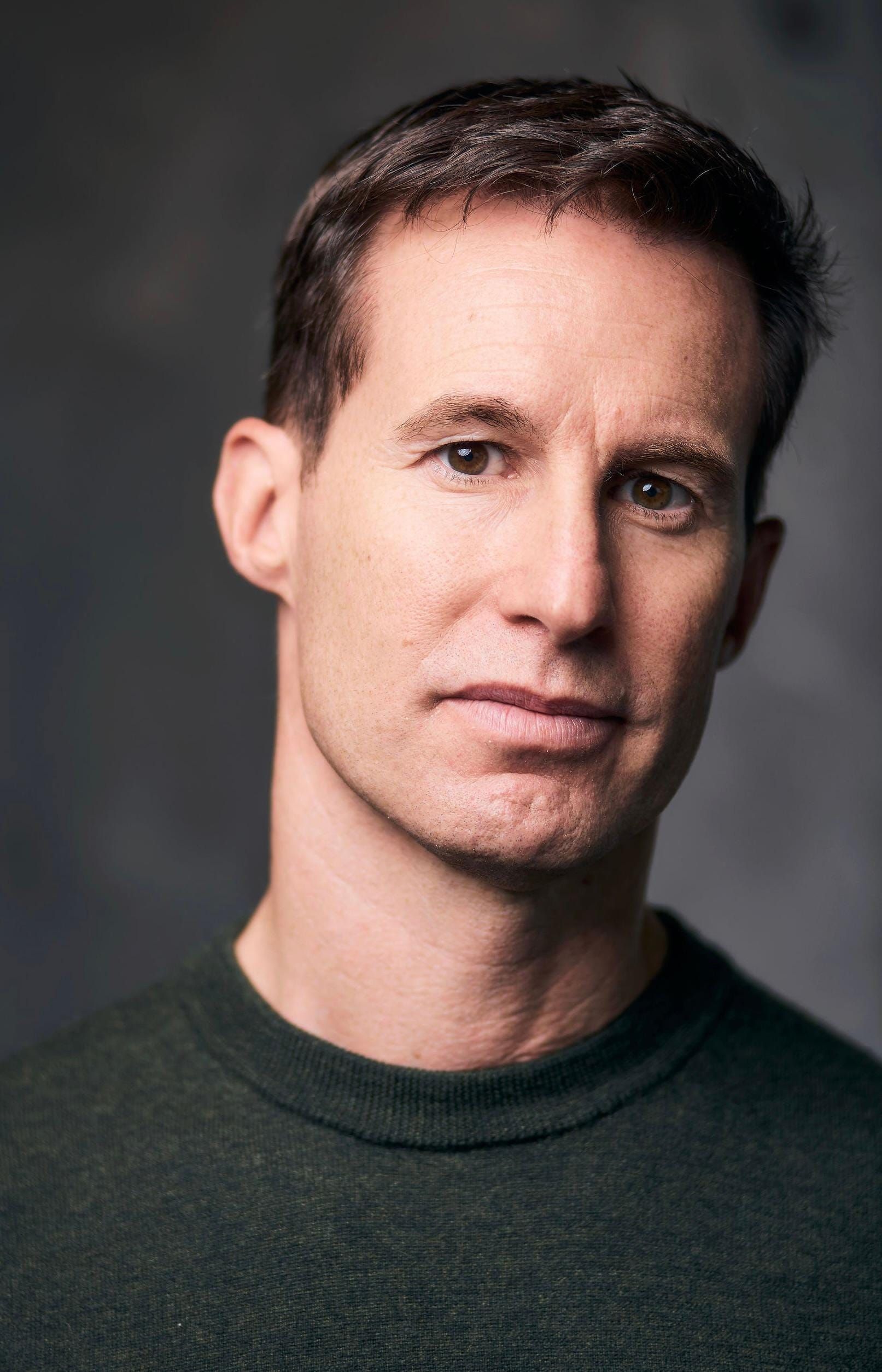
My conversation with the four-time Black List screenwriter.
In 2014, Variety named Chris Sparling as one of their 10 Screenwriters to Watch. With good reason. Chris made his first splash in the business with his script for the movie Buried, starring Ryan Reynolds and followed that up with another contained thriller ATM. Other screenwriting credits: Greenland, Mercy, and The Atticus Institute which he directed. His screenplays have been named to the Black List four times: 2009, 2010, 2013, and 2016.
Here is my interview with Chris.
Scott Myers: Let’s jump into this. Where’d you grow up, and were movies and TV an important part of your life?
Chris Sparling: I grew up in Providence, Rhode Island. I basically still live in that area. As far as what the role film and TV played, I was just a kid that loved movies. I loved the big spectacle of movies. As I got older I started to appreciate smaller indie films. We had, and we still do have, a really great independent movie theater here in Providence, called The Avon, that showed a lot of small indie films. That exposed me to a whole different side — a different side of filmmaking, a different side of storytelling.
I think I always knew I wanted to be a part of it all somehow. It just wasn’t until later in life that I understood you actually could be.
Scott: As I understand it, you start off trying to be an actor.
Chris: Yeah, that’s right. I moved to LA when I was pretty young. I spent about two years out there acting, and at the same time I started writing as well. I ended up moving back east to finish college, because I had left just after my freshman year.
I was trying to do too much in L.A.. I was trying to act, I was waiting tables, I was taking acting classes. I was also taking college classes part‑time. So, between homework, and work, and auditions, and acting classes and everything else, I was like, “This is impossible.”
I finally said, “Let me just move home to finish college, and then move back out to LA,” which is how it went down. By that point, I think I shifted more to writing, even though, when I did move back to L.A. for a second time, which was only for a four‑month stint, I was still there for the purpose of acting.
I returned to L.A. on September 10th, 2001. I woke up the next day, and it was September 11th. I didn’t know what was happening for several months afterward, career-wise, so I said, “I can’t stick around,” and I moved back east again.
Scott: Where did you go to school?
Chris: I got my undergraduate degree from Roger Williams University, which is in Rhode Island, and then my graduate degree at Bridgewater State, in Massachusetts.
Scott: You were doing some writing in LA and then began to focus more on that. How did you go about learning the craft?
Chris: I was self‑taught. I wrote my very first script right before I moved to L.A. for the first time, when I was in college. I wanted to learn how to do this. I don’t know if I ever had a knack for writing in general — maybe I did, maybe I didn’t — but writing was never anything that was daunting to me.
At any rate, I found out how to write a script, at least in terms of the formatting and the structure of it, and went from there.
I remember I found Michael Hague’s book, “The Standard Guide to Screenplay Format.” It was at the library and I photocopied the entire book. I also remember getting Syd Field’s book and just pored through it. So those books gave me a good, basic sense of how to do this, how to write a script.
And then I spent my first college year writing my screenplay, saying to myself, “All right. By the last day of school, I will finish this.” And I did. It’s funny, I still have it — I still have that script. I’ve never actually looked at it since, but I remember it was atrocious. So, yeah, I did it, I finished it, and it was an eye‑opening experience to be able to say, “Hey! That wasn’t too, too hard to do. Now let me do it again.”
Scott: You parlayed some of those scripts into short films and indie films?
Chris: When I moved back east the second time, I basically moved saying, “You know what? I don’t know what’s going on.” This was my career. My life. And I had absolutely no idea where it was going, which I didn’t like one bit.
So I then said, “All right, I’m going to move back east and I’m going to make my own film.” So I did. I pulled together a little bit of money, between my own money from working regular jobs, and some money from friends and family.
I had a little bit of money and I made a feature that I had no business making [laughs]. I had almost no idea how to make a movie — period. But I still did. I didn’t have any grand illusions that it would go on to become some breakout, indie darling or anything, but I hoped it would do something, anything.
Somehow, it did end up on Netflix for a while. I think it was on HBO Europe for a while, too. It, by itself, didn’t land me representation, but it started me down a road with the person that eventually became my manager. It started my career.
Scott: You took a similar approach with BURIED, which was your breakthrough as a writer. I’d like to ask a few questions about that. Here’s a plot summary:
“Paul is a US truck driver working in Iraq. After an attack by a group of Iraqis, he wakes to find he’s buried alive inside a coffin with only a lighter and a cell phone. It’s a race against time to escape this claustrophobic death trap. Starring Ryan Reynolds.”
The movie made a splash at the Sundance Film Festival in 2010. It won a number of awards, including Best Original Screenplay from the National Board of Review. I thought this was fun: It won the MTV Movie Award for Ryan Reynolds as the “best scared‑as‑shit performance.”
Chris: Yeah, it did.
[laughter]
Scott: As I understand it, because we’ve talked about this before, you wrote this script with the thought that you were going to direct it. That choice of setting a story inside a coffin, how much of that was based on budget, the benefit of one location. Or how much of that was based on, “I could basically do the ultimate contained thriller, literally inside a coffin”?
Chris: It was definitely in the order you just said. First and foremost it was budget. As I said, I had made a feature beforehand, and it suffered because it had way too many locations, way too many actors. All these characters, all these locations, all this stuff that I couldn’t support with my budget.
You learn from the mistakes you make, you know? You try to, anyway. So with BURIED, I realized, “Well, this time, I’m not going to star in it. I just want to direct it. I want to write something. I want to have something produced, in a pretty meaningful way, that I wrote and I directed.”
The intention was to come up with a story that I could shoot for about five grand. I had been working, probably at a job I hated — because I hated almost all of them back then, put aside a little bit of money and said, “All right. I can make a movie for five grand and not completely turn my life upside-down.”
So, naturally, with that small of a budget, I had to keep thinking smaller and smaller and smaller in scope, and also find a way to have less and less and less characters — which all ultimately left me with a guy alone in a box for a whole movie.
I wrote a totally different script based on that idea, about a guy buried alive. But it was more of a horror film; it was about a deranged person who put the protagonist in the box to punish him or something like that. I got to the end and was like, “Well… I did it. I did write a feature that takes place in this one location, and it plays.” But, at the end of the day, that script was OK. For me, at that point in my career — or, kind of my lack thereof, I needed more than just OK.
The thing is, prior to that, I’d made movies — a feature, a short — that played small festivals and people sort of pat you on the head, you know? You occasionally win some awards, which I definitely appreciated at the time. But I was at the point where I felt I had graduated from that scene — or, at least, I wanted to graduate from it. Anyway, long story short, I ended up scrapping the whole script. I just said, “All right. I’m starting from square one. What is the reason this guy’s going to be buried alive that’s not because of some deranged lunatic or whatever? What’s a more dramatic, compelling — and realistic — reason?”
That’s when I started researching what was going on in Iraq and Afghanistan at the time. That’s when I discovered that civilian contractors, all different kinds — truck drivers, kitchen workers, people that were re‑building over there — were being taken hostage, quite frequently, and ransomed. It was one of the only functioning businesses in Iraq at that time. When these contractors were being held captive, obviously they weren’t being held in the best of conditions. They were normally kept in these tiny little rooms, or beneath floorboards of these little tiny shacks in the middle of the desert.
So I pretty much said, “What if I marry that truth with my fiction?” I did quite a bit of research, spoke to a lot of contractors — not ones that were taken hostage, but people that did the job of truck driver out there — and got a sense of what that job was like, so on and so forth. Anyway, I said, “That’s it. That’s the movie.” I went back, and I did a page one rewrite on the script, and wrote that version of it.
Scott: So you not only took that original idea, which was a horror‑conceit, and genre‑bent it into more of a drama‑thriller. You also geo‑bent it, switching locations to Iraq.
Chris: Yeah. And so I was going to do that movie. I was going to do it for five grand. Then, one night, I sent the script to the person who’d eventually become my manager. I had sent him the feature I had made, three years prior, and he liked that movie enough to at least start a dialogue. Well enough to say, “Hey, I liked it. What else you’re working on?”
What happened was, I just continued to write scripts after that, for about three or four years, and send him those scripts. He would like them well enough, apparently, but there were never anything that clicked in a significant enough way for him to take me on as a client.
So now here I was, about to make my five thousand dollar version of BURIED, and for whatever reason I never sent him the script. It was literally the only script I’d written and did not send him. I figured he’d have no interest in my “tiny, guy in a box” movie. But, six months after the script was done, I finally sent it to him, and he surprisingly called me two days later.
He asked me, “What are you doing with the script? I loved it.” I was like, “Well, I was planning on making it about a month from now.” He asked, “Would you be willing to not direct it and instead go out with it as a spec?” And of course I said, “Absolutely. I’m dying here, for 10 years, trying to catch a break!”
So that’s what happened. Instead of me making the five thousand dollar version of the movie, I ended up getting signed by a manager who then helped get me an agent and an attorney, and then we went out wide with the script — which opened a ton of doors for my career.
Scott: The script goes out, gets you a lot of attention. Eventually, it attracts Rodrigo Cortes, who directs it. Then it debuts at Sundance. Were you there for that?
Chris: Yeah, I was there. It was an amazing experience. I was also in Barcelona for a good portion of the shoot. Rodrigo and I had a really, really great working relationship. We’re currently working together again on something else, actually. We became fast friends. I was very lucky he wanted to make the movie. He’s a huge talent.
Scott: I’d like to talk about THE ATTICUS INSTITUTE. You didn’t get a chance to direct BURIED, but you did direct this new movie that comes out on iTunes January 9th, 2015.
Chris: That’s right, and then on VOD and Blue-Ray/DVD on January 20th.
Scott: I’d like to dig into that story if we could, because I really enjoyed the script. Here’s an IMDb plot summary:
“In the fall of 1976, a small psychology lab in Pennsylvania became the unwitting home to the only government‑confirmed case of possession. The details of the inexplicable events that occurred are being made public after remaining classified for nearly 40 years.”
What was the inspiration for THE ATTICUS INSTITUTE?
Chris: A couple things. After BURIED, I had a movie come out that I wrote, called ATM, and then I had a couple scripts that were looking good in terms of their chances of getting made. I was watching my career progress, which is the goal.
I was getting to a place where I began thinking more about directing. I started saying to my reps, “Let’s have discussions about me maybe directing this next one.” The conversations were real, as were the conversations with producers. Everyone was legitimately open to it, which was awesome.
But what I kept finding was that, as the movie itself would get closer to becoming real, I kept running into the first‑time director roadblock in terms of securing financing and everything else. Yes, I had directed a movie before, but because it wasn’t good — it was basically my film school, my learning on the job — it did more harm than good in that way. Naturally, you want to do what’s best for your script; you want it to get made. You don’t want to start creating obstacles, especially if you are the obstacle. So I stepped aside.
I eventually realized that if I ever wanted to direct a movie, I first had to direct a movie. So, I conceived of an idea I felt was, from a business perspective, difficult to say no to, be it from a producer and/or financier.
It’s in a genre that historically does pretty well. Plus, you typically can make those kind of movies inexpensively. You don’t have to rely on A‑list talent for them to succeed, and your fan base is loyal. You’re talking about the genre fan base. Those are probably among the most loyal movie fans out there.
That’s why I landed on that, as opposed to trying to go out and make a drama or a comedy or something like that, which really isn’t my wheelhouse anyway, but still. It was that, that was how I came to the idea of making the film the way I did, in that particular style and everything else.
But the idea itself, the idea of having the government step in with a possessed person and attempting to weaponize them — that’s actually a missing piece from that description you read. That’s a huge part of the movie — that the Defense Department comes in to weaponize this entity, this demon, if you will.
Before that, long before that, I always had an idea for a film, or not even a film, just a thought, really, that with all these stories of possession that you hear, be it in books or movies, that are supposedly true… I’m not saying they are or they aren’t. I have no idea. Anyway, what inevitably tipped me in the direction of “I guess it’s not real,” is the fact that, if there really were people out there, possessed people who have the ability to do the impossible things that possessed people supposedly can do — like levitate things and read minds, there’s no way the government would allow that person to just roam free. That person, or whatever is inside that person, is a threat to national security. It’s almost like they’re an X‑Men mutant.
So, it became the quintessential screenwriting question of, “What if…?” What if the government did step in? What if there was an incident, and there was a case where the government stepped in because this time, it actually was real? What would happen? What would they attempt to do? And once they confirmed it, would they just be content with confirming it, or would they try to go further? I posit that, no, they would attempt to weaponize it. This is a powerful, powerful force that they can use to their advantage, strategically and militarily.
Scott: It’s like you’ve taken this familiar conceit, the idea of people being possessed by demons, something we’ve seen many times before. But just like with BURIED, which is taking a contained thriller and putting the emphasis on “contained,” like literally — guy stuck in a coffin. With THE ATTICUS INSTITUTE, you found a unique angle, which is, OK, so what if we could get the government, basically, taking control of a possessed person who’s got supernatural powers, what would the Powers That Be do with that.
Chris: I’ve always been fascinated with the scientific approach to things that are typically attributed to spirituality. We talked earlier about watching movies as a young person and everything else.
The first one that jumps to mind is POLTERGEIST. I always thought it was so cool in the scenes where you see the high‑tech instruments the scientists had, measuring this and that. I guess that’s a little more common now because of those shows you see on TV, like “Ghost Hunters” and stuff like that.
But back then, it was like, “Wow, they’re really utilizing the scientific method to see if this is real.” THE ENTITY did the same thing in a way, using a scientific approach to explain the supernatural.
To me, that was a fascinating take, and so that’s what I tried to do here.
Scott: Let’s talk about the two central characters in the story. There’s Dr. Henry West and Judith. West, he’s the protagonist figure in the story. If you were trying to sum up this guy in terms of his role, how would you describe Henry West?
Chris: It’s like the Fox Mulder poster from “The X‑Files”; Henry wants to believe. He’s a guy that believes there’s legitimate science in this world of ESP and clairvoyance and telekinesis. But at the same time, he’s a very aware that mainstream science questions this sort of stuff. Even when his subjects test above statistically significant levels, it’s never enough for the mainstream scientific community to view him as anything more than just a fringe scientist, a parapsychologist. Maybe even a charlatan.
He never really gets their respect, and so it’s an ongoing struggle for this guy. That’s why, for example, Henry has such high hopes in the movie when a test subject comes through that he thinks is the real deal, only for the subject to turn out to be a huge fraud.
That’s emblematic of Henry’s career. That’s why, when Judith Winstead later arrives at The Atticus Institute, Henry at first approaches her with a little bit of skepticism, because he doesn’t want to get burned again. But at the same time, it’s not long before he realizes, “This is it. She IS the real-deal. This is going to finally be proof.”
He’s enamored with her and completely taken with the possibilities of her and what it represents for him and his career, but at the same time, he can’t deny the fear that’s creeping in. She’s just so damn unsettling. It’s undoing him, mentally. He’s trying to stay in the game, but it’s just proving too difficult, because she’s not normal.
Scott: Judith is a woman brought into The Atticus Institute because she’s got this psychokinetic capability, but then it evolves over time to the point where it’s clear there’s something more malevolent going on with her.
There’s a line from one of the documentary subjects interviewed in the movie: “She became his [West’s] obsession. In hindsight, I think that was its plan.” In your mind, do you think that Judith zeroed-in on West because she knew he was consumed to prove his theory to be true, basically a weakness she could exploit?
Chris: Yeah, absolutely. It comes out more in the movie than in the script. The draft I sent you is probably the last screenplay draft as opposed to shooting script. The script changed a fair amount, especially towards the second part of the movie, and then naturally the movie changed in the edit.
All the way through, even in that draft I sent you, it’s always been a two‑hander. It’s Judith and Dr. West. She’s preying on him. She’s preying on his vulnerability. She’s preying on his need for validation.
At the same time, he needs her, and he still feels for her, in a way. He feels for her as a person, especially once the government steps in and starts to brutalize her. You know, “Don’t destroy that. I need that. I need her.” It’s like, “I know there’s something wrong here, I know there’s something malevolent here, but I still need her.
I think it comes out more clearly in the movie, quite honestly. But there’s very much this symbiotic relationship between the two of them.
Scott: Through the story, Henry goes on a downward spiral, psychologically. It’s really intriguing to track his deconstruction almost stage by stage. Did you always have that arc in mind? Was it interesting for you to explore a character’s descent like that?
Chris: Yeah, it was. Henry is the driver of the story, him and Judith. He’s the non‑possessed driver of the story, anyway. It’s easier to feel sympathy or some empathy for him. But that was always the case.
He’s just like anybody in any field. You want to be really good at what you do. Most people do. It starts when we’re kids. We make our drawings, our artwork from school, and we give it to our parents. Why? Because we want them to like it. We want them to hang it on the fridge. That need for validation doesn’t go away when we become adults. It just changes into something more grown-up, like your peers seeing your name in the local newspaper, or, knock on wood, your movie gets good reviews.
Scott: Let’s talk about Judith. You mentioned this idea about this militarization. She starts to become more and more activated in some very violent and malicious ways. I don’t know if this is still in the movie, but you bring in Donald Rumsfeld and Dick Cheney. Are they still in the film?
Chris: No, they’re not.
Scott: But that was so cool!
Chris: Let me go back to what you asked me before about what was the impetus or the inspiration for the movie, aside from the things I mentioned in terms of wanting to direct a movie and everything else. As far as the shaping of the movie itself, why I decided to do it in pseudo‑doc style, apart from the financial benefit of doing it that way, it was partly influenced by a movie that came out — it must have been at least six or seven years ago by now — called DEATH OF A PRESIDENT. It was about the assassination of George Bush. It came out while he was still in office.
I remember watching that film. It was a pseudo-documentary. It was about George Bush being assassinated and the fallout from that. It had interviews with the Deputy Director of this and a Secret Service agent and this person of importance, and so on. But, none of them were real — they were all actors.
I found the movie riveting. I really did. The biggest takeaway, for me, was… In a weird way, it was like the Stanley Milgram study, the obedience to authority study. It was almost that at play when you had these authority figures saying this stuff in that movie, talking about the assassination in a believable enough way.
I bought it. I knew it wasn’t real, mind you, but I still went along for the ride. It was almost like it added a layer of authenticity because it had these authority figures — figures that, like the Milgram study showed, make you more inclined to obey, to believe. The movie also used a lot of footage where you did see real people. You saw Clinton at Bush’s funeral and all sorts of crazy things like that. So, by having the real authority figures in there with the stock-footage, it magically made the fake authority figures seem pretty real, too.
That, early on, was part of what I wanted to do with ATTICUS. I really wanted to set this thing in the real world. I wanted to have Gerald Ford involved. I wanted a then-young Rumsfeld and a young Dick Cheney involved, back when they were in Ford’s cabinet. I wanted to add that sense of realism to it.
Unfortunately, that was probably the only thing the producer, Peter Safran, the executive producer, Dan Clifton, and I ultimately had to settle on not doing. We ultimately felt it would distract from the narrative. Plus, we could have encountered clearance issues. So that stuff, those specific real people that were in the script, did not make it into the movie. However, there are plenty of people that are essentially fake representatives of the Department of Defense, the Defense Intelligence Agency. I still utilized that approach, but didn’t use any real people.
Scott: Their philosophical worldview is in play there. It gets to the heart of this central conceit of the militarization where they say, “Possess the possession.” How early on did that narrative element emerge, this idea of militarizing a possessed individual?
Chris: It was the combination of two things. I always had that idea in mind, the idea of the government stepping in if there really was a possessed person, and then asking myself, “What would they do?” What would they do if they just ‘stepped in’”? What does that even mean?
I couldn’t help but think that if they came across a woman who could affect someone’s breathing, for example, you could use her to murder someone. You could assassinate a foreign leader — possibly from across the globe — without even touching them.
Then I started delving deeper into that sort of stuff and found that, at least as best as I can tell, the Defense Intelligence Agency, back in the ’60s or ’70s, was investigating psi, as was the KGB. Not with possessed people but with people who allegedly had telepathic abilities, clairvoyant abilities. They were seeing if they could somehow turn these people into some kind of weapon, a psychotronic weapon.
Scott: Like THE MEN WHO STARE AT GOATS.
Chris: Exactly, same idea. There are true accounts of that kind of stuff happening, or at least attempts at making it happen. It stood to reason, to me, then, that something similar would happen with a possessed person, but now you factor in these other abilities.
This is a force. This is an entity. That’s why I said I wanted to try to explore the scientific aspects of possession — like what goes on in the body physically. What’s going on that we can actually study and maybe replicate and utilize?
Scott: What’s interesting [re The Atticus Institute] is you’ve got this history of movies featuring demon possession and exorcisms, but it really is that militarization angle about the potential use and utilization of a person with those capabilities that enables you to create this character, Judith, who is both in the tradition of these possession stories, but also unique because of her circumstances.
Chris: Between Dr. West, who William Mapother plays, and Judith, who’s played by Rya Kihlstedt, I wanted to show not just the relationship between the two of them, but once the government steps in, how it throws everything out of whack.
The Government was initially brought to The Atticus Institute, in a way, to try to help the situation, but they end up doing the exact opposite. Once they’re there, they create this divide, not only between Dr. West and Judith, but also between themselves and Dr. West and his staff. The Government agitates Judith, the entity is inside her. They start to push it and push it — and it starts to push back.
That’s what happens. This thing is retaliating to, essentially, the torture that they’re putting it through, the physical torture, all in efforts to gain control. This isn’t a church matter. This is a government matter, and as we’ve seen, that can get draconian.
That said, I wouldn’t go as far as to say the movie is about torture. Or even an allegory about the dangers of torture. Still, I can see how it could potentially be perceived that way, because it does suggest that it’s wrong to treat human beings that way, and that there’s a danger in treating people that way, regardless of how menacing and awful they are. Like I said, the movie’s not necessarily saying that, but at the same time, I guess it is.
Scott: You go off and direct this movie. I believe you shot it in LA.
Chris: We did.
Scott: What was your experience like shooting a movie? How long was the shoot, and what was it like?
Chris: It was a fairly short shoot. We did it in, I think, 15 days. We did three five‑day weeks. We shot at this place called Linda Vista Hospital in East LA. I think it’s torn down now. I know, in the past, a lot of people shot a lot of low‑budget horror films there because it was a completely derelict, old hospital that was pretty creepy. And supposedly haunted, on top of it.
We didn’t really use the hospital, per se. We used it as a space to build our set. We just built a psychology lab. That’s what the Atticus Institute is. It’s not an institution for the insane; it’s not an asylum. It’s an institute of study. It’s a parapsychology lab.
So, yeah, we built our lab inside Linda Vista, and it was great. The experience was everything I hoped it would be, honestly.
Scott: Were there some writing lessons you learned from your first feature film directing experience?
Chris: It’s seeing the script-to-screen in practice. Directing, obviously, I could see it very clearly because I was involved with every stage of that.
Even with my other films I wrote, where I watched the production or watched what became of the things I wrote, I learned that sometimes things that are relatively easy to write require quite a bit of heavy lifting for them to materialize on the screen.
The example I always give is, it’s easy to write “They fight.” But there’s a lot of people involved with “They fight.” It takes me two seconds to write “They fight,” but it could take two days to actually shoot, if not a hell of a lot more.
So, yes, absolutely, I learned a lot of lessons from it all. It all informs my writing at this point. I can’t help but be aware of what these words mean, even more so than before.
Scott: Let’s talk about another of your movie projects THE SEA OF TREES. Is that still in post‑production at this point?
Chris: Yeah. Actually, I just got an email asking that I watch the updated cut of the film. That’s what that ‘ding’ sound was that you might have heard.
Scott: The plot summary for that:
“A suicidal American befriends a Japanese man lost in a forest near Mt. Fuji, and the two search for a way out.”
The movie stars Matthew McConaughey, Naomi Watts, and Ken Watanabe, directed by Gus Van Sant.
As I understand it, the concept arose when you discovered there’s this actual location in Japan where people go to commit suicide.
Chris: Yeah, that’s right. I think I was on Cracked.com, which is a great website, by the way. [laughs] I don’t fully remember, but I’m sure the title of the article was something like “Weirdest Places on Earth” or something to that effect. Aokigahara was one of the places listed in the article. It’s a forest, also known as “Suicide Forest” and also known as “The Sea of Trees”, at the foothills of Mt. Fuji.
This place, Aokigahara — there are more suicides committed there per year than anywhere else in the world, except for the Golden Gate Bridge, perhaps. It’s primarily Japanese people, but, strangely, people come from all around the world, too, to commit suicide in this forest. Nobody fully understands why. It’s a very mysterious place.
The Japanese have their own mythology built around it. They think it’s a very dark place, for obvious reasons. Plus, the forest is very disorienting. Compasses allegedly don’t work there, cell phones don’t work. It has this built‑in mysticism to it.
It was weird because it was like BURIED again, in that my first inclination was that this would be a good setup for a horror movie but I instead decided, “No, I don’t want to do that. I don’t want to take what seems like the obvious path. How about a drama? What’s the drama that can be made in this surreal place?” That’s when I came up with the idea of the two men bonding during this survival story.
Scott: You specifically said a drama, not a genre piece like BURIED, ATM, or even ATTICUS. Was this a conscious decision on your part to try to break out of that thriller brand?
Chris: Not so much to break out of the horror or thriller brand, but to break out of the smaller movie box that I had been ‑‑ no pun intended — put in. Early on, with BURIED and ATM, I actually found it beneficial. People have asked me that many times, “Did you feel you get stuck in this box? Was that a bad thing?” Early on, no, I thought it was a great thing.
I was occasionally being considered for non‑contained, thriller‑type movies, but I was always considered, it seemed, for contained thrillers. I was always the guy they thought of for those movies, which was great. It, at least, separated me from the overall pack in one specific way early on in my career.
But as I said, my goal is never to just be complacent and stop. And before writing THE SEA OF TREES, I wondered, “How do I continue to grow? How do I move out of strictly being the contained thriller guy?” The answer was that I needed to write a bigger movie than what people might be used to from me. I remember I told my agent about the concept. He was like, “Uh.” [laughs] He was like, “It sounds like it could be an interesting story. I just don’t know how commercial it could ever be. I don’t know if it’ll ever get made, but if you feel like you have to get it out of your system, if you feel passionate about it, then go do it.”
I did. Thankfully, I did.
Scott: I think that’s the default mode for reps, isn’t at, at first? It’s like line of least resistance. If someone establishes themselves in a genre or specific story type, that’s the easiest thing to get them work on.
On the other hand, if a writer comes and says, “I’m really passionate about this new story arena,” eventually, if they’re a good agent, they’ll support the writer and say, “Yeah, you go do that.”
Chris: For sure. Absolutely. My agent did support it. He did what agents do: he looked at it from a business perspective first. It wasn’t exactly the greatest business decision. [laughs] But he was still supportive. So was my manager.
Scott: Turned out to be a great business decision. What was that like ‑‑ because you were also a producer on the film ‑‑ working with a well‑known director, Gus Van Sant?
Chris: It was great. I’ve been really lucky, honestly. As you well know, it’s not very often that what a writer writes ends up on the screen the same way it appeared on the page. [laughs]
I’ve been really lucky with my three movies now, not counting ATTICUS since I directed it myself, that the directors I worked with, pretty much, they’ve all read the script and said, “This is the movie I want to shoot,” and then that’s the movie they shoot.
In that regard, I couldn’t have been more grateful that Gus wanted to make my movie, and not just something in the spirit of my movie. As far as how he and I got along, he’s an extremely gentle soul. Very quiet, mild‑mannered guy. Really nice. Just a nice human being.
Going in, I didn’t know what to expect. Obviously, he’s a big‑time director. I had no idea what his personality was. Of course, you hear horror stories, not about him, but about people in general once egos start to take over and everything else. I didn’t know if he would be that type of person. I had no idea what to expect.
It turned out not to be that at all. He’s a very normal, down‑to‑earth, soft‑spoken guy.
Scott: Then the stars aligned, literally. Matthew McConaughey commits to the project. Then he’s riding high off the Oscar from DALLAS BUYER’S CLUB and the success of “True Detective” on HBO.
You’re sitting back in Providence, Rhode Island, and you’re looking at this project with him in the lead. How does that make you feel?
Chris: It was great. We were fortunate enough — and by “we” I mean me and the producers, Gil Netter and Ken Kao — to get Matthew on‑board when we did. I believe it was a week before the Academy Awards. Who knows? I don’t know if he would have done the movie or not had we approached him after he won his Oscar. He might have, he might not have. His agents could have taken a different view of his career. I honestly have no idea. Thankfully, the timing was perfect, and we were thrilled.
I got the call saying that Matthew’s in. Ken Watanabe was already in at that point. Soon after that, we got our female lead, Naomi Watts. It call came together very fast after that. On top of it, selfishly, I thought it was especially great because we shot in Massachusetts.
Scott: You were able to just pop up there, then?
Chris: Yeah. It took me about 40 minutes to drive to set.
Scott: Massachusetts has a pretty attractive film production tax rebate program now, right?
Chris: Yes, they do.
Scott: When can we expect to see THE SEA OF TREES?
Chris: If I were to go by how quickly things are moving along, it looks like some time in late 2015. I can’t say that with certainty, but I would imagine the idea would be to launch it at a high-profile festival.
Scott: You’re also involved in a number of TV projects. I was wondering if you could give us a rundown on what you’re doing there?
Chris: Sure. The past couple of years, I’ve gotten involved with TV. It’s a totally different animal. It took some time to understand how it worked. I sold a show about a year and a half ago to FX that unfortunately didn’t get a pilot order, and then something similar happened with a Stephen King adaptation I did for NBC that unfortunately didn’t go to pilot, either.
It’s weird to know that, unlike features, where things can have a life elsewhere, generally, with TV, that’s not the case. When it’s dead it’s dead, so you move on. To that end, I’m currently writing “Mayflower” for FX.
Scott: That’s going to be a whole different thing for you. If you’re a screenwriter living in Providence, Rhode Island, it’s all pretty electronic, but, assuming that a TV series, even if it’s a limited series, that would require perhaps a bit more location type of a thing for you. Are you still locked into living in Providence? Have you given any thoughts, if a TV series goes, that you might have to move to LA for a while?
Chris: I’ve never been opposed to moving back to LA. My wife’s okay with it, too. But it would be a little tricky now because our daughter starts school this September. I don’t know how that would factor in, but we’ve always known that if I had to go, we would go.
I’ve been lucky in that there’s been nothing that’s truly necessitated that move. Now, with “Mayflower” — which hopefully continues forward ‑‑ we’ll see. I’ll be the executive producer on the show, so I’ll have some say about things I normally wouldn’t have much say in. Part of that might very well be, “Well, look, this is the Mayflower story. Let’s shoot it on the East Coast. Hell, let’s shoot it in my back yard!”
[laughter]
Scott: You live in Providence, and I’ve heard you interviewed where you say, “Well, I go to Starbucks, and people don’t even know what I do,” and you like that.
Chris: I do, which is the truth. That’s exactly what I did today, in fact. I suppose it’s a different world than 10 or 15 years ago, when you didn’t have things like Skype. You didn’t have things like .PDFs, and conference calls weren’t as easily coordinated. You couldn’t do this remotely, I imagine. Technology’s made the world a much smaller place.
Plus, it isn’t terribly expensive to jump on a plane if I need to. I mean, you can usually find a flight to L.A. for around 300 bucks. I do that about five or six times throughout the year, and that’s usually enough. Unless there’s something, like I said, that necessitates me being there, I kind of don’t have to be.
The way I see it, it all depends on where you are in your life, what you have going on, and what you’re willing to leave behind — and to what end. It’s up to the individual. It’s one of the more complicated decisions you’ll ever have to make about your career as a writer, because it most likely impacts more than just you.
Scott: Let’s jump into some craft questions here. How important do you think story concept is to the overall strength and commercial viability, particularly a spec script?
Chris: I think it’s incredibly important. You need to be able to sum up your movies succinctly, and with that log line or that short pitch alone, people should know there’s a movie there. Especially early in your career, when you usually aren’t given the opportunity to pitch something in full or get someone to read your script.
The tough, tough, tough thing about trying to get your break is the lack of access. Access to execs, access to agents, access to producers. The Black List — what you guys are doing there — is phenomenal. You’re giving writers that access. I have to say, in a way I’m bitter, because I wish you guys had been around 10 years ago!
Scott: How much time do you spend on prep writing? What do you focus on? Brainstorming? Character development? Plotting? Research? Outlining?
Chris: I do a decent amount of research. For example, “Mayflower,” that’s a research‑heavy project. It’s adapted from a book, a historical non‑fiction book. There’s that reading, and then ancillary material I’ve hunted down. I’ll probably go up to Plymouth Plantation soon to do the tour and everything. Mess with some fake Pilgrims.
I always found that physically visiting a location, especially when I was doing a lot of the single location thrillers, helps quite a bit. With ATM, I visited a lot of ATMs. I would go these vestibule type ATMs and I would just look around to see what’s in and around theme that I could use as something in the story that the characters can use as a weapon, or whatever the case may be.
Then, when I wrote a script called INCIDENT ON 459, which takes place on an airplane, I found myself paying attention much more closely when I was on airplanes to see, like, “What does that do? There’s that overhead bin that’s reserved for emergency equipment. Oh, they opened it and I see that there’s a first aid kit and a megaphone. Hmmm, a megaphone. I didn’t know planes had megaphones on them. Maybe someone can use that in my story, somehow.”
The one potential downside of research, though, is that there’s always the risk of going down a rabbit hole. You’ll all of a sudden realize you’ve been researching for months and haven’t actually written a word yet. Or worse, you can start to use “doing research” as an excuse to avoid actually writing.
Scott: Are you one of those writers that likes to do an outline?
Chris: Yeah, I have to. I can’t not do one.
Scott: Do you use three by five inch index cards? Are you that analog?
Chris: No. Usually I’ll just open up a Word doc and I’ll write the movie in two to three pages, just a synopsis of it, the three acts. From there I’ll do the beat sheet to flesh it out more. Then, maybe, I’ll flesh out the beat sheet even more.
Then I write a step outline — a scene breakdown, scene by scene, every scene in the movie. That’s pretty thorough. Usually that’s more or less a scriptment. After that, I finally open Final Draft and start on the first draft of the actual script.
Scott: How do you go about developing your characters? Are there any specific routines or tools that you find yourself using regularly?
Chris: Yeah, that’s another thing I’ll usually create: a character breakdown. It’s nothing fancy; I make a table on Word and then put the character names, their physical description, their habits, their flaws.
Scott: Is that how the dialogue emerges?
Chris: I think so. I think it helps to make sure the characters and their voices don’t become too similar.
Scott: How bout theme? Do you have any thoughts on that? Do you think much about the central themes or sub‑themes of the story? How does that work for you?
Chris: I think I tweeted something about this recently. [laughs] I frequently find myself at this place with theme, and I think that’s what happened the day I wrote that tweet. I was working on a new project and suddenly realized that what I thought was its theme wasn’t the theme at all.
Sometimes you go into a script with a theme, knowing this is the theme you want to tackle, this broad idea, or even if it’s a narrow idea. Regardless, you go in with a theme and then you build from there. Other times you find the theme as you’re writing, and other times still, you go in with a theme, only to find a different theme is actually what’s driving the story — which is what happened to me with the project I just mentioned.
I think theme is huge. I think it’s the heart of the movie. Maybe even more than that. It’s something underneath, almost like an electric current, a constant underlying current that’s coursing through the movie, through the story. It’s nothing that has to become a lightning bolt, or an electric shock. But if it does, it probably only does once. But, generally, it’s just something that’s always there that everybody feels and it’s real.
Scott: You’ve got that in ATTICUS. An ends-justify-the-means kind of thing going on and you’ve got it at two levels. There’s the military, but then there’s also Dr. West who has his own thing going on. Initially he’s trying to use her in order to validate his theories, his career, but then he gets to see it taken to the nth degree by the military. Isn’t that a thematic thing that ties those together?
Chris: That’s very much the theme in ATTICUS. As I said, theme is that current; the electricity that’s always there and you feel it even if you can’t see it. It needs to be. It’s what we’re identifying with, we’re connecting with, whether we realize it or not.
Scott: What do you think about when you’re writing a scene? Do you have specific goals in mind?
Chris: I do. I think every scene should have a purpose and that your character’s needs and wants are important. A lot of times scenes work best when those needs and wants conflict.
Scott: What’s your actual writing process like? Do you write every day or are you sporadic bursts? You mentioned Starbucks. Do you like to work at home or do you go out or do you listen to music or does it need to be quiet? How do you write?
Chris: Definitely with music on. I try to find music that corresponds with the type of material I’m writing. I’m working on something currently that’s a spooky ghost movie; it’s the project I’m doing with Rodrigo. So I’m listening to Pandora. I found this station called Spooky Symphonies [laughs], so that’s what’s on in the background.
I remember when I was writing BURIED, at times I listened to a Middle Eastern station I found. Music’s a nice distraction, and it’s evocative. It also helps keep me from being distracted by people’s conversations around me when I’m writing in public.
I work from home sometimes, too. Usually my day is, I get up, hang out with my daughter for a little while and my wife, then I’ll take off and I’ll write for about four hours, go to the gym, come home, relax a little and settle in for a bit. Then, at night, I’ll try to get anywhere from two to four more hours in again.
Scott: Here’s a couple of questions I like to ask. First one’s sort of a fun thing. What’s your single best excuse not to write?
Chris: I’m going to sound like a dick for saying this, but it’s the truth. I don’t buy that. I feel like… [laughs] I think it’s fucking stupid.
[laughter]
Chris: If you want to do this, why would you find reasons not to do it? I don’t get it. I don’t get it at all. It’s not as if you’re a fighter, a boxer, and you’re like, “Dude, this guy’s going to beat the living shit out of me. I need to find an excuse not to get in the ring today.” You’re just going to sit down and write.
Again, I probably sound like a dick saying this because I know there are plenty of writers out there that are successful and great and talented, and they probably find reasons all the time not to write, and they may read this and go, “Screw you, pal. Who do you think you are?” I don’t mean it like that. I’m just saying I don’t get it. If this is what you love doing and this is what you want to do, why would you not do it?
Scott: That’s like the best answer to that question ever.
[laughter]
Scott: Conversely, what do you love most about writing?
Chris: The fact that it’s my job ‑‑ not to be goofy about it, but that’s the truth. I get to do this for a living. I enjoy it. A lot. [laughs] You get to make movies, to write movies. You’re not writing, I don’t know, technical documents or economics textbooks. You’re doing something creative, and you’re going to places in your mind that are fun.
Scott: Last question. What advice can you offer to aspiring screenwriters and filmmakers about learning the craft and breaking into Hollywood?
Chris: It’s advice I know you share, because either we’ve talked about it personally or I’ve heard you say it, and that is, screenwriters need to read screenplays. You have to, have to, have to. It’s a free education and it’s arguably just as good as any other form of education you could get in this field. I can say, wholeheartedly, reading screenplays made me a better screenwriter. And like I said, it’s free. Few things of that much value are.
Here is a trailer for Buried.
Here is a trailer for Sea of Trees.
Here is a trailer for The Atticus Institute.
For my interviews with dozens of other Black List writers, go here.