Go Into The Story Interview: Chris Wu
My interview with the 2021 Black List writer.
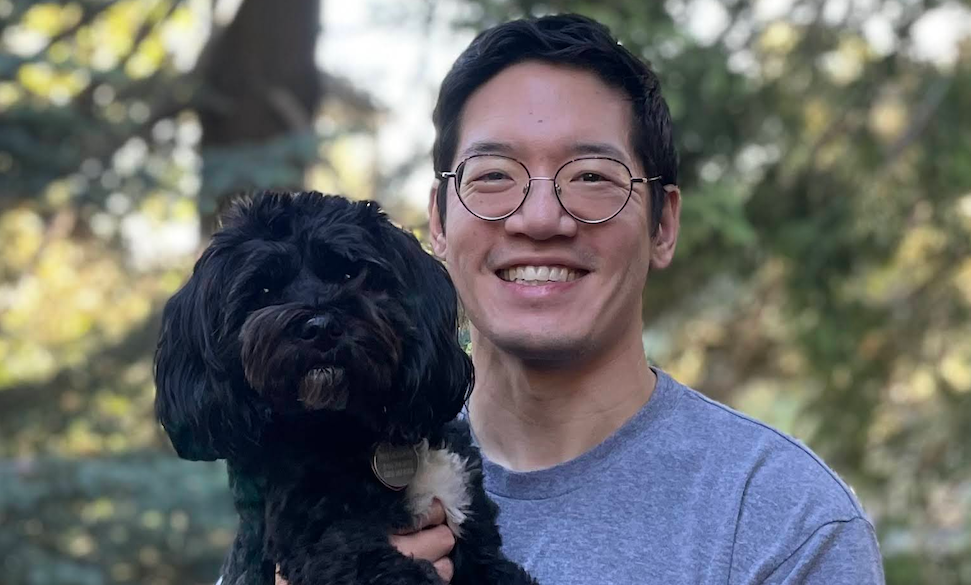
My interview with the 2021 Black List writer.
Chris Wu wrote the original screenplay “Mr. Benihana” which landed on the 2021 Black List. I had the opportunity to chat with Chris about his creative background, his script, the craft of screenwriting, and what making the annual Black List has meant to him.
Scott Myers: Congratulations on your script “Mr. Benihana” being selected to the 2021 Black List.
Chris Wu: Thank you. It’s exciting.
Scott: Let’s dig into your background a bit, how you got into the business of screenwriting. Where’d you grow up and how did you find your way into writing as an interest?
Chris: I was born and raised in a suburb of Dallas, called Plano. My parents were Taiwanese immigrants. I grew up with film, television, books, and comics as my main escape. I was always fascinated with stories. I ended up going to college at Yale. It was a complete one-eighty from my upbringing. I was able to discover a lot about myself. I came out of the closet, for one. I also found film and television as something I could potentially do as a career.
I was an econ major, mostly for my parents. That good old Asian guilt! But I took all these film studies classes, enough that I was able to double major in both. It was a good place to get a chance to write my own stuff. And direct shorts with other creative likeminded people there.
From there, I moved out to LA. I was still unsure of how I would break into the industry. At first, I thought I might do the business side of entertainment. I went to USC Business School to get my MBA. I thought maybe I could work at a studio. Marketing, corporate finance, something like that. So I got a summer internship at Disney in their corporate finance group. It was probably one of the most soul-sucking summers of my life. I knew very quickly it wasn’t for me. Even more so, I was constantly looking over the fence at all the creatives on the Disney lot. They were so close, it made it worse.
I knew I’d regret it for the rest of my life if I didn’t give it a shot. I decided to take the plunge. I had spoken to a few people about the best way to break into the industry. A lot of them had suggested working at an agency. After getting my MBA, I jumped into the mail room at WME and ended up working for a TV lit agent.
That was a great experience to understand the TV landscape. And to see what the TV clients were doing, and what it was like to be a TV writer. That’s what I decided to focus on. I was writing pilots and specs of TV shows. Especially since I knew I didn’t want to be an agent, I left WME and worked at Fox TV Studios.
There, I got to meet a great team of creative execs. One of the first shows picked up while I was there was “The Killing” on AMC. I got a job as the Writers PA on the first season of that.
From there, I worked my way up the assistant ladder, and worked on many different shows. Got to learn how a writers’ room works and how you break story and write scenes. I got into the CAPE Writer Fellowship Program, and a few years later, the CBS Writers Program. Got a manager, an agent. That’s how I got my break into writing. Through the television side.
Scott: I’m looking at your IMDb credits. It’s interesting to track your progress going from one TV show to the next. You’ve mostly focused on TV. Are you still writing for TV at this point?
Chris: Yes. I’m currently writing on “Bosch: Legacy.”
Scott: Let’s talk about your 2021 Black List script “Mr. Benihana,” such an enjoyable read.
Chris: Thank you.
Scott: Here’s the plot summary:
“When a short Japanese kid from postwar Tokyo decides to make it big in New York, he discovers a winning recipe of exploiting his heritage with good old-fashioned American entertainment, to the great shame of his traditionalist father. This is the true story of Rocky Aoki, the OG daredevil playboy tycoon.”
Everybody’s probably been to Benihana’s. I’m not sure that someone would say, “Wait a minute, how did this get started? Is there a movie here?” But you did. How did that happen?
Chris: During the pandemic, I wanted to write an Asian American biopic. That was my main goal. Mostly because you look out there and there aren’t any. I felt like it became my mission to do that. I started researching a lot of different Asian American figures in sports, entertainment, music, architecture, politics, you name it.
I was trying to find someone whose story stood out and popped. It was my manager who helped me find Rocky Aoki.
Scott: Is this John, your manager at Bellevue?
Chris: Yeah, John Zaozirny. I was chatting with John about Steve Aoki, DJ Aoki, and John pointed out that Steve’s father created Benihana. And that guy led a crazy life. Maybe I should look into him. I read the first article that I found off Google on Rocky Aoki, and I was like, “Wow, this guy has done it all.” His story feels larger than life. He’s done so much more than just creating Benihana. All this was good fodder, it felt prime for a movie.
Scott: I have a lot of questions about the approach you took to the narrative, because it is quite interesting. I remember reading an article with Akiva Goldsman, he had written “A Beautiful Mind.” One of the reasons why he was attracted to it was he said John Nash’s life laid out in three acts. Genius. Madness. Redemption.”
I’m looking at that, thinking about you in relation to Rocky Aoki. Did you see a natural structure there to how the story would play out, or was that something that you had to discover along the way?
Chris: There was a lot of discovery and different twists and turns to finally get to where it is now. One thing that was pretty clear to me from the get-go was that his life trajectory followed the same kind of rise and fall that you find in movies like “Goodfellas,” and “Wolf of Wall Street.” The Icarus curve. That was a very loose structure I could build off. But finding the details of voice and tone, how the story would be told, all that took more work to pin down.
In my research, I sometimes found multiple accounts of the same story that Rocky would tell. For instance, how he got his name. His real name was Hiroaki Aoki, and he changed it to Rocky once he came to America. I saw three different versions of how that happened. So okay, there’s a bit of an unreliable narrator at play here. I was able to use that, have fun with it.
That also helped liberate the storytelling. I didn’t feel completely tied to every single thing that I read about him. And it also became a theme. Rocky was an entertainer. He didn’t care so much what was authentic or what was true, as long as it entertained. That was his primary goal and that’s what he thought was the recipe for success in America. I ran with that. I used what Rocky espoused and that’s how I shaped the script.
Scott: The details of his life are remarkable. Olympic wrestler, immigrant to the United States, basically penniless. Ice cream truck, goes to Harlem and become successful. Saves up money and then eventually convinces his father and takes a bad deal, gets five percent ownership to found Benihana’s. Then it’s rags to riches, like you said, “Wolf of Wall Street.” Three women in his life resulting in multiple children with. The whole money, drugs, booze, fast living storyline.
So let me ask you. You set off with this kind of a mission: “I want to tell a story, an Asian American biopic”. How much of that was, “Well, I know biopics are quite popular in Hollywood, they show up quite a bit on the annual Black List.” Were you motivated primarily by that or did it become more of a passion project based on immersing yourself in the life of this remarkable individual?
Chris: The passion came first. To tell you the truth, I’m now dealing with the business side of it with, “OK, how are we going to sell this movie? How are we going to get attachments?”
In general I tend to follow the passion first. The producer cap stays in the closet for a while. For me, that’s usually how the more interesting and exciting scripts are written.
Scott: So you’re writing the biopic, but you make some choices that… in a way, it’s a conventional “cradle to grave” biopic, but there are some unconventional aspects to the script. For example, the use of voiceover narration.
We’ve seen that before and “Wolf of Wall Street” and “Forrest Gump,” even though a fictional character, that’s a good reference point. There are times where Rocky breaks the fourth wall. Literally talks directly to the reader. For example, there’s this side of voice-over in the script:
“Now I know what you’re thinking, not another fucking biopic about another rich asshole. Oh, I’m sorry. Is Scorsese the only one allowed to do that?”
[laughter]
Scott: Was that the voice thing that you were talking about discovering along the way?
Chris: Absolutely. Part of the fun was playing with the tropes and subverting them. Or finding ways to poke holes at them. Rocky had such a distinct voice in real life. When you read his quotations, they’re outrageous. He actually said something like, “The moment I learned to stop being Japanese was when I found success.” Just leaning into his voice, I was able to allow that to guide a lot of the storytelling.
Scott: Let’s talk a bit about your research. How did you go about diving into the life of this character? Audio, video, books, articles…
Chris: All of the above. Definitely a lot of articles written about him. There were many “Sports Illustrated” articles I found in the archives, especially with powerboat racing, surprisingly. There was a biography that was written about his life that I was able to dig up.
Also, video clips on YouTube. A few of them were Benihana commercials that he starred in.
He was everywhere. I was able to get a good composite of who he was.
Scott: Back to the unreliable narrator. If you’re watching “Forrest Gump,” we have no reason to believe that he’s not telling the truth. But in “Mr. Benihana,” there are moments where, for example, he says, “So how did he fit into all this? Shit man, my memory is not what it was. Give me a second. Go get some more popcorn.”
[laughter]
The decision to embrace the concept of an unreliable narrator, how did that evolve in your approach in terms of writing his voice?
Chris: It came organically as I was writing. I found that he liked to embellish a lot. As an entertainer, he exaggerates. He likes to make things as entertaining as possible, even if he’s stretching the truth.
The example that comes to mind, Rocky’s talking about this amazing studio apartment that he has in Manhattan, like imagine that. Meanwhile we see it’s the size of a closet [laughs] where the bed’s touching all three walls. That’s his personality. He likes to make things sound as great as possible and tell the best story out there. I really leaned into that.
Scott: It’s intriguing that in some of his voiceover narration, we get into his rationale for why he does what he does. For example, he says, “Yes, I had a mistress. Of course, I had to have a mistress. Show me a successful man who doesn’t have a mistress and I’ll show you a lying sack of sea urchin.”
That extends that idea of the unreliable narrative even further. That this is a guy who stretches the truth in terms of his own sense of morality.
Chris: Yeah, for me, Rocky is probably not aware of why he does things. He’s not really an introspective or a thinking kind of man. The justification that he gives, I feel like he does believe it, to some extent.
And there are cultural aspects. Also, the period when this took place. This was back in the ’60s. It’s something that he tells people to feel better about himself.
Scott: There’s a couple of other narrative choices you made. For example, while the story is told largely in chronological order, you begin in the present, then go back in time. Like how “Sunset Boulevard” begins…
Chris: Sunset Boulevard, yes. Exactly. The body in the pool.
Scott: In this case, the script begins with Rocky having this horrific boating accident. You’re hearing the voiceover. For all intents and purposes, we think he may very well be dead at the beginning. Was that an homage to Billy Wilder in “Sunset Boulevard” or was that just an interesting way you thought of starting the story, and wanting to go back and then catch up to the present?
Chris: It definitely was an homage to “Sunset Boulevard,” in my mind. I will say that that boating incident, which I found in many different articles, was so wild and crazy that it felt like a great way to start a movie. And to show who this character is.
Scott: You have a couple of other things where you’re finagling time. Of course, dropping in the way he does, that’s one of the advantages of voiceover narration. You can pick and choose the things. There are some times where he goes back in time. For example, where he realizes, “Wait a minute, my brother and my dad have been manipulating things.” It’s almost like “The Sixth Sense,” where Malcolm Crowe realizes, “Uh oh, I’m dead.”
Chris: Exactly.
Scott: Then there’s another one that’s actually quite interesting toward the very end, in Act Three, where we go back to a bombing incident in 1944, World War II. Could you talk about the choice of having that flashback at that point in the story?
Chris: Another homage. That was the Rosebud moment for me. To me, the childhood memory Rocky has and the story that his family has told him about where Benihana came from, it was in the rubble of bombed out Tokyo, where his family had lost everything. His father had found this one red flower. The name of that flower was Benihana.
That felt like an origin story for not only the restaurant, but also, for Rocky, his family, and this whole legacy of where he comes from. That, to me, felt like the ultimate vulnerable spot of who he was at his core. What he tries so hard to mask and cover up and not let anyone else see.
That was important for me to have in the movie. It felt like in the third act when he’s at his lowest. We’re allowed as the audience to see this special moment that he probably has not told many people at all.
Scott: You plant a seed earlier. At some point doesn’t he say there’s a name? He says Red Flower, or he’s talking with someone about naming something, right?
Chris: Yeah. Naming the horse. [laughs]
Scott: The horse. He was going to name him Benihana, and they said, “You can’t name him Benihana.” Was it Red Flower?
Chris: It was Red Flower. That’s right.
Scott: I was quite struck, too, by the way you wrote it. I tell my students all the time, movies are primarily a visual medium, so you need to write visually. And yet, we try to avoid using camera shots. In your script “Mr. Benihana,” you have an interesting way with visuals. For example, here’s a paragraph of scene description:
“Click clack, spatulas dance, shrimps somersault like acrobats, chefs in red costumes crack jokes. Customers seated around the grill top, ooh and uh, applauding like it’s the circus. Tourists from Arkansas take photos with their iPhones. Rocky sits at a grill top wearing an immaculate white tuxedo. He holds a golden cigar in one hand, a phone in his other hand where he texts someone a GIF of a dramatic gopher.”
It’s like each one of those suggests a camera shot, but you’re not using any camera language. It’s very cinematic. I’m guessing that’s an intentional thing on your part.
Chris: That’s correct. I agree with you, I don’t like to write specific camera direction. That’s the director’s turf. But it’s still important for me to show how I’m seeing the scene. That’s why by the descriptions, you’re able to fill in the gaps of where the camera should be.
Scott: That’s also part of our task as screenwriters. We’re trying to get the movie we see in our head into the minds of the reader.
Chris: Absolutely. Find the most concise way to describe things. Because ideally, you want the reader to see the movie as they’re reading.
Scott: I want to talk about some of the other characters in the story. There’s Rocky’s wife, Chizuru. He loves her and their longstanding relationship for many, many years throughout Rocky’s emerging lavish lifestyle. There’s a little moment there, where Rocky first takes the family to his mansion, with twenty-nine bedrooms.
He tells the kids, “Go look, find them all.” Then he says to Chizuru, “Can you believe it? I always dreamed of having a mansion.” Then she says, “That’s not the dream, Rocky. The dream is the family inside the mansion.” Now, is that an actual line of dialogue or is that something that came up in your head? It does feel like it’s almost a prophecy in relation to Rocky’s journey.
Chris: Absolutely. That whole scene, I created. And for me, it was important to have Chizuru point to the different path that Rocky could have taken. Chizuru as a character is his foil. By having her verbalize what’s truly important to her, we see what Rocky is sacrificing in this whole process.
And this can be extrapolated even further. What Rocky has done, he’s bought into this American dream. The question is, what has he given up in the process? At what expense? His identity? His family, his heritage?
Scott: It’s interesting now thinking about because I did, like you, I was thinking of movie associations and stories. Protagonists who basically live out these grandiose lives, where they in effect are seeking external validation through the stuff they accumulate. The things they do and the money they grab, like Jordan Belfort in “The Wolf of Wall Street,” Mark Zuckerberg in “The Social Network.” Tony Montana in “Scarface,” Charles Foster Kane in “Citizen Kane.”
Each one of them has a girlfriend or a lover or a wife who represents an authentic path, an authentic emotional existence, as opposed to this other path. Does that seem relevant here and resonate with you in terms of what Chizuru was with regard to Rocky?
Chris: You hit the nail on the head.
Scott: You’ve got the Big Story, which is all the stuff that goes on. The rise of Benihana and all of that, and yet, there’s the Small Story, too, of the father-son relationship, Papa-San. They have a troubled relationship. In some respects the father is more traditional. He’s more Japanese, Rocky more American.
At one point, the father tells Rocky, “Your lists of failures is as long as your ego.” Then there’s a big blow-up in the end where Papa-San says, “You are done. You are not my chonan. You are not my son.” I think chonan means “elder son.”
Could you talk a bit about the relationship between Rocky and his father? How much of that derives from your research and how much of that is embellished for the story?
Chris: That’s a good question. In my research, they didn’t have the strongest relationship. There was definitely some friction. But I ran with that. I decided to make Papa-san the main antagonist for Rocky in this film.
But I also wanted to be careful to not make him this cliché of the traditional Asian dad who’s a tiger parent and doesn’t allow his kids to have fun or do what they want. There’s a lot to his character to round out. For example, he was a vaudevillian. He tap-danced and wanted to be like Fred Astaire. There’s something that’s fascinating about that.
What defines him is his pride in Japan and his pride in certain traditions that he holds important for the family. The role of the firstborn son being extremely important, Rocky completely throws that all out of the window. That’s where a lot of the central conflict comes in for the two of them. There are layers of jealousy involved where Rocky’s able to do what his dad was never able to achieve career-wise or financially.
More so, at the end of the day, it’s about holding onto tradition and family. Your roots. That’s what the main conflict is between the two of them.
Scott: Doesn’t that speak a bit to the, I don’t want to say dilemma necessarily, but the tension of the immigrant story where that first generation comes in and often either the parents saying, “We want you to Americanize,” or the younger person just, “I want to distance myself. I want to fit in”? Does that speak a little bit to that, what was going on with Rocky?
Chris: I drew a lot from my own experience. I’m second-generation American. My parents were immigrants. I had conflict with my dad about identity. My dad was very much Chinese Pride. Like the Chinese did this! They were the first to invent that! Meanwhile, I was struggling to find my American identity. There was conflict, times where we butted heads. I used a lot of that with Rocky and Papa-san.
Scott: The tension plays out… I don’t want to give away the Act Three turn, but there’s a moment there in the denouement right at the very end where Rocky’s with his son, Kevin.
They have an agreement where Kevin wants to work in the business. There’s this exchange that was interesting. You mentioned earlier that Rocky tries to avoid feelings. Kevin says, “If I do this, I don’t want you to just be my business partner. I still want you as my dad, OK?”
Then, in the scene description, Rocky’s eyes widen in realization. Then, in voiceover:
“Holy shit. That’s what I wanted to tell Papa-san, my whole life. Fuck, I’ve become my own Papa-san.” It’s like, in a way, he’s running away from those feelings. Does that feel accurate?
Chris: I feel like Rocky’s been trying to run away from his feelings his whole life. All of the daredevil sort of crazy, death-defying sports that he engaged in. That’s his avoidance technique. That’s how he’s able to escape feeling the pain that this fissure with his father and his family has caused him.
Scott: Yeah, it’s like a void that exists and he’s trying to fill it. Of course, he’s got this guy Kessler. You’ve got his wife who represents to Rocky, “You can go this path, which is the authentic life.” Then you got this guy Kessler who’s a business adviser, but essentially a trickster figure who, “Let’s go have fun.” He facilitates that whole slippery slope down on. He even turns against him.
Chris: He even sells him down the river.
Scott: I’m fascinated with character archetypes in storytelling. You can see even in a biopic that there are these characters that have these narrative functions. For example, Carl Jung and his concept of the shadow. Boy, Rocky’s got that going on big time, those darker impulses, the negative impulses, the influence of his shadow.
Chris: For sure. I think that’s why I go back to that powerboat racing scene that opens the film. I think, in some ways, you can see it as slightly suicidal, what he’s doing. I think that’s Rocky’s shadow, where he’s taunting death in many ways. I think you’re right.
Scott: “Mr. Benihana” is not only an engrossing and entertaining story, it’s what they call in Hollywood a “good read.” That’s why I’m having my MFA students read the script, an example of a “good read.”
Chris: Oh, really? [laughter] Thank you.
Scott: You may not have intended to have your script read in an academic environment.
Chris: Definitely not, but I appreciate it.
Scott: So your manager says, “There’s this DJ, maybe you want to check him out for a possible story” and that leads to Rocky. What was the process of writing this? How long did it take in terms of the research and the writing and rewriting and to the point where he was able to go out of town?
Chris: The research comes first, especially for historical pieces that are based on real people or real events. I do like to have as much research as I can gather. What I do is I read as much as I can, and then I just let it marinate and soak a bit. See what stays with me.
I’m very much an outliner. I want to know how it looks. How the whole thing, what the shape of it is, before I start jumping in. It took a while to find the exact shape.
Funny enough, I prefer biopics that are not cradle to grave. [laughs] I like to focus on a specific event and not try to tell an entire life story in one sitting.
Scott: A snapshot bio, right?
Chris: Right. Exactly. I was hoping to do that, but in all honesty, Rocky’s life was so expansive, and there was so much to it that it felt like, it did warrant a “whole life” type of biopic.
After finding what the main events of his life were, I selected what I wanted to tell. And the founding of Benihana became the first main thing. Telling that fun and wild story was important. Then figuring out, how after Benihana was a success, what happens next.
Of course, he has all these crazy things that he does. The powerboat racing, flying across the Pacific in a hot air balloon. [laughs] Having a stable of horses. Those are all interesting, but storywise, there’s not a real story. It’s just interesting thing after interesting thing.
Finding out more of the character arcs of what’s happening with Rocky, and then what’s happening with his wife and his father, and seeing what exactly the downfall looks like, those were the main things. Figuring out the shape of those big pieces, once that was in place, I was able to start writing and going to draft. Even then, there were a lot of different iterations.
At one point, I did start off having a third party character, like a journalist, trying to write a piece about Rocky’s life. She’s trying to interview Rocky and gets bits and pieces of his life as she’s on deadline to finish her piece. It might have worked, but it would have been a really different film.
What ended up happening, why I decided to scratch that was, I felt like hearing Rocky’s voice was more important than hearing this made-up journalist’s voice.
I did end up using the voiceover even though generally speaking, I’m not a huge fan of that. [laughs] I make this exception when it’s my thing. No. When it’s an interesting, unique voice. Rocky definitely had one of those.
Scott: I tell my students, “If you want to use voiceover narration, you’ve got to have a reason why.” Of course, in this case, it’s great, because Rocky’s personality is so big.
Let’s turn to Monday, December 13th, 2022, the rollout of the annual Black List. Were you tracking it at all?
Chris: I was. Yes. It was very nerve-racking. [laughs]
Scott: How did you find out about it? Was it on Twitter?
Chris: Oh yeah. They announced them in batches, and I was one of the last batches that they announced. For a while, I figured it didn’t make the list, and I was settling into that. I saw my name pop up, and it was such a great feeling.
Scott: I would imagine the phone starts blowing up and the text messages and emails and stuff.
Chris: Yeah, it was pretty wild. A lot of texts and phone calls from different folks. My manager, my agent, and other friends and people I’ve worked with.
Scott: Congratulations again, it’s a terrific script. A few craft questions for you. First of all, you’ve been writing a lot in TV. Are there differences that you can articulate between writing TV and writing movies?
Chris: I always like to think of the difference between TV and film, similar to the difference between a short story and a novel. Features are more contained. Much like a short story, you can figure out the beginning, middle, end and craft the perfect story to fit within that framework.
In TV you’re having to figure out this entire saga and multiple stories past the first chapter. It’s a different storytelling. It involves some different ways of thinking about your characters and plot.
Scott: I think I saw on IMDb you’ve got another feature script that you’re developing. Do you enjoy bouncing back and forth? Is that how you envision things playing out here careerwise?
Chris: I actually do. I like to write in both formats. I also think the process of writing features and television are different in my experience.
In television, it’s mostly the writers’ room. So you’re with a group of other writers. You’re working together. It can feel more like a 9:00 to 5:00. You have coworkers, and it’s collaborative.
In features, for the most part, it’s a bit more solitary. I waver between the introvert and extrovert in myself. There are times when I do crave the camaraderie and the creative energy of working with others. And then there are times when I’m like, “OK, I’d like to just be by myself as I figure this out and write it.”
Scott: Recently, I was talking with a writer friend who’s on staff for a TV series. And he told me that a script where a scene went over a page and a half, that was going to get flagged immediately. Have you found that to be a thing in TV? Where the page count, the real estate of a script, is so limited, every scene has to be as tight as possible.
Chris: It certainly depends. But yeah, I’ve found the real estate in an episode to be narrower than movies. The pace and structure of TV seem to dictate scene length. Scenes can’t get too bloated or meandering.
Scott: Let me ask you another TV question. It used to be that you’d write a spec on an existing TV series. Though, it seems like over the last decade or so, showrunners have become much more open to reading original material. Do you have any thoughts on that? Should writers have one of each or more of each, just focus on the original stuff, or focus on the specs?
Chris: I started off writing specs. To my understanding, that was the preferred writing sample. Your job as a television writer working under a show runner is to emulate their voice. Makes sense why specs were samples.
Now I feel like I only have originals. No one asks for my specs. I haven’t written any specs in the last five years or so. There’s a little bit of a different prioritization. The show runners are looking perhaps for original voice, original ideas. I’m speculating here, but they’re assuming that you’re able to match their voice. That’s almost a prerequisite.
But I would say, especially for new and emerging writers, specs are a great way to learn how to write television. It trains you to study a show, study the structure, study the characters, and emulate it. Especially the types of shows you enjoy and you would want to write for.
Scott: That’s some good advice. I’m going to ask you one final question: What advice you have to offer aspiring screenwriters, TV writers about learning the craft and breaking into the business?
Chris: [laughs]
Scott: That’s the big one, right?
Chris: That’s the big one.
Scott: It’s either that or how do I get an agent?
Chris: Exactly.
[laughter]
Chris: My advice would be to learn how to celebrate your accomplishments. Especially in this industry, where you hear no all the time. But even in your day to day. When you’re a writer, you are in effect your own boss. It’s very easy to create a long list of tasks for yourself and to feel disappointed at the end of the day for not finishing all of them.
The taskmaster in me was particularly vicious. I’d beat myself up all the time. It was a long process for me to learn how to focus on my accomplishments. To be able to pat myself on the back for the small stuff. And to set realistic schedules and goals for myself.
Be kind to yourself. It’s important.
For my interviews with dozens of other Black List writers, go here.