Go Into The Story Interview: David L. Williams
My interview with the 2022 Black List writer.
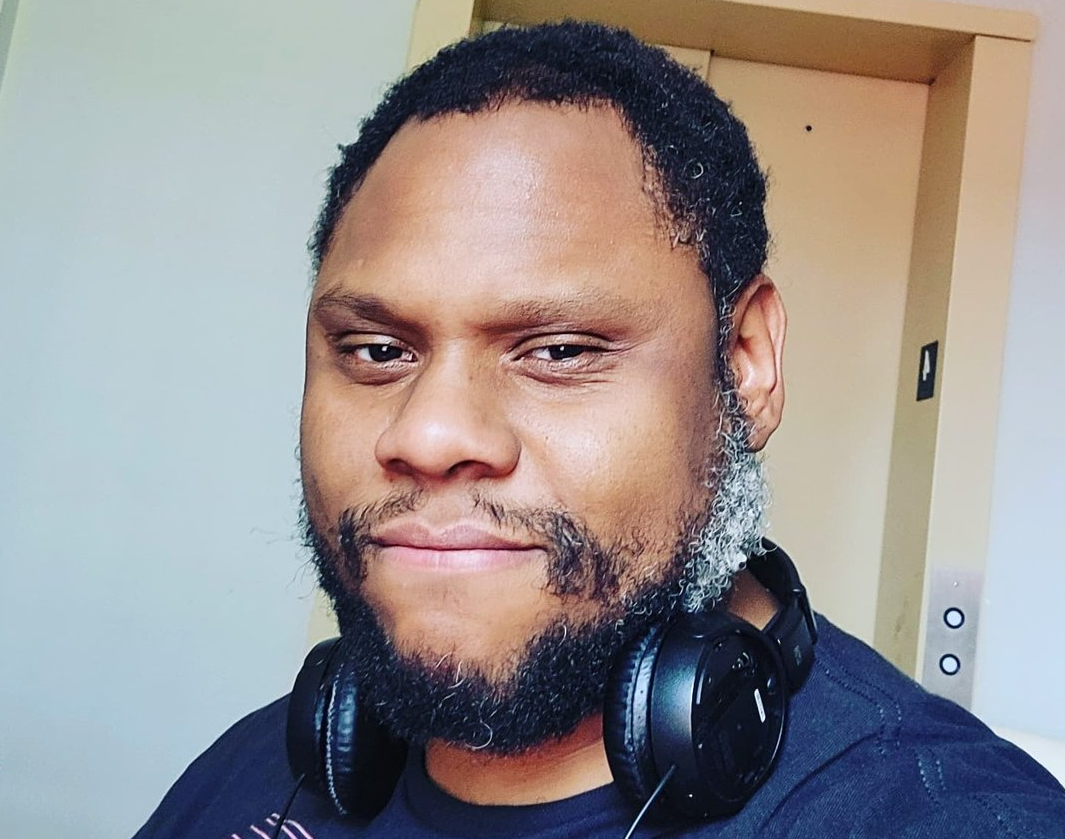
My interview with the 2022 Black List writer.
David L. Williams wrote the screenplay Clementine which landed on the 2022 Black List. I had the opportunity to chat with David about his creative background, writing a Black List script, and the craft of screenwriting.
Scott Myers: Congratulations on getting that 2022 Black List on your resume.
David L. Williams: Yeah, thank you. Thank you so much. I appreciate it.
Scott: Let’s start with some background here. I read a bio. It says, “David’s a former Brooklynite turned Angelino who’s been writing screenplays since working at Blockbuster centuries ago.” Then it say you’re a former pro‑gamer and a Division One athlete. I definitely want to get into all that. Let’s start at the beginning. You grow up out in the East Coast. When did you start getting interested in film, TV, and writing?
David: It starts way back when I was about eight years old, maybe a little earlier than that. My grandfather got me into movies in general. He snuck me into a bunch of movies in theaters, R‑rated movies that I wasn’t supposed to see.
Thanks to him, my earliest memory in movie theaters is “Pulp Fiction.” I saw that when I was about six. Luckily, I didn’t know what was going on, except for a couple of scenes. That was quite the trip.
Scott: That’s perfect synergy. Tarantino’s mom used to take him to R‑rated movies when he was a kid too.
David: Just handing the baton on over, not that I’m going to be anywhere within a thousand yards of his kind of career. That’s funny. Hopefully, the next person who watches “Clementine” or something and then goes from there, whether or not they’re supposed to see it as a kid. That’d be funny.
As a kid, I was also already into writing. I wrote a lot of short stories, especially in 4th and 5th grade, some weird stuff. Also, in high school, I wrote a ton of poetry as well. I was into writing. I tried my hand at a couple of novels. It didn’t quite work out. I don’t have the attention span. I get bored, not my jam.
What happened, like you alluded to in the bio, is I was working at Blockbuster. I ran into “Blade Runner” and fell in love with it. Something clicked. I don’t know why it took me so long. The love for movies and the love for writing got married immediately. I was like, “Wait a minute. People write movies, don’t they?” I looked it up, and it looked like a viable career. I pursued it immediately.
I looked up the format. My first script was a sequel to Blade Runner, it was in a Word doc. [laughs] It was quite the journey. Ever since then, I’ve honed my craft. I really wanted to immerse myself in film industry, so I was PA‑ing on set. I was a script supervisor for a few years. That’s how it kicked off.
Scott: How about the pro-gamer and D1 athlete?
David: When I was between 18 and 23, those things were happening around the same time. I got a full scholarship to play football at Wagner College, but I quit in my freshman year. I was technically a D1 athlete, but I ended up quitting and they wouldn’t let me stay at the school. Kind of how I ended up back in Brooklyn, New York, and studied at Brooklyn College.
Back in New York ‑‑ get ready for this ‑‑ I started playing Mortal Kombat 2, highly competitively on the PlayStation 3, to the point where I started playing for money, and winning some tournaments. There’s literally a video of me on YouTube from over a decade ago. I was playing for money and winning some, losing some.
There were times, especially when I was working as the PA, because you’re freelancing and stuff like that, you might have those lulls between jobs where my main income was playing Mortal Kombat. I would play in tournaments, I’d place, and that’s what fed me.
That’s something that I haven’t done in a long time, but yeah, I was traveling, I played in Philadelphia, Florida, Jersey, Cali. A lot of online stuff too, though, I will say. I’d say, almost half of the tournaments I played were online. It’s the only reason I’ve ever been to Philly, was for tournaments.
[laughter]
Scott: Do you still keep up with the gaming at all?
David: No one really plays Mortal Kombat 2 competitively anymore. However, I do keep up with other games. I’m very much in tune with what’s called the fighting game community. They play Street Fighter, Marvel vs. Capcom, The King of Fighters, all those different things.
I still tune in and nerd‑out on that stuff. I have a friend who lives round the corner that I play with as well.
Scott: Oh, that’s great. Where did the screenwriting component come in? It sort of clicked for you, of course, that script for Blade Runner, written by David Webb Peoples.
Were you studying that at Brooklyn College or was that afterwards?
David: It was actually between leaving football and studying film is when I had that kind of epiphany. It was because I realized it was something I wanted to pursue that I ended up going to Brooklyn College to study filmmaking and screenwriting, so yeah, I did a bit of studying on it in college.
Brooklyn College is almost like the forgotten stepsister of NYU ‑‑ not quite to the same caliber and about one one‑hundredth the size, but yeah, I was studying it and just writing. I was just really compelled to write movies.
My professor, J. P. Auerbach, he ‑‑ great dude ‑‑ the thing I think I took the most from college was keeping things simple. That’s kind of my mantra these days. Whenever I have ideas swirling around my head, it’s whichever one is the simplest that wins, and that’s because of him.
I wrote a few features in college. They kind of sucked. They were readable, but just like most writers who are starting out, execution wasn’t quite there. I just kept writing after college.
I left college early and kept writing even though I was freelancing and on set and stuff like that. Found time to write even after long hours.
Scott: Would you consider yourself mostly a genre writer?
David: Yeah, definitely. I’m pretty flexible, but yeah, I mostly a genre writer.
Scott: Let’s talk about this script, Clementine, which did make the 2022 Black List. Definitely a genre piece. It’s an action‑and‑a‑half piece.
David: [laughs]
Scott: It’s a really ‑‑ what’s that called? ‑‑ page‑turner, man. It’s just woom‑woom‑boom.
David: Thank you.
Scott: Here’s a plot summary.
“Set in real time, a Colombian mother barely escapes a pawn shop shootout and goes on the run from her violent ex‑husband, a terrifying mob boss, and a bloodthirsty hit woman sent to collect an overdue debt all while trying to keep her diabetic daughter safe.”
What was the inspiration for this story, David?
David: This is a case where it happened so quickly. I was reading a friend’s heist script in 2020, and he had to build up to the heist. It was around the midpoint.
Just randomly, because this is how my brain works sometimes, I just imagined, “Man, what if this heist just went terribly wrong ‑‑ as bad as possible ‑‑ and everyone got shot? What if everyone was shot and there was one survivor and we follow that survivor, and say he or she was bleeding out for an hour‑and‑a‑half and we follow them? What if?”
It was just a bunch of what‑ifs, and I fell in love with that idea so much that that night of coming up with that idea, I had about 25 pages written. The whole story came to me so quickly. Within, like, minutes, the entire story came. It was just so clear to me, and by the end of the week, I had a draft. That’s how that happened.
Scott: Oh, wow. Those magic words again, I always tell my students ‑‑ “what if?”
David: Yeah.
Scott: You wrote it in a week and it pulses with that propulsive energy. I wrote this note. I said, “The script begins hot with action. It stays hot pretty much throughout.” Literally, the first line, in caps ‑‑ “ROAR OF A MOVING CAR THAT HAS SOMEPLACE TO FUCKING BE.” No fade‑in.
David: No.
Scott: No fade‑ins. Just go, man. Did you always intend just to drop the reader straight into the action, like no setup, just boom ‑‑ here you are, figure out where things are going as you go along?
David: It depends on the story. For this kind of genre, just what I was feeling ‑‑ I guess I was still in that moment of when I read that scene in my friend’s script, and so I guess part of me was almost branching off into my own story, my own version of what happens after that heist. It felt natural that I was being dropped in [laughs] when that was happening.
I would say, yeah, I love it, especially for action and crime stuff, especially involving characters like Driver from “Drive” or the Wheelman in all those different movies. I think the story benefits from throwing people in, because the protagonist in this story is in over her head, so why not make the reader feel as though they’re completely out of their element, out of their comfort zone.
I would say, for this genre, for this kind of story, absolutely.
Scott: It’s an interesting thing, David, it seems like audiences like that nowadays. Get things started, put us in there, and go. It’s almost like a way that movies can replicate a bit of the videogame experience, where you drop people in and you’ve got to figure things out. It’s very effective.
The first scene in your script, they say that it’s a heist that goes awry and all hell breaks loose after that.
What about the real‑time thing? Because it literally is like, you could set a clock, and there’s no jump cuts in this. It’s just, boom, boom, boom, boom. Was that always there too, that first inspiration for the story?
David: I will say, yeah, that was maybe one of the very few things about the story that was planned. Basically, I was inspired to write a movie that I wanted to see. I feel like I hadn’t seen a real‑time, one‑take movie ever since Victoria back in 2015. It had been a while. I was inspired by that movie.
I wanted the reader to feel every second of those 90 minutes. I went in thinking, “I’m going to try to challenge myself to write a script that’s not only in real‑time, but could be shot all in one take.” I wanted to have that kind of feel to it.
Scott: You mentioned Drive, which was a movie that came to my mind too. I was also thinking Collateral. Were there other films that inspired you? You mentioned Victoria, you mentioned The Wheelman. Any other films that were an inspiration for you?
David: I would say Victoria. That was probably the one. I was inspired by all the different kind of motifs that I had experienced throughout the movies in the same genre.
I know that, in hindsight, some people have compared it to Good Time or Uncut Gems, which is a huge compliment. I would say, retrospectively, yes, those are movies that inspired me that I probably didn’t even realize at the time, so yeah, those kind of movies.
Scott: Let’s talk about the key characters here, starting with Clementine. This is how she’s introduced: “Flickering dawn light hastens over wide‑eyed Clementine, 25, sitting in the back seat. She’s Colombian, aged with stress, her face features a pale shiner and busted lip.”
You did something I’ve never seen in a script. You not only drop us in the middle of this thing, you don’t even explain the shit that she’s in until page 48.
How would you describe Clementine, in terms of her background and who she is as a person and a character in the story?
David: She’s a very sweet, artistic person who got caught up…She fell in love with the wrong guy and went down a wrong path. It’s so easy. From my experience of going to school in East New York, up there in Brooklyn, and stuff like that, there are some good people who are impoverished or their environment isn’t very conducive to living what’s an ideal, safe lifestyle.
That’s what imbued Clementine to someone who is into that game. She’s as sweet and nice and innocent as anyone else, but she got caught up with Rico. One bad person leads to one bad situation, which leads to one bad decision, and here we are.
She’s a badass in her own right, but honestly, she’s way, like I said, in over her head. This is not her thing. This is why she doesn’t even carry a loaded gun for a part of the movie, because she doesn’t want to have to shoot anyone. That’s the kind of person that Clementine is.
Scott: That gives her a little bit of an arc because, spoiler alert, she becomes mama bear with an AK‑47.
David: Exactly.
Scott: Speaking of mama bear, you mentioned Rico, who is her estranged husband. She’s even gotten, if I recall, that she got a restraining order about the guy.
David: Yeah.
Scott: There’s the daughter, five‑year‑old Sandy. Maybe you could describe that situation and that kid.
David: Sandy is a reflection of all the kids like myself, frankly, who’ve grown up with a parent who is somewhat abusive, whether they’re abusive against the other parent or herself or both
She’s a good person. She’s going to grow up to be a sweet person, but she’s also a fighter. She’s someone who feels like, even though she’s five years old, she has the need to defend her mother the same way that when I was five, I had to defend my mother from my father. That’s who Sandy is to me. Maybe she’ll be an artist like her mom one day.
Scott: That’s one of the nice moments in there is the unicorn thing, where they’re doing the sketches and all that stuff. She is a fighter and she does get involved in there, because she’s also rambunctious and push backs in with her mom when it comes to eating the little crackers and stuff.
What about the diabetes thing? Was that a conscious thing? You give the mom a wound, she gets shot in the first scene. It’s not life‑threatening, but it’s something she has to deal with. The diabetes is also like a ticking clock. Was that a conscious decision to add that?
David: That was inspired by a note. Fun fact, the script in its current form is the second draft. In the first draft, Sandy wasn’t sick. In the second draft, someone gave me a note of like, “Man, I feel like something’s kind of missing. What if Sandy was sick or something?”
Yes, it was a conscious decision to give her specifically diabetes, though, because I’m somewhat familiar with diabetes. I don’t have it personally, but my grandfather does. Sometimes I’m drawn to stories, and I’ve been drawn to people who have diabetes, and I do feel that empathy for them. That was perfect for the script.
That’s the kind of thing that not even cancer can threaten your life that quickly. Cancer is more of a prolonged kind of thing. Diabetes, if not treated within hours, it’s life‑threatening too. That became a tool, a very inspiring tool. It also just kind of bolstered her tenacity because she is sick, but she will still defend her mom.
Scott: Let’s talk about this other character, you introduce as “demented‑looking Sicaria, woman in her 40s with one hell of a scar across her face.”
Clementine not only is trying to accomplish a goal. She’s also being chased. Maybe you could talk to us a bit about the Sicaria character.
David: Sicaria is probably the biggest swing I take in the story. She is inspired by, again, all those tropes from movies in the same genre, but with that twist that it’s not necessarily a hit man. It’s a hit woman. I thought about making it a guy. When I was in the middle of writing, it was a dude. Then, I was like, what if it’s a woman?
This is terrifying. Her drive, even though it’s subtle, it still has to tie in with motherhood. She does this for her son who passed away. I wanted someone who’s badass, very terrifying, someone who was almost mechanical in their execution, almost like a “Terminator” character, but a female. I would say, if anything, maybe the Terminator is what inspired this, someone who is a go‑go‑get‑it‑done machine.
Scott: In her bad ass black car…
David: Unstoppable, she is.
Scott: I don’t want to give away the ending, but a couple plot twists I want to get your thoughts on. First of all, there’s a twist. It’s about page 60 in, where we think Clementine is dead. Sandy ends up with Sicaria for 15 pages, a really interesting shift.
Before we get to the Clementine thing, let’s go over to Sicaria. Something interesting happens in that little sequence because she’s taking care of this girl. That’s when we learn that she had the son. You start to feel sympathy. You start to feel some positive energy toward this hit woman. Were you consciously trying to elicit sympathy for that character?
David: That’s a really good question. So much of the script came to me as I was writing, so these are all things I would want to see in this movie. If I was seeing it in a theater, I’d want to know more about this character. I don’t want to stop the thrills or the pacing in order to do it. That’s why there’s that tattoo.
It’s my way of being able to complicate her and her situation. Because of what she’s lost, it’s a little harder for her. She makes it look easy, but it’s not easy, [laughs] we know, what she’s doing, and the mental boundary she has to vault to get the job done. I don’t want to jump the gun about whatever other questions.
Basically, for a second, I had no intention of bringing Clementine back. As I was writing, it felt very natural to me that it reached a boiling point and she dies. When you think about it, what’s the worst thing that can happen? That’s it. This is it. She’s gone. [laughs] It wasn’t like all the other decisions.
It was a matter of, man, what would be the most entertaining thing for me if I was watching this movie in theaters? Then, I thought to myself, it would be pretty badass if she came back.
Scott: She wasn’t whispering in your ear, “David, come on man. I’m not dead yet.”
[laughter]
David: No.
Scott: Like in Monty Python and the Holy Grail: “I’m not dead yet.”
David: That’s so funny. One of the producers even suggested, when it was first optioned, he was like, “It’s almost like her motherhood transcends life and death.” The same way that Sicaria is completely unstoppable, maybe motherhood is inspiring Clementine to be the same.
Scott: The script is an action script, no doubt about it, but at its emotional core, it’s a mother‑daughter story. You explore that with Zacaria, too, which is great, because you humanize this, what in effect, is a nemesis character. I always tell my students that great line, which is, even bad guys have moms.
David: That’s so true.
Scott: I was very impressed with not only how Clementine was so mama‑bear‑focused on this kid, but the interaction moments, not the action moments, the interaction moments, are quite touching. Could you talk to me about the mother‑daughter relationship and how you wrote that?
David: First of all, I wanted to find something a little unique. I wanted the down time to not just be down time, but that they’re doing something a little productive. I grew up around very similar people. I grew up in a predominantly Black neighborhood, but also had a lot of Hispanic descent as well.
I had the opportunity to see mothers exactly like that, who interact with their children by doing things that they love, whether it’s playing tennis or something, or singing, playing music. This reminded me of that, of a mother being able to share something with her daughter.
It’s probably the one thing in all these hard times that she’s able to share with her, and it not be just for the practicality purposes or just trying to find money. It’s her way of reminding her daughter that there’s art in this world, no matter what’s happening, she can find time to express that and invest in it and confide in it as well. That’s what inspired those moments.
Scott: Do you have children of your own?
David: No, I don’t have children.
Scott: Because it was very impressive. I’ve got two, they’re adults. I was like, these little moments where she’s having to negotiate with her daughter about the crackers and stuff, and like that.
As parents, we’ve all been there. But you’re not a parent. How did you manage to create such an authentic dynamic between mother and daughter?
David: Sometimes, not all the time, but for some characters I almost employ this actor mentality, of being almost like a method actor. When I go in to write a character, I try to feel and breathe that character when I’m writing them. It is a mix of, I’d say, it’s mostly those observations, for sure. I was so immersed in those kinds of people, and I’m grateful for that.
It’s that, but also an ability to, or rather a desire and a want to, feel and breathe that character on the page and make people feel as real as possible. That’s my goal with those scenarios.
Scott: That’s great. I’m going to cite this with my students, because I’m always telling them, “There’s the world out there. Get off your phone and just observe,” because if you’re a writer, that’s where you’re learning stuff.
Here’s a guy who doesn’t have kids, he’s a guy, not a girl, and he’s able to in the script, write a relationship, a mother‑daughter relationship, that comes across as very authentic. More power to you.
David: I appreciate that.
Scott: I want to talk to you about the scene description, the action writing. Were there any screenwriters that you were inspired by or influenced you, in terms of how you approach the actual prose of the script?
David: There are a couple, two that come to mind. I’ll say the first time I came across a script, the idea, the notion of voice hit me. Also, very effective and efficient prose, not necessarily writing for the sake of writing, not over‑describing things, but the efficiency of words, was the Coen Brothers.
I read Raising Arizona, many eons ago when I was an intern at a post‑production house. I couldn’t believe how quickly I was flying through that script.
I remember, because I have a bad attention span when it comes to reading, and so part of me is always trying to please myself when I’m writing. If I can keep myself invested and engaged, I have a shot at keeping other people invested and engaged. I would say the Coen Brothers, that script specifically, Raising Arizona, did it for me.
The other I would say is Chris Sparling, the guy who wrote Buried, Greenland. Man, his writing is so good…He has that efficiency factor that I talk about. I remember I read a script of his where a plane was exploding, and the way he described it was so magnificent. It definitely had an impact on me.
Also, my friends. I feel like I surround myself with great writer friends. Some of them are working writers as well. I’m always inspired by them. I’d say for sure, though, Coen Brothers, Chris Sparling, a little bit of Taylor Sheridan as well somewhere in there. I would say the Coen Brothers and Chris Sparling, for sure.
Scott: As I was going through your script, I was like, “Oh, there’s a little bit of a Shane Black in here.”
David: [laughs]
Scott: Like this scene description: “Jake snatches owner’s balding head and slam dunks it into the glass counter. Goodbye, glass! Goodbye, nose!”
David: [laughs]
Scott: He does that sort of thing. Another line: “Jake, Disco, Wwner are all down. No telling the status of whatever is behind door number death.”
David: [laughs]
Scott: That feels like something I would’ve read in The Last Boy Scout. Another one: “The muzzle of her handgun creeps up to his temple. A few seconds take a few years to creep by.”
William Goldman said, “You’re not writing a refrigerator manual. You have to be entertaining.” In fact, I was also struck, too, by this little bit of business in your script where you basically make up verbs. “Clementine thunder‑stomps the brake.” Or “Rico crack‑thunders from the apartment complex.”
That reminded me of Butch Cassidy and the Sundance Kid. This is during the Bolivia shootout ‑‑ “Sundance, vaulting through the shattered window, moving out into the sunlight of the patio, two guns in his hands, two more in his holsters. As he comes and fires, starts to turn, and as the first turns happens, Butch, barrel‑assing out of the door.”
David: [laughs]
Scott: Barrel-assing. Just make up words. Make it visual, entertaining. I don’t know, maybe you’ve got some subliminal Shane Black and William Goldman coursing through you, David.
David: Man, I will not complain about being in the same league as those guys. [laughs] I appreciate that. My professor did show us some Shane Black in college, so I wonder if that’s subconsciously stuck with me.
You brought a good point up about being entertaining. It is a goal of mine to entertain with every line. I want every line to feel like its own story, I want every line to be as entertaining as the last, because that’s what helps me get through scripts. Those are the things I enjoy. If I’m writing scripts, I want a reader to have the same feeling.
Scott: With my students, I say, think of it as narrative voice. It’s like the invisible character who’s watching the story. You’re writing it, but they’re telling it. What’s their personality? It’s not like you’re writing an essay in 10th grade. It’s genre plus style equals narrative voice. Your script, consistent, strong narrative voice throughout.
David: I appreciate that.
Scott: Congratulations. I enjoyed it. Let’s talk about this little thing that happened in December 2022. The reveal of the annual Black List. Were you following this at all?
David: Yeah, I was. I was trying not to, because I didn’t want to have anxiety about whether or not I would be on the list. Of course, my group of good friends were all hyping me up. I couldn’t help but pay some attention to it.
Leading up to the Black List, I had absolutely no idea if I was even qualified…I had no idea if I’d be on it at all. That morning was rough. I had to take public transportation to work. The trains were being smelly, the bus had a detour.
I got into work and it was chaos…I had this small thing happen where I had to use the bathroom. I washed my hands, there weren’t any paper towels left.
That was the first time that we never had paper towels… “Why are there no paper towels? I don’t understand this.” [laughs] Then I go to get tea and someone’s pouring water out of the kettle. I was like, “What is happening?”
Meanwhile, my friends were losing their minds because the announcements had started, and scripts were getting announced. By the time I got back to my office, my phone was already ringing, I had about four emails already, within a few minutes, one of which was from my team, so I knew what was going on. It was an amazing feeling.
I also found out, in hindsight, I had a general the next day, and that exec told me that they voted for it, which I thought was cool to know.
That exec voted on their own accord, my reps didn’t even chat with that person about it. They did have a good campaign, I found out later on, and they made that happen. It was a mix of my team being amazing and, fortunately for me, some people being fans of the script, regardless.
Scott: You mentioned that it was optioned. Was that before it made the Black List, or after?
David: Almost a year ago it was optioned, probably about February.
Scott: That explains how the script was already circulating. I’m assuming that your team is getting you out there for meetings based on the script, right?
David: Yeah, I’ve had about 85 generals the past year.
Scott: Holy cow. 85 generals. That’s a lot of bottled water, pal.
David: [laughs] That’s not even counting the pitch meetings and business meetings. It’s meeting people for the first time.
Scott: My blog is the official screenwriting blog of the Black List. I don’t get paid by them. I’m more involved in their educational side as a mentor in these feature‑writer labs.
David: Really appreciate what you do, really appreciate you, by the way. Thank you so much, Scott, for doing this for so long.
Scott: Thanks. 15 years in May, the blog.
David: Yeah, man. That’s amazing.
Scott: People are always asking me, “How do I get a script on the annual Black List?” Well, first you got to write a great script. Then, you got to be in a situation where the script’s in that sweet spot, where it’s not been out so long that people have forgotten about it, that it’s still circulating and it’s got that little bit of buzz to it. It seemed to work out well for you.
Subsequent to the Black List and the blowing up, has it made a difference? Has this project gained a little more heat, for example, or more meetings, or different types of meetings for you?
David: I would say, externally, not that much yet. [laughs] I’m under the assumption that, even if people wanted to read it because it was on the Black List, it might still take them weeks to do so, and get back to my team. I’m sure some people are reading multiple scripts from the Black List.
I’ve always been under the assumption that if there was something to come out of it, it wouldn’t show up for months. With that said, as far as things that are already in the works ‑‑ this is a surprise to me ‑‑ it can move the needle. For instance, we’re still looking for directors for Clementine.
There’s always that chance that, if it’s on someone’s pile, and it’s the only script in that pile that’s on the Black List, it could work in its favor and get read sooner. That kind of thing. I know the producers are very excited about it being on the Black List, probably just as excited as I am, which is great.
Also, when I go into pitches for OWAs, people are like, “Congrats on the Black List.” What if I’m the only writer competing for that job that’s the only one on the Black List? It’s been somewhat beneficial in ways I didn’t really expect. As far as what might be coming in…I’ve had about a dozen execs email me.
People are definitely aware. They congratulate me for being on the Black List. It definitely seems like people are aware, for sure, about it. We’ll see in a few months how that comes to fruition.
Scott: Again, congratulations on the Black List. I highly recommend people, they get a hold of the script Clementine through the nefarious underworld of screenplays floating around out there.
David: [laughs]
Scott: I’d like to ask you some craft questions. Apart from reading your friend’s script, and, all of a sudden, having a what‑if idea like, how do you come up with story ideas?
David: Great question. It’s not that fascinating. It did just come to me. There are cases where, especially before I got signed, and I was by myself floating through space, say I had four or five ideas that I really liked. Whichever one was the simplest, is the one I usually gravitated towards.
Whichever story I felt like could tell itself, it’d be a canvas that allows me to complicate the characters and the situations a little bit more. That’s how I come up with ideas. It’s pretty rare that I ever sit down and go, “Man, I need to come up with story ideas.” They just show up, and I go from there. I see if they’re a good fit for me, if they’d be easy to tell, and fun to write. That’s also a huge factor, because I love the feeling of writing.
I’m very passionate about putting words into a screenwriting software, and making a screenplay exist. Whichever story gets me the most excited is the one I gravitate towards.
Scott: I have all these little screenwriting mantras that I’ve come up with over the years that I like to bother my students with. One of them is: Screenplay. Simple plot. Complex characters.
David: There you go.
Scott: You know what, it’s to your credit, Clementine, having that simple plot nowadays, when there’s…first of all, it’s really hard to get original material made, as you know, right now in Hollywood, because Hollywood’s addicted to preexisting content.
To have that simple thing that they can market, they’re like, “Hey, this is what the movie is about.” Boom! To get through the noise to consumers. I’m assuming you know that the story concept, or you think or believe, the story concept’s pretty damn important to the success of a spec script or a project.
David: Totally. 100 percent.
Scott: How do you go about breaking a story?
David: Great question. What I’ve realized is that sometimes it might be different from script to script, but I am in the camp of people who don’t outline very much. I don’t dislike outlining. If someone asked me to do it, if my reps or an exec, I’ll happily do it. I have no issues whatsoever with outlining.
When it comes to doing my own original stuff, and this is just a weird thing about me, it almost feels like the more I know about the intricacies of the story, the more I lose interest in it.
One of the only things I try to figure out is the mood and the tone, because I’m a very visual person. Sometimes, just like with Blade Runner, it was really the aesthetic that really drew me in.
I’m always thinking about, “OK, what’s my tone? What’s my feel? What are the movies that are in the same wheelhouse? Am I leaning more towards Drive, or am I leaning more towards Green Room or something like that. Then I try to sort out who my protagonist is. I try to sort that out as well, and also the side characters, how quirky do I want them to be, or that kind of thing.
Then, once I have those elements, I start thinking about the act breaks pretty early, especially the break between act one and act two, what really sets the story in motion. I know that a lot of people struggle with that too, but that’s one of my strengths, is act two. That’s what I look forward to doing the most, is really exploring the conceit.
I’m really big on the story beats, the general beats of the story. If I have a really good sense of how I transition from one beat to the next, if I even know the first, say, 30‑something pages of the script really well, I’ll start writing, I’ll start sorting it out as I go. This is the case for a lot of the scripts that I write.
Clementine happened super quickly. It happened in a day, I had the whole story sorted out. Usually, it could be days or weeks, sometimes months. Now that I’m busier, it can be…I do know what I’m going to write next, it might be a couple of months before I get to it. I sort out the act breaks after I know what I want to write, and I know the protagonist.
I do everything like it was in beats. I try to get from one beat to the next. When I’m writing, I jump back in the middle of the story beat, and then I try to get through the next one. Maybe I’ll cover two or three story beats in a day. It’s a step‑by‑step process for me.
Scott: Do you ever find, you go, “Story beat, story beat, story beat. Oh, this is a dead end. I guess that didn’t work.”
David: Yeah, that definitely happens. When that does, I’m happy to step away. I take a step back and I just let it come to me…I always feel like it’s going to sort itself out. I don’t try to rush things or force things. Also, I typically don’t go with the first idea. It’s usually the fourth or fifth or sixth idea by the time it’s being written, because I want to make something that feels unexpected.
Scott: “Let’s kill my protagonist on page 60 and see if…”
[laughter]
David: Seriously, man.
Scott: Do you use index cards? Word doc? How do you organize your thoughts?
David: Fantastic question. You know what’s funny, I don’t use index cards, I don’t use any whiteboards or any cork boards or anything. Even this is rare, but on occasion, I do write some character bios, but it’ll be one or two of the main characters, typically.
Basically, everything is in my head, all of the time. It’s in my head until I start writing the actual script, which might be crazy. The thing about it being in my head is, it’s like, if I forget it, it probably wasn’t worth remembering. If it somehow stood the test of time with my jumbled mind, there might be something to it.
This is also why the simpler, the better. A lot of times I get caught up trying to tell very intricate stories and try to outline them. When it’s only in your head, you don’t have a choice but to simplify them. For me, it is all in my head.
There is one exception where, again, it’s also rare, but I can think very clearly of the moments when I’ve done this, where if I don’t know what happens exactly in my first 10 pages, 10 or 15 pages, I won’t start the script, no matter what. I have to know, down to every minute detail, what’s happening in those 10 to 15 pages.
There are occasions where if it’s too foggy, I will sit down and try to outline the first few scenes. That will allow me to sort that out and then I’ll start the script.
Scott: Do you have an interest in writing TV?
David: Yes, totally. That’s why Roberto Larios is on my team, he’s a TV agent [at Verve].
Scott: You may have to adopt a little bit different approach there, because…
David: You’re right. I’m working on a pilot right now, and my manager and Roberto asked for the outline. These pitches that I’m developing are all written. I’m adaptable. I can handle it.
No, it’s a fair point, especially in TV. They want to see outlines for everything.
Scott: You said, occasionally you may do a little biography or whatnot. How do you go about finding those characters? Is it more through the actual act of writing or do you front‑load a bit of that by spending time with them? If so, what do you do to locate and find and get those voices and stuff?
David: Awesome question. As cheesy as it may sound, I find that I have the most success when I’m discovering things about the character. It’s like the observation factor never stops. Yes, I use the observations that I’ve had to imbue characters. When I’m writing, I usually have a good sense, especially the protagonist. I know the main character before I even start.
I do a lot of discovery. As I go along, it’s all in my head, the things I want to see. Then I dig for reasons, I ask my characters questions, I do a little psychoanalysis. Then once I get those answers or if I know why I can’t get those answers, those kinds of things help with creating the characters.
One of my favorite things is to give characters a belief system ‑‑ what do they believe in and what are their principles. Those kinds of things will veer their actions and what they say and how they talk. I feel like that’s the case for a lot of people in real life, that you can associate a belief system to a specific person.
That helps me a lot. That’s the kind of thing that helps me write characters.
Scott: Do you ever think about theme?
David: I do think about theme. I don’t let a lack of a theme keep me from starting the writing process. I feel like I always end up with a theme, even if I didn’t set out to project something.
You remember how I said that a tone or a mood can get me excited for it. A concept, a lot of times, the theme will also have the same effect, where…for instance, I have a script called Intergalactic. It has a director attached. It’s about this teenage boy who can move objects in outer space. It’s a drama. It’s very much like Spectacular Now, or Perks of Being a Wallflower. It’s coming of age.
I was excited, yes, by the visuals, him being able to move planets across the sky and all that stuff, and the indie tone of those movies I talked about. One of the things I got excited about is, “Oh, you know what, maybe the chaos he’s sowing in the stars can represent something that’s happening within him.”
That’s the kind of thing that made me even more excited to start a project, and I know the theme and I go in with that.
There are other times where I’m just writing something entertaining. By the end of it, I’m like, wait a minute, this is about this. I’ve noticed that this is about this. When I go on to subsequent drafts, I try to pull that out more and make it more solidified and that kind of thing.
Sometimes, I don’t set out specifically to try and hammer in some theme, but I feel like I always end up with something, whether it’s before I start writing or after.
Scott: What are your goals when you’re writing a scene?
David: Oh, wow. I don’t think every scene has to be like this, but I feel like some of the best scenes are ones that have beginning, middle, and end.
Depending on the story you’re telling or what you’re trying to accomplish, it can be very cool if your scenes feel like their own stories, if they can hold up on their own. For me, what I like to do, I have the momentum from one line of description to the next. I try to have that continuity as well.
I try to have this connectivity between scenes to keep the flow going, which ties into the whole entertainment value, to be honest. It’s a flow thing for me. That’s what I try to focus on when I’m creating a scene.
Scott: Do you ever think you want to direct?
David: Probably not. I won’t completely rule it out. I am a writer through and through. [laughs] If there’s a very specific project, the same way that I’m certain there’s aliens out there in the universe, I’m certain that there’s a script out there somewhere that, if I read it, I’d be like, “I would direct this.”
Scott: The reason I ask is that you’re not only a very visual writer, but even the way that you strip out individual paragraphs, they suggest like, “Oh, that’s a camera shot. That’s the camera shot,” but not using camera lingo. No jargon, but it reads like that on the page.
David: I try to make my writing feel like a movie as much as I possibly can. Over the years, I’ve developed my own ways, whether it be through voice or just shear craftsmanship and practice, of being able to hold the reader’s hand. Basically, sit them down in a movie theater, and have them watch the movie.
I feel like there’s so many screenplays that feel like scripts. They don’t feel like movies. In many cases, obviously, that’s fine. Personally, I prefer that my screenplay feels like a movie. That’s why I’m doing that.
Scott: One last question for you. You meet an aspiring writer, like you’re at the Austin Film Festival or someplace. They come up to you, and they say, “Hey, so what’s some advice that you have for me to learn the craft, and try and break into the business?” What would some of your advice be?
David: I am a huge proponent of persistence, and also always writing as though the next script is going to help you in your career. When you’re done with that script, then continue the next one as though that’s the one that’s going to help you in your career. [laughs] I’m never satisfied, basically. To a healthy degree, I would suggest that writers try to write with that mentality.
Don’t think that you’re done just because you’ve finished a script, and stuff like that, or just because you’ve placed in a contest or anything. You have to have that relentlessness and drive. The one super‑cheesy, cliché piece of advice I always give is to keep writing. Keep churning stuff out. Don’t be afraid to generate ideas, write them down, and experiment with stuff as well.
That’s super important because, in this industry, a lot times, people depend on writers for the extra ideas, or to bring ideas to something that they’re already working on, even IP. You have to start making it your own. Keep writing. Be relentless. Please, no matter what, write like you’re dissatisfied all the time. That’s my opinion. That’s what works for me.
For my interviews with dozens of other Black List writers, go here.