Go Into The Story Interview: Elad Ziv
My interview with 2022 Black List writer.
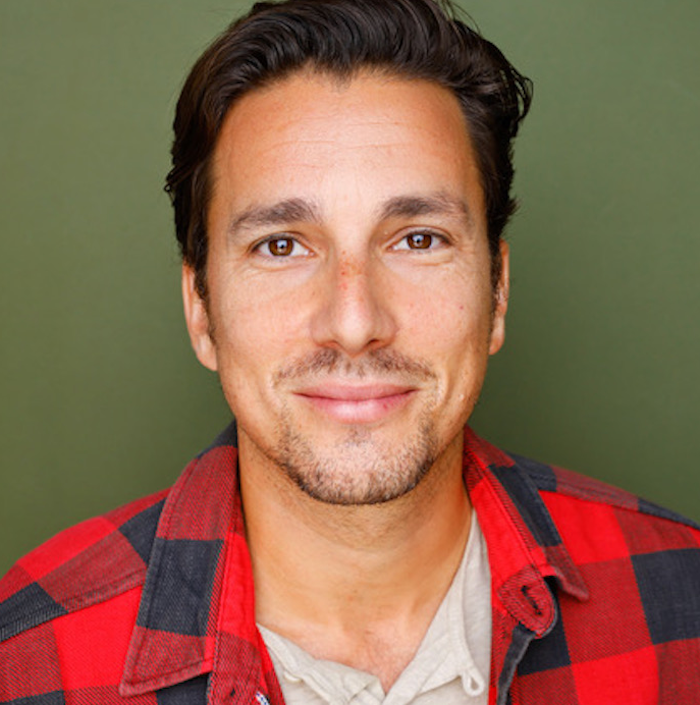
My interview with 2022 Black List writer.
Elad Ziv wrote the screenplay Court 17 which landed on the 2022 Black List. I had the opportunity to chat with Elad about his creative background, writing a Black List script, and the craft of screenwriting.
Scott Myers: Welcome, Elad. Congratulations on making the 2022 Black List. That must have been pretty exciting.
Elad Ziv: Oh, my God, it was very exciting to say the least.
Scott: We’re going to get into your script COURT 17 but first, let’s explore your creative background. You’re both an actor and a writer. Which came first?
Elad: I’ve been doing both for around 15 years. I think the acting came about three months before the writing. I was a bit of a late bloomer in everything, as I’m sure we’ll get to later with the conception of COURT 17 and everything, but tennis was a huge part of my life growing up.
I really thought I was going to be a professional tennis player. Up until the age of 18 or 19, that was my goal in life. That changed. Then I ran around, did some other jobs, trying to find myself. Then around the age of 24 is when I really decided that I wanted to do something within movies and TV.
At first, it started off with acting. I’ve been doing acting for a very long time as well. That has its ups and downs, like everything else. About three months into the acting, about almost 15 years ago now, I was getting really frustrated with the notion that I’m always waiting for someone else to allow me to be creative. That was a difficult thing for me.
At the time, this girl that I was dating, one of her good friends was a development exec at A Band Apart, which was Lawrence Bender’s production company at the time. She told me, she goes, “You should write something for yourself.” I thought, I was like, “Wow.” At that time, Good Will Hunting, Rocky, those were my favorite movies, “Why can’t I do that for myself?”
I set out, and I wrote a tennis script. That was the first movie I ever wrote, was a tennis script because it was something that I understood intrinsically. I knew that I would have to focus less on how to be a good writer and less on the actual subject matter, since I knew it inside and out.
That set off my journey to write scripts. Then COURT 17 now is, man, probably my 12th or 13th script that I’ve written in the past 15 years.
Scott: It reads like a professional script, so I assumed that you had written quite a few scripts beforehand.
Elad: Thank you. I did. Overnight success of 14 years.
[laughter]
Scott: Obviously, if you’re an actor, you’re reading scripts…
Elad: Absolutely. I was a very serious actor. I studied with William Esper in New York City, the Sanford Meisner program.
It was absolute militant studying of dialogue, character, and all that stuff, which really, really helped me as a writer later on, as I was breaking down dialogue, but then breaking down the subtext of the dialogue. Where the character’s coming from, what they’re trying to say in a scene, and what they’re actually saying in a scene.
All that stuff really, really helped me with writing, especially once I started to understand plot, general structure, and all that stuff. It was a very helpful tool on filling in the blanks, for lack of a better term.
Scott: Would you say that the way you went about learning the craft of screenwriting was more just by doing it?
Elad: I took some script anatomy classes a couple years ago, but that was much later on. As far as learning how to write, I taught myself how to write. I remember, after I spoke with the lady over at A Band Apart, I read how to write a movie in 25 days, or “How to Write a Movie…”
Scott: Viki King.
Elad: Yeah. I read that. I wrote an absolutely terrible movie, but I stuck with it. I stuck with her daily schedule because I hold myself accountable with that kind of stuff. Then I learned to write by rewriting that script and by reading a lot of books along the way, and falling.
I should say, before the acting, I came from the modeling world. When I was 18 or 19, I started modeling. I think the one great thing the modeling ‑‑ and acting to some effect ‑‑ helped me was the acceptance of rejection.
I got really, really good at hearing no, which is a difficult thing for a lot of people to conjure up, especially writers. With writers, you’re hearing no’s every six to eight months. You’re finishing a script, then you’re hearing the nos.
With acting and with modeling, you’re hearing no’s two, three times a day if you’re busy, if you have good agents and bookers that are sending you out. That helped me learn how to write because I would write terrible scripts, but I still kept pushing. To be honest with you, I kept pushing for 15 years.
I’ll read some scripts that I’ve wrote four or five years ago and I’d be amazed at how good I thought they were, and how I don’t think they’re good anymore. There was a certain relentlessness, I think, that my history built within me of not accepting no for an answer.
Listen, I have people who have told me that writing great dialogue is inherent in people. Some writers are talented, some writers are not talented.
Playing sports my whole life, I’ve become a huge…Honestly, studying with William Esper and hearing Sanford Meisner ‑‑ because William Esper worked with Sanford Meisner ‑‑ and hearing Sanford Meisner’s definition of art, craft, and all that stuff, I’m a huge believer that anyone can become what they want to do with craft if they work hard enough at it.
That the harder you work at something, the better you get at it. I believe everyone has a voice. I believe everyone has something to say. I knew that I did. I just wanted to keep working on it until I found out what it was.
Every script I wrote before this one was a script I wrote for myself, not for anyone else. That’s probably why I didn’t win any script competitions before Script Pipeline last year. It’s probably why every producer from here to Israel passed on all my projects because I was writing for myself. I didn’t care what anyone else wanted to do, but it helped me find my voice.
Then when I finally decided to go with something higher‑concept like COURT 17, I had the practice behind it to be able to execute that to a level where I’m not going to tell you I was confident. When I finished it, it’s all been such a shock to me in how well it’s been received, but in retrospect, I think that helped it a lot.
Scott: It sounds like you’ve got a really nice dual‑piston engine at work. You got that athletic background, practice, practice, practice, practice, and that competitive spirit, but then you’ve also got the acting thing going on, too. You can relate to characters. You know how to dig down deep into them and find emotional subtext. Does it feel like you’ve got both of those things at work in your creative process?
Elad: If I’m being completely honest with you, I feel like I have the one piston, which is the work ethic because I’m conscious of that, because it doesn’t come naturally to me. It’s something that I still struggle with every day, of forcing myself to sit down and write every single day.
The other piston that you’re talking about, which is that athletic…I’m sorry, the acting chops, getting into character, and all that, that’s more subconscious. That’s more ingrained in the DNA that I have from all the reps that I have, from all the classes I’ve taken, from all the auditions I’ve done, from the jobs that I’ve booked. It’s just in there.
It must lend itself creatively where I’m unaware of it. People have told me that with COURT 17, they see the vulnerability of the character, they love how I wrote her and all that. A lot of things that I wasn’t necessarily doing on purpose, but it’s stuff that I’ve read before.
I’ve read great roles, I’ve read terrible roles. I’ve auditioned for great things and bad things. I’ve racked up judgments in my head that helped me create these characters.
Scott: I tell my students all the time, particularly when they’re writing that first draft, “Don’t think. Feel.” You want to allow that room for the characters, and then the subconscious to speak because that’s the best stuff.
Elad: Absolutely.
Scott: You can always step outside the story universe later and manipulate things, but you want to get that receptive flow of content coming out there.
Elad: Yeah. It’s hard to get there because it’s vulnerable. When you’re pouring that into something and then someone tells you it’s not good, it’s like, “Listen, it’s just really vulnerable and it’s difficult.” A lot of people, whether they’re cognizant of it or not, are protecting themselves from that.
Maybe if they’re being a little bit more intellectual with something, it’s easier to be rejected on that than if they’re pouring their soul and feeling it, and putting something more personal into it.
Scott: It’s actually a nice segue to your script, COURT 17, because that’s part of the journey that your Protagonist Noa has. She’s got to open up and make herself vulnerable.
Elad: Absolutely.
Elad: Let’s talk about that. Here’s a plot summary.
“An over‑the‑hill tennis pro, trying to salvage her career, finds herself stuck playing the first round of the US Open over and over again against one of the top players in the world. The only way to stop the loop is to win the match, a seemingly impossible task due to how overmatched she is.”
The script not only made the 2022 Black List, but I was doing a little research and I found this article. Forbes Magazine had an article. The title was called “The 15 Most Intriguing Scripts On The Newly Released 2022 Black List.” COURT 17 was Number One on the list. Did you see that?
Elad: I did. That day of the announcements of the Black List was such a whirlwind for me. I don’t know. I truly went into that day with no anticipation and no expectations on anything, and it blew me away from finding out I was on it to finding out my ranking.
It wasn’t till that night that my career coach actually texted me the article. She was like, “You must be so psyched about this.” I was like, “I didn’t even see that. What is that?” Then I read out like, “Oh, my God.” Then I sent it to John.
That was almost as sweet as the Black List, honestly. That’s also something where I’m from Buffalo, so no one in my family is in the industry, no one understands anything.
The Black List means less to people outside of LA, but Forbes Magazine was a nice little tip of the hat to be like, “Hey, mom and dad, I know I’ve been doing this for 15 years, and you haven’t heard many things, but maybe this it’ll show you that it was worth it this whole time.”
Scott: You have a tennis background. You went to Temple University and played tennis there. I’m curious. What was that moment of inspiration for the script where you said, “All right. This is what I’m going to do.” Was it tennis? Was it a female athlete confronting the checkered past? Was it this conceit of an athlete being forced to play a match over and over again? Do you remember where you started the actual process for writing COURT 17?
Elad: The actual process started with an idea I had to write a loop movie at the beginning of the pandemic about a writer who cannot figure out what to write, and the day keeps repeating itself until he can figure out what to write. I was doing loglines for it, and trying to figure it out. It was so boring, and I couldn’t figure out the movie.
I wasn’t excited, and I really set out to write a movie that was higher concept. I set out to write something that would be seen by people. That would give people an excuse to see my writing because I felt like before, no one ever gave me a chance because as soon as they read the logline of something, they wouldn’t even open the script.
I kept thinking and racking my brain. My first script ever that I wrote was called “No Man’s Land.” As I mentioned, it was a tennis story. It was an Israeli‑Palestinian Romeo and Juliet story seen through the eyes of an Israeli tennis player. I had like, would go in and edit it and stuff. I even did that during the pandemic a little bit.
That tennis and loop thing, when I considered the two and considered the fact that no one had ever done a sports movie that was a loop movie, and it started there. Then the more I thought about it, it was such an organic marriage. It was like you mentioned earlier athletes, they practice every day, they do the same things over and over again.
With tennis, I would hit a thousand forehands, I would hit a thousand backhands, a thousand volleys, overhead, serves, slices, topspin, whatever, so that when I stepped onto the court, everything would be second nature, everything would be subconscious, it would be in my DNA. That’s what a loop is, is you’re doing the same thing over and over again.
There were so many organic…That’s where it started. It started with that concept of merging two genres into one that had never been done before. That no matter what angle I looked at it from seemed so…It was one of those beautiful things where you come up with a concept and you’re like, “How did no one ever write this before?” Or at least I’ve never read it before.
It started there, and then as I kept writing, she was originally a man and then I changed her into a female. Then right when I changed her into a female, Naomi Osaka withdrew from the French Open for mental health reasons. Exactly. That opened up a whole new thing for me, because as you see with Noa, Noa grew up in the same era of tennis as me.
Which is in college, if my body was physically healed, there was no way my coach was not going to let me play. If I said, “I’m having anxiety, I don’t feel like…” There’s no way. If my arms were working and my legs were working, I was playing that match.
When Naomi Osaka withdrew from that tournament, it opened my eyes and I was like, “This is a whole new world of sports that I’m no longer a part of.” I hadn’t been a part of tennis in a long time. How interesting for this player to be a part of it now? She’s “old school” as far as sports is concerned. She comes from a different era.
How would she deal with that? Then the whole idea of the onsite clinician came up and all these other things. That was another beautiful happy…Again, the loop movie, it could drive you insane to live the same day over and over again, that also beautifully lends itself to the mental health of athletes.
Then I read…Kevin Love did a beautiful piece in “The Player’s Tribune” about his mental health. He was an all‑star basketball player for the Cleveland Cavaliers and the Minnesota Timberwolves. All these things beautifully melded with each other and helped create the story because then it became…then I had a cool concept.
It’s a loop movie, and it’s sports, and it’s drama. I also never wanted to do a comedic loop movie because I love “Edge of Tomorrow,” but I thought so many loop movies…That was one of the biggest challenges was trying not to make it funny because loops there’s something inherently funny about the same person…
I didn’t want it, I wanted it to be that manic insanity of, “This sucks, get me out of this day.” Then after that, it became more about shining a light on the mental health of athletes.
I honestly think…I’m not a woman, but I do think that it is much more interesting the pressure of the mental aspect of sports is much more interesting on women than it is on men, because our society, we do have this inherent sexism against the age of women more than we do against the age of men. In sports that plays out in a different way.
A woman in her mid‑30s is different than a man in his mid‑30s when it comes to playing sports. When it comes to everything, but especially sports. It’s one of those happy acts, the timing of that. If Naomi Osaka didn’t withdraw from that until four years later, until now, it would have been completely different.
Maybe the script wouldn’t be about that, but that helped me dig deeper and find another unbelievable level that connected to me, and that I cared about.
Scott: You mentioned these loop movies and there’s a lot of them. Groundhog Day, Palm Springs, both comedies. There was a horror movie called Happy Death Day. That also had a comedic bent to it. Then Edge of Tomorrow had some humor to it as well. There was the TV series, Russian Doll. Comedy.
This is different. To me, putting my producer’s hat on, how Hollywood operates, similar but different. That’s their whole thing. They’re like, “Those were all successful movies. This is different. It’s a sports drama.” I can see why that would slot into the similar but different model.
Elad: That was the other thing for me. There was an interesting “New York Times,” another reason, so another motivation that subconsciously helped me discover the tennis loop thing. There was a New York Times article, I think it was four or five years ago that came out, and it interviewed all these professional tennis players on the lack of good tennis movies in Hollywood.
This was before obviously, King Richard came out, well before, I think before it was written. It spoke about how there hasn’t been a good tennis movie. There hasn’t been a movie where a professional tennis player can walk into the theater and be like, “That’s what it’s like.”
I have always been chasing that, and that’s what I chased with my first movie as well, with my first script, Excuse Me. That was another guiding thing for that.
Match Point it’s a great movie, but the tennis in it is not…Woody Allen doesn’t know what it’s like to be a professional tennis player. He’s a phenomenal writer, you know what I mean? It’s not accurate. I didn’t buy Jonathan Rhys Meyers as a professional tennis player. Wimbledon has its great parts, too, but I didn’t buy Kirsten Dunst as a professional.
There’s all these things that led up into that. It was a big part of really wanting to write a tennis movie from a tennis player’s perspective, something unique that I can do. I will say since then King Richard was a phenomenal tennis movie. I think King Richard is the first phenomenal tennis movie that I’ve seen.
Scott: Let’s talk about the characters because they’re so well‑drawn. The Protagonist, here’s how she’s introduced. It’s literally right at the top of the script, the script’s first scene.
“Blistered and beaten hands shake as they anxiously wrap grip tape over the vital handle of a tennis racket. We pull out to see the hands belong to Noa Schulman, 37, slouched on a bench. She’s tall and lean, yet battered and abused by her decades as a professional athlete. Tattoos riddle her arms and legs.”
How would you describe Noa, her state of being at the beginning of this story?
Elad: I know a lot of Noas. My senior year of high school, I went to an academy called Saddlebrook Academy, which is in Wesley Chapel, just outside of Tampa. It’s an academy where tennis players go to either go play college tennis, or a lot of them, to become professional tennis players.
I made a lot of friends when I was down there. A lot of them stuck the course and continued on. This is another thing, on top of everything we’ve previously discussed, another thing I wanted to educate audiences on, is that tennis is not a country club sport played by WASPs and the privileged elite. It is that, but professional tennis is not that.
Outside of the top 50 players in the world, and you could say maybe top 100 and make a good living, I know people who are ranked 400, 500, 700, 800 in the world, you’re making twenty, thirty thousand a year. You have no home. You’re traveling around the world 10 months out of the year. It is a ridiculously brutal, brutal existence.
I really wanted to shed light on this because I think it’s something that is not as glamorous as people think.
I love Darren Aronofsky’s The Wrestler. That movie does an interesting thing, too, of you see Stone Cold…I used to love wrestling when I was a kid. You see The Rock and all these guys, and the glamour of it.
The Wrestler really shows a light of the seedy underbelly of the wrestling world that most people don’t see. I think that COURT 17 does that a little bit with tennis. Noa, on top of everything, was ranked number one in collegiate tennis. She went to University of Texas. She was the highest recruit. She was the number one junior in the country.
She went to the best school. She won a national championship her freshman year. Then she turned pro. Everyone touted her, as Americans do. This happened to Andy Roddick, this happened to Mardy Fish. It happened to Serena, but she actually showed up and did it. It happened to Coco Gauff.
It happened to a lot of players. They get touted. Americans want that next great player. We always want to be the best in everything. We want the Michael Jordan of whatever sport it is. It’s a lot of pressure. Noa came from that.
The pressure’s different, as I experienced in college. Sometimes in practice, I would play out of my mind. Sometimes in matches, I would lose to people who were significantly worse than me because there’s a different pressure in matches that you just can’t practice for.
On a much higher level, Noa experienced that on the pro tour, and it hurt her ranking. There’s a frustration and a flusteredness of, “I’ve been on this tour now for 20 years, little less, but 20 years including college and everything like that, and I have nothing to show for it.”
Her dad died. Her dad was her best friend. There’s also that feeling of disappointment to your parents and not living up to their dreams, and how much they sacrificed for you, and you weren’t able to truly pay them back with your success for all that. There’s a lot of that as well, I think, in her.
Scott: When we meet her, she’s at a crossroads. The stakes are high. If she doesn’t succeed here, she’s going to be demoted, in a way, to the Asian tour, right?
Elad: Futures, Challengers, and all that kind of stuff. That’s something you do when you’re 19 and 20. No one in their late 30s wants to do that.
Scott: It’s interesting. First of all, Noa, I looked it up. The name means motion. Was there any significance to that at all, or did you just pick the name, it just come out of nowhere?
Elad: That’s interesting that it means motion. I’m Israeli, so I speak Hebrew and stuff. I know that, but I didn’t actually think of that. It’s actually accidentally beautiful, to be honest with you. I thought Noa was a really beautiful name. I thought she was such a tomboy character.
Noah is usually a boy’s name, historically, so I thought it was a beautiful name to give her for that reason as well. That she has such a masculine energy to her.
Scott: She’s got some rituals. There’s this thing with the water bottles, which I thought was really interesting, everything is got to be lined up, taller to shorter with the labels organized. Then she’s also got this necklace, that’s from her father, right?
Elad: Correct.
Scott: It’s a hand‑shaped symbol that’s been used for centuries to protect against evil. I’m just curious, that probably popped up out of your subconscious, but why do you think she had these rituals?
Elad: That was actually very purposeful that I put all that. The rituals were a sense of control. OCD is a sense of control. She breaks out of the loop when she figures out. For me this is what the movie is about, and it’s a spoiler, I’m sorry for the listeners who haven’t read it.
The movie is about letting go of control, and being OK with what is. That’s something that’s a powerful lesson in my life, and I think it’s a powerful thing for people to learn, is that we don’t have control over anything.
Being human is a really hard thing, and when you accept that everything is happening for a reason, and that you don’t have control over something, and that you just have to do the best that you can do with whatever you’ve got. I think in Noa’s case that that was a really important lesson for her.
Because coming into this movie, when we meet her slouched on that bench, she is angry at her history. She’s angry at the way things turned out. She’s angry that she didn’t get to number one. She’s angry that she didn’t win multiple Grand Slams or any Grand Slams.
To let go of that, that freeing thing of letting go and being at peace with you got to travel the world, you got to be a professional tennis player. You played the best players to ever play the game. There are so many things to take out of that. Anyway, that OCD stuff is like a microcosm physicality of that deeper meaning.
Scott: Tennis has a history of troubled dads. Like Andre Agassi had a real mixed relationship with his dad. Jennifer Capriati flamed out, Mary Pearson’s dad.
Could you maybe describe the relationship? Because Noa’s father was best friend and yet she does carry a lot of ‑‑ I don’t want to say ‑‑ negative associations, not intentional on his part, necessarily, but she didn’t live up to what he wanted her to be.
Elad: That is something, I wasn’t born in this country, my parents weren’t born in this country. There is a certain, and I’m pretty sure Andre Agassi’s dad was born in Iran that he wasn’t born in America.
There is a certain thing about people who come from humble beginnings and they moved to this country, or even if they come from humble beginnings in this country they want the best for their kids. They want their kids to have a better life than what they had, not to deal with that.
I think Noa’s dad pushed her and wanted her to be the best that she can, so that she didn’t have to deal with what he dealt with in life. Also coming from Israel and coming from his generation and stuff, I think he did the best he did with what he knew. He didn’t know any better, so he just tried to protect her and do what he thought was best for her.
Those lessons of work ethic and never giving up and second place is not an option, and all stuff like that ends up having a lot more, it hurts more than it helps. Even if you are able to succeed, I would imagine it’s the pressure of having to win all the time, it’s just insurmountable and very difficult to deal with.
His early passing, he passed away her freshman year of college, it doesn’t help that, because then he leaves her with all these things that are unresolved, and now she’s on her own, and she’s looking.
That’s why Eric becomes a pseudo‑weird father figure, but he’s not signing up to be a father figure, he’s not suited to be. He’s got his own things to deal with, but she needs that guidance because her father forced that on her her whole life.
Then he exited at such a young age for her that she was left without anything and having to make her decisions for herself. Not that he did it on purpose, but she just wasn’t equipped to handle that pressure by herself.
Scott: You mention Eric, her long‑time coach. He is a surrogate father figure, but he drinks a lot, for one thing. At one point, he says, “I’m going to go take this gig at the University of Texas,” so that’s another thing.
She has an interesting relationship with him. On the one hand, she wants him around. On the other hand, she’s not willing to listen to his advice.
Elad: That kind of hypocrisy, I think we all do it. Sometimes, we want something, but we’re not willing to actually deal with the difficulty of having that thing. I think relationships are like that. I think people want camaraderie, people want to be with people, but I think it’s work. You’re dealing with another human being, and it’s not just commanding. It’s also listening.
More specifically, with her relationship with Eric, he’s got his own life. She’s been making no money now for a long time, and his pay is 10 percent of whatever she makes, so he’s making 10 percent of very little money for a very long time.
I think that’s a difficult reality to grapple with. This guy has to live his own life. He can’t just service my life. That’s not fair to him. However, I don’t want to do this alone either. Then it’s also the other thing. Going back to the father, the father gave certain lessons for her first 17 years on Earth that she’s very stubborn about, that Eric has a different way of doing things.
That’s why I like the whole thing of her and Eric training, because Eric actually has some great ideas. He’s a phenomenal coach. She just doesn’t let him be one because she holds her father in this holier‑than‑thou light, and puts Eric below him. In reality, maybe Eric’s a better coach than her father. Maybe Eric knows more about tennis than her father.
Her father was like a Richard Williams, where he learned it along the way. He wasn’t a good tennis player, but Eric knows tennis. Tennis has been in Eric’s life his whole life. That’s an interesting subtext that we don’t see, but it’s there.
Scott: That’s one of three storylines. One is obviously the match. I want to talk about her nemesis character in just a second, but there’s the storyline of she and Eric. Then there’s a storyline of another character, which I want to get to in just a bit here. Let’s talk about Anya Khruscheva.
This is Noa’s rival, the match we’re going to see over and over and over again. This is how she’s introduced, Eric and Noa as they meet Anya on the court practice time at the US Open.
“We follow their gazes toward Anya Khruscheva, 18, the new phenom on tour. There’s an underlying beauty to Anya’s intimidating stature. Six foot, three inches of dense muscles, wrapped around bones made of pure Russian steel. Her team surrounds her on the court, her father, coach Yuri, 44, two agents, two assistant coaches, and a trainer.”
Functionally speaking, Noa mentions this later on, she’s like a younger version of Noa.
Elad: Absolutely. I thought that’s an interesting lesson for Noa to learn, to have to see her younger version of herself over and over and over again, until she finally gets it, “What a beautiful journey have I been on.” You know what I mean?
Scott: Yeah. It’s like, Anya’s like the shadow nature of Noa that she’s got to confront over and over again in these repetitive matches. The first match begins with this description.
“Anya and Noa are locked onto one another like two apex predators in the wild. No one dares blink first,” which is a great starting point because the very last match, there’s a whole different dynamic there. That first match, she gets…not blitzed, but 6‑2, 6‑1. That’s not good.
Elad: That’s as blitzed as you’re going to get in a pro tour. 6‑0, 6‑0 doesn’t happen very often.
Scott: Doesn’t happen very often. That looks like that’s it, but then the accident happens. Let’s talk about that. This is the thing that sets into motion the loop. Yesterday, that movie where they had a bicycle thing, an accident that created where nobody heard of The Beatles.
What did you think about it? This is, she’s running and there’s a taxi cab that collides with her. You have to have something that sets this thing into motion. Talk about how you came to that incident.
Elad: I just needed something to kick it off. There were earlier iterations of it that didn’t have the loop aspect of it. I was searching for something that would kick it off. After I won the Script Pipeline award, I worked with…Are you familiar with Script Pipeline?
Scott: Yes.
Elad: The way they work with their winners is that they actually work with them. They do some edits with us, they’ll get us into representation if we need it, or whatever. I worked with a guy named Matt there, and we came up with that together, that we need something to really kick it off. The taxi cab thing is just so jarring.
To be honest with you, I love it the most because she dies, or you think she dies, and then it’s like, “OK, I’m in the first act. Where is this…” That’s the main thing of it, is I really wanted to shock the audiences to be like, “OK. Where can this possibly go?” Then there’s a beautiful, whimsical thing that you can carry it, where I love when things are up for interpretation.
Scott: By the end of Act One, Noa discovers she’s trapped in a loop. She even says, “I’m stuck in this thing, and I can’t get out.” It’s like the loop is not just conceit. She’s stuck at life, it’s a metaphor for she’s living a loop.
So, there’s three storylines. There’s the recurring tennis match with Anya. There’s the relationship and strategy sessions with Eric. Then there’s this third one with this character, Roxanna. Could you talk a bit about her character?
Elad: Roxanna’s like a weird melding of my actual therapist in real life and my fiancée whose name is Roxanna. Again, after the Naomi Osaka thing, I started researching and then I started following…There’s a player called Iga Swiatek. She’s from Poland. I think she’s the number one player in the world.
If not, she’s been number one player in the world for a bunch of time during the past five years. Her coach, I’m going to butcher the name. It’s like Daria Abramovich or something like that. She’s very, very into the whole mental health of athletes thing. I started following her on Twitter. I started doing so much research on it.
I came upon this idea of these onsite clinicians at these Grand Slam tournaments, and I thought, what a fascinating job to be the therapist for these players as they’re winning and losing matches.
Roxanna was an amazing opportunity to shine the light on the mental health of athletes, but then most importantly, because this movie is not only for athletes. It’s so analogous to everyone’s mental health. There’s so many issues that Noa encounters in this very unique setting that I could definitely relate to on a day‑to‑day basis. You know what I mean?
The things that they talk about, the notions that they discuss, those are universal things that are human problems more than there are tennis players’ problems. They’re more than loop movie problems.
Scott: Joseph Campbell talks about how the whole point of the Hero’s Journey is transformation and that the outer journey is important, but what’s really important is the inner journey. In your script, much of that gets played out through the relationship Noa develops with Roxanna.
At one point Roxanna says, “I think it’s purposeful that you’re playing Anya.” Noa laughs, and Roxanna says, “That you two were brought together for a reason.”
Here’s what I thought was pretty interesting. There’s the five stages of grief: denial, anger, bargaining, depression, and then acceptance. That’s Noa’s journey.
First, she’s in denial that the pattern is happening, the loop is happening. Then you mentioned anger, anger, anger, oh, boy, does she really gets into that mode big time. Could you maybe talk, was that all conscious kind of a thing, or is that it subconsciously flowed that way?
Elad: It’s solely subconsciously flowed that way, which makes me as you’re talking, it makes me think of, these unbelievable notions that these brilliant psychologists came up with, I wonder if they’re inherently in our psyche that we don’t even have to think about them because I thought about this movie in totally a different context.
The way that I wanted Noa to deal with this scenario like you said, it lines up perfectly with those points, but it’s completely…It’s not coincidental, that’s the wrong word, but it lines up without me even having to think about it lining up. You know what I mean? That’s a beautiful thing that it works out that way.
What I was trying to do was take it from scene to scene and think, how would a human or how would this human specifically excuse me, “How would Noa deal with this on a day‑to‑day basis?” and make that as real as possible?
For instance, when Roxanna tells her maybe it’s on purpose, no one’s initial reaction is, “Fuck you, how dare you say this is on purpose. Do you know the shit that I’m dealing with?”
That is interesting because it’s not a movie, it’s like real life. It’s like, if you’re dealing with something and someone is “gaslighting you” and telling you, “Oh, be OK, everything’s fine, you’re fine.” It’s like, “How dare you tell me that?”
If you sit down and think about it, and you’re being honest with yourself it’s actually, you’re helping yourself by thinking that way. By being angry at the situation, Noa’s not helping herself. She’s not going to solve anything.
Those five stages of grief and everything, they’re so intrinsically true to us as a human race that it lends itself that if you’re being honest with your characters on stuff, it organically lends itself into that story.
Scott: The anger is a pretty extensive part of her experience after she accepts the fact that she’s stuck in a repetitive time loop.
Part of that control thing that you were talking about earlier, she’s not allowed herself, though she is pretty snarky with Eric, and she has moments with Anya early on, but she’s never allowed herself to go full volcano. When she does, she unleashes a torrent of anger.
That actually helps her a little bit on the court because with each rematch, she starts to get a little closer, it’s now 6‑2, 6‑2 and so on. The anger is not the solution. Roxanna keeps driving her down to the point where there’s a touching moment. It’s a breakthrough. She’s with Roxanna. She says, “No, I’m a fucking dinosaur. I don’t know which tournament will be my…” clears her throat, “Will be my last.”
“She gets emotional, tears in her eyes, some even sprint down her cheeks. Noa relaxes her fists and falls into Roxanna like a giant, hurt child. She bawls her eyes out. Roxanna holds her.”
That’s a breakthrough because underneath the anger is the sadness.
Elad: Well, it’s fear turned inwards, anger. It’s all these wounds we have as children that we’re afraid of and stuff. Instead of being vulnerable and brave enough to show them, and I don’t even want to say brave because that’s judging people as if they’re not capable of doing it.
We’ve set up society as a difficult place to be vulnerable. That was a beautiful…Roxanna has created through these…Every day she’s created that safe space for Noa that she never had before.
Scott: That leads to that next stage of bargaining, because once Noa realizes she can survive that vulnerability, and that there is a deeper emotional thing going on there, she’s willing to explore that now. She starts to become more open to that, even to listening to Eric and the strategy.
Now, all of a sudden it’s 6‑4, 6‑3, going to tie breakers. She actually wins. She breaks service at one point. You can see this progress going on. There’s the progress in the court, but it’s mirroring or incentivized or created by the thing that she’s going through psychologically.
Elad: That’s absolutely accurate. Yeah.
Scott: Now, you did something really interesting. I would think like a typical development exec would say, “OK, I see where this is going. She’s going to finally win the big match in Act Three, and everybody’s going to cheer, big finish,” and all that sort of thing. She actually wins the match in the latter half of Act Two.
That leads us into the depression part because she wakes up the next day thinking, “OK, great.” It’s like Bill Murray in Groundhog Day. But no. Same thing again. Then she starts losing in the rematches even worse, because she can’t escape. She says, “Why am I still fucking here?”
Then Roxanna says, “Letting go means being at peace with everything,” which is a huge message. She does have that depression mode where things are not going well, and she’s got to bottom out.
Elad: Absolutely. She’s got to bottom out, but she hasn’t learned her lesson. She thought it was all about winning, and it’s not about winning. If it was about winning, and she went and broke out of it, then she would go back to being the same person she was at the beginning. She just would have had a first round win in the US Open under her belt.
That doesn’t change who she is as a person. That’s why, obviously, in the first few drafts, that was the ending, but then I started thinking about more and more. I’m like, “That’s cheap.” You know what I mean? Winning is cheap.
If anything, I want to talk about this obsession we have in this culture of winning versus losing that I grew up in where I felt great when I won, and I felt terrible when I lost. That’s not healthy for the mental health of anyone.
Scott: I don’t want to give away the ending, but I do want to make one point here. She sees Anya’s father ripping Anya. Noa comes back to Roxanna and says, “I felt protective over her, like I wanted to throw him off her and save her.” “Why do you think that is?” “I saw myself in her.” That empathy.
That’s really the pivot point for her in terms of her psychological journey where she starts to see this person, this rival in a different light, not the enemy, but someone that’s close to me. It leads beautifully to the ending. I don’t want to give that away, but it involves acceptance.
Elad: It proves Roxanna’s point that there was a reason why Anya was stuck with Roxanna in the loop, not a different player, because it was…She needed to see it in herself personified externally so that she can empathize and then internalize it, and see that was what she was going through.
Scott: It’s an interesting point you make because you could switch protagonists and look at it from Anya’s perspective. She had a realization there at the very end as well for herself going forward.
Elad: Sequel maybe.
[laughter]
Scott: Hollywood producer talk.
Elad: There you go.
Scott: I want to mention one last thing. The relationship between Noa and Roxanna is intriguing, and there does feel to be like a romance, even a kind of a sexual subtext going on. Could you unpack that a little bit what’s going on because it feels pretty nuanced.
Elad: You said it beautifully. It’s exactly what it is, and it’s nuanced. It’s not black and white. It’s not they’re either together or they’re not together, there’s nuance, and it’s complicated. Roxanna has her own complicated past that she comes from as well, but it’s absolutely…Listen, they’re obviously physically attracted to each other.
I wanted to set that up, that they’re physically attracted to each other. Then when someone makes you feel that safe and that at home, and you get along on a personal level, and they’re your friend, and then on top of that you’re physically attracted to them, it’s an organic thing to feel that for one another.
I also wanted to leave it a little ambiguous at the end. I didn’t want it to be like, them holding hands walking off into the sunset together kind of thing, because that’s not how it is in this story. It’s more complex. Now, Noa kind of wants to continue onto this journey and Roxanna has her own life, but that doesn’t mean that they’re also not ending up together.
You touched upon it beautifully, and it’s ambiguous, and absolutely it’s more than a friendship type of attraction that they have for each other. Is that to say they end up with each…Who knows?
Scott: It’s a terrific script and well worth getting on the Black List. Let’s talk a bit about that second Monday in December when the annual Black List was revealed. What was that experience like during that day, and subsequently?
Elad: I’ve been writing for 14 years, and I’ve been hearing nothing but nos for 14 years. I’ve never had a rep before this year. I’ve never won a screenplay competition before last year. It was a long journey, and I’ve worked really hard. I’ve written every single day as if I was a professional screenwriter.
I’ve dedicated myself to this craft, and I love this craft. I went to the gym that morning. My manager had warned me like a month before that it was going to be today. I knew that I was going to have a few votes, but I didn’t know that I would have enough votes to actually be on the Black List.
I went to the gym, I always turn my phone off. Then when I turned it on at the end, I saw a Twitter notification. It said Black List, and it said my name, and it had a little caricature of COURT 17, but that’s all it said. I was like, “What is this?” Because I also paid for Black List services a couple…
When I was first writing this, I would pay for the notes on stuff. I was writing on the black, I got notes. I didn’t know which Black List it was. I called my manager, John at Bellevue and he said, “Dude, it means you’re on the fucking Black List.” It’s hard to describe the feeling of all those years.
It sounds so stupid to say this, and I’m kind of going back onto everything I said with COURT 17 and the moral of it about how it shouldn’t be about awards and all that stuff, but to get that validation, and honestly, I don’t even know if it’s my happiest day because the day I signed with John Zaozirny [manager, Bellevue Productions] was definitely one of the happiest days of my career as well. That was unbelievable validation because I have friends who are so much farther along than me in their career that he did not sign. I know how picky he is.
That was honestly one of the best days of my professional career as a writer, but then the Black List, it was an amazing experience. I didn’t expect it. To be honest with you going into it, I didn’t think I cared about it. Maybe I was protecting myself in case I didn’t get on it. When I found out I got on it, it was unbelievable.
Then a couple hours later, the Deadline article came out with the rankings and I saw myself at number two, and I was like, “What?” I knew COURT 17 was special, and I really believed in it, but I had no idea. Honestly, I was so humbled by everything and excited, man.
Compared to other writers and even when I see other Black List writers and stuff, it took me a long time to get here compared to most writers who are around…my peers or what have you. I appreciate it. I really appreciate it.
Scott: I would hope that’s translating into a bunch of general meetings.
Elad: Before the Black List, we sent it out to a bunch of producers to try to get a producer on it. We had an unbelievable response to it, so many people reached out. I’ve had a lot of generals and stuff like that with great production companies that I respect, and I love their work and excited to potentially work with one day.
The Black List thing was exciting as well. It definitely has amped it up a little more, and now I have some more meetings coming up as well. Hopefully it helps with getting it made as well.
Scott: Congratulations again. I’d like to ask you a few craft questions if I could. Of those scripts that you’ve written like 12, 13, 14, are there any in a specific genre? I’m curious. Were you testing out different genres?
Elad: Testing out different genres. I would say, the biggest thread of all of them, it’s write what you know. I wrote a pilot about my grandparents, a true story about my grandparents living in Poland in the 1930s, leading up to the Second World War and what life was like for Jews in Poland in the ’30s before the Nazis invaded. I thought that was a very interesting time.
I’ve written biblical epics, I’ve written horror films, thrillers. I’ve written sci fi, near future, futuristic sci fi. I love so many different movies, and I’ve dabbled in so many different kind of things.
The thing I’m working on with John now is like a dark character study as well. It’s similar to COURT 17, but also kind of different. I like so many different kinds of movies. I’d say the only movie I really haven’t written is a comedy. That’s really the only thing that I don’t do. Yeah, a lot of different things interest me in this world.
Scott: Would you recommend to writers who are just trying to learn the craft that they write a lot of different genres? Or would you recommend they find one and focus on that?
Elad: I think it depends on where you are. For me, I was just figuring out who I was. If you know who you are, then lean into it and write that over and over and over again. I think I was discovering my voice and discovering who I was. I started at 24. At 18, I didn’t go to film school and study writing. Everyone has their different journey.
Once you discover your voice, lean into it. Honestly, the biggest thing I can say, I’m so happy of the path that I took, but I think it took a lot longer because I was very hesitant about the idea of concept. I was always obsessed with execution, which is very important. I was obsessed with the readability of my scripts more than I was with concept.
I really do think it’s 50/50. I really do think it’s important that you get something that people want to read, so that they, as I mentioned earlier, even give you a chance to read your scripts.
Now, that being said, COURT 17 is by far the best script I’ve ever written. Even if I did something higher‑concept six years ago, maybe the concept would have been cool, but maybe the script wouldn’t have been that strong, and someone would have rewritten it or something like that. It really depends.
I had to have a lot of patience. I don’t recommend what I did to most people because it took 14 years. I don’t know that a lot of people want the 14‑year plan of how to finally start getting traction with things.
I’m happy that my path was learn how to write without anyone seeing what you’re writing. Then when you’re ready to go out there, you’ve written enough where you can execute something that is on a professional level.
Scott: That’s a good philosophy to have. Maybe, like you said, you may have come up with a high concept six years ago, but you might not have been the writer that you needed to be to sell that.
Elad: I definitely was not. I know for a fact, I was not, because I read my scripts from time to time just to be curious about where I was and where I am now. I definitely was not the writer that I am today.
Scott: Based of the success of COURT 17 which does have a high concept to it or a strong, central conceit, has that shifted the way that you approach coming up with story ideas, or at least assessing them in terms of what you maybe wanting to write?
Elad: Absolutely. I think that’s the amazing thing about having John and working with Bellevue is that he’s very hands on in development of new projects. He doesn’t just tell you to go write something, and then you come back to him in six months. You know what I mean?
He wants to make sure that whatever I’m spending my time on is worth my time. He understands the market place, and what’s going on better than I do. I really, really appreciate his mentorship in that. I say that because he checks me a lot. I sent him 40 concepts and he’s like, “No, this is not going to do it.”
Because I still hang on to that old stubbornness thing of, “Oh, maybe I can make something for myself now. Screw what everyone else thinks,” but it’s a dance. Everything is a dance. You’re not selling out, but then you’re also making movies for people to watch, not for you and your family to sit in a theater by yourself to watch.
It’s that dance of figuring out how I take my love for script writing, my love for storytelling, and how do I turn that into a wider thing that people are interested in reading. Which I did with COURT 17, and which John and I believe we’re doing with my next thing now.
Scott: How do you break story, your story prep process?
Elad: I’ve got to tell you, it’s different for everything. It’s really different for everything. I used to just jump right in. That was more, not because what I wanted to do was best for the story, but because I was impatient. I wanted to get to the writing, and I wanted to finish a script every three months.
Now, I really, really like to focus on character first, and get my characters down. Once I have the characters down…Well, first, you have to come up with the concept or the setting. That sometimes comes with doing a lot of research, reading a lot of newspaper articles, listening to a lot of different podcasts, scouring social media. Sometimes there’s interesting stories on there.
Once you have your concept, then I go into the characters and I find out who is the most interesting person that this story can happen to.
Then once you get the characters down, then you can start going into story threads and different plots that are happening throughout your script, then I would go into the outlining. Then finally after the outlining, you take care of the first act, you make sure that’s good, then you move onto the…maybe in quarters. If you do the first act, first half of the second act, on and on and on.
Scott: I know Bellevue’s got that thing where sometimes they have other writers they read material. Have you had that experience?
Elad: Are you talking about the Circle of Trust?
Scott: I don’t know what they call it, but…
Elad: Is it when other writers read your script, and they get you notes on?
Scott: Yeah.
Elad: Yeah, I have. We did that with COURT 17, which was really, really helpful, which was again, one of the…I would look up all the writers that were giving us notes and I was like, “Oh, my God, they were on the Black List two years ago.” That’s an unbelievable thing that John does. It’s brilliant.
Then I’ve been on the other end of it. I’ve given him Circle of Trust notes for a few different clients of his. It’s great. It’s beautiful because it’s like, “I’m a huge…”
Oh, that’s another thing actually that I think is important for screenwriters. Reading scripts is one of the biggest things that changed my writing. I’ve been told to read scripts for so long, and I’ve been so against it.
When I sat down and I started reading two to three Black List scripts a week, two to three a week. I would actually read as much as I would write ‑‑ maybe write a little bit more, but two to three a week ‑‑ it changed everything.
It honestly changed everything for me because the great scripts, you’re obviously inspired by, you know what you love. The bad scripts, you’re learning so much about. If you see a script ‑‑ it’s obviously subjective ‑‑ that you don’t think is good that’s on the Black List, because I think Black List is a great resource of reading scripts, because it’s like, that’s what the town wants.
Reading those scripts, even the bad ones that are getting there, you’re like, “Oh, I don’t like this. Why don’t I like it? Why did all these producers and film executives like it? What can I do better than this to also do that?” That made such a huge difference for me.
I would be remiss not to mention that that was a huge growing point for me was reading scripts.
Scott: I always love to hear that, because I have this little mantra I came up with years ago: Watch movies. Read scripts. Write pages. You do those three things, eventually, you can get there, but you’ve must read scripts.
Elad: You have to. You know what I hate to say, I used to be like, “I’d rather watch the movie. I don’t want to read the script because I don’t want it to ruin the movie.” It’s like reading the script. If you want to be a writer, if you want to be a professional paid writer, you have to read the scripts because that craft is different than the movie.
Scott: Absolutely. You mentioned something interesting earlier about people can grow, and they can develop, and they can learn the craft specifically like dialogue. Because there’s a lot of people who say, “Yeah, you either have the skill to write dialogue or you don’t.”
You’re an actor, so you would have maybe a natural instinct for it, but has your ability to write dialogue evolved? If so, are there any techniques or tactics or things you’ve done to do that?
Elad: Jeez. For your first question, I hope it’s evolved, but it’s hard. It’s hard for me because I’m in the cornfields, I’m not in the helicopter above, so I don’t know if it’s gotten better. If I’m reading scripts from years ago compared to today, the dialogue is way better today. I guess in that sense, it has evolved from where it used to be.
Being an actor has helped me a ton with that because I can naturally…When you’re studying lines, there’s so many ways to study lines, but I would study lines with the subtext of what the actor is saying. I would say what is the actor actually saying. Then with that, that’s how I study the line, if that makes sense.
I’m not studying the actual words, I’m studying the subtext. That trains a certain thing that when I’m writing the dialogue, I can kind of imagine the scene. If you’re telling someone you’re like, “I love you.” I see them saying it like that.
I can write I love you, and when you’re reading it, you’re like, “Oh, that’s a weird place to say I love you to someone.” For a bad example. The acting thing has helped a lot. Again, as you get more comfortable with writing, this is why I say you can always get better at it. I believe that when you relax into the writing, and you can see the scene as you’re writing, that’s when the dialogue pops.
When people are manually trying to hammer something home, or trying to be interesting, or trying to do something, that’s when dialogue falters a little bit. Great writing and great acting and great…everything is effortless, or looks effortless anyway. That’s what I learned to do.
It’s bad advice because it’s hard to replicate that. Everyone has to find it within themselves what that means. For me, it’s leaning back a little bit, looking at the scene, and seeing the actors as they say it. One thing I love to do, is I love giving actual actors the roles in the movies. That helps me see them say the roles.
That also helps me write the dialogue for them. Then you find out as I’m finding out with COURT 17, you get different actors in that role maybe, but then it actually becomes even more interesting. You don’t have to be precious about, I don’t know, “What if Jon Bernthal is not going to be the lead in this movie?”
It doesn’t matter because Tobey Maguire is going to do a really interesting job saying those lines anyway, or whatever it is.
Scott: Star casting. That’s what they call it.
Elad: Exactly. That’s a nice trick as well. Acting for me was always very visual, I always visualize things. That’s a helpful tool with writing.
Scott: You mentioned scenes. When you sit down to write a scene, do you have specific goals in mind?
Elad: Yeah, I always try. Sometimes I feel like I don’t succeed but I always try to have a beginning, middle and end for a scene, it’s tough. I always try to start the scene as late as possible and leave the scene as early as possible, which is also tough to do sometimes, and I don’t know if I succeed in it.
I think it was my acting teacher who said this, “A scene is like, there’s one person at the end of the room, and there’s another person at the end of the room, and they both want to go across, but they’re both in each other’s way. How can they figure out to get to the other side with the other person being…?”
I always find that an interesting way because you always want conflict in your scene. I feel like those, if you do those, and you execute them without someone seeing that you’re executing them, then you have your scene.
Scott: It’s funny, I hadn’t thought about this, but sometimes I like to use metaphors with my students. I say, “Yeah, a scene is like tennis. It’s back and forth.” You’ve got to get that conflict, that tension going.
Elad: It is, but sometimes it’s nice also when you mess up the…Tennis is so methodical, so when you hit a drop shot, or when you do something to mess up the rhythm of something, that’s so good for a scene as well when you put pauses or whatever.
Scott: A lob. [laughs]
Elad: A lob. Exactly.
Scott: That’s right. Establish the pattern, then break the pattern.
Elad: 100 percent, that’s sports.
Scott: All right. One last question. What advice do you have in terms of how can learn the craft, and try and break into the business?
Elad: It’s cheesy, and I hate it because it’s something that I heard, and I hated hearing people say it, but it’s like, stick with it no matter what. I’ve come up with friends in different walks of life who have quit on stuff because they listen too much to other people. If you feel it inside there, then do it, but if you’re going to do it, then really do it.
Sit down and do it, be vulnerable, put hours into it, write shitty scripts. I see on Twitter all the time people saying you need three good samples to be…You need this, you need that. I had one script. I had one script, and my life has completely changed with the people who are around me right now.
I am by no means an award‑winning, rich, millionaire screenwriter. I’m not trying to pretend like I am, but where I’m at right now in life, I was dreaming of this a year and a half ago. Yet for the previous 13 years, I was struggling and being told no constantly. For whatever reason I had a delusion to continue to go, to continue to push hard, to continue to work.
I would say don’t listen to other people and keep doing it, but do the work, and don’t be afraid to do the work. Don’t be afraid to write a bad script, and then keep working on it. If it’s bad after two, three years or however long, you have to listen to yourself as well, then move on and do another script.
Keep writing and if you keep writing, my honest belief is that you will be great. I think that there’s no shortcuts to it. I think you have to put the hours in. I don’t buy all these people writing a script in an hour and all that kind of stuff, these prolific writers. I don’t buy it. I don’t believe it. I think it’s PR.
Writing, like any craft, like acting, like tennis, anything that’s a craft, it takes hours and hours and hours of dedication. If you love it, just do it. If you have another job, then you do it at nighttime or whatever it is, you know what I mean? If you love it, stick with it. Don’t listen to anyone else, whatever you think about yourself is valid.
Again, I used to hear that all the time years ago, I used to hear people saying it, and I didn’t like it, but I’m seeing it come into fruition. One thing I wanted to say too, it’s interesting is that, before I once…I don’t know if it’s before I won Script Pipeline, or before I signed with John, which happened in about a five‑month period.
I was shocked because I had realized that I had gotten to the point where I bartend at nighttime, and I would write during the day. I got to the point where I didn’t even think of an end goal.
I was in this constant loop, if you will, that maybe for the rest of my life, I’m going to be hustling it out, and I’m going to have a side job, and I’m going to write every day, and I’m never going to make money off of it. I found out that I became at peace with it.
I believe that that has something to do with all this amazing things that have happened to me over the past year is that, I settled into this. I settled into this beautiful rhythm of loving the writing and not worrying about what came of that. If I can read this for you, because it made me think of it.
This is on my iPhone screen, and I keep this in front of me, and it’s been there for years. It says, “You simply cannot worry about whether it’s going to sell or get made or whether the actor reading it is going to attach, or why your agent hasn’t called you in a week because the only thing you need to focus on, the only thing that matters, are today’s pages.”
That’s a quote from William Goldman who obviously…I love that because I had that before I had an agent, before I had actors reading anything, but I love that a guy who wrote “Butch Cassidy and the Sundance…” that kind of guy was saying, “Writing pages is the only thing that matters. Don’t worry about all the other stuff.”
That was a game‑changing thing for me that I think changed everything.
For my interviews with dozens of other Black List writers, go here.