Go Into The Story Interview: Eric Koenig
My conversation with the 2014 Black List screenwriter.
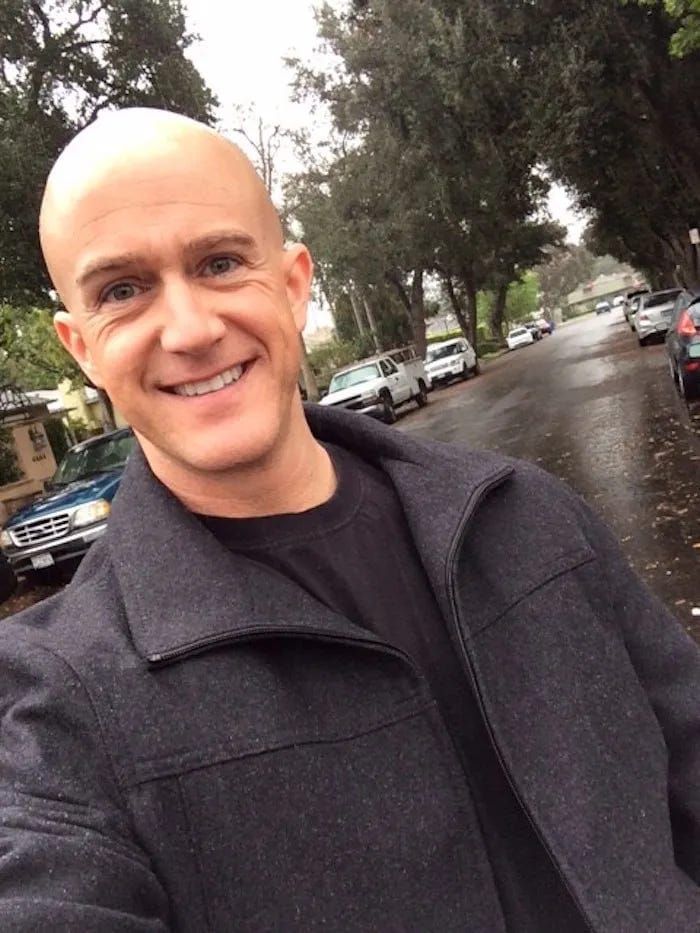
My conversation with the 2014 Black List screenwriter.
Eric Koenig was a “first-timer” back in 2014 when his original screenplay Matriarch sold as a spec to Paramount:
The thriller follows two powerful female characters going head to head as a prison psychologist has 48 hours to convince a serial killer to disclose the location of her final victim before she is executed.
The script was also named to the 2014 Black List. Here is my conversation with Eric.
Scott Myers: You currently serve in the United States Air Force. How did you get interested in screenwriting?
Eric Koenig: Because you mentioned the Air Force, I’d just like to quickly say that the military has been a wonderful career for me for 13 years now. When I was a young, nineteen year-old punk kid in dire need of some direction and discipline, the Air Force was more than happy to provide it (imagine that!). Later on, the Air Force put me through college and through dental school, so all my education has been paid for by the military and for that I’ll always be grateful.
That said, I first got interested in screenwriting when I was completing a one-year general dentistry residency in Las Vegas. The hours were long and the curriculum grueling (at least for me — some of my classmates seemed to have no problem) and I discovered I desperately needed a mental break — something to take my mind off of teeth and tongues over the weekends and during the evening when I’d come home.
The idea of writing a screenplay was completely foreign to me until I woke up one morning and remembered this pretty intense nightmare I had during the night. I jotted it down (remember, anything to keep me from reading my textbook on diseases of the periodontium). Then I turned it into a two-page story. Then expanded it to ten pages. Then I thought my little nightmare story would make a pretty cool movie so I Googled screenplays and read all about the craft and thought, “Eric, you can spend your Saturday studying the varied canal morphology of mandibular first premolars, or try writing a screenplay.” I bought a copy of Final Draft later that day and the rest is history.
Scott: How did you go about learning the craft?
Eric: Blogs and books. I’ve probably read every book published on screenwriting… at least twice. Ok, maybe not every book, but enough that at least a small patch of forest somewhere was destroyed in order to print them. There is also a HUGE amount of helpful information out there on the web. Both of these were easy to get my hands on and provided me with a great foundation from which to start. I’m always ashamed to admit that I haven’t read a larger number of screenplays, but the one’s I’ve read have helped immensely. If there was one thing I’d like to do more of (besides just writing, which has been the single best education), it would be read screenplays.
Scott: When we emailed each other, you mentioned that you’ve followed Go Into The Story for years. What are your favorite features of the blog?
Eric: Go Into The Story has been one of those instrumental blogs when it comes to me becoming a professional screenwriter. I’ve read it religiously for several years now and the wisdom I’ve gleaned from it has definitely helped me get to where I am today. Thanks, Scott! I truly mean that and believe thousands of other readers of GITS would agree with me.
I’ve probably read every single thing you’ve posted in the last two years, but I remember when I first discovered GITS that I was especially drawn to the series “The Business of Screenwriting” and “Everything You Wanted To Know About Specs.” The basics, from someone who’s a professional screenwriter. The information you provided in these was exactly what I was looking for. I didn’t go to film school. I didn’t know “the business.” I had no clue how Hollywood worked (not that I do now or ever will for that matter). I just had this burning desire to write a screenplay and absolutely devoured all the information these posts provided. While those really gave me a solid foundation for what to expect as a writer, I also enjoy “Screenwriting News” and “Saturday Hot Links.” In fact, I’d probably have several more screenplays finished if it weren’t for your Saturday Hot Links…
Scott: How do you balance your work and your writing?
Eric: Ahhh, this one’s tough. And no surprise, it’s gotten even tougher since Matriarch sold. There’s only so much time in the day and it’s never, ever enough. I think the biggest reason I’m able to juggle these two careers right now is because I don’t have a family — no wife or children. I’m not saying it can’t be done because I know people do it. As long as I’m on active duty, my military career is number one. Thankfully, dentistry — even in the military — is pretty much a Monday through Friday job. This leaves evenings and weekends to write, which I take full advantage of. I will often spend 10–12 hours on both Saturday and Sunday writing, because if I don’t, then it doesn’t get done (well, that and because I love writing!) Has my social life taken a hit for it? Without a doubt. Has it been worth it? Absolutely.
Scott: Here is a plot summary for the spec script “Matriarch” which you sold in 2014: “The thriller follows two powerful female characters going head to head as a prison psychologist has 48 hours to convince a serial killer to disclose the location of her final victim before she is executed.”
What was the inspiration for this story?
Eric: I wanted to write something very, very dark. Unicorns? Not so much (although there was that unicorn in The Cabin In The Woods). Serial killers? Now we’re talking! Silence of the Lambs was a big inspiration when I wrote Matriarch, although I tried to differentiate it enough that no one would read it and think it was just a cheesy rip-off. In fact, in early drafts several people told me that my serial killer antagonist, Margaret, was too similar to Dr. Lector, so I really tried to make her different and unique in her own sick and twisted way.
Scott: How many scripts had you written before taking on “Matriarch”?
Eric: I had written several different scripts in several different genres. I was experimenting, if you will. I’ve always been drawn to darker material and if I had to write in only one genre the rest of my career it would be thrillers, but early on it was fun to see what I was capable of — and what I wasn’t capable of. Here’s something very important I learned early on by writing those different scripts: I am NOT a comedy writer. In fact, I invented an entirely new genre — the non-rom/non-com. My masterpiece, that I was 100% convinced was going to be Judd Apatow’s next big project, was neither romantic, nor the slightest bit funny.
Thrillers. Yeah, that’s my genre.
Scott: How many drafts of “Matriarch” do you figure you wrote before it was ready to go to market?
Eric: Many. Maybe a dozen? Some drafts had smaller changes, while others had more significant ones. I would get notes from a variety of different sources and I’d think about them and eventually say to myself, “Yeah, I agree. It would make more sense or be an improvement if I changed this.” I absolutely refuse to say the old adage about re-writing, but man is it ever true.
BUT…. all that mattered to me is that with each new draft, the story got better, and I think it did. I changed the entire 3rd act at one point. Literally deleted the last 25 pages. That was tough, especially when I loved what was there. I thought what I had “was” the ending. That was the only way the story could be resolved. It just made sense. With everything I had so meticulously set-up, how else could this possible end? But then I really thought about it and sure enough something bigger, badder, and better came along and the script improved because of it.
Scott: I understand the key to getting from your computer hard drive to Hollywood were some screenwriting contests. Could you talk about that experience?
Eric: I don’t need to tell anyone out there reading this that it can be extremely challenging and frustrating trying to break into this business. Trust me, I was there. Oh man, was I ever. But also trust me when I say it can be done. I had a screenplay (Matriarch) that I was trying to get anyone to read that would accept it, but no one wanted to. I was a military dentist without a single Hollywood connection, so I tried every idea known to man to get my script read. Lots of queries, both e-mail and written letters. Nothing. I paid several people to read it in the hopes they’d like it and “pass it up the chain.” Nothing. So I entered it in several screenwriting contests… And that’s finally when my luck changed.
Matriarch placed in the top 25 of The Tracking Board’s 2014 Launch Pad Competition. The big thing with this particular screenwriting competition is that there’s no monetary prize — it’s strictly about trying to get you representation, which is all I wanted. Really, that’s all anyone at that stage wants. So I was elated when my script was announced in the top 25 and it was only a week later when my agent and my manager called me and said, “We’d love to represent you.”
My script had been passed to them from a producer who had read it from The Tracking Board contest. So contests do work — I’m living proof! I’ll forever be grateful to everyone involved in this early stage of my career, from The Tracking Board to the producer to my reps. Everyone believed in the script and things just kind of fell into place. I consider myself very fortunate.
Scott: How did the deal with Paramount go down?
Eric: Again, everything happened really quick. I think it was a Friday when the top 25 scripts in the contest were announced and Matriarch was on it. The very next Friday — so exactly one week later — is when I signed with my reps. They gave me some great notes to implement over the weekend and on Monday they did what reps do and tried to sell it. The next evening, Tuesday, I was attending a dental implant continuing education course and my phone wouldn’t stop ringing. I finally stepped outside to yell at whomever was bugging me and it was my reps telling me that Paramount made an offer. It was surreal. I was just so happy to have a manager and agent at this point, as that had been goal number one for so many years. But now to have a major studio offer to purchase my script?! Are you kidding me?! Of course we accepted Paramount’s offer and I’ve been on cloud nine ever since.
Scott: Your script features two female leads. Did the so-called conventional wisdom of Hollywood re male leads concern you at all?
Eric: Absolutely. I wasn’t sure this was the way to go, but did believe it would help the script stand out from the pack. But once I started writing, it all fell into place and I can’t imagine this particular story with anything but a female hero and female villain. I did get notes from several people during various drafts of the script and some would love the two female concept, while others believed very strongly that this would never sell precisely because it was two females. They said to make one of them a male — that’s what Hollywood “wants.” I’m glad I didn’t.
Scott: Now that it’s sold, you must feel good about your instincts to write a script with two strong female characters.
Eric: Again, absolutely. I kind of mentioned this above, but I took a chance and it paid off. I’ve been told many times since Matriarch sold that the fact it has two strong females leads is actually a great selling point. While I was hoping this would be the case, the real reason it has two female leads is simply because that’s what this story called for. This is a great point for aspiring screenwriters. Only you know the story you want to tell and how you want to tell it. Follow your gut. Write what you want. Write it how you want. And write it with rich, complex characters of whatever sex you think best support your story regardless of what conventional Hollywood wisdom tells you to do.
Scott: What’s the status of “Matriarch”?
Eric: I’m currently working with the producers (Red Wagon Entertainment and Romark Entertainment) and the studio (Paramount) to try and improve the script to a point where it becomes the best possible movie we can make.
Scott: I assume you’ve done the whole bottle water tour of Hollywood. What are some keys to surviving Hollywood meetings?
Eric: My reps have been wonderful at arranging a ton of meetings with a bunch of different people around town: producers, studio execs, fellow screenwriters. For me it’s not a matter of “surviving” these meetings because I always have a great time at them. While it’s crazy driving from one place to another all day, everyone I’ve met has read and liked Matriarch (as a writer, is there really anything better?) and been an absolute pleasure to talk to. They all want to know what you’re writing next and will tell you what kind of material they are looking for. That’s the real point of these meetings obviously — to hopefully find a project to work on together.
Scott: So you have an agent, a manager, a spec script selling to a major Hollywood studio. What are some key things you’ve learned in this entire process?
Eric: That Hollywood is nothing like The United States Air Force.
Scott: What was it like to make the 2014 Black List?
Eric: Amazing! As a writer, it means a lot because the yearly Black List, as Franklin says on its opening pages, is really a “best liked” list. It’s validation to me personally that I wrote something other people enjoyed reading and THAT is one of the biggest reasons I write. Making the Black List can be a great stepping-stone to getting your script produced certainly. But it’s also bragging rights, if you will. I’ve read for years now that “…who’s script was on the Black List” and “… placed in the top ten on the Black List,” and now Matriarch has joined all those other wonderful scripts and it’s a real honor. What was also really exciting was the way the scripts were announced via short videos by various actors/producers/etc. So not only was I shocked to find out my screenplay made the list, but there was this great video of Reese Witherspoon, Laura Dern, and Bruna Papandrea announcing it! Cool on so many levels. Matriarch features several strong females roles, which I know is a focus of Reese and Bruna’s production company, Pacific Standard, and I’d love to work with them in the future. I had also just seen Wild and really enjoyed it (fave scene: the little boy singing to her on the trail). But also because no one in my family or immediate circle of friends has ever heard of The Black List. Again, my friends are all in the military for the most part and truly believed there wasn’t even dialogue in a screenplay — that it was all improvised (Can’t blame them — I may have been guilty of this also before I read my first script). So me making the list wasn’t all that exciting for them… until everyone saw the video of Reese Witherspoon and Laura Dern! Two famous actresses mentioning my name?! Now we’re cooking with gas! So that was the video everyone I knew re-posted on Facebook. Now I was ‘legit’ in my family’s eyes. Great experience. Absolutely amazing. Loving this crazy ride called life.
Scott: Finally what advice do you have for aspiring screenwriters?
Eric: It can be so very, very frustrating trying to break in. I remember just a year ago telling myself that there has to be a better way to get into this business. There has to be a better way to get people to read your screenplay. I told myself that if I ever “broke in,” I’d try to make it easier for that next guy or girl. I wasn’t sure how I’d do that, but I felt there was room for improving the process, whatever that might be. Well, I still don’t have the answer unfortunately. All I know is how I did it and if it worked for me, it might work for others.
I wrote. I wrote a lot.
And I re-wrote. A lot.
I had a script that felt special to me. One that I thought was a good representation of my writing skills.
Then I re-wrote it some more.
Finally, I entered it into two contests.
It didn’t even make it out of the first round in one of them…
But it made the top 25 in the other contest and that was enough to start my professional screenwriting career.
Write because you love writing. Write because you want to make the reader laugh, or cry, or cringe (my personal favorite). Write because you have an amazing story to tell. Write because it makes you happy. Write because it provides an escape from your normal life (or textbooks). Write because you see a movie in that nightmare you had. Write because you have something to prove.
But write.
For my interviews with dozens of other Black List writers, go here.