Go Into The Story Interview: Geoff LaTulippe
My conversation with the 2008 Black List screenwriter.
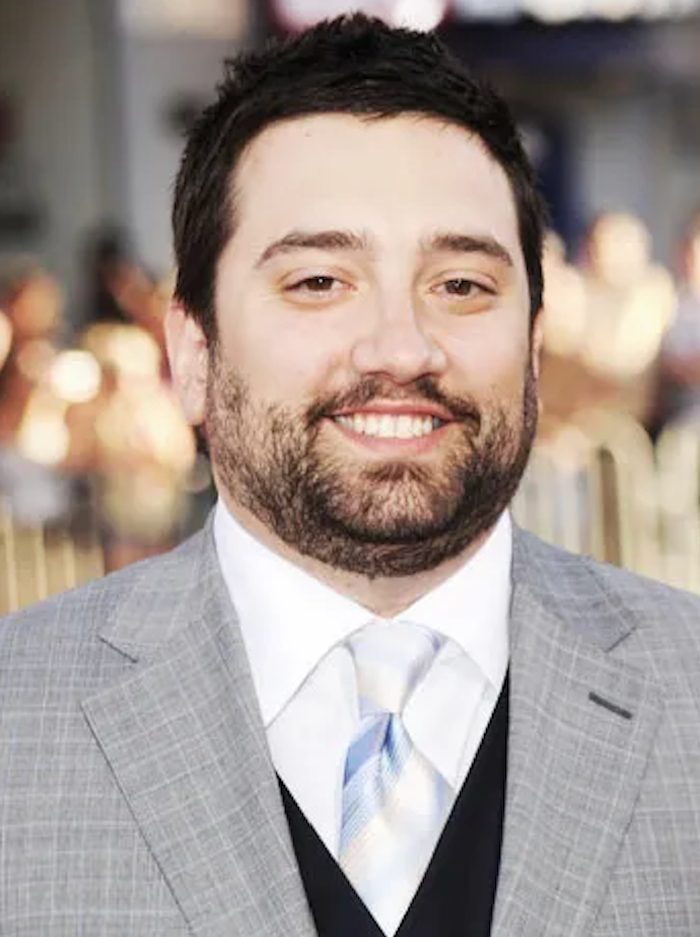
My conversation with the 2008 Black List screenwriter.
Geoff LaTulippe wrote the 2008 Black List screenplay Going the Distance which was produced in 2010 starring Drew Barrymore and Justin Long. Here is my interview with Geoff.
Scott Myers: Were you always a movie fan growing up? What are three movies you remember which had a big impact on you when you were a kid?
Geoff LaTulippe: I was, certainly, but I look back and find that I really had no film “education” until I got to college. I never really had my mind opened up to the wider world of what was available outside my local theater or the shelves at the video store my parents let me rent from, so my cinematic worldview was an almost entirely commercial one. Obviously that’s changed since I was a teenager and I’m now better versed in all types of film (though, just like most, I still have a ton to absorb and learn).
I think there’s a good and bad there. On one hand, I don’t have the near-encyclopedic film knowledge of many of my contemporaries, and as far as I’m concerned, more knowledge is rarely a bad thing. On the other hand, I grew up not knowing too much about individual directors and writers, so I think my influences were less specific. I feel like that’s helped me develop a writing style that’s just unique enough to keep me interesting. And sometimes when you don’t know that you’re doing something that’s considered “wrong” you end up making choices that really shine.
Or so I hope. I leave open the possibility that I’m a total hack with absolutely no clue what I’m talking about. In any event, my three favorite movies growing up were TOP GUN, THE PRINCESS BRIDE and THE SHAWSHANK REDEMPTION. Out of everything I watched — back then and up to today — those always struck me as the most perfect movies of their archetype.
Scott: I’ve read where you come from a family of storytellers. What do you mean by that and how did that type of environment help you develop as a writer?
Geoff: I did, but in a very…colloquial sense, I suppose. My family is just full of lively, interesting people who love to spin a yarn. Our gatherings usually consist of us — and there are a couple dozen people included in that group — eating, then drinking, then sitting around a table recounting old stories and tossing a new one into the mix. We’re a bunch of REALLY different people morally, politically and socially, so telling stories and reminiscing is the way we find common ground.
And absolutely, my family has been a TREMENDOUS influence on me. There’s nothing I’ve written so far that doesn’t have some influence from one or many of them, from a character to a situation to a conversation I might have had. They have a hand in every single creative thing I’ve ever done.
And I can’t oversell this enough: there is not a single member of my family, no matter how many disagreements we’ve had or how different our views are, that has not been in full support of me chasing a dream. Not a single person who ever said, “You can’t do that. It ain’t happening.” Not once. To a person, it’s always been, “Give it your best, we believe in you.” As a writer you need confidence in your ability, and I’ve been lucky enough to have that in spades literally my entire life.
Scott: You moved around quite a bit during your youth: Ohio, Pennsylvania, Colorado, Kansas, back to Pennsylvania, and Virginia. Did all of that travel have an impact on the type of writer you have become?
Geoff: Yeah, without question. First of all, I got to meet people from all over the country and all walks of life. My father sold caskets, and every time he’d get promoted or take a new job, we’d move to where the business was headquartered. I also spent a LOT of time in funeral homes going on business trips with him, which I’m sure has contributed strongly to my penchant for gallows humor. Also, now that I think of it, my dad was probably using me to establish good relations with his customers. “Look, I have a kid, and I love him so much I take him to work with me! Aren’t I the kind of guy you want to buy your caskets from?” My dad always was savvy like that.
So there’s that aspect to it. There’s also the fact that, wherever we went, I was constantly meeting new people and making new friends. It made me pretty adept socially — I can function in just about any setting with relative ease. That’s made it easier for me to establish business relationships, and I’m sure it’s helped me land/hold onto a writing gig here or there. But most importantly, it taught me to listen to people, to learn about them, to take something away from an interaction above a surface level. That, more than anything, I think, has helped me in my writing — getting deep into certain characters and how they think, how they talk, how they are. It was an invaluable accidental education.
Scott: Do you think spending so much time around funeral homes and that proximity to death influenced your world view and creativity?
Geoff: It was a massive influence. My father was very, very deliberate in communicating the finality of death to me and what it meant for the time you have on this earth. Really early on, I remember him telling me, in so many words, that if there was no death, then life wouldn’t be important and you wouldn’t learn anything from it or ever feel anything. Years later, this near-exact sentiment ended up in an episode of SIX FEET UNDER, so I think it must be something that people in the deathcare (I fucking HATE that word, but it is what it is) industry either believe or are taught to project.
In any event, that’s become a core life lesson for me, and I think about it whenever I’m writing. Death is inevitable, but living life is a choice. I’m always interested in how my characters respond to that given their unique situations.
Scott: You went to James Madison University in Virginia. Did you taken any writing classes there? Any lessons from your collegiate courses you carry with you as a writer today?
Geoff: Many, and many. I took a couple screenwriting classes, a couple playwriting classes, and some film studies classes. Also as many English and Philosophy classes as I could cram into my schedule.
Of all the writing lessons I learned at JMU, the one that always helped the most was: read your lines out loud. Or have some friends do it for you. Dialogue that sounds AWESOME in theory can be TOTAL SHIT in execution, and it’s important to figure that out. I’ve often patted myself on the back for a line I thought was perfect only to hear someone say it and immediately want to kill myself.
Between that and learning that having a thick skin is beyond important and that criticism makes you better, I left JMU, I think, with the right attitude and some great practice under my belt.
Scott: At some point, you moved to Los Angeles and worked as a script reader for several years. How did that happen and what was that experience like?
Geoff: I had been floating ever since college, thinking that I needed to save up X amount of dollars to move to LA “just in case something happened”. I languished trying to do that. Then one day, as I was working in chemical lawn care, I’d had my fill.
I’d had an offer from Luke Ryan, then the Story Editor in charge of readers at New Line Cinema, that if I wanted to move to LA and read scripts, the option was open to me. I had NO idea how both legitimate and miraculous this offer was, so I waffled on it for months longer than I should have. Luke and I knew each other from an online screenwriters’ message board back on the old Yahoo! Groups, and he really took me under his wing as he started in the industry. I bet you couldn’t count on twelve hands the number of careers in movies Luke has had a major hand in, and I’m definitely one of them.
So in April 2004 I quit my lawn care job on a Monday, and came to LA that Saturday. Then I read scripts until I sold my own script in 2008.
Scott: Every writer I’ve ever talked to who had a stint as a script reader has told me it was an invaluable learning experience. What are some key things you learned from your time as a script reader?
Geoff: Is there a word stronger than invaluable? For myself, I would use the word “essential”. Outside of some classes at JMU and reading scripts on my own, being a reader WAS my education as a screenwriter.
By leaps and bounds, the most important thing you learn as a reader is what separates a bad script from a good script and a good script from a great script. I read probably 5000 scripts in my four and a half years as a reader, and I absorbed everything I could consciously and God knows how much subconsciously. The bad scripts drill into your head the things you should NOT do to the point where now, if I’m making big mistake in my writing, I’ll catch it before I’ve cemented it. It’s almost muscle memory. “No no, don’t do that there. That sucks and you know it.”
With great scripts it’s always far more abstract — there’s a feeling you get, like you sense it worming its way into your system. My first week on the job as a reader I read an Aaron Sorkin script, THE FARNSWORTH INVENTION. Even though it was early and even though I knew well who Sorkin was, there was this sense of, “This is it. Right here. This is the apex of talent.” And I rarely got that excited about a script again.
Side note: I Reluctant Passed on THE FARNSWORTH INVENTION, because I was terrified that Recommending it would have cost me my job if the exec hadn’t liked it. Luckily, the exec ignored me and they bought the script. I hope Mr. Sorkin has forgiven me.
I’ve said over and over and over and over again that aspiring screenwriters don’t need to spend money on books and contests and all that crap when it comes to their “education”. They just need to read a ton of scripts, figure out what works and what doesn’t, and then write and write and write. I am living proof of that.
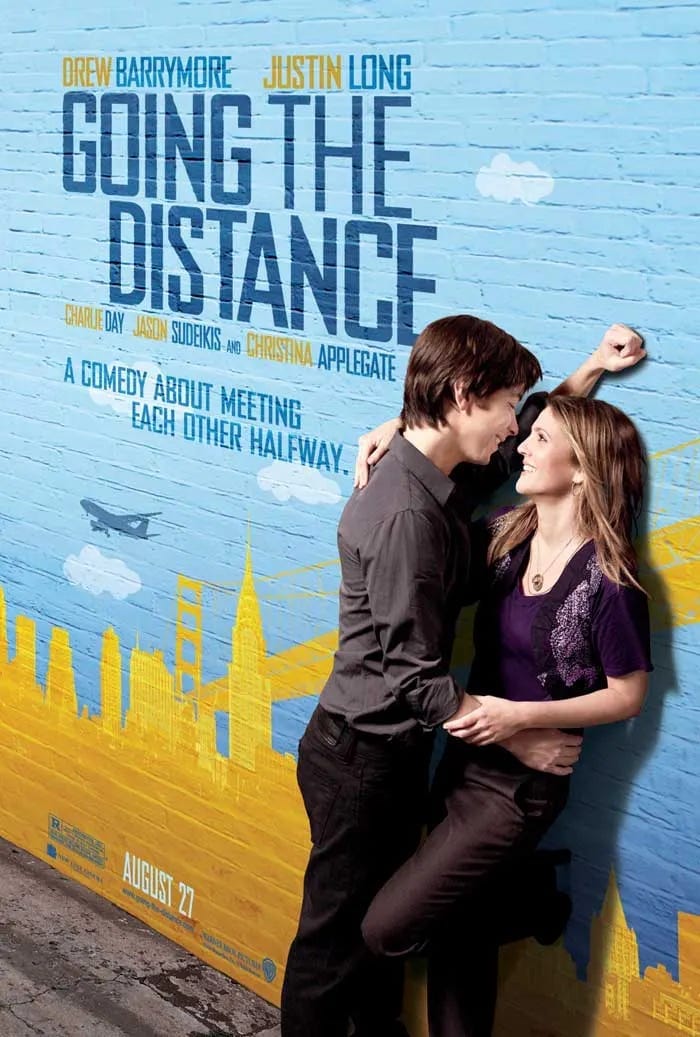
Scott: Let’s talk about the movie Going the Distance which made the Black List in 2008 and was produced as a movie in 2010 starring Justin Long, Drew Barrymore and a slew of great comic actors in supporting roles. Here’s the logline from the movie’s IMDB page:
“A romantic comedy centered on a guy and a gal who try to keep their love alive as they shuttle back and forth between New York and San Francisco to see one another.”
What was the genesis of the idea?
Geoff: This is one of those stories where the Who You Know was just as, if not more, important than the What You Know.
Executive Producer Dave Neustadter was one of the first people I met in LA, and we were instafriends. As it happened, in mid-2007, Dave got out of a long-term long-distance relationship with his best friend from high school. One night, sitting around drinking beers, he said, “You should write this script. There’s so much to be mined from this concept. I have a billion entertaining stories.” At the time, I was actually reading so many scripts that I’d abandoned all hope of writing one of my own. But Dave and I hashed out a rough idea, and I combined my own relationship failures with his, and in Summer 2008, I finished it. We spent a weekend deleting and rearranging and streamlining, and then he gave it to Richard Brener that Monday. On Wednesday it sold.
Scott: I’ve read where you said you wrote the script in 3 days, but over a period of several months. Could you walk us through the first draft process?
Geoff: When I first sat down, I had an opening sequence in mind — watching the two leads break up with significant others and then charting the fallout from the immediate aftermath of that when they met each other. From there everything snowballed, and all of a sudden I looked up and I’d written 30 pages.
I walked away from it for a bit, but kept going back and reading it every now and then just to convince myself that I was on the right track. I really felt like I was. And I was about to write more…and the writers’ strike happened.
Now a lot of people aren’t going to believe this, and I can’t blame them, but: it was suggested to me at the time that, though I wasn’t in the WGA, I would be one day. And one thing I could do in support of my future guild brothers and sisters was not work on any projects I had going until the strike was over. So I didn’t. And then, when the strike ended, I immediately picked GOING THE DISTANCE back up, got onto a streak, and wrote another 30 pages in one night.
Then I walked away from it again — mostly because I was very busy reading again, but also because, frankly, I had the luxury to let it breathe a little. Then, one night in July 2008, I was reading one of the worst scripts I’d ever gotten my hands on. It was infuriatingly bad, and I remember throwing it across my living room (literally) and thinking to myself, “It’s time to stop reading other writers’ scripts and finish your own.” That was in the early evening. By 6AM the next morning, I had finished the script, motivated by completely unearned confidence and a primal loathing of bad writing.
I then sent it to Dave with a message that read something like, “I don’t know what the fuck this is. I’m sorry.” And then he called me later in the day — he thought it was great. We went to work finishing it that weekend. And the next week it sold. It’s a batshit crazy story that I’m unbelievably lucky to be able to tell.
Scott: Let’s talk about some of the key characters in the movie. First, there’s Garrett played by Justin Long. If I asked you to describe his character, what would you say?
Geoff: Honestly? He was just a version of me and Dave at the time. Manchildren slowly coming to terms with the notion of real world responsibility and flagging immaturity. I think I imbued on Garrett, though, a good heart at the center of it all; the existence of my good heart is still a hotly debated topic. But I think he was a reflection of where I and so many of my friends were at the time: too old to be a kid anymore, too young to really have grown up yet. I was 28 when I sold the script, and Garrett was originally written as a 25 year-old. He just felt like a guy who was in the same place as me — waiting to find his path, figuring out romantic entanglements as part of the course.
Scott: Garrett is a huge fan of the movie Top Gun. In fact there’s kind of a runner with that movie’s song “Take My Breath Away.” First off, did you include that song in your original script? I mean we all know about the supposed rule not to include specific songs, but it says something about Garrett’s character: He’s a romantic.
Geoff: The TOP GUN stuff was always in there, and as we developed it, we came up with the idea to have his roommate Dan DJ his hookup with Erin; I believe that song was always part of it. And yeah, even though it’s not Garrett putting on the music, the way he plays it off is pure MODERN romance in my eyes. The reason he hangs onto things like a then-25 year-old movie is because he’s sentimental, as am I. One thing that’s always stuck with me from one of my favorite movies, HIGH FIDELITY, is that notion of, “It’s what you like, not what you ARE like.” I think that’s true to a huge degree. And there’s something fun and sort of adorable about bonding over a homoerotic fighter pilot movie.
Incidentally, in the morning, Dan is still DJing the hookup, this time with “I’ve Had the Time of My Life”. That wasn’t originally in the script, but one day it just popped into Exec Producer Michael Disco’s head. It was a brilliant bookend that I wish I could take credit for.
Scott: This idea of Garrett as romantic is underscored when he says point blank, “The only way you can be happy in life is to marry your best friend.” That’s an admirable goal, but on the other hand Garrett’s friends critique him that he’s never really allowed himself to be close to any girl he’s dated up to this point in his life. Do you think that’s in part because he has set the bar so high: he’s got to find a best friend first before he can open himself up like that?
Geoff: That scene was actually ad-libbed by Drew and Justin, and it’s one of my favorite parts of the movie. I’ve met a lot of writers who get really upset that their scripts have been “tainted” by actors going off the literal words written for them, but I wear it as a badge of honor. I wrote something that they dug deep into and found something in. I find that incredibly gratifying. Maybe I’m just conceited.
In any event, I don’t think it’s that specific for Garrett. I think, much like my writing, love is a gut instinct that you have — it’s either there, or it isn’t, and it works or it doesn’t. And until Erin came along, he probably never truly felt “it” before. In the middle of writing this script I thought I’d had my heart broken big time; as it turned out, the relationship I was in was toxic and holographic, and as I adjusted I realized I was better off free of it. A lot of that is there in the script, oddly enough. Because when the script sold and I was making my rounds with studios and production companies for generals, I remember very clearly a female producer saying to me, “So you wrote the girl YOU wanted to find, right?” And I realized, holy shit, that’s EXACTLY what I had done. And so, not to get too metaphysical here, but that’s what I did for Garrett — I drew up a dynamic and wonderfully flawed girl in Erin that would cement that gut feeling for him that he’d never quite found and perhaps never even knew he was looking for.
So maybe he WAS looking for a best friend? Aaaaaaaaaaaaaand I think I’ll just stop giving myself theoretical handjobs now.
Scott: But Garrett does meet a woman who becomes his best friend: Erin played by Drew Barrymore. When we meet her, she’s an intern at a New York newspaper, but she’s in her early 30s which is unusual. Her backstory: She ran off with some guy after high school for several years, giving her a delayed start on life. So my first question regarding Erin: Did you always have that background for her character or is that something you did to adjust to Drew Barrymore taking on the role?
Geoff: Unbeknownst to me, when we attached Justin to the script, he was dating Drew. He gave the script to her, and she, in another ABSURDLY lucky turn (my life seems to be built on those), kind of flipped for it. Since Drew is the kind of actor that gets you a greenlight, we immediately began adjusting the character to her. Originally, Erin had been, I think, 23. Fresh out of college and in her first year of teaching at a middle school. Eventually, it evolved into the character that showed up in the movie. And thank God it did, because that character and her story were infinitely more interesting at the end of the day.
Scott: How did you go about developing Erin’s character? Were you making choices in response to what Garrett would need in terms of a best friend or did she evolve as her own type of character, or perhaps you developed both she and Garrett simultaneously?
Geoff: We had the good fortune to have Nanette Burstein, a very strong female director, come into the fold pretty early on in the process — before anyone was even cast, I recall. And she was one of the first to say, “This is going to work much better as a two-hander instead of predominantly from Garrett’s point of view.” And she was right. And once we clicked onto that, it became…it was never easy, but much smoother to develop the characters against each other and the situation they’d put themselves in. And I think that was always the focus — we need to shine a light on the universality of the situation and just what it is about a long-distance relationship that’s so challenging. And, ultimately, why so many people go through it knowing, on some level, that it’s almost certainly a doomed proposition.
Eventually, Justin and Drew came on, and they were (or had been) in an ACTUAL relationship, and so we further developed based on their experiences and their personal connection. It was a fascinating thing to be part of, because it always felt very, very real.
Scott: You set yourself up with a big challenge in the first act of the story. First, you needed to show Garrett getting dumped by a girlfriend, meeting Erin, hitting it off, setting the timetable — Erin will be leaving to go back to college in 6 weeks — then somehow creating a credible sense that they actually fall for each other, all of that in the first 30 minutes. But you pulled it off. Did that lay out pretty easily for you or did you have to work and rework Act One to get all of those dynamics in place?
Geoff: We did a TON of work on Act I. A ton. But what’s really funny is this: at the end of the day, that ticking clock provided a sense of urgency, and that was what really propelled the relationship forward and likely stoked feelings that would have taken more time to light a fire under in a “normal” circumstance. One of the questions I STILL ask myself when watching the movie is, “Are they REALLY in love, or are their feelings simply inflated by the circumstances?” Maybe it’s a little of both. I think that’s a good thing.
So what it came down to was this: we had two people who were getting split apart, but that wasn’t something either of them wanted — it was simply unavoidable. I thought it was crucial to have them communicate this. And so we actually started from a place where the characters were saying, “I know this isn’t ideal, but there’s too much here to let it go just because we don’t live in the same place.” And I think it’s that detail, that take on their relationship, that allows it to essentially continue to be explored throughout Act II. They say absence makes the heart grow fonder, and I think Erin and Garrett are the quintessential embodiment of that.
Scott: Before we move more into the plot, I want to ask you: Are you a fan of romantic comedies? If so, were there any that inspired you in writing Going the Distance?
Geoff: Not at all. I find the vast majority of them contrived, trite and god-awful, with a few exceptions (WHEN HARRY MET SALLY being an obvious one). Thankfully, Judd Apatow showed up and proved they didn’t HAVE to be that way AND could actually benefit from a guy’s POV. If it weren’t for him this movie probably never happens. I really owe him a beer.
I’ve always said and I hold to this day that I didn’t write a romantic comedy — I wrote a comedy with a romance at its core. That’s a VERY important distinction for me.
Scott: The reason I ask if you’re a fan of rom coms is Going the Distance is unusual in that it’s an R-rated movie. Most rom coms are PG-13. And Going the Distance is not R-rated due to nudity or lots of sex, but primarily due to the language. And I thought that was really refreshing in that both Garrett and Erin, and several of the supporting characters, talk very frankly about everything: men, women, relationships, sex, drugs, bodily functions and so on. I get the feeling when you were writing the script, it was important to you to be as realistic as possible in terms of the dialogue, real people talking real talk about real stuff. Is that right?
Geoff: One hundred million percent. This is how I talked. It’s still how I talked. It’s how a lot of the people I hang out with talk. It’s not sanitized or restrained. It just IS. Again, authenticity was very important to me. And this is what is authentic in my life. It’s not meant to reflect how EVERYONE talks. But it IS played, I think, in a way that you can still identify with the characters, even if you’re not quite as…um, vocally unencumbered as they are.
Scott: Also in that vein, although it’s an R-rated movie, there is a lot of heart to the story. How important was it to you to balance the racier elements in the script with trying to hit on genuine, authentic emotion with the characters?
Geoff: I’m a very, very, very firm believer that the funniest comedy isn’t nearly as funny unless it’s grounded by something real and dramatically centering. At the center of this movie is an all-time struggle: two people who love each other can’t be with one another. There’s so much about that experience that is genuinely heartbreaking.
So why shy away from that? Real life isn’t all laugh beats — there’s pain, there’s failure, there’s darkness. But going from the darkness into the light just makes the light that much brighter. You’re a fool if you don’t use that to your advantage. Authenticity is your friend.
Scott: Back to the plot. End of Act One, the couple — Garrett and Erin — are separated, she’s at Stanford in California, he’s in New York working at a record label, thus the central conceit of the story: a couple carrying on a long distance relationship. Once again, a tricky thing to pull off as a writer because you’ve got two parallel storylines. You use some narrative devices to have them separate, yet keep the relationship front and center. Obviously there are phone calls, Skype calls, texting and voice mail. And they get together every so often either in California or New York. But I also noticed this: Each has their own support group of friends and family, and those subplots are dominated by conversations about the couple. How much of a challenge was it for you to pull off that balance of them being separated for much of the time in Act Two, yet also keep the couple ‘together’ on screen?
Geoff: Well, I think you hit the nail on the head there: the best way of keeping them “together” was to highlight that they were going through this simultaneously and their friends and family were there for support. The trade-off you make there is that there’s really not a ton in the movie that ISN’T about them, so I can understand people wondering, “Jesus Christ, do these people ever talk about anything other than Erin and Garrett?”
So it was more of a metaphorical balancing act than anything — showing clearly that Erin and Garrett have a special place within the groups they spend their time with because of the type of relationship they’re in. If you hit that just right, they don’t need to be splitscreened on the phone every five minutes. They’re living parallel lives. I think audiences understand that.
Scott: Let’s talk about the support groups for both Garrett and Erin. Garrett has two good friends: Dan played by Charlie Day and Box played by Jason Sudeikis. Erin primarily has her sister Corinne played by Christina Applegate. First off, wonderful comedic talent there, so I’m guessing you must feel really good about writing entertaining and unique secondary characters strong enough to attract that level of talent.
Geoff: Every time they cast someone new, I felt like New Line was playing a trick on me. Like, “We got WHO?” And then I felt like I won the lottery.
I didn’t have a say in any of the casting — I just had my head down writing — but I will take credit for putting Charlie on New Line’s radar. Eventually I’m sure they would have come around to him one way or another, but I was constantly begging them to get him the script and watch ALWAYS SUNNY. Luckily, my annoying tenacity paid off.
Scott: How did you go about developing Dan, Box and Corinne? And how important is it for a writer to make the story’s secondary characters, in terms of page count, as real and compelling as the primary characters?
Geoff: There are a couple things here that are important. One, you want to respect them as real characters, not devices used robotically to move the main characters in one direction or another. You have to imagine they have their own lives outside of this script, and you have to convince the audience that’s the case. So, of utmost importance: they have to have a point of view, and it has to be a point of view that an actual human would have. Caricatures don’t work in grounded movies like this.
Beyond that, you just have to make it clear that they CARE about Garrett and Erin. That way, even if their advice is problematic or they fuck things up in some way, you know they’re coming from the right place.
I wanted people to walk out of the movie thinking that these characters were properly-elevated versions of their own friends or acquaintances. Charlie and Jason and Christina and everyone just nailed it so hard. I can’t say enough about any of them.
Scott: There’s a natural evolution to the relationship between Garrett and Erin in Act Two. They start out living apart, then they decide they need to define their relationship: light but exclusive. Then they get together for the first time, followed soon thereafter with the declaration: I love you. So that’s all positive. But things start to get more difficult and increasingly do so in the second half of Act Two, some angry phones, misunderstandings, and a failed bout of phone sex, capped with a big plot development: Erin gets a job offer, only it’s with the San Francisco Chronicle. Was that dynamic — things go easy at first, then get more and more difficult — always in your mind for the overall arc of the couple’s story?
Geoff: Sure, because I think that’s how most relationships evolve, with things going great at first and then slowly regressing to enough that it just doesn’t work anymore. And with our main characters here in a situation that has them struggling from the jump, that’s amplified. Frankly, in a movie like this, that’s the only clout you have to start stacking the tension and force these people to make some decisions about their lives.
It really all comes down to mounting frustrations. It makes you wonder if things would be better if they lived in the same city, or if these two people are just hanging onto something because they don’t want to feel like they failed at it. And if it’s the latter, being long-distance has probably extended this relationship past its expiration date.
So yes — that this courtship would naturally come to a breaking point is the whole crux of the story.
Scott: Let’s talk about the ending. Garrett and Erin agree that Erin should take the job in San Francisco, and the couple essentially breaks up for a period of time. Then at the very end, Garrett shows up having moved to Los Angeles, so while the couple is not officially back together and not living precisely in the same city, the door is open for them to resume their relationship, still long distance, only now an hour away by plane. It’s not your typical storybook happy ending, but again fitting with the tone you’ve had throughout the story, it feels realistic. Did you always have that ending in mind?
Geoff: A huge part of it was that we didn’t initially want the story to have a happy ending — we wanted Garrett and Erin to break up. It seemed the most honest way to end things. Because how many of these relationships actually end up working out? Plus, I don’t think always seeing the couple stay together is necessarily satisfying.
Of course, there was no way the studio was letting this happen. So we compromised with our ending. But we intentionally set up to work as a scenario in which he couldn’t move and she couldn’t move, thus forcing one of them into action if the relationship were to be saved.
(Secretly, I hope they didn’t end up together after all but remained really close friends. It’s the only way I can sleep at night. Otherwise it feels forced to me.)
Scott: What was it like when you found out Going the Distance made the Black List in 2008?
Geoff: I’d be lying if I said it wasn’t something that I hadn’t hoped for. The script had generated a ton of buzz when it went out and it seemed as though it stuck with people, which is something that still boggles my mind. But I’d also be lying if I said I thought it WOULD happen. So when it did, I was over the moon. I freaked out. It was that Sally Field moment — people like my work, they really like it! Or my agent is just amazing at bribing people to claim they did. Probably more the latter.
In all seriousness, for someone who forever doubted (at worst) and wondered (at best) if he had it in him to write a script in the first place, having it recognized in such a way was, honestly, every bit as thrilling as getting the movie made. For one calendar year something I wrote was recognized alongside some of the best writers working in film today. And no matter how spectacularly I flame out of the industry, no one can ever take that away from me. It’s to this day the coolest honor of my life.
Scott: Could you describe the process of how the movie came together?
Geoff: As we developed, we went out to actors and actresses. After we got a couple passes for various reasons, the studio turned to directors and brought on Offspring Entertainment to co-produce. Together they found Nanette. Shortly after that, the studio was looking to do more with Justin after HE’S JUST NOT THAT INTO YOU. He was a big fan of the script and he just seemed completely right for the part (and he was!), so he came aboard. Then, he got Drew interested, and then she came aboard, and shortly after that we got our greenlight from WB.
Scott: Were you on the set for production? What was that like?
Geoff: I spent a long weekend in New York as sort of a courtesy; with so much ad-libbing and freedom on set, there wasn’t a ton to “rewrite” — the cast was really great at figuring out how to toss things up as they went along. I did work a lot on the week of reshoots we did in very early 2010.
Scott: Recently you live tweeted the movie when it played on TNT. I was tracking that and at the end, it felt like that had been a pretty emotional experience for you, sharing the movie with a bunch of folks on Twitter. Can you talk about what that experience was like?
Geoff: There are still times when someone will mention, for one reason or another, that I had a movie made. And most of the time that happens I react like, “I did?” It still doesn’t seem real to me, and I mean that in the most magical possible way.
I was super bummed I didn’t get the chance to be part of the commentary on the DVD — there were so many anecdotes and fun stories to tell from working on it, and I’m still in a perpetual state of delight that it happened at all. So I just felt like sharing that with whoever would listen. In the end, like most things for someone with an ego the size of mine, it was for me more than anyone else. But a few people seemed to have a good time with it too. It was a blast.
I still tear up and have no idea how to react on the rare occasions that someone says to me that GOING THE DISTANCE is their favorite movie. Because I know how precious my favorite movies are to me, and that MY movie is ANYONE’S favorite movie is just an overwhelming concept for me. So doing stuff like live-Twittering the movie helps me to release some of that joy, I suppose.
Scott: Speaking of social media, you’re an active presence on Twitter. You have a blog. And there is the Broken Projector podcast you co-host with Scott Beggs, who is a managing editor of Film School Rejects, an excellent online movie resource. Why are you involved in all of these online platforms and what do you get out of interfacing with the public this way?
Geoff: Well, I’ve already mentioned my ego. I have a lot of opinions. I like to express them. I do so often. I get antsy and weird when I hold things in.
So that’s most of it. But beyond that, I was given a TON of help on my way up. Just hand after helping hand from people who were looking out for me and wanted to make sure I was well-advised so I could make the best decisions for myself. And I feel like there’s absolutely no reason to pay that forward. There’s an entire shadow industry that’s been built up out there to bilk novice writers out of their money for absolutely no return, and that pisses me off violently. So if I can shine a light on it, I feel like it’s my job to do so.
Otherwise, movies are just simply my favorite thing to talk about (after sports, or maybe tied with sports). Anything that gives me an outlet to do so I’m willing to hop on and foist myself upon the world.
Scott: Could you talk about any projects you’re working on now?
Geoff: I’m writing a spec about a specific and historical baseball game at the moment. I’m also in various stages of pitching several projects with different producers and always taking a look at potential rewrites and open assignments. I tend to spark to some really odd stuff, so I always like to know everything that’s out there. I never know what’s going to sink its claws into me.
Hopefully that was generic enough for you. I usually try to say as little as possible about projects until they’re set in stone. I CAN say that everything I’m working on at the moment is a comedy, which is going to be really bad news for the hundreds of millions of people who do not find me funny in the slightest.
Scott: Some craft questions. How do you come up with story ideas?
Geoff: Man, I don’t know if I have a good answer for this. Lots of things intrigue me, and every once in a while a concept just gets stuck in your head and the only way to get it out is to turn it into a story. That seems to be how most of my stuff comes about.
I also just pull from real life a lot. The Everyday is a limitless well from which to draw inspiration. For me, anyway. So if something funny or scary or interesting happens to me, the first thing I think is, “Can I turn that into a script?” Which I think makes me kind of a concept whore, but I’m OK with that.
Scott: How important do you think the story concept is to the overall strength and commercial viability of a screenplay, specifically a spec script?
Geoff: I don’t know if that’s for me to say. There are countless movies that I see an ad or trailer for and think that it’s not for me, but then I end up seeing it and am blown away, wondering, “How in the HELL did you make me care about gay cowboys in circa-1980s Wyoming?????”
I think, all other things being equal, people respond more to great writing than they respond to OK writing about a topic they’re in love with. So, in my opinion, concept is only half the equation. And if a story is really, truly great, you can turn any audience onto anything.
Scott: We’ve talked before about your approach to prep-writing, how you’re pretty adamant about not working up an outline, instead you prefer to write a short story type version of the narrative, then go to pages from that. Could you describe your prep process, why it works for you, and why outlining does not?
Geoff: I don’t even like writing treatments, ideally; unfortunately, I have to deal with them because they’re part of the pitching process. It’s a necessary evil, but it’s not my preferred mode of operation.
Generally, I just start with some scribbled-down notes and a general idea of where I want the story to go and how I want it to end up. Then I just go. I generate my best ideas (or at least the ideas I like the most) on the fly. If I pre-plan too much of a script, I start to feel constricted by what I’ve predetermined and my creativity suffers.
Most of the fun of writing, for me, is discovering MYSELF where the story is going to go. Hell, that’s ALL the fun of writing. Getting to be party to that surprise. If I outline, I deprive myself of that. And then writing becomes a job, and it’s less fun and I’m just not as good at it.
Scott: How do you go about developing your characters? Any specific tips or tools you find yourself using regularly?
Geoff: Mostly, think you just have to be a student of people. If you know people, you will NEVER lack for characters, no matter what genre of script you’re writing. It helps to know unique people, and it helps even more to engage them and peel back their layers.
I firmly believe that the more you have this outlook, the better your characters will be and the more the audience will cling to them. Moviegoers want to have a visceral experience — they want to feel like they know these characters onscreen. So what better way to accomplish that than work from people we all know?
I think one thing that’s focused on WAAAAAAAAAAAAAAAAAAAAY too much is “likability”. Fuck likability. Give me someone who’s bleak and damaged and awful any day over someone who’s just happy and saves puppies. I don’t care if your character is likable — I only care if he or she or it is interesting and entertaining and engaging. That’s all that matters.
Scott: What about dialogue? How do you go about finding your characters’ voices? How can a writer develop their ability writing dialogue?
Geoff: Again, I really think it’s all about listening to how people speak in the real world, and then stylizing it if you need to. Everything you write, whether it’s a romantic comedy or a space alien actioner, is filtered through your experiences in the world. Those experiences, by and large, are FILLED with people. Why not authentically reproduce how they talk, putting your own spin and spice on it?
That’s why I’m a big advocate of having stuff read out loud, even just to yourself. You realize quickly if this is anything someone would ever say in any circumstance. Or not.
As a side note, one of my favorite things to do is think back over passionate debates or arguments I’ve had, and then write down the things I WISH I’d said in the heat of the moment. That makes for some really excellent quips.
Scott: How would you define theme? How important is it? Do you start with themes or do they arise in the context of developing and writing the story?
Geoff: Theme, to me, is the ultimate notion that you’re trying to get across with your story. Love is Hard. Space is Dangerous. Hope is Lost. Whatever it is, you have to ask yourself, “If I had to give it to the audience in one sentence, what would be the POINT of all this?”
The good news is that, in talented writers, I think it comes out organically. It’s not something you have to force. But it IS something you have to consider, or why are you writing the fucking thing in the first place? Why bother?
Scott: What do you think about when writing a scene? What are your goals?
Geoff: Keep. The reader. Engaged. As far as I’m concerned, this is the ONLY rule of screenwriting. However you can do it, entertain the reader. Make sure they can’t put the script down. If you’ve done that, little else matters. If you haven’t done that, NOTHING else matters.
So that’s all I think about: did I just keep my reader wanting to read more. And even then, I only think that at the end of the first draft when I’m getting ready to rewrite and refine. Mostly, I just go, knowing that I’m going to have to come back and fix some of it anyway. But getting something on the page is more important than anything else the first time through.
Scott: What keys do you have to write entertaining scene description?
Geoff: I think scene description should, again, engage the reader as much (or more) than anything. I’ve often had lines of scene description that someone has pointed to and said, “This should be dialogue!” And sometimes they’re right. And other times, I feel like that’s a perfect compliment and I’ve done my job.
Scene description is a GREAT place to talk to your audience, to shape the story how you want it to be shaped in the tone you want it to be taken. As long as you’re not overly showy or melodramatic about it, you’ll catch someone’s attention. Scene description is often just that — description. Why? Have some fun with it. Readers remember that stuff.
Scott: When you finish a first draft, you are faced with the inevitable rewriting process. Are there some keys you have to rewriting your scripts and if so what are they?
Geoff: I let people I trust look it over and give me notes. Then I absorb those and jump back in. My first draft is there to say, “Here are all my ideas. Let me know what works and what doesn’t.” I take that data along with my own feelings and any suggested direction from my creative partners and dive back in.
And here’s the most important thing I’ve learned about rewriting: my job is to decide what notes I think are worth taking to heart and which I think are worth pushing back against. But when it’s all said and done, the best I can do is give everyone what they want in MY WAY. That’s been such a sun challenge on every project I’ve ever worked on where there’s a note that HAS to be addressed. I might not like the direction the note takes the story, but it’s on ME to find a way to solve the problem in a manner that makes ME happy. That notion has freed me up to take a lot of interesting chances.
Scott: What is your actual writing process?
Geoff: All depends on how much work there is and what my deadlines are. I have an office in my apartment, so I work there. If there’s lots of work, I work every day. If there’s not, I take the day off. I like not having any real structure. Keeps every day interesting. And I’m always writing SOMETHING, even if it’s not a screenplay, so I rarely get “rusty”.
Not big on writing to music — just never felt helpful or unhelpful to me. Once I get going I kind of get lost in the words and all the rest gets tuned out anyway.
Scott: What is your single best excuse not to write?
Geoff: Best? I just don’t want to, or I’m just not feeling that I “have it” that day. The former is far rarer than the latter. If I feel like I don’t have it, I don’t push it. I walk away, recollect myself, and try again later. It’ll always come. Sometimes it takes longer than others, but it’ll always come.
Scott: What do you love most about writing?
Geoff: The exploration. Finding the world inside myself and forcing it outside myself. The discovery of what I find there. I don’t know if I’M very fascinating as a person, but some of the things that have come out of me…I’m quite proud of.
Scott: Where do you see yourself in 5–10 years? In an ideal word, what are you doing?
Geoff: Hopefully in a place where I’m considered an interesting writer who takes chances and has something that no one else has. That’s the dream, anyway — to be indispensable.
Other than that, just chugging along, writing things that interest me and producing things that I could never write myself. I’ve got my fingers crossed. Which makes it hard to type.
I might have to rethink some things.
Scott: Finally what advice can you offer to aspiring screenwriters about the learning the craft and breaking into Hollywood?
Geoff: Read every script you can get your hands on. Write until your fingers bleed. Don’t spend any money you don’t need to spend on people who can’t help you get better or put your script into the hands of someone who can because the people who really CAN do those things won’t charge you money to do it. Move to Los Angeles — the chances it’s going to happen for you anywhere else are abysmally infinitesimal. Develop a thick skin — if criticism breaks you, you’re not a writer; you’re just someone who strings words together.
For God’s sake, ENJOY writing. If you’re not doing it in the first place because you love it, you’re never going to do it well. Writing is a lot of things, but it’s never a hobby. You either write with a goal in mind or you’re putting together a really nice diary.
Drink at least occasionally. Not so you can write while you’re shitfaced — so that you have more ridiculous experiences to write ABOUT.
Here is a trailer for Going the Distance.
For my interviews with dozens of other Black List writers, go here.