Go Into The Story Interview: Jonathan Stokes
My conversation with the five-time Black List writer.
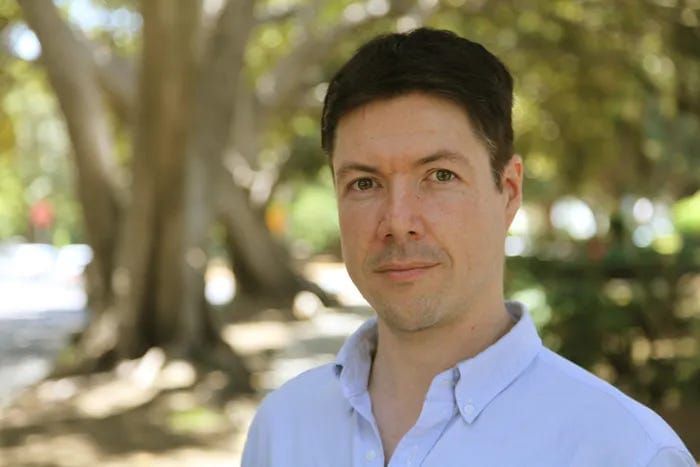
My conversation with the five-time Black List writer.
Jonathan Stokes has written five screenplays which have made the annual Black List. They are:
- Blood Mountain (2011)
- Murders & Acquisitions (2011)
- Border Country (2012)
- Tchaikovsky’s Requiem (2013)
- Murder in the White House (2020)
That’s rarefied air for any screenwriter. He also has produced a fantastic video series I have featured here at Go Into The Story: Raising the Stakes.
Here is my interview with Jonathan.
Scott Myers: Jonathan, you’re not only a screenwriter. You’ve written novels, books, a musician. You play the spoons, evidently, and the saw. I’ve seen that on video. You created some Wiki thing that you sold. It’s amazing. You’re the Thomas Jefferson of screenwriters. You do everything.
Jonathan Stokes: Yes. First of all, I’m going to put Thomas Jefferson of screenwriters on my tombstone someday.
[laughter]
Scott: That comes from a UVA graduate, so that’s the real deal.
Jonathan: Wow, high praise. Hats off to your research department for finding a video of me playing spoons. I think Christopher Hitchens said there’s a relationship between music and writing. Show me a writer with an ear for dialogue, and I’ll show you a writer that had to take music growing up.
Scott: Okay, let’s start all the way back from where you began. I know, at some point, you were living in Connecticut. Did you grow up in the East Coast?
Jonathan: Yes, I grew up in the wilds of Connecticut, 3,000 miles from Hollywood, and wrote my first “book” when I was eight for a writing assignment in second grade.
In my little author bio page of the book, I wrote that when I grew up, I either wanted to be an author, or the guy who puts together dinosaur bones in the museum. I had narrowed it down to those two options. Then, in fifth grade, I wrote my first “screenplay.” It was six pages long, and…
Scott: Is this “Alienators”…
Jonathan: Yes, that’s right. How do you have the time to do this level of research? It’s amazing.
Yes, “Alienators.” One of my neighbors down the street, Seth Grahame‑Smith, directed it. Seth went on to become a very successful screenwriter. We were in love with movies in general and with Spielberg in particular — that spark was there early on.
Then, in my high school, I was allowed to put up plays that I wrote. So even though it was perhaps a handicap to be growing up in Connecticut so far from Hollywood, my school allowed me to pursue writing in a number of different ways. That was a strong asset.
Scott: You went the Claremont Colleges, is that right?
Jonathan: Right.
Scott: Was that in part to get to the West Coast because that’s where Hollywood was?
Jonathan: Not consciously. I knew I wanted to be a writer, but I had no idea what the career path was, or if it was even possible. I majored in philosophy, and my poor parents had to fork over the bill for that. [laughs]
There was no film studies department at my college, but again, I found myself making movies with friends for projects whenever we could. I arrived in Hollywood with absolutely zero knowledge, connections, or possible hope of launching a writing career. No game plan.
Scott: This would be the question probably for 90 percent of the audience here. They’re going, “OK, Claremont Colleges, philosophy degree… how’d the jump to Hollywood happen?”
Jonathan: In the most serpentine, inefficient way possible. I believe the best career advice I could give is to take whatever I did, and do the opposite. [laughs] Where ever I zig, you should zag.
When I graduated, I thought maybe if I go into finance and save a lot of money, then I could become a writer. With this half‑baked plan, I moved to New York, went into private equity, and worked in venture capital and leveraged buyout.
It was an amazing time to work in that field. I worked with brilliant people, but even though I was working 90 to 100‑hours a week, I would still be writing short stories on a Saturday night. It was a signal to me that I was serious about writing, and that I should stick with it.
My goal was to save $100,000, quit, and move to Hollywood. Working in Venture Capital, I accomplished this by the time I was 23. If this sounds like a self-aggrandizing story, stick with me, because the protagonist is about to hit obstacles…
I quit my job and started the road trip out to Los Angeles with my two best friends. By the time we reached Chicago, the NASDAQ had crashed, and I’d lost half of my net worth. [laughs]
By the time we reached Los Angeles, it was deeply unclear if I should just turn around and drive back home. My whole skill set was in financial analysis, which was now useless because A) I was in Los Angeles, and B) the market boom was over.
I was unemployable, and owed thousands of dollars in taxes to the IRS. That was my humbling start to moving to Los Angeles. I thought that I had three or four years of savings with which to write, and in the end, I had maybe six months of runway.
Scott: But you learned the true meaning of plot twist.
Jonathan: [laughs] The hard way, yes.
Scott: Where does improv fit in? You did some of that, too.
Jonathan: Yes, in college, I was a member of the improv group at the Claremont Colleges, and a number of those folks went on to become terrific writers like Wendy Molyneux has won more Emmys than I’ll ever see in my life.
I did UCB in New York, and I did Second City and Improv Olympic out in LA. That was a fantastic writing education because all of the rules of improv are the rules of writing, as far as I can tell.
“Start in media res,” “assume information,” “establish a relationship in two sentences,” “establish hierarchy in a relationship,” “use truth in comedy,” “follow the shiny object…” Every rule that you’ll learn in improv is an incredibly valuable rule in writing, but you’re learning it on stage in front of an audience through trial by fire.
When you violate one of these key rules, you pay the penalty instantaneously with a silent, bored, or confused audience… Whereas if you break a rule when you’re writing a script, it might take six months for you to figure out that you’ve made a mistake. [laughs]
When you’re flailing up on stage because you’re asking too many questions instead of “assuming information,” you feel that burn instantly.
Scott: I did what could be charitably called “stand‑up comedy” for two years. Whatever it was, I made a living doing it. You’re exactly right. There is an immediacy of learning that happens when you do stuff on stage that you just can’t replicate when you’re in a room writing.
You can gather that knowledge, and hopefully, it shaped your writing, but boy, yeah, it’s nothing like dead silence when you do a bit.
Jonathan: You made a living at stand‑up…
Scott: It was just an absurdly dumb act. It was during the ’80s, during the Reagan era. My persona was Scott California, a hedonist and materialist. I did all these songs “Yuppie Love,” “Hot Tub Club,” “A California Kinda Guy.” Making fun of the whole 80s consumerism thing. It was like Steve Martin on a bad acid trip. Enough about that.
You’re in LA. There’s a crash. Did you stay in LA even with your limited resources?
Jonathan: Yes, I would say I learned about poverty as much as a college‑educated kid in America can experience poverty. My first year in LA, I had to negotiate a payment program with the IRS. I was driving in a 1988 Toyota Corolla with three bad rotors, and then got cut off at an intersection by a 16‑year‑old driver, totaling my car. I had no way to get to my temp job to pay my rent, and so I went deeper in debt to lease a car…When you’re poor, it’s really easy to just get increasingly poor. It’s hard to climb out of that cycle.
I learned that shampoo is cheaper than shaving cream, so I would shave using my shampoo rather than the shaving cream. I survived on 99-cent Trader Joe spaghetti. I lived in a three‑bedroom apartment in Silver Lake with four roommates, and just lived that chaotic, impoverished lifestyle for a lot of years.
Scott: If I’m looking at it, you’re saying you moved out of 2000. Now, I’m sure you had some successes as a writer between them, but your first Black List script was 2011. That’s a decade. How long did it take you to find your footing as a writer?
Jonathan: I did everything wrong. I had no connections. I wrote 30 screenplays before I sold one. I spent years writing hundreds of sketches for Second City and IO — literally hundreds. I was in five different sketch groups, and it took me years to figure out that there was no career in sketch comedy.
The only show at that time that you could get hired to write sketch comedy for was “SNL”, and I still don’t know how you get hired on SNL. I was also writing thousands of pages of poetry, stuff that had no commercial value.
Scott: Was that just out of self‑expression? The poetry part?
Jonathan: Yes. I was also writing tons of short stories, novellas. Again, stuff with no commercial value. I think I was just writing out of a sense of passion and joy rather than thinking about it through a practical lens.
I just needed to be beaten down by adulthood, perhaps, before I started to figure out that I need to put food on the table. Instead of just thinking of a crazy experimental screenplay idea and going off and writing it, I needed to get more practical about, “Is there room in the marketplace for that?”
There was a real turning point for me at age 27 when breaking in started to become more inevitable. I could talk about that, if you like.
Scott: I’d like to get to that, but could I ask you a question?
Jonathan: Yes.
Scott: How many times during this bleak period of time did you say, “I got to bag this?” What was it that kept you going?
Jonathan: When I worked in finance, my boss — the most amazing boss I ever had in my life — shook my hand one day and said, “We’re making a gentleman’s agreement. We’re going to pay for you to get your MBA at NYU. In exchange, when you graduate, you work here as an associate for at least two years, and you’ll profit‑share on any deals you do.”
So I knew that by age 26, I would have solved the money problem. This was a $1 billion private equity company, and the deals I was working on were minimum $50 million deals with 20% carries. I could reasonably expect to make several million a year. I knew in that moment that chasing money was not going to do it for me, and that I wanted to pursue something different or harder perhaps.
I don’t think I fully appreciated that by choosing screenwriting I was choosing, perhaps, the most competitive job on the planet. I don’t think I anticipated just how incredibly difficult this career path would be.
I just knew that — whether I succeeded or failed at writing — I felt that choosing that path would be honorable.
Scott: This gets into Joseph Campbell territory, doesn’t it a little bit? “Follow Your Bliss.”
Jonathan: Yes.
Scott: I had a similar thing. I was going to graduate school, got a master’s degree. I was going to get a Ph.D., but I played music. I said, “I’ll take a year off because I’m really passionate about that.” That led to everything else.
Isn’t that interesting how it’s not the easiest path? Like Campbell says, “If you stumble upon a path, it’s probably not yours. You’ve got to create your own.” It’s authentic. It’s genuine.
Jonathan: What instrument do you play? I have to know.
Scott: Guitar. I wanted to be Jackson Browne. Then I found out there was Jackson Browne. I did a gig in Ventura, California once. A guy came up to me afterwards and said, “Wow. That song before the last song you played there, what album is that on?” I said, “It’s not been recorded.” “No, what Jackson Browne album was that on?” I had so replicated Jackson Browne I wrote a song that this guy thought was a Jackson Browne song. I said, “That’s about as far as I can go with that.”
Jonathan: [laughs]
Scott: That’s how I segued off into stand‑up comedy. Anyhow, it’s that whole point about…I tell my students all the time, the beginning of my first class, the final thing of the last class. I remind them: Follow your bliss.
I say, “You may not take anything else away from any of these classes, but find the thing that you’re passionate about, that enlivens, that brings you joy, that you have a talent for, you feel like you can share with the world.”
It doesn’t have to be a vocation. It could be an advocation. It could be anything. As long as you’re passionate about it, do that in your life, because that’s the path toward an authentic existence. If we’ve got one shot, why not? What else is a reason for living than to do something that you can bring meaning and joy to your life?
When I asked you what kept you going, it sounds like you said, “Well, I could always go do that, but that would slay me psychologically to go do the money path. I couldn’t do that.” Is it fair to say that that’s almost like a negative reinforcement, like, “No, I’m going to stick this out, because I know that that’s not the path for me”?
Jonathan: Absolutely. I had seen “American Beauty.” I saw Kevin Spacey wake up one day, and discover that he was 40 years old, and that he hated his life. My decision to quit finance, despite all of the rewards of finance, was really, really easy because I didn’t want to be Kevin Spacey in American Beauty. [laughs]
Scott: Let’s jump to this. You’re 27, you’ve talked about this break‑in moment. I’d be curious ‑‑ I’m sure everybody else would ‑‑ what was going on there?
Jonathan: I didn’t break in. I broke through. [laughs]
Scott: Broke through? OK, breakthrough.
Jonathan: The breakthrough. I don’t know how to tell the story succinctly.
I was 27, and I was becoming very embittered thinking that maybe screenwriting was not a meritocracy. I knew incredibly talented people who were gods of improv in LA, and they were driving a milk truck at age 44.
Meanwhile, I saw people that I felt were not as talented becoming very successful.
I felt like my writing was strong, but I wondered… do we live in a fair and just universe in which talented people are recognized? I really grappled with this.
Then, I got a temp job at the ArtCenter College of Design in Pasadena. I was a stenographer during the eighth term reviews for the graduating photography students. This was their last chance to get crit from their professors.
The three department heads doing this crit were outstanding in their field: one was a National Geographic photographer, one was a New Yorker editorial photographer, and one was a wildly successful commercial photographer.
These three professionals, despite having completely different sets of expertise, could open up a student’s “book” and within three seconds unanimously arrive at a conclusion as to whether or not this photography student had the goods.
This blew my mind because it suggested that maybe there was meritocracy in art. The professors were incredibly generous, and would take me with them to the faculty cafeteria every day, where I could bombard them with questions.
ArtCenter is the Harvard of art schools. I wanted to know, “Out of each class of 20 students — how many will become professionals?” The professors said, “One.” I said, “Can you tell which student it will be?” They said, “100 percent. And you can, too, if you come back next week…”
I came back the next week, and sat in the back of the room as the students came in for their “live crit.” 19 of the 20 kids would show their work, and the professors would say, “We notice you’re only shooting natural light. We’ve got $3 million worth of lighting equipment at this school. Why aren’t you using any lighting equipment? What images are you looking at? What art exhibits have you been to recently?” And 19 out of 20 kids would have lame excuses… “Well, you know, I broke up with my boyfriend, and I’ve just been really stressed, and I just haven’t had any time.”
Then one out of the 20 kids would come into the room on fire. They’d turn in twice as much work as the curriculum required. They’d know every photographer, every camera, every light. Every museum exhibit, every magazine, every photography book. 1 out of the 20 students lived and breathed their art. It was so obvious. There was meritocracy.
From that moment on, I feel like I overcame my bitterness, and I redoubled my efforts. I spent every possible hour sitting on the floor of Barnes & Noble’s until I had finished reading every single screenwriting book. I couldn’t afford the books, but nobody at Barnes & Noble ever hassled me as I read them for free. I will be a loyal Barnes & Noble customer until the day I die for that.
I watched every movie with a stopwatch and a notebook, writing down all the story beats. I went to the woodshed, and I started with Aristotle, and went through everyone from Georges Polti, to Lajos Egris, to Pen Densham, to Michael Hauge. I made it like my own private PhD.
If you want to be a well-regarded expert, like a doctor, we accept that you’re going to need 10 years of schooling, and residency, and sacrifice before you have any right to puncture someone with a scalpel.
If you want to be a valuable lawyer, we accept that it takes a decade of law school, clerkships, the bar, and working your way up in the firm, before you’re considered an expert.
When it comes to screenwriting, we have these unrealistic expectations of overnight success, or even overnight competency. Every few years a 22‑year‑old will sell a script out of the blue, but that’s the exception that proves the rule. One should expect to put in at least a decade of sweat equity before mastering a craft.
Arnold Schwarzenegger talks about he would never go to the gym and dread a workout. He would go to the gym with a smile on his face because no matter how much pain he pushed his body through, he knew he was getting close to his goals.
I just started taking pleasure in the suffering. In finance, you don’t question working 90-to-100-hour weeks. I took that work ethic into writing. Even though I had a day job as a piano teacher, I just made it my mission that I was just going to put in the hours, and if I never broke in as a screenwriter, that’s OK because piano teaching is an honorable job.
I was content to just spend the rest of my life writing my ass off with screenplays, whether or not it ever paid me a dollar. I just made it my mission just to write with every spare minute that I had.
Scott: That’s terrific. We should just quote that, put that there because it’s so valuable. You’re right. When the spec script boom hit in the ’80s ‑‑ and that’s when I broke in ‑‑ there was this whole cottage industry. You may remember, Jonathan, these websites and people. “Learn the secrets of the million‑dollar spec script.”
There was this sense that, “Well, it’s easier than a novel. It’s only 100 pages.” People have unrealistic expectations. You’re right. It’s incredibly competitive. That’s such an inspirational story. I love the whole thing about the photographers. That’s so great.
Were you writing screenplays at this point? Have you just decided you’ve done sketch writing, poetry, short stories, novellas, you’re focusing on screenplays and feature films, that sort of thing, right? Is that is that where your focus was?
Jonathan: Yes, like you, Scott, I have too many hobbies. At age 27, I decided, “You are allowed only five pursuits: writing, reading, music, dance, and the stock market. Those are the five things I allowed myself.
No matter how much I wanted to become good at archery, or juggling, I just had to put that off. I competed in ballroom for a good 12 years there, which split my focus a little. But otherwise, I went all-in on screenwriting.
I pictured Hollywood as having this castle wall around it, that I needed to break through. Now, I have friends who have made the mistake of chipping away at one corner of the wall for six months and then thinking, “Well, that’s not working. I’ll go chip away at this other corner on the other side of the wall.” Then six months later, “Well, that’s not working. Let me find another brick to chip away at.” It dawned on me around age 27 that I needed to just pick one wall, and then never stop chipping.
Scott: Let me ask you because you mentioned this earlier, and having come from a background of finance this might have had some influence about the viability or marketability. It’s let’s just get an idea, and go write a screenplay.
Did you start thinking because if you look at the projects you’ve sold, the movies you’ve made, The Black List scripts, most of them have what you could, at least an identifiable concept, if not a high concept? How much of that was coming into play during this period of time where you were writing stuff, or you’re thinking, “OK, I’ve got to be cognizant of the marketplace?”
Jonathan: It still took me a few years, and it’s still something I’m working hard on because I will get a bug up my butt to go write some crazy Charlie Kaufman‑esque experimental story that has limited chances in the marketplace. But those are often the movies that get us the most excited.
When someone makes a movie like “Everything Everywhere All at Once”, that’s completely left‑field, it’s so inspiring. A “Pulp Fiction” or a “(500) Days of Summer” that breaks all the rules in just the right way. But you have to be very lucky to break-in with a script that is so left-field.
Scott: I was just thinking that.
Jonathan: I have had to try and discipline myself to write things that are a little bit more down the middle because I didn’t want to piano teach forever. I love piano teaching, don’t get me wrong, but it was a struggle to make ends meet.
I would take odd jobs on construction sites, digging ditches and hanging drywall. I had to take bartending gigs, all kinds of horrendous jobs that I’m not qualified for. Being poor is an incredibly stressful existence.
I think that there’s been a lot of talk about diversity in screenwriting in the past few years. Of course, we should have those conversations, but from my perspective, the biggest issue, and one that I have no solutions for, is income diversity. I feel like 90 or 95 percent of the screenwriters that I am friends with had a big financial safety net. Their parents subsidized them so that they could survive that silent decade before breaking in.
That was what was so challenging for me about breaking in. It’s exhausting to work a day job, and then feverishly write all night. Poverty itself is incredibly exhausting. When you get that parking ticket or your car is towed, it sets you back for months when you’re living hand to mouth. [laughs]
Scott: Did that influence your thinking? There’s always that debate. You mentioned the Charlie Kaufman‑esque story or (500) Days of Summer. I know those guys (Scott Neustadter and Michael H. Weber). They said, “We’re going to break every rule. We don’t care. We’re going to write what we want to write and how we want to write it.”
It seems like if you literally are struggling with paying parking tickets, the car gets towed, you’ve got to be thinking marketplace. You’ve got to be thinking of buyers. Where is that balance? How did you do that? If you look at The Black List scripts, as I say, each one of them’s interesting in itself.
“Tchaikovsky’s Requiem” is not something that you would necessarily equate with a mainstream commercial movie, and yet you can look at it, and you look at the plot description, you can say, “Yeah, I can see that as a movie.” How did you balance that out in terms of the marketability versus wanting to write stuff that is emotionally satisfying to you?
Jonathan: That’s a great question, Scott, and one that I will spend the rest of my life trying to figure out. I don’t have a smart answer.
When I write something like “Tchaikovsky’s Requiem,” which is wildly unmarketable because it’s the real‑life murder mystery of a Russian composer who died 150 years ago — it doesn’t sound very marketable to me. But at least it’s a movie idea that you can explain in one sentence.
I do believe that when you’re going to the multiplex with your buddies on a Friday night, debating what movie you want to see, the person who wins that debate does it in one or two sentences.
“It’s Tom Cruise, and it’s fighter planes, and there’s incredible action sequences.” [laughs] “Yeah, that sounds like a fun Friday night.” So if you’re writing something left of center, but can still explain it with an exciting one-sentence hook, then maybe it has a shot at market viability.
Scott: I know Daniel Kunka, and he’s got the six‑word test. He says, “I need to be able to reduce it to…” He’s got this movie that’s being shot right now with Netflix called the “Lift,” which is about a heist that takes place in an airplane.
Jonathan: Wow.
Scott: Literally, I think he said it was even three words. It was like, “Gold airplane,” or something like that. “Gold airplane robbery.” Do you know what I mean? Is that it for you, like, “OK, it’s the guys in the parking lot. They’re trying to decide what movie they’re going to go to. I need to be able to come up with a story idea that I feel would work in that environment”?
Jonathan: You’ve expressed it far better than I did. There’s that Marshall McLuhan line that Americans prefer variations on things they’re already familiar with rather than anything that’s actually new. I think that new twists on familiar ideas are easier for us to latch on to than things that are completely brand‑new.
Scott: I’ve written about that in the blog: Similar, but different. Precedent and analogy in Hollywood. There was “The Great Train Robbery” in 1902. Then, in 1903, they made “The Great Little Train Robbery,” which was a train robbery done with little kids and smaller trains.
[laughter]
Jonathan: Now, Daniel Kunka’s doing it in an airplane.
Scott: Exactly, in an airplane. I think they’re more comfortable with that, too, because it’s such a fear‑based business. “OK, it’s like this that was successful. Therefore, I could go into my boss and pitch it.”
Jonathan: Yes. The time to do your crazy outside‑the‑box idea now is in television. The time to do it in film was the 1970s, the 1990s, or maybe the earlier days of Netflix.
Right now, I think it’s a very frightened Hollywood environment given the market crash and layoffs. They’re probably not going to take crazy risks right now.
Scott: What was the first script that, “OK you sold it, and now you can get your car out of hock?” Do you remember what that was?
Jonathan: Yeah. The second screenplay I ever wrote, I had optioned. I had this initial taste of success followed by just astonishingly bad luck for a decade, more than anyone I know, honestly, Scott.
There’s probably a lot of screenwriters who would claim this, but my ratio of screenplays that were about to sell, but didn’t, or about to go into production, but didn’t — it would just bring tears to your eyes. I guess what you’re asking is, how did I break in?
Scott: Right.
Jonathan: I had an agent and a manager for five and a half years who had never sold anything, and a good actor friend basically staged an intervention for me, took me out to dinner, shook his head at me and said, “Dude, why are you still with them? I won’t stay with a manager for more than three months if they don’t make me money.”
I’m just a guy from Connecticut, and loyalty matters to me. It terrified me, the idea of firing those reps. I thought: “no one will ever love me again!” When I let them go, I sort of gave up and thought, “Well, I’ll just be a piano teacher for the rest of my life.”
But as soon as I fired them, the phone started ringing. Execs around town knew my work and spread the word that I was on the market. New agents and managers started calling. Here I was, teaching piano lessons, with $11,000 in credit card debt, and CAA and UTA were suddenly vying to sign me. I was trying to make time in my piano teaching schedule to take these agency meetings.
I went with UTA and finally started selling scripts. But I didn’t quit piano teaching for a year and a half because I was so afraid of poverty. I had PTSD. [laughs]
There would suddenly be these situations like flying to Philadelphia to meet Will Smith for a project, and I’d have to call my piano student’s parents and tell them I was sick and had to miss this week’s lessons.
After a year and a half of this, my agents sat me down and said, “You’ve got three open writing assignments coming due, and you’re still teaching middle C position to second graders. This is getting ridiculous.” They finally convinced me to give up the piano students. That was a big step — I was convinced that the day I gave up my piano students is the day the phone would stop ringing.
Scott: That probably speaks to your poverty experience, right?
Jonathan: Definitely.
Scott: You didn’t want to put yourself in that position again, but I’m assuming that you’d had at that point several scripts that were filtering out, people would have been reading them elsewhere. UTA is not going to be coming after you. They see someone who’s got not only a talent, but also the process is prolific, persistent. It wasn’t just one script that attracted UTA’s attention.
Jonathan: Yup. Like I said, I wrote 30 scripts before I sold one. In my signing meeting with UTA, they laid out a whole strategy. They said, “First, we’re going to sell this script, and then on the heels of that, we’re going to go out with this next script.” They executed. I signed, and five days later, they sold “El Gringo” to Joel Silver.
Then, they timed the Deadline announcement for 20 minutes before my first general meeting with the vice president of Warner Brothers. Just so that when I walked into his office, he was able to say, “Hey, I just read about you in “Deadline.”
This built momentum for the next script. I had this war chest of screenplays that were gathering dust in the closet. I think there were something like four sales my first year at UTA because I had this massive back-catalog. [laughs]
Scott: Now, let’s talk about The Black List because there are few people like Neustadter and Weber who have made like four times. Daniel Kunka has made it ‑‑ I think ‑‑ three or four times. Brian Duffield, maybe three times. There are people who’ve made it, but I’m not sure anybody has made The Black List five times. You might be in The Black List Hall of Fame, as far as I know.
[Editorial note: Scott Neustadter and Michael H. Weber have made the annual Black List five times: 2005, 2006, 2008, 2009, 2012]
You made an interesting comment in an email. You wrote: “It’s so random to me which of my scripts ended up on The Black List. I guess it’s just a function of what happened to go out to a wide audience. I think if I had to name my top five scripts, only one of them is on The Black List.”
Like you’ve had five scripts on The Black List, and everybody in Hollywood who’s a screenwriter would ‑‑ not die, but metaphorically, to have one script on The Black List, and here you’re like, “Well, you know, actually only one of those scripts is one is really one of my favorites.” Maybe you can unpack that a little bit.
Jonathan: Now, I’m worried that it sounds incredibly snotty when I say that. How do I unpack that?
The scripts that have any shot of getting on The Black List have to go wide to the whole town… This means The Black List tilts toward newer screenwriters, as it should. Once you’re established, there’s not a huge reason for everyone in town to read you because they’ve already read you. So, the longer you’ve been a screenwriter, the harder it is to get on The Black List again. I think this is only fair.
Now, I’d like to imagine that my writing skill is improving over time. Yet, as my screenplays grow stronger, my odds of being recognized on the Black List get lower. Thus, my absolute best screenplays are not among my five on the Black List.
I think I have done a lot of my best work on Open Writing Assignments. And those scripts, by definition, are not shown all over town. So some of the scripts I am the most proud of have only been read by two or three executives.
I love the fact that The Black List exists because it, I think, is a very pure way of recognizing the work of singular authors. There are scripts that can win Oscars that had 10 different writers on them, or maybe represented the vision of the director more than the writer… whereas The Black List is very pure in that you’re actually recognizing the work of one authorial voice.
Whether or not that script ever wins the lottery of getting produced, getting a little bit of recognition for the craft on the page is invigorating and rewarding for so many screenwriters.
Scott: That’s a really interesting take. I’ve never heard that, but it makes so much sense. You’re right. In some respects, The Black List does represent, probably, the best single way to honor that singular vision of the writer.
They say that making a movie involves…it’s a collaborative effort. No matter what the screenwriter brings to bear on it, it can get, hopefully for the better. That’s an interesting take on that. I like that. That’s very insightful.
What about these books you’ve written? “Addison Cooke and the Treasure of the Incas,” “Addison Cooke and the Tomb of the Khan,” “A Thrifty Guide to the Ancient Rome,” “A Thrifty Guide to the American Revolution.” When does all that pop into existence?
Jonathan: I always wanted to be an author, and I loved being a teacher for many years. I taught in public school, and I taught piano. The Thrifty Guide series is a way of marrying my love of teaching with my love of history, with my love of comedy, and my love of writing.
As for the Addison Cooke series, that is me accessing my love for Ferris Bueller and Indiana Jones and the 1980s movies that I grew up on. I get to scratch completely different itches writing novels from writing screenplays.
In a screenplay, all of the work you put into the prose will not necessarily end up on a screen, or even be read. It might be skimmed over.
In the novel that stuff counts for a lot! If you can come up with a vivid description or a funny wordplay, that actually scores points on the page of a novel. [laughs]
A novel is much closer to being a single authorial voice, whereas the screenplay is very much a team sport. You are still working with an editor, and I’ve learned that you don’t have complete creative freedom in publishing unless you’re, I don’t know, J.K. Rowling. But it’s still a pleasant development process.
In screenwriting, a screenwriter is eminently replaceable. Hence, you might be 1 of 17 screenwriters on that pipeline before the movie gets made. In the book world, you’re more akin to the director; you’re kind of unfireable. The way in which they approach note giving is very much…They’re not trying to get you to service their vision. They’re trying to service your vision. It’s a completely different experience.
I love the collaborative nature of screenwriting, but the introvert side of me also loves the singular voice that I get to express in my novels.
Scott: I want to talk to you about your video series, which is terrific, “Raising the Stakes.” What was the inspiration for that?
Jonathan: Thank you. The next season is out now!
Scott: If only there were a blog that could promote your videos…
[laughter]
Jonathan: Thank you. I’m so pleased you connect with them. It means the world to me.
Scott: Terrific.
Jonathan: I appreciate it tremendously because I’ve learned so much from your blog over the years. I so sense a kindred spirit in the way that you geek-out over story structure, and the way that you and I both worshiped at the altar of Joseph Campbell.
The video series in a catastrophically poor use of my time, but I love doing it because I love story structure. It’s what I live and breathe. It’s one of the great passions of my life — being a student of story.
When I start to get cocky and think that I really know what I’m doing, I’ll read some new screenwriting book that gives me a completely different perspective on this ever‑evolving craft of ours, or I’ll watch some new TV show that brilliantly violates some rule that I had fixed in my mind.
I’m doing the video series to — in my own tiny way — be a part of the conversation as we all try to figure out story structure together in this ever‑evolving discipline. I want to explore. There’s something called the Sapir‑Whorf hypothesis, which says that if you have a vocab word for a concept, it’s easier to grasp the concept. It’s hard to experience nostalgia if you don’t have a word in your language for nostalgia. I think that there’s a lot of screenwriting concepts out there that we need words for. As soon as someone points a finger at a concept and defines it, it becomes easier to understand, and then we can all get better at this craft together.
By making these videos, I’m following my bliss, Campbell‑style.
Scott: We are kindred spirits. It’s like when I started the blog, people are like, “You’re going to do this every day, and it’s going to be content that’s free, and you’re just giving it away.” I was like, “Yeah, I just feel like it.” As a result of that, I’ve had so many things happen.
You’re right. Exactly. With my students, because I teach, I’m constantly looking for metaphors for ways…You have this like the objective correlative, for example, is one of your videos. That’s an interesting way of talking about how it’s visual storytelling. If there are objects that we can find, I call them talismans.
Like if there’s an object with a symbolic or psychological or emotional meaning that’s saying, going back to your photography experience at that school, when they say a picture is worth a thousand words, there’s truth to that.
I do feel like there’s a kindred thing here. We’re, both of us, fascinated by story. Both of us are interested in story structure. Movies have been around for 100 years, but that’s still pretty young as far as dramaturgy is concerned, the Greeks going way back when. When you say you’re a student, what are you studying? What do you do to inform your understanding of all this stuff?
Jonathan: You mean, what am I reading right now?
Scott: This is one of your five things you wouldn’t give up, reading.
Jonathan: At all times I have to be reading a screenwriting book. Whenever I pound the table and say, “I have read every single screenwriting book ever written,” I’ll inevitably end up in a conversation within the week, where a writer will ask, “Oh, have you read so‑and‑so?” And I haven’t. In those moments, I realize I will spend the rest of my life endlessly researching this ever-evolving craft.
I’ll get into weird tangents with story structure. I got into linguistic positivists for a while; I got into Freud, Jung, and Adler for a while. It’s an endless list. Even the Comparative Mythologists — there’s so many guys who did what Joseph Campbell did before Campbell did, guys like Claude Lévi‑Strauss or Vladimir Propp. We all think we’re inventing the wheel, when this wheel has been invented so many times before us. It’s very humbling.
When you asked me before what was my motivation to keep doing this… I think I had no choice. Just like you, I had no choice. Why would Scott Myers write, what, 4,000 blog posts every day for years, for free?
Scott: Yeah, except for when I had shoulder surgery. Two months I was out, but yeah, for free. Exactly.
Jonathan: It was 4,000. Is that a safe estimate?
Scott: Yeah, that’s right. It’s almost 5,000 at this point.
Jonathan: Almost 5,000. You were doing…
Scott: Days.
Jonathan: Consecutive days. I can’t get a Duolingo streak going for more than two weeks.
[laughter]
Jonathan: Part of what drives me to do the video series is that I was hardcore into Wikipedia. I was a Wikipedia editor, and edited on a lot of different Wikis back in the day. It’s a legit question: who are these morons like me writing Wikipedia? It’s a thankless task. You’re not paid any money. You’re only ever returned with weird edit wars and vandalism, and yet you’re devoting your time toward sharing your knowledge for free with strangers you will never meet. That is a beautiful thing about the Internet.
I see this a lot on YouTube, where any time I need to learn anything, like how do I fix the garden hose that’s rusted onto the spigot? I watch a YouTube video.
So many strangers have benefited my life with no monetary reward. I want to pay into that system. Is it a great use of my time to spend hundreds of hours editing YouTube videos? Arguably not. But you just do it out of joy and honor. Like pursuing a screenwriting career. [laughs]
Scott: Yeah. You never know. It’s like Johnny Appleseed. You never know a comment you make. You’ve had this experience. I’m sure faculty, teachers, mentor figures. I just got in touch with Harry Gamble, who was a faculty member of mine at UVA because I had the book come out, and I hadn’t…He was like a mentor.
He’s literally the person who said, “Scott, when you go to Yale, make sure you take the three‑year degree. It’s a terminal degree that may come of some benefit to you later on in life as opposed to the two‑year and masters before you go and get the doctorate.” That did. That’s how I’m on the tenure track at DePaul because I got a three‑year degree because of Harry Gamble.
I contacted him recently, and he’s like 82 years old, and I said, “Thank you.” He said, “Oh, I remember you.” I’m sending him a book. As a person who…We live in this cycle. We live in, and with the Internet, it’s even crazier. You influence people. I get emails all the time from people all over the world.
Again, we’re kindred spirits. Put it out there. You never know. One comment could elicit someone coming up with the most incredible story that could transform millions of people’s lives, and you just put something into the universe and hope that it lands. Does that make sense? Does that resonate with you?
Jonathan: Yes. If we have seen further, it’s because we’re sitting on the shoulders of giants. I couldn’t write whatever it is that I write if it wasn’t for Christopher Vogler or David Mamet.
How do I pay that forward in my own tiny way? You’re right. If I write one sentence about story structure, or have one thing that I can say in a video that’s one‑quarter bit insightful, then I’ve paid back into that system that I have benefited from.
Scott: You’re certainly doing that, and I look forward to seeing more of the video series. Final question. For people outside the business now, what is your go‑to piece of advice when they ask you, “How do I break into the business, or how do I learn the craft, or whatever?” What do you tell people?
Jonathan: One of the books that I’m reading right now is the new Amor Towles — The Lincoln Highway. He had a sentence that rocked my world…I hope I get this. He said something like, “Time is what God uses to separate the idle from the industrious.” I believe that success is a function of time. It’s F sub T, where T is the unknown variable.
We have to solve for T, and you don’t know if you’re going to be one of the lucky few that breaks in after waiting tables after college for three months, or is it going to take you 20 years?
You don’t know! And that is a good thing because it will separate the idle from the industrious. It will separate the deserving from the undeserving. It will separate the system‑cloggers from the ones who truly love this craft.
For better or for worse, my life hit a point where I was going to write screenplays for the rest of my life while piano teaching, and it didn’t matter anymore. I didn’t care about the money. I didn’t care about success. I just cared about the writing because I had essentially given up hope of any external reward for screenwriting. [laughs]
Anyone can serve a prison sentence, I think, if you know exactly how many days you’re in that prison. If I tell you you’re going to be in that prison for 481 days, you can probably serve out that sentence, because you can mark it on a calendar. But if you have no idea how long your prison sentence is, that’s when it gets really hard. I think that is when your quest becomes honorable.
If you truly just devote yourself to working hard at your craft. If you are Jiro, and you care about sushi so much that you dream about it at night. Jiro didn’t get into sushi because he wanted to serve sushi for Barack Obama. He didn’t get into making sushi because he was going to become the first sushi restaurant in Japan to get three Michelin stars. He did it because he loves sushi, and that is the only reason to do it. You have to fall in love with your craft, and become a shokunin. [laughs]
You have to do it with no hope of reward. This is what Immanuel Kant wrote in — I think it was in the “Grounding for the Future of the Metaphysics of Morals.” He said that if you’re rushing into that burning building to save the cat so that you can get a financial reward, your action is not honorable. If you’re rushing into that burning building to save the cat so that you can get your name in a paper and be famous, your action is no longer virtuous. If you do it to impress a girl, same deal.
Kant says that we can only truly know that your action is virtuous if you rush into that burning building with no hope of reward. And not only that, Kant says you must even get slightly injured ‑‑ it must cost you something. Only then can we truly know that your action was virtuous!
That’s how I feel about any craft. To be truly honorable and truly a servant of your craft, you have to work at it every day of your life with no hope of reward. I don’t know if that’s good advice or bad. Don’t think about breaking in. Think about mastering your craft.
Jonathan is also musical. Here he is performing on upright bass with his band mates.
For my interviews with dozens of other Black List writers, go here.