Go Into The Story Interview: Joshua Golden
My conversation with the 2014 Black List screenwriter.

My conversation with the 2014 Black List screenwriter.
Joshua Golden who wrote the spec script “Road to Oz” which was not only a finalist in the 2014 Nicholl Fellowships in Screenwriting competition and was named to the 2014 Black List, it sold in September of that year to New Line.
Here is my interview with Joshua.
Scott Myers: Let’s jump into it. Where did you grow up? How did you find your way into writing as an interest?
Joshua Golden: I grew up in Chicago. Well, the northwest suburbs of Chicago. A town called Buffalo Grove. A very suburban town, but close enough to the city so it didn’t feel isolated. I lived there all my life.
My earliest memory of writing is when I entered a contest for Reading Rainbow. It was a contest for elementary school students, where they were looking for the “next great story” or something like that. I remember writing a very Disney-esque tale about a talking tiger who had wanted to be a professional boxer, and needed to find his inner strength. Suffice it to say, I didn’t win. After that, I just remember writing short stories. I was definitely an Amblin kid. E.T., Star Wars, anything like that. I would write short sci-fi stories probably all the way up through middle school.
It wasn’t really until high school that screenwriting was on my radar. I had a terrific English teacher who knew I loved writing, and loved film, and she kind of came to me and was like, “You know, there are people that do this thing for a living. They write movies.”
Scott: I’ll ask that question sometimes to writers: “When did you first become conscious of the fact there were people whose job is to write movies?”
Joshua: Yeah. A lot of people growing up don’t really — myself included — don’t really realize that there are screenwriters. Actual, real life people who write movies. That kind of opened my eyes a little bit.
Scott: You had a high school teacher who opened your eyes to the fact there were people who write these things called screenplays?
Joshua: Yeah. High school, I think, was kind of a pivotal time for me, especially those last couple of years. My English teacher kind of took an interest in me, and then introduced me to the fact that my high school had a media technology program. Something, I believe, many schools have now. Which is great.
Then I had a wonderful media teacher, Dave Fuglestad, who really encouraged me to create. I spent countless hours in that lab, putting together short videos, writing my own little films and stuff. It was a very fun, experimental time.
Scott: You also had a fun thing you were doing with writing. For over a period of something like ten years, you worked with kids in summer camps, after school programs, and community workshops, even creating a youth storytelling class. Could you talk about that.
Joshua: That’s been such a huge part of my life. Probably for the the past 10–11 years, I’ve been working with kids in an after school environment, a recreational environment. It stared with my local park district back home. I’ve been doing that for a good chunk of my life, and I’ve loved every second of it.
There was a point where I realized I could take my interests in film and in screenwriting and kind of parlay that into the work that I enjoyed doing with kids. I started a screenwriting class for elementary-age kids back home, where we would just kind of talk about the basics of storytelling, and how to get your ideas onto the page, and then bring them to life. Really basic stuff.
I thought about how at elementary schools they teach how to write short stories, poetry, but this was kind of a different avenue of storytelling that a lot of kids don’t really get to learn.
Scott: Do you feel like you learned things about story and storytelling through the process of teaching it?
Joshua: Yeah. Especially through the process of teaching it to elementary-age children, because I think one of the things I always liked about working with kids is that they see the world in a very different way. Their imagination and their way of storytelling is very unfiltered.
There’s a lot that can be learned from kids just in terms of their limits, or lack of limits, to telling stories. And I did. It was a very interesting, eye-opening experience. I continue working kids to this day.
Scott: You attended DePaul University.
Joshua: Yes.
Scott: And received a degree in film, I believe, in 2012.
Joshua: Yes. I graduated from there in the spring of 2012. I was part of their fairly new Digital Cinema program. My concentration was screenwriting.
Scott: What was that experience like?
Joshua: It was great. Honestly, when I was looking at universities and colleges, I knew I wanted to study film. I made a very foolish choice. I applied to USC, I think. That was it. I thought, “All right. You know what? If it’s meant to be, it’s meant to be.” I didn’t have the grades or the academic stature to get into USC. Not even close.
My first year and a half, I went to Loyola University in Chicago, which really didn’t have a screenwriting program. I went there because it was in the city, and I had some friends going there. It was one of my few options. Then a year and a half in, I realized, “I need to go somewhere where I can really learn the craft of screenwriting.” DePaul, at the time, their film program had only been around for a few years. It was in the city. It was close by. I gave that a shot.
Honestly, DePaul’s program — granted I haven’t been to another program — but it’s fantastic. The professors, especially. The faculty really encourages you to workshop your work, to form a very kind of tight knit group of collaborators.
The program has been growing by leaps and bounds in the past few years. I keep in contact with my professors, my peers. I moved out to LA after I graduated, and there are probably about 30 of us that front he same class that are living out here now. I couldn’t have asked for a better learning environment and experience.
Scott: You did the intern thing at Jim Henson Company, Walt Disney Studios. Was that somehow associated with DePaul or was that something you did on your own?
Joshua: I interned at the Jim Henson Company in the summer of 2010, I want to say. That was an internship where I came out to LA on my own for a summer and did an internship. That was on my own.
But in the fall of 2011, DePaul launched kind of like an LA immersion program — the DePaul LA Quarter — where we came out here with a group of students that were accepted into the program, and with DePaul professors. We had classes on a studio lot, two nights a week. We would have guest speakers from the industry come in to speak with us. Some really great people. Part of that program was to have an internship as well. While I was out here with DePaul for that Quarter, I interned at Mandeville Films on the Disney lot.
Scott: That’s a question I always get from young people: Do film school or not? It sounds like you have positive things to say about that.
Joshua: My biggest takeaway from film school is the group of people that I met, and worked with, and continue to collaborate with today. A very close, supportive group of friends. You need that. It’s hard to get that from any other experience.
Scott: Was “Road to Oz” something you started at DePaul?
Joshua: No. “Road to Oz” was something that I started actually pretty much right when I made the official move to LA about a year ago, that was the project that I had started working on. That was after DePaul.
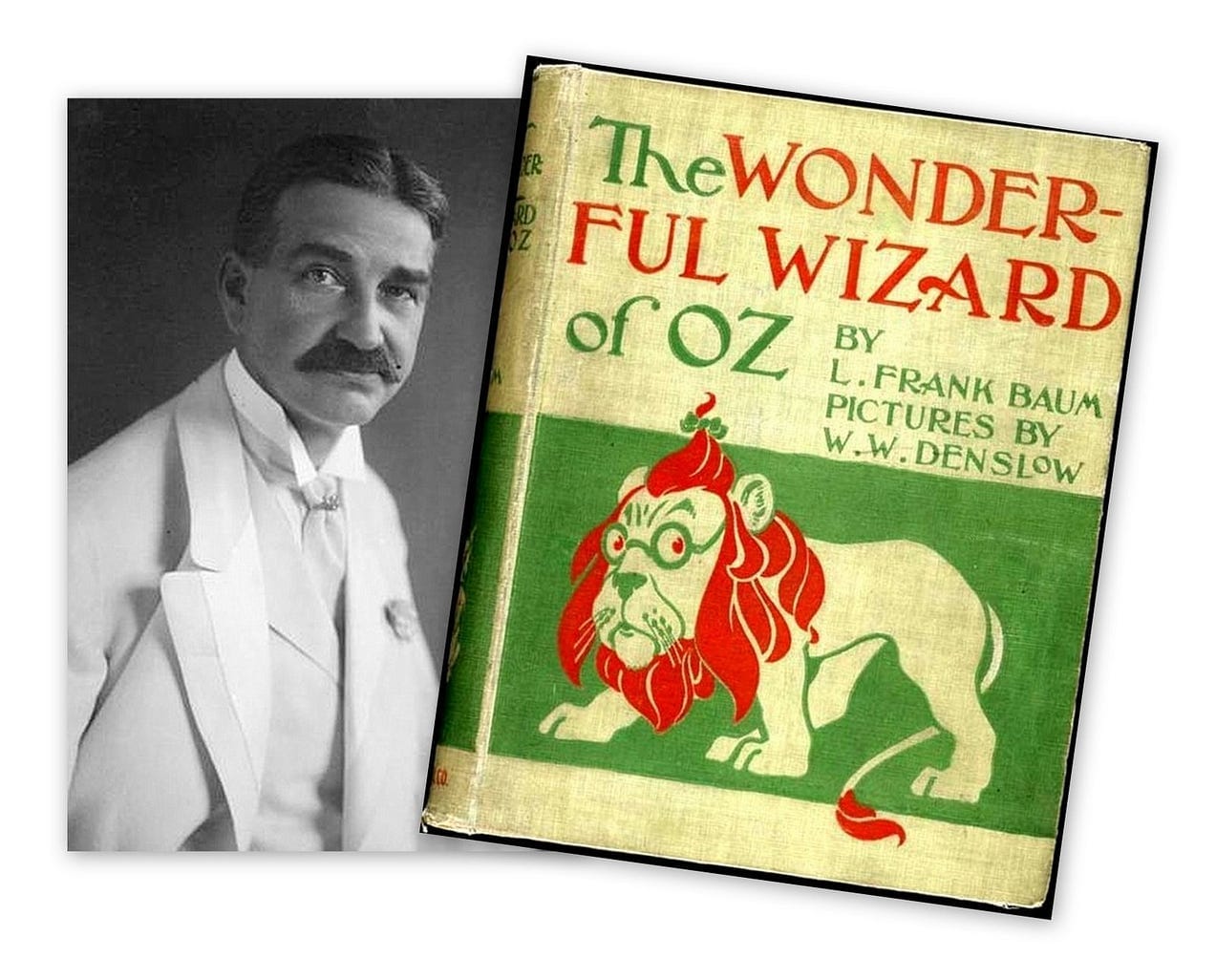
Scott: The script was a 2014 Nicholl finalist and sold as a spec script to New Line Cinema in September. Here’s a plot summary: “Based on true events, ‘Road to Oz’ details the experiences of ‘Wizard of Oz’ author L. Frank Baum which led to him writing the beloved American fairy tale as he draws inspiration from the people he meets, specifically his sickly, fatherless niece, Dorothy.”
First off, what was your original inspiration for writing this story?
Joshua: My original inspiration for writing “Road to Oz,” I loved The Wizard of Oz books growing up. Obviously, the 1939 film I think holds a special place in all of our hearts and childhoods. But I wanted to tell a grounded, realistic story. I was at, I think, Barnes and Noble and I was looking through one of their new editions of “The Wizard of Oz” book, the first one. On the inside cover, there was a blurb about the author, L. Frank Baum.
It was just an image of him, and underneath it said something like, “L. Frank Baum would spend many hours telling stories to the neighborhood kids.” For some reason, that sparked something in me, maybe because I’ve spent so much time working with kids myself and I maybe could relate in some way. That sparked something in me, so I did some research. That’s what really started it all.
Scott: I’m curious as to if you put your producer’s hat on during this process and maybe at what time you might have done that. Because, as you mentioned, you’ve got the 1939 movie, which is one of the most beloved films of all time, and so with the current climate of Hollywood, talk about brand recognition, The Wizard of Oz is one of the most pre‑branded things I can think of.
There’s “Wicked,” the Oz story which is told from the perspective of the Wicked Witch of the West, which is one of Broadway’s biggest hits. There’s the Disney movie, Oz the Great and Powerful, a prequel which did $500 million. There’s Saving Mr. Banks and Finding Neverland, two other movies about authors of famous children’s books.
There’s even the 2013 Nicholl winning script “Queen of Hearts” by Stephanie Shannon, which explored the author Lewis Carroll and how he came to write “Alice in Wonderland” and “Through the Looking Glass.” I’m curious, did any of that impact your thinking, how they might increase the commercial viability of your story, or was it strictly, “I just love L. Frank Baum and these stories,” and that was your primary passion?
Joshua: I’d say that was my primary passion. I’d be lying if I said that the commercial aspect of it didn’t appeal to me at all. I’m a fan of pretty much all of those other projects you mentioned. I think Disney did a great job with Oz the Great and Powerful. The world of Oz is just so rich, an exciting playground for any writer.
I really was excited to play in that world, to get to incorporate characters that everyone knows and loves. In Finding Neverland, they did a great job with telling the story of J.M. Barrie, and that’s what I wanted to do with this one.
A big part of it was wanting to tell this story about this man that a lot of people really don’t know anything about. You’d be surprised how many people don’t even know the Oz books came before the movie.
Scott: How much did you find yourself in the writing of the script inventing characters and situations and scenarios versus how close to Baum’s life story?
Joshua: My goal was to honor the man. To honor L. Frank Baum and the type of person he was. That was first and foremost. I did a good amount of research, and there is a lot in the story that is true and factual and historically accurate. But I did take some liberties for the sake of the story and for the sake of compelling narrative. I wanted to tell the best story possible to honor this person.
Scott: I’d like to consider some of the key characters in the script. Obviously, Frank Baum is the most important, the story’s protagonist. You introduce him early on. He’s a writer, albeit a playwright of sorts, but for a long time he lets the writing drop away. What are some of the most important aspects of his persona as he enters into the story in developing that character?
Joshua: It’s interesting, because The Wizard of Oz is really the first American fairy tale. Frank’s story is kind of a fairy tale in and of itself. There’s something very American about this story, I think. He is a man whose first priority is to take care of his family, his wife, his kids. Everything else, his imagination, his ability to tell a story, I think takes a back seat for a while because of that.
When we first meet Frank, he is someone who sees the world in a very interesting way. Some might say maybe the same way a child sees the world. He learns to use that in different ways. Like when he opens a bazaar in town, it’s something that people haven’t seen before. In a nutshell, it’s a man who’s balancing his responsibility to his family with his passion, which is storytelling.
Scott: That’s interesting because he does have that tension. It’s like he’s acutely aware of wanting to and needing to provide for his family. Yet, when the family moves to South Dakota to live with his sister‑in‑law, Emily, instead of trying to write for a living or even secure a steady job, he invests much of the family funds in buying a curio shop. Was that actual historical fact?
Joshua: That was. Yeah. He owned and operated a bazaar in town with items and trinkets that were imported and that many people had never seen before. That element of it is historically accurate. Honestly, there were all sorts of other odd jobs in town that he had worked that, for the sake of story and for the sake of time, I couldn’t include. But there were many, many more.
Scott: That curio shop essentially reinforces his instinct for flights of fancy, right?
Joshua: Yes. Right. But he also sees promise in it. He sees profit.
Scott: Then his wife, Maud. You’d think because they were married, she would serve as more of a romance figure, what I’d call an Attractor. But really, it seems like her primary narrative function is more of Mentor because she’s the one consistent voice to keep pushing Frank to write. She really believes in him, even when he doubts himself. Did you think of her as kind of a Mentor figure?
Joshua: Very much so. Maud Gage was a very strong-willed woman. Kind of Frank’s guiding light, in a way. Maude came from a family of progressive feminists. Her mother was a very well-known suffragette who marched alongside Susan B. Anthony. I wanted that to be reflected in Maud’s character.
Scott: You mentioned the mother, Matilda. She’s a strong personality and, in fact, provides a lot of opposition to Frank throughout. From the beginning, she has doubts about the marriage. She’s not entirely an enemy to Frank, as she travels to South Dakota to help take care of her ailing granddaughter, Emily’s young daughter, Dorothy. But by the end of the story, Matilda has come around. She actually believes in Frank’s talent as a storyteller. Did you always have that arc in mind, that she would essentially go from enemy to ally?
Joshua: Yeah, very much so. I think she comes around. She sees the value in what Frank is doing. My goal wasn’t to make her a villain necessarily. But when our lead character is kind of off in the clouds, it helps to have someone like her who really gives us a reality check and brings us back down to Earth. The relationship between her and Frank is something that I really enjoyed developing.
Scott: There are several children in the script including Frank’s sons, Junior and Robert. But it’s really Emily’s daughter, Dorothy, who is key. Her relationship with Frank is central to the plot. When we first meet Dorothy, she is refusing to talk. Could you describe the reasons for that condition?
Joshua: Dorothy’s father, Henry, who she was extremely close with, had recently passed away. She’s a young girl. This has a profound effect on her. She essentially shuts down and stops speaking. She’s not speaking to her mother, to anyone.
When everyone else arrives on the farm, Frank, Maud, and the kids, she’s not speaking to them, as well. Frank, being who he is, kind of makes it his mission to get her to speak again.
Scott: That’s what I was thinking. By refusing to talk, she creates a great motivation for Frank: get her to talk. As a result of that, he starts spinning these stories for her to win her over and hopefully convince her, maybe even connive, to get her to speak. In a way, that helps him to reconnect with his storytelling.
Joshua: Exactly. Aside from all the external factors surrounding him and everyone else, she is very much a catalyst for him. That relationship between the two of them — I think we all had that one kind of adult figure growing up, the who ideal adult-child relationship. Whether it’s the fun uncle or the goofy grandfather. Her and Frank have that very special relationship.
Scott: You even deepen it with another point of connection. They obviously love stories, especially fantasy, but they also share a weakness in the area of their physical health. Was that a conscious choice on your part to give them that even tighter emotional bond, both knowing what it’s like to be physically frail?
Joshua: Definitely. Yeah. That is something that they both have in common. I think it helps Frank relate to her more and vice versa. Frank’s heart condition, he had since he was a young child, so he knows what it’s like, in a sense, to be where she is. That was definitely a conscious decision.
Scott: You also have the character William Denslow, who was the actual artist who provided pictures for the eventual book.
Joshua: Yes. He was the illustrator for the first “Wizard of Oz” book.
Scott: They develop a nice bond and friendship where they go on the road to sell their wares. Then, ultimately, he’s involved with the book. How much did that depiction hew to real life?
Joshua: I definitely expanded on that bond and that friendship in the story. There is some information out there regarding Denslow as an individual and their relationship. From my research, it seems that Denslow was a little bit more of a stiff than I portrayed him in the story.
Frank traveled on the road in real life, but Denslow was not a part of that. I wanted Frank to have that one person outside of his family the he could talk to and bond with. Denslow is very much Frank’s sort of sidekick, in a way.
Scott: One last character I want to mention. That’s Rak the Terrible. He’s basically the town bully, slots right into that antagonist role. What was the inspiration for him?
Joshua: The inspiration for that character was to have someone in town with sort of a very clear, opposing view to Frank’s. Someone to bring Frank out of his shell and sort of awake the sleeping wizard, in a way.
Just out of curiosity, the draft you read, did you get a hold of that from the Nicholl’s competition?
Scott: I think so. Yeah.
Joshua: There have been many…
Scott: Many drafts? [laughs]
Joshua: Many drafts. The Nicholl’s draft was the first draft, I believe. It’s come a long way since. But in a more recent version, we see Frank as a child, being bullied, in a way, in the opening of the piece. I think Rak kind of brings back some of that torment and pain that Frank felt growing up. Rak very much provides a reason for Frank to find his courage. That’s Rak’s purpose.
Scott: I’d like to ask some questions about some of the key choices you made in writing the script. This is a story about the writing of a story. There’s an inherent challenge in the face of it because what could be more boring than to show someone writing?
Joshua: [laughs] Right.
Scott: Yet, you hardly ever see Frank writing. Rather it’s all conveyed through dialogue and, mostly, these wonderful images through the POV of Frank and Dorothy, basically, what they’re imagining. How early on did you land on that narrative approach?
Joshua: Very early on. I didn’t want to tell a story where we see the author sitting and writing in his book for 90 or 100 pages. I wanted that to be implied, in a sense, and make it known that he’s writing this all kind of off screen and in the background, and what we’re seeing are the moments that inspired him.
That way, when it all kind of comes together at the end, it’s that much more rewarding.
Scott: Then what about this idea of entering into their perspectives and these fantasy images that Frank and Dorothy see? How did that evolve?
Joshua: That’s something that, also from the very beginning, I knew that was the way in which I wanted to tell the story. I wanted the audience to see the world how Frank sees it and how Dorothy sees it, with the help of Frank.
I knew going into it, that was how I wanted to go about showcasing these moments that we see and instantly are like, “Oh. OK. Well, that, I remember that from reading the ‘Wizard of Oz,’” or, “I remember a similar moment from the 1939 movie, with the flying monkeys at the fair, or the yellow brick road.”
Scott: The tone, I’m guessing, must have been a big concern for you, finding that right balance between realism and fantasy.
Joshua: Honestly, I had an easier time balancing the realism and fantasy than I did with balancing the lightness with some of the darker, more “adult” moments.
I wanted this to be a movie that parents could take their kids to and not have any kind of reservations about it, and have it be something that they could enjoy together. There are some of these more adult themes. Finding that balance was probably more difficult.
Scott: Because Hollywood has this affinity for edge…
Joshua: Right.
Scott: Did it ever concern you that this story might be received by people in the movie business as being soft?
Joshua: Honestly, it didn’t concern me because that’s the type of movie that I’d like to see, and that’s the way I wanted to tell the story. I thought back to Finding Neverland. That had a very similar tone, I would say. This might be bigger in scale, but a similar feel, for sure. There’s an elegance to it.
Scott: It’s not like your story doesn’t have tension. You’ve got people with physical ailments. You’ve got dire financial situations. The mother‑in‑law’s disapproval. The presence of Rak. Yet, throughout, Frank’s family is a loving, supporting family. You hit that balance quite nicely while still being realistic.
Joshua: Thank you. I appreciate that. That’s what I was going for. Hopefully, that ends up coming through.
Scott: I can’t analyze the script without getting into all the wonderful moment where things Frank hears or sees become inspiration for his book, from Dorothy, to Toto, to Scarecrow, Tin Man, and Cowardly Lion, even tiny things, horse of a different color, or slippers, in this case silver, but even the derivation of the name Oz, that whole sort of Shakespeare in Love kind of thing where you see things in real life and then take that as creative inspiration. I assume that was a very early choice on your part.
Joshua: Very much so. That was probably one of the most fun things about writing this, for me. It was incorporating those elements. Some of the places he drew that inspiration from are, somewhat, historically accurate. Others I kind of worked in on my own.
But that’s definitely something that I hope will be a lot of fun and nostalgic for the audience. To see those moments and connect the dots. Yeah, that was a lot of fun.
Scott: I’m curious how that process worked. Did you make a laundry list of things, at the beginning say, “OK. I now wanted to get this beat, and this beat, and this beat from the movie,” and then try and work that into the plot? Or was it more of an organic thing, as you were working with the characters and the story that those elements kind of popped out? Or perhaps it was both?
Joshua: Some of them I knew very early on, and were kind of a big part of the outlining process. I knew one of the first things he was going to see was the hot air balloon taking off into the stormy sky. I knew the way he was going to be welcomed to Aberdeen was going to be reflective of how Dorothy is welcomed into Munchkin Land when she arrives in Oz.
I knew the slippers, when those were going to come in, because they were going to play a pivotal role in Dorothy’s story. Those were all kind of anchors in my outline, I would say. But there are smaller things, like when I was writing the county fair sequence.
There were things that kind of organically came up, like, “Oh, this. OK. Well, this could be a good moment for us to see, to see the monkeys or the lion.” There were small things that came up while I was writing. But a lot of the big ones I knew, going in, when they would all happen.
Scott: Let’s talk about all the good news regarding your script. First, the Nicholl. What was it like to become a finalist?
Joshua: That was very, very exciting. I entered, like I said, one of the earlier drafts of the script into Nicholls back like seven months ago or something like that. Actually someone, my now-manager, had recommended that I submit it. That whole process was really exciting. Lots of waiting around for the next phone call.
But it was an honor. It’s a great group of people, and the other finalists, and the fellows. I’ve read a lot of the other scripts as well. It’s a really talented group of people. I’m honored to have been a part of that.
Scott: The script sells to New Line. Did you get representation off the fact that you became a finalist in the Nicholl? How did all that work out?
Joshua: This all really started about seven months ago when I finished a draft of the script that I was happy with. Then I sent it out to three or four writer friends of mine, who all kind of said the same thing, “OK. This is good. It’s ready. Do something with it.”
I then did my research, as far as representation goes. There was one individual, Rich Green, at Resolution Agency at the time. He was someone who really stood out to me and represented writers whose work I admired and envied. I sent him a very nice query letter. The query letter was intercepted by the head of the Story Department over there at Resolution, a guy by the name of Jeff Portnoy.
I got the typical, “Agents can’t read unsolicited material, but I’ll check this out.” He did. The rest is kind of history. I developed the script a little further with him. He suggested I submit it to Nicholls, and I did. I worked with him for months and, at the same time, brought my own producers onto the project.
About two months ago, once the script reached the semifinalists stage of Nicholls, Jeff brought me up to the agents at Resolution and brought me in. I signed with them. The representation, that’s all very recent. Then following that was the Nicholls finalists and all of that. It’s been a busy couple of months.
Scott: How did you attach a producer?
Joshua: I went about it the same way I went about reaching out to my representation. I knew what type of project I had. Like I said, Finding Neverland was something that I was a huge admirer of. It was kind of a similar story. I reached out. I sent a nice letter to Nellie Bellflower, who produced Finding Neverland.
I said, “OK. You know, I’m a big admirer of your work. I have a lot of respect for Finding Neverland. I just finished this project…”
She got back to me, read the script. We had lunch. Then I started developing it with her and her husband, Michael Mislove, also a producer. So here we are now, and they were all a part of the deal that we made with New Line.
Scott: Speaking of New Line, how did all that play out?
Joshua: We had a whole plan. A strategy. Our plan was, as soon as the top ten finalists lists were announced, that we would go out with it. We had a list of producers and production companies that we were pretty much ready to click send and to make those calls.
But just literally a couple of days prior to that, producer Beau Flynn had gotten a hold of the script, spoke very highly of it. Him and New Line made an exclusive offer. It happened very quickly. I was not expecting it to happen like that, but I’m very glad that it did.
Scott: I’m sure you are. Where does the project stand now?
Joshua: The project, I’m doing my work on it. Some rewrite work. Once that’s wrapped up, then next step is to find a director and put it together. It’s been great. It’s a really great group of creative, kind, and passionate people. They’re really excited about it. So, we’re moving forward.
Scott: Have you got any other writing projects in the works?
Joshua: Aside from the myriad of people I’ve been meeting, doing the whole water bottle tour and all that, I’ve got another project or two that I have been developing and working on prior to and while the whole Oz thing was happening.
I’m excited to kind of wrap those up and see what the next steps are for those. Projects that are very much in the same vein of Oz. I spend my time in the family genre.
Scott: I would imagine soon DePaul will be calling up and saying, “Hey, Josh. Come on back and speak to our students.”
Joshua: [laughs] It’s funny. DePaul has their LA immersion program out here, which is out here a few quarters out of the year. I already went in, actually, to talk to a group of students that are out here. But I’m definitely willing to and am game to go back to Chicago. I owe a lot to that school, so I’m willing to help out, obviously, in any way that I can.
Scott: Let’s jump into some craft questions. The first one is a pretty obvious. How do you come up with story ideas?
Joshua: It’s a good question. You know what? Like how I stumbled onto the Oz thing, there are just little moments and little things that kind of jump out at you. Having worked with kids for so long, I think helps also because I’ve gotten little ideas just from conversations I’ve had with them.
Or I look at stories that I loved growing up, whether it’s finding this sort of the new twist on a classic story, or a fairy tale, or something like that. It’s really about kind of looking at things in a different way. I want to tell stories that remind me of the things that I loved growing up.
Scott: This whole thing about high concept, how important do you think the story concept is to the overall strength and commercial viability of a spec script?
Joshua: It’s important. You don’t want to recycle the same concept over and over again. I think it’s important. But ultimately, at least for me, I’m a big proponent of theme and character. That’s the place I usually start from. The concept, of course, has to be original. But if you have strong characters, the rest will follow.
Scott: How much time do you spend on prep writing? What do you focus on? Brainstorming, character development, plotting, research, outlining?
Joshua: It all depends on the story. For Oz, there was a pretty big period of research. But, ultimately, it’s usually, like I said, knowing my characters first, so whether that’s writing a paragraph on each of my characters, figuring out who they are, where they’re at, what they want, what they need.
That’s usually where I start from. Then, like I said, theme. Tying each character’s journey in a way to what the overall story is about, whether it’s the importance of imagination or identity, that’s where I’d start from. Then I will usually do a pretty thorough outline, beat by beat of what’s happening in the story.
When I first started, I would jump into a script without that. I don’t think staring at that blank page helped my anxiety. So, going forward, it’s a pretty thorough outlining process.
Scott: You mentioned characters several times. Are there any tips or tools you find yourself using regularly in developing your characters?
Joshua: Creating characters that are unique enough, but that we can relate to, in a way. Usually, it’s starting with a few basic questions. Who are they? Where are they in life right now? What are they looking for? What do they want? What do they need? Usually, those two will run in opposition to one another.
Then there’s small stuff, little details. Their backgrounds and how they speak or what they look like. I’ll sometimes just write scenes with a couple of characters kind of going back and forth just to kind of get an idea of how they would interact with one another.
Scott: You mentioned how they talk. How do you go about finding your characters’ voices?
Joshua: God, I wish there was an easy answer to that. [laughs] I don’t know. I mean, it’s just, I think you know if you hear them clearly enough. Other writers I’ve talked to have said it’s like a dozen people talking to you at the same time. That’s very true. Once one voice stands out to you enough from the other characters and has some sense of uniqueness and originality, and you can get an understanding of this person from the way that they talk, I think that’s when you know you’ve kind of found something. Yeah. I wish I could say it’s something very specific but I think it’s just kind of figuring out how they speak to you and how it comes through on the page.
Scott: Theme. How important is it to you? Are you one of those writers who start with theme or do themes emerge as you get into the story?
Joshua: No, I typically start from theme and character. I don’t want to start writing and halfway through, ultimately figure out what the story is about. I mean thematically, what it’s about. I need to know that going in. I don’t want to beat the audience over the head with it, though. I want everyone’s journey to be reflective of whatever the theme is. Some might argue that maybe it’s not as important or as necessary. But theme and character, for me, are my two starting points.
Scott: What do you think about when writing a scene? Do you have specific goals in mind?
Joshua: I’ve found this more and more recently. If you don’t have a goal in mind while writing a scene, then the scene probably doesn’t need to exist or be there. If each scene is accomplishing something and moving the story forward, then I think you’re on the right track.
There’s this other project that I’ve been working on, where I’ve had to trim a lot. I’ve kind of been just looking for the scenes that lack purpose or don’t accomplish anything, and I’ve just been slashing those.
Scott: We’ve all heard, “Writing is rewriting.” How do you do that? Are there some keys for you in terms of rewriting your script? If so, what are they?
Joshua: I’ve never had to, at least yet, do the page one rewrite. Usually, there are pretty thorough notes. If some of the big notes are — OK. Frank’s heart condition, for example. “We need to see more of this, and it needs to be more prevalent.” I’ll go through the script and address that note first.
I’ll look for places where that can be enhanced and where I can work on that. Then I’ll go to the next note and then do a pass on the script with that in mind. I’ll do the “Save as,” and I’ll create a new document. But I’ve rarely needed to start from a new blank page.
Scott: It’s like you take whatever the issue is and you deal with them one by one.
Joshua: Right. Exactly.
Scott: What’s your actual writing process like?
Joshua: It’s interesting. For the past year, I’ve been living on a couch. I did, however, just move. Literally a couple weeks ago. I don’t have any furniture, but I did just move. So I have had to go out and work at coffee shops, which is something I’ve always done.
I want to have a place I can work ‑‑ a good, open work space. Typically, I work in the morning. If I can work from seven to one or eight to one, then that’s a good day for me. The mornings for me are the most productive.
When I moved out here a year ago, I got a job at an elementary school, which is later in the afternoon. I’m still working that job. I typically like to write up until it’s time for me to go over there. Then I’ll close the laptop, head to work, and interact with actual, real life people.
Scott: What is your single best excuse not to write?
Joshua: My single best excuse not to write is probably just having a bad day. Honestly, there are some days where I’ll go to write and I just won’t be feeling it. I won’t in the zone, so to speak. If I feel that initially, I can justify it by saying, “OK, it wasn’t meant to be today. So I’m just going to put it off until tomorrow or maybe give it a shot tonight or something.” I don’t want to force it. I think that’s an excuse. That’s the biggest one.
Scott: Conversely, what do you love most about writing?
Joshua: What do I love most about writing? Very often, I hear the “I don’t like writing but I love having written,” which I think is very true. God is that true. But I really like the feeling when you get into a scene and it’s just, you’re really feeling it and you don’t want to stop, and it’s very clear and you can see it and you can hear it and you can get into that rhythm. It’s almost a euphoric type of feeling. That’s something I think that makes it worth it for sure.
Scott: One last question and this is the obvious one that you’ll be getting hit up on from here on out: What advice can you offer to aspiring screenwriters about learning the craft of breaking into Hollywood?
Joshua: God, I feel like I am still an aspiring screenwriter. You know, I think it’s just, don’t stop writing. Keep writing as much as you can. There’s a reason I didn’t go the assistant route and I didn’t get a job in the industry, because I knew I probably wouldn’t have time, as much time as I wanted to write. Find something where you can carve out time to write. I think that would be number one.
Then number two would just be don’t hesitate to reach out to people and to put yourself out there. The position that I’m in right now, I wouldn’t be in if I hadn’t sent out two query letters to my producers and to my agent. I wouldn’t be here if it weren’t for that. Just be kind and be polite and reach out to people. Yeah, don’t be afraid to, I guess, take a chance.
For my interviews with dozens of other Black List writers, go here.