Go Into The Story Interview: Kyle Killen
My conversation with the 2008 Black List screenwriter.
My conversation with the 2008 Black List screenwriter.
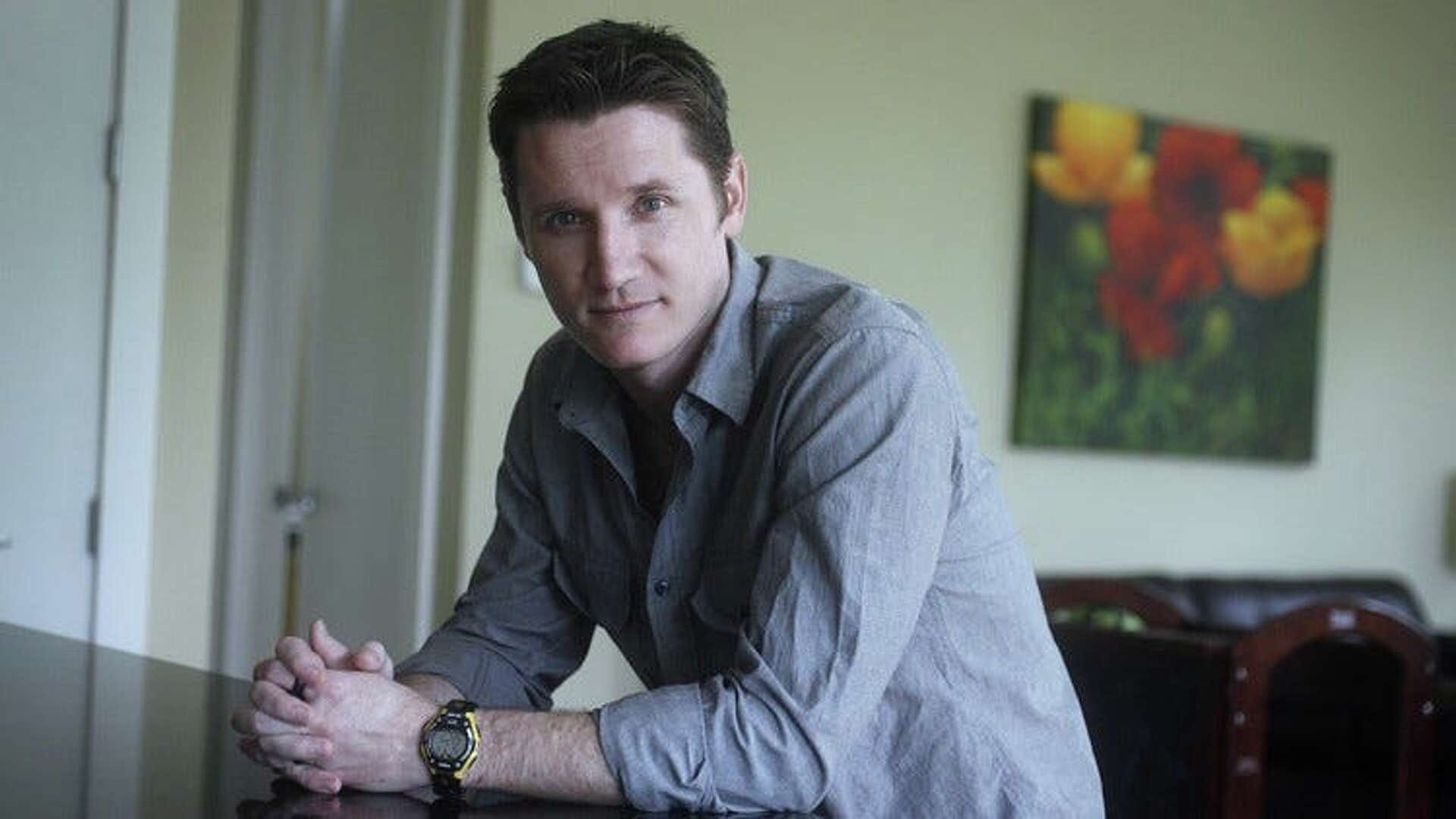
Kyle Killen’s TV writing credits include Awake, Halo, and Man On Fire. In 2008, his script The Beaver was named to the annual Black List and actually topped the list. I interviewed Kyle in 2011. Here it is in its entirety.
Scott Myers: Okay, let’s start at the beginning. Your writing has appeared in Mcsweeney’s, Salon.com, The Mid-American Review, The Berkley Fiction Review, among others. You won the John Steinbeck Award for a short story called “Johnson’s March.” You had a blog in which you wrote letters to your gestating twins, then started another blog in which you talked about, among other things, being the father of said twins. You went to the University of Southern California Cinema Television Program. You wrote the spec script “The Beaver,” the basis of a movie which debuted this weekend. You created the Fox TV series “Lone Star” and now have an NBC TV pilot “REM” in production which you also wrote. I’m a bit slow, but even I can figure this out: You are a writer. How did that happen? What about writing appeals to you? If you weren’t a writer, how would you be making a living?
Kyle: I think I’m a writer not so much because I’ve ever been successful at it, but because I’ve been so unsuccessful at giving it up. I’ve worked a buffet of other jobs, from tech support to construction, and I always ended up writing, if not for its own sake, then ABOUT the terrible jobs I was doing. I had a professor at USC who used to say that writing is like a Heroin addiction — if you can give it up, you really should. I could not. And I expect that to eventually leave me pushing a cart and begging for change.
Scott: As I was doing research for this Q&A, I found the best source of information to be your blogs. So I thought we could track the arc of your career by using excerpts from your blog posts. For example, when I read your script “The Beaver,” which I thought was great, one of the first questions that popped into my head was, “Why a beaver? Why not a moose or an otter or a squid?” You provided a tantalizing tip in this blog post dated May 22, 2008:
If you read the old blog you may remember that nine months or so ago I responded to the news that my wife of one week was pregnant by trying to write a book about a beaver, which somehow seemed like a reasonable response at the time. I put together something like 13 chapters and then my brain broke and I laid in bed for a week meowing like a cat. Then, I decided to turn it into a screenplay because screenplays have less pages and I am very lazy. Several months, countless drafts, and much meowing later I finished said screenplay. And in what is surely a sign of both the apocalypse and the untapped market for beaver related films, on Monday someone decided to take it off my hands.
But you still didn’t answer my question. So… why a beaver?
Kyle: I have no idea. It’s one of those things that just came to me so fully formed, a British Beaver Puppet, that I never thought to ask why, I just accepted it. But I suspect it has something to do with the presence of Radon gas.
Scott: More substantively, what was your inspiration to have a suicidal character find help, at least at first, in the form of a talking hand puppet?
Kyle: I think I’m fascinated by the degree to which any of us can really ‘change’. There’s aisles upon aisles of books that not only assure us we can, but that it’s actually easy and just takes a few steps to get from here to there. In my experience, it tends to take more than 7 Highly Effective Habits. So, the Beaver was just sort of the most ridiculous incarnation of that desire for a quick fix, a silver bullet, or an easy answer.
Scott: One of the things that is most impressive about your script is the balance you managed to keep throughout in terms of its tone. It’s dark, dramatic, funny, and finally deeply human. Did you always see the story playing out that way or did it, for example, start out more as a comedy, then go dramatic?
Kyle: I think it probably just started and ended a mess. If you read the blogs you know that I had no idea what I was doing and am as shocked as anyone that people have responded to it. I think there were things I always knew would be a part of it, and those were my signposts along the way, and those things felt fairly real and grounded, and in some cases tragic, and I think because of that whatever comedy there is tended to come from a somewhat dramatic place.
Scott: How did you get the script into the hands of potential buyers? Were you represented at the time and if so how did that happen?
Kyle: I was represented. I turned a short story I’d had published into another screenplay the year before and had been lucky enough to fall in with good people because of it. It was actually Steve Golin, the owner of my management company, who preemptively took “The Beaver” off the market and set out to see the little piece of weirdness actually get made.
Scott: So someone acquires the rights to “The Beaver.” But then something rather magical happens. Another blog excerpt dated December 10, 2010:
I’d be lying if I said that I hadn’t read the Black List in years past, then scrounged around for the scripts on it, and been inspired to imagine how awesome it would be to end up in such a spot. I have no idea what will happen to The Beaver in the future. My hopes are high, but we’ll see. What I can say without reservation is that I never imagined more than ten people would try to read it, and of those, more than five would finish it. So starting with the sixth person who said they not only completed, but liked it, I’ve been pretty sky high.
Your script was named the #1 script on the 2008 Black List. What did that mean to you professionally? And when that happened, what sort of effect did it have on moving the project forward?
Kyle: It meant an incredible amount on both fronts. Personally, it wasn’t about where I was on the list, it was just about being included among real writers. I had been outside of the world of working writers for so long that it just felt impenetrable, so to have some number of people sign off on your efforts and welcome you (as much as anyone is ever welcomed) to the club was an incredibly satisfying thing. Professionally it meant that people were suddenly not only willing to listen, but wanted to talk, and after years of outgoing phone calls they started to come the other way. It opened all the doors in television and features that I’ve been lucky enough to walk through ever since.
Scott: At various points, Steve Carrell was attached or circling the project to star. Then Jim Carrey. But it ended up with Mel Gibson in the lead role. When you were writing the script, did you star cast the role of Walter Black? How did Mel Gibson match up to the character you envisioned in your mind?
Kyle: I don’t know if I had mentally cast the role as someone specific, but I assure you it wasn’t Mel. He wasn’t acting at the time and had more or less become only slightly more available than Bill Murray. But once Jodie brought him up I think we all saw an incredible potential there, and had a sense that he would have access to some of the dark places that Walter goes in a way that no other actor was likely to.
Scott: Jumping ahead several months, you have this blog post dated July 27, 2009:
We had a table read for The Beaver… at some point in this process I’ve begun to wrap my mind around the idea that a group of people were actually going to film the things I had written on a page, were going to say those lines, and record it, and put it together, and show it to people. And they were going to do all this on purpose!
For the benefit of all the aspiring screenwriters who will read this interview, would you mind describing what it felt like when you first really got it: “They’re going to make my movie.”
Kyle: It’s really weird. You have this initial ‘Holy Shit’ moment where it all feels unreal. And then it quickly becomes very practical. There’s work to do, scenes that felt long, things the actors don’t like, that the director doesn’t like, that the producers don’t like. I think you sink or swim very quickly, and you stop feeling like the new guy, and just begin to feel like the writer. And in retrospect, it’s that second feeling, that this is just YOUR JOB, that’s far more amazing than the first.
Scott: You live in Austin, Texas, so it must have been especially meaningful to you that “The Beaver” had its premiere at SXSW 2011. Quite a journey from finding out your wife is pregnant and deciding to write a book about a beaver to a world movie premiere. Do you ever stop to think this is some sort of fantasy or alternate life? This can’t be me?
Kyle: All the time. And I live like I’m about to wake up. Nothing’s promised and you can fall off the map like that. So I’m grateful for every day, which takes work, because like anything, dream jobs do eventually just become jobs, and you find a way to bitch about deadlines and people you work with and things so and so said to so and so. So when I hit those days I try hard to remember being paid to crawl around in laundromat ceilings and… well, deadlines still suck, but a little less when put in context.
Scott: You created a Fox TV series called “Lone Star,” the premise of which is an oil man who is leading two lives. What was the genesis of that idea?
Kyle: A friend and producer knew some people in Midland [Texas] and wondered if there might be something interesting enough about life there to do a show about. So we visited. And I think we both came away thinking, no, there wasn’t. But the longer I played with it, thought about the people who lived there and how they simultaneously loved and hated being in the middle of nowhere, the more I started to think about someone who could have it both ways.
Scott: In a blog post dated February 20, 2010, you acknowledged an odd sense of connection with the series’ Protagonist Bob Allen in an entry titled “The irony about working on a show about a guy living two lives”:
Let me just start by saying that I love my freaking job. I’ve never been happier to be tired. I wake up from four hours of sleep literally dying to get to work… In the past two weeks I’ve watched incredible actors bring characters and words to life in ways I could never have imagined, had the surreal experiencing of scouting my own hometown for locations, and been invited to a straight up HOLLYWOOD celebrityfest simply because I was dressed so poorly I made the person taking me look good by comparison. I know it’s all too good to be true and too fun to last, and every day I’m surprised when I’m not hit by a bus.
So here you are living these two lives — a TV writer in LA and a father of now three children in Austin — working your ass off, loving it, the show gets picked up, the critics love it, it debuts — but the ratings just weren’t there. Instead of curling up into the fetal position and downing a bottle of Woolite, you did something different: You got on your blog and tried to drum up viewer interest, an effort that got picked up by some in the press, and even on my blog. Were you really hoping to influence the show’s Neilsen ratings or was this something else, a writer attempting to make sense of a confounding situation by writing about it?
Kyle: I was absolutely hoping to influence the shows ratings. I knew in my brain that wasn’t going to happen, but I’ve known a lot of things were never going to happen to me, and then they did, so at this point I tend to just try anyway. The thing about getting a show on the air is that you suddenly find yourself on top of this little corporation, all these people, from actors, to writers, to ACCOUNTANTS, depending on you for their job. And that sense of responsibility helps you get over your fear of looking like a moron in public very quickly. It didn’t work, but I tried, and I needed to know that I had if the inevitable really happened (which it did).
Scott: After Fox dropped the show, you wrote a thoughtful post on your blog. Here’s an excerpt:
The truth of the matter is, shows come and go every year. Good ideas, bad ideas, whatever. They all get a run, people find them or they don’t, and the world keeps turning. I’m incredibly grateful that we were given an opportunity to try a premise that, as the numbers seem to confirm, was perhaps a little riskier than I estimated. But I enjoyed every minute of it and would gladly do it all again and just the same, because, well, I’m just that stupid.
Writers are fueled by dreams and I suspect we tend to fantasize about huge successes rather than things not ending well, but the fact is every professional writer has to learn how to deal with failures. How did you handle the cancellation of “Lone Star”?
Kyle: It’s like driving by a car crash on the freeway. It’s really not that big a deal unless it’s your car. “Lone Star” was my wreck, so it felt significant, but to the rest of the world it was just another fender bender keeping them from getting to Starbucks before work. Ultimately, all you control is the work you do and the environment you do it in, and on that front I thought Lone Star an enormous hit. I met people I will love and respect for the rest of my life, learned things in months that I’d been blind to for years, and had an incredible time. I hope everyone has the chance to enjoy a failure as much as I did.
Scott: Your current project is the TV pilot “Awake.” I’ve read the script and it’s terrific, setting into motion a great twist on the procedural cop TV formula. The premise of the show is [description grabbed from the Web]: “An Inception-style thriller about a cop who wakes up after an accident to find he is living in two different realities.” What was your inspiration?
Kyle: Honestly, it was “Lone Star.” I was just starting to really think about and play with the whole issue of duality and this offered me a different way into it, one where people would be sympathetic to the character as opposed to suspicious of him. I think the fact that we only get one life makes us think hard about all the ways it could have gone but didn’t, so I’m fascinated by people who, for one reason or another, don’t just ask, but start to answer that question.
Scott: “Awake” has a fantastic cast including Jason Issacs, who plays Britten, Wilmer Valderrama, B.D. Wong, and Laura Allen and a respected show runner in Howard Gordon (“24”). How has the pilot shoot gone? How do you feel about the prospects of the pilot getting picked up?
Kyle: Again, you never know and so many of the factors are beyond your control it’s like trying to predict the weather on a given day a month from now. I know we put together a great group of people who were committed to doing their best work in the hopes that we could do more of it.
Scott: If it goes to series, would you consider relocating to L.A. or are you committed to living in Austin?
Kyle: I REALLY like living in Austin. I also REALLY like my wife and kids, so I don’t know. We’ve tried to carve out a situation that would allow me to spend more time in Austin than Lone Star did, and if there’s any way to make it work I’d like to stay right where I am.
Scott: Okay, some questions on your writing practices. Let’s start with your prep-writing process. Where do you find your stories? How do you come up with story ideas? How important do you think the story concept is to the overall strength of a screenplay or TV series?
Kyle: I wish I knew where I found things — I’d look there more often. Notions, ideas, thoughts, they just sort of come to you all the time and some stick around long enough that you decide you should try to do something with them. I’d say that the concept is really important to the whole, except there are countless examples of brilliant films and shows about very little, and spectacularly terrible ones that seem to have slam dunk concepts. Everything in life tends to be execution dependent.
Scott: How much time do you spend in prep-writing (i.e., brainstorming, character development, plotting, research, outlining)? Which of the aspects of prep do you tend to devote the most time and focus to?
Kyle: Again, I’m really a mess when it comes to process. TV was the first time that something structured and rigorous was demanded of me, and I still tended to start writing before I really knew what I was writing about. I’ve never done outlines because I’m never sure what a scene really is until I try to write it. The flip side of that is that a lot of what I write turns out to be overwritten and unnecessary, to make the same point multiple times, and generally read like I’m working it out as I go, which I am. I hope I’m getting better through the sheer volume of things being asked of me, but only time will tell.
Scott: When you wrote “The Beaver,” was there a particular narrative paradigm you used or did you have a more ‘organic’ approach to story structure?
Kyle: If by organic you mean, I just threw in a bunch of stuff, yes, it was that. I mean, I went to film school, I know how structure works, and I absolutely try to have it guide me and keep me from spiraling off in a million directions. But with the Beaver in particular, because it started as a novel, it was more about seeing what would fit and what told a story that could be understood than anything else.
Scott: Let’s say you’re plugging along in your writing when you suddenly realize something you wrote 15 pages previous doesn’t work. Do you go back and fix it, or do you keep writing because it’s more important to you to finish that first draft?
Kyle: This is where the difference between what I was used to doing and what TV demands really became clear. I’m totally a go back and fix it person. I want to know that the ground I’m standing on is firm before I start building anything else. But in TV there just IS NOT TIME. You have so much to write that if you get stuck you have to skip ahead and find the next scene you DO know how to write and come back. It was the first time I ever wrote scenes out of order, let alone wrote on multiple different scripts in a single day. Tremendous pressure makes all sorts of things possible.
Scott: What do you think are the keys to the rewrite process?
Kyle: Usually it’s about hiding whatever you wrote the first time. The first time through people tend to tell each other what the scene is about, and in life we don’t really talk that way. We talk around things, at things, and about things, without ever overtly stating them. Life has a subtext. Most first drafts don’t.
Scott: If there’s one fundamental principle about screenwriting or TV writing to which you subscribe, what would that be?
Kyle: You have to be interested in what you’re working on. If you’re not, it shows. That doesn’t mean it won’t get made, or air, or make millions of dollars. It just means that someone somewhere will know you wish you were writing something else, even if that someone is just you.
Scott: TV writing or screenwriting: Do you prefer one over the other? If so, why?
Kyle: I don’t. Time is the incredible and terrible thing about both. In TV it means you write something today, shoot it next week, and see it on the air in a month. It also means that your job never ends up being about making something perfect, it becomes about making it as perfect as it can be by next Tuesday. In film, you have all the time in the world to tweak, adjust, and perfect. It’s truly about going back as many times as you can stand it until the thing is as good as you can make it. The flip side is that it all takes forever. So many things have to break right for a film to come together, let alone to be successful that it can feel like waiting for an eclipse. But on those rare occasions where everything lines up just so… I like to imagine it’s pretty hard to beat.
Scott: Finally, what advice can you offer to aspiring TV writers and screenwriters about the craft of writing?
Kyle: I’m terrible at advice because frankly I’m not sold on the idea that I’m that good at my job to begin with. So perhaps instead of advice I can simply offer inspiration. I got this far on a very limited amount of talent and copious amounts of desperation. In the end it just comes down to this: if you can’t quit, you also can’t be stopped.
For my interviews with dozens of other Black List writers, go here.