Go Into The Story Interview: Melissa Iqbal
Melissa Iqbal: Nicholl Fellowships in Screenwriting winner.
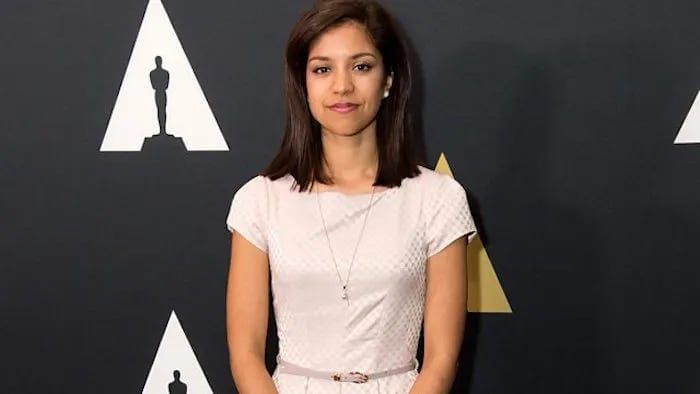
Melissa Iqbal: Nicholl Fellowships in Screenwriting winner.
U.K.-based writer Melissa Iqbal wrote the original screenplay “The Death Engine” which won the 2014 Nicholl Fellowship in screenwriting. Melissa and I had a transatlantic conversation in which we covered a lot of territory.
Scott Myers: Easy question to start: Where did you grow up and how did you find your way into writing as an interest?
Melissa Iqbal: I grew up in a village in West Sussex in the south of England. And I’ve always been writing. When I was younger I quite liked the idea of being a novelist, so I started writing short stories. Then my passion for film sort of took over. In hindsight, screenwriting was quite an obvious way for me to merge my two great passions, but I was nervous about dedicating myself to something that meant I’d have to sit alone in my room for long periods. I liked being around people too much, so, in the end, I got started in production and kept writing as a sort of hobby. It wasn’t until I became a bit disillusioned working in production that I returned seriously to writing and applied to the NFTS.
Scott: The NFTS, is that like a graduate school?
Melissa: Yes, I did my masters there and graduated in March last year. It’s a fantastic place to study, I don’t know what I would have done without that experience. Film school’s not for everyone, but it definitely helped me.
Scott: Let’s drop back a little bit. You said you had a longstanding interest in cinema. Can you remember some movies from your youth that influenced you?
Melissa: One film that had quite a big impact on me was Hayao Miyazaki’s Castle in the Sky, which my mum taped from BBC two and that I remember watching repeatedly with my brother until the VHS tape was practically destroyed [laughs].
Looking back, it’s such a well‑crafted adventure film. There’s no fat in it. All the elements in it work so well together- the characters, the structure, the music especially. It managed to take me beyond the limits of my own imagination, which is incredible for a young kid.
Scott: Your interest was production. Did you study that at university?
Melissa: I did a BA in film production at London College of Communication. That was also a valuable experience.
Scott: Did your experiences working in film production help you in terms of your screenwriting, understanding life behind and in front of the camera?
Melissa: Definitely. It taught me not to be too precious with my work. I now know how hard it is to get a film made and how it’s a constantly evolving thing. The last thing anyone needs is the writer throwing a fit because it’s not how they saw it in their head.
Scott: Let’s talk about the National Film and Television School. Is that a two‑year program?
Melissa: That’s a two‑year program, yes. In the first year, it’s a lot of seminars and classes and then the second year is a lot freer. You get the opportunity to apply what you’ve learned to your own work. And one of the best things about it is the standard of tuition and guidance you receive. My tutor, Brian Ward, was amazing and we’re given a personal mentor in the second year to help us develop our spec scripts. I had the wonderful Holly Phillips who’s a professional TV writer and who helped me develop ‘The Death Engine’. I had never really gone through the whole process of re-writing draft after draft of a script before and she really supported me and gave me excellent feedback at every stage.
Scott: Is the focus at the NFTS more about the British film industry or do they also consider careers in Hollywood?
Melissa: Ultimately, what they want is for you to go on to work in the industry. Whether that’s in Hollywood, in Britain or elsewhere, that depends on what you write. They don’t try to pigeon hole you, they make it clear the industry will do that for you. It’s more a discovery of how to sell yourself and your writing in the best way possible. Of course, the British industry is given a lot of emphasis simply because its on our doorstep and a lot of the tutors have experience working in the UK, but it’s by no means something that’s forced on you. Every writer’s path will be different and it’s more about helping you find yours.
Scott: There are all these screenwriting resources online. Do you track blogs, podcasts, message boards, anything like that?
Melissa: A little bit. The BFI does a great screenwriting podcast and the academy sometimes posts script pages and videos interviewing working screenwriters. It’s always great to hear from other writers. It can help you improve your approach or you might pick up useful tips. And even if you don’t there’s at least a sense of camaraderie you get from hearing other writers talk about their process. It can be quite an isolated existence sometimes and it’s nice to have a peek into someone else’s bubble. It makes you feel less alone if anything.
Scott: Let’s talk about “The Death Engine,” the script that won you a Nicholl Fellowship and that you hatched at the National Film and Television School. Here’s a summary of the plot.
“In a world where forever never ends, Lilly lives the perfect immortal life. But when she’s diagnosed with the quote‑unquote ‘melancholia,’ the incurable desire to die, she pays the Death Engine for the perfect death, but how can her assigned reaper do his job when he’s fallen in love with his client?”
Let’s start at the very beginning. Do you remember how that initial story conceit emerged?
Melissa: It definitely grew out of this idea of a world where people can live forever and I know I do tend to return to the idea of immortality, mostly because I like fables and Greek mythology. I also love stories about people who get what they want only to realize they don’t want it anymore, like a rise and fall.
“The Death Engine” was my graduation script and the spec I would take out into the industry, so I was also a little more conscious of trying to come up with something that would sort of define me as a writer to people who hadn’t read any of my work. In this respect I knew it would probably end up being something with a complex story universe, but with simple, relatable characters at the heart of it.
Scott: That’s an interesting observation that you’re drawn to stories that have a complex story universe, but the characters within that context have rather simple dynamics going on. In “The Death Engine,” you’ve got several major characters and subplots. Some really big ideas in play. A rather involved narrative scheme that a key point pivots from character to character. Yet, it all comes together and works as a story. How long did it take for you to work out, then write the script you submitted to the Nicholl competition?
Melissa: It must have been maybe two or three months of writing notes, building a picture of the world and working out the characters and basic thrust of the story. I then did a fairly detailed outline and wrote the first draft in one or two weeks, something like that. That whole process made me realize how important planning is for me. I don’t want to have every moment plotted or it would kill the fun of actually writing it, but I find I can be freer so long as I have a roadmap to stop me getting completely lost. It also helps me write quickly, so I can get a real sense of the script as a whole, it’s pacing and what that experience might be for an audience.
Scott: In terms of the writing process, what were some of the most challenging narrative components of the story?
Melissa: It was quite difficult getting the balance between all the genres right. There’s sci-fi, romance, some thriller elements and a family drama in there and I didn’t want the audience to be disappointed or confused about the film they were watching. And there’s still problems with it, so… still looking to improve it a bit more [laughs].
Scott: Speaking of that, how long did it take for you to complete script revisions?
Melissa: Probably another two or three months, I’d say. When I entered the Nicholl Fellowship I’d just finished draft five.
Scott: Let’s work our way through the story. I want to focus on three characters. The first is Lilly the character through whose perspective the story is primarily told.
She looks to be about 28 years old. But, as it turns out, she’s much older. How would you describe Lilly in terms of her psychological state at the beginning of the story?
Melissa: At the start, Lily is very close to having what is seen to be a perfect life in this future world. She’s purchased her immortality, ticked off all her bucket list adventures and now she has a husband, a successful career in the city, a house in the country. All that remains is to obtain a child license and have a baby. The only problem is she’s starting to suffer from the ‘melancholia’, a depression that comes about when someone has simply lived too long. Lily is now bored and disillusioned with living forever, which in this world is what everyone wants, so they can’t possibly understand what she’s going through. It’s as if she sees the cracks and no one else does, if that make sense.
Scott: Sure, it does. Because you’ve got this longevity product out there, and they have this sales catchphrase, “Forever never ends” which, on the face of it, that’s a wonderful thing, to live forever.
Yet, Lilly’s journey throughout the story is an exploration of the dark side of that, “Forever never ends” is like a prison.
Melissa: Yeah. Definitely. People want to live the perfect life and, more importantly, be seen to be living the perfect life, so in order for Lily to experience something new and exhilarating, something different from the norm, she has to go into this darker back‑alley world.
Scott: That’s right. Even at the very beginning, she’s already starting to live this kind of double life. She even wears a wig at some points. She’d visit these places called ‘risk clubs’. I’m curious, why did those clubs exist in the society in 2041?
Melissa: Strangely enough, the ‘risk clubs’ sort of came from reading, ‘The Picture of Dorian Gray’. I liked the idea that he would disappear into the shadows of the city to experience all these taboo things in secret, most of which remain behind closed doors.
Scott: The appeal of risk is like you have an eternal life, in some ways, that dissolves fear of disillusion, right? And so, the appeal of these risk clubs is somehow reflective of the fact that that’s gone in a way.
Melissa: Yeah, I think so, but the desire to experience it is still there even though people are ashamed of it, like it’s a base instinct or something, so they manufacture it artificially and sell it as this black market commodity.
Scott: These clubs have rooms called ‘rabbit holes’ which, of course, evokes ‘Alice in Wonderland.’
Melissa: Yes. What I like about world building is creating a mythology or a sort of logical cultural evolution, so, once you get how the world operates in principle, using terminology like ‘rabbit holes’ or anything else that has roots in reality can begin to make sense without too much exposition.
Scott: Let’s talk about that. There’s this condition that’s accepted as affecting some people called the ‘melancholia’. Is that any different, in your mind, than what we would specifically call today ‘depression’?
Melissa: No. It’s the same thing. The only difference I guess is that if you live long enough in ‘The Death Engine’ world you will eventually suffer from it and when you do it’s pretty much impossible to come back from.
Scott: There’s a side of dialogue from Lily, something she confesses to her husband, Richard. I’d like to read that to you. This is early on the script.
“Richard, do you ever stare into space and say something over in your mind again and again like your own name until it moves past losing all meaning, and into a place where you can see yourself from the outside. And, then, you try to figure out whether the thing you’re seeing is full of secrets and life and just overshadowed by gray clouds or whether it’s empty. But, either way, it makes you sad.”
And so, that is, a fairly apt expression of her experience of ‘melancholia’.
Melissa: Yeah.
Scott: Richard does not want to hear this. Because he’s in that place of having completely bought into the whole thing. In fact, he even says at one point that death is evil, right? He’s giving voice to the status quo of the people who have bought into the system.
Melissa: Definitely. He sees the world as black and white, he’s still buying into the dream of the perfect life and he has no real understanding of what Lily’s going through. It’s like trying to help someone who’s experiencing depression when you’ve never really experienced it yourself. All you want to do is snap them out of it, you can’t understand why they can’t just be happy.
Scott: And so, she doesn’t have recourse there with her husband. But there’s another major character in the story named Anthony to whom she does go to share her feelings. He’s a ‘cherub’. Could you describe what cherubs are and the role they play in this future society?
Melissa: People can buy their immortality in the form of an injection, which will allow their cells to rejuvenate, keeping them looking the same age they were when they took it. Legally, you can’t buy the injection before the age of 18, but some people from poorer families buy them and give them to their children so they can work as hire children. These children are known as ‘cherubs’. In an overpopulated world where very few people die, getting a license to have a child is difficult, so some people hire cherubs instead. Anthony looks and behaves like he’s 12 years old, but is actually over 100. Again, it’s part of this idea of living the perfect life on the outside when the truth underneath is a very different story.
Scott: Physically Anthony is 12 years old and happens to be the cherub of Meredith, who’s Lily’s sister. So Lily is Anthony’s aunt. They develop a really fascinating relationship as Anthony becomes about the only individual Lily feels she can talk to or share her inner life with. What is it about Anthony that makes Lily seek him out as a mentor?
Melissa: Anthony’s a metaphor for what Lily’s going through. He’s someone who’s pretending to be something he’s not. The difference is Anthony seems to be fine with it whereas Lily’s having trouble coping. She’s experiencing all these dark feelings on the inside, but no one notices, they can only see what’s on the outside. I think she looks to Anthony to see how he manages and they strike up this unlikely friendship.
Scott: It’s funny you mentioned that. There’s some really great scenes with Anthony. He’s a 12 year old kid, but he’s got the mentality of his actual age and the physicality of a youthful body. And so, it’s a really odd disassociation. For example, at some points, he’s talking about these sex fantasies and drinking whiskey.
As I was reading these scenes, I’m going, “Can’t people see the lie here?” If you had the physical embodiment of the delusion of this false reality, it would be these cherubs, right?
Melissa: Yeah, I think so.
Scott: That’s probably one of the reasons why you said she’s attracted to him. That she realizes that he’s, as you said, a metaphor for that lie.
Melissa: Yeah, I think Lily responds to having found someone like her that she can confide in and I think Anthony finds solace in the fact that Lily refuses to treat him like a child and just accepts him for who he really is. Lily’s sister isn’t interested in the real Anthony, she just wants the perfect kid and Lily’s husband isn’t interested in the real Lily, he just wants the perfect wife.
Scott: He is like a mentor figure. There’s a scene where he’s talking about his ‘mother’ Meredith who’s now pregnant with an actual child. The family got a license to do this.
He says to Lily, “Well, sleeping beauty slept most of her life away, didn’t she? She wasn’t involved in the adventure that saved her. She just woke up one day and lived the perfect life. It means Meredith’s a client mother who doesn’t want to see the strings behind the puppet show. Before the license, I think part of her believed that if she wished hard enough and kept her eyes closed tightly enough, one day, I’d become a real boy and she wouldn’t have to wake up.”
And so, that’s a really interesting insight. Also this, Melissa. You got ‘rabbit holes’ which brings up ‘Alice in Wonderland’ and now he’s talking about ‘Sleeping Beauty’. Then, this idea that wishing Anthony could go from a fake child to a real child that evokes ‘Pinocchio.’ And so, I was thinking this is like a dark twisted Disney movie.
Melissa: [Chuckles] I do like twisted fairy tales and I especially like bringing these sorts of references into a real world scenario. It also felt like a really apt way of exposing the imperfections of this seemingly perfect world.
Scott: Third major character is James. How would you describe James, his job as a ‘reaper’ with this outfit known as the ‘Death Engine’?
Melissa: James basically sells people their perfect death, an end to their perpetual lives, but his job is more psychiatrist than assassin. He does his research and orchestrates a tailor-made death for each client. Some people want to die softly and quietly. Some people want to experience fear or excitement. Each death is as unique as the person. He’s an interesting character in the sense that he has to deal with death on a daily basis in a world where that’s seen as taboo.
Scott: He’s been assigned Lily. She’s decided she wants to — what they call euphemistically — achieve a permanent end. James is at the top of the list of dispatching clients quickly, yet can’t seem to pull the trigger with Lily.
What is it about her that distinguishes her from anyone else? In fact, to the point where, eventually, he falls in love with her.
Melissa: For me, it’s in the scene where James interviews her. He has a form full of standard questions and when Lily gives her answers, they’re not answers that can fit neatly inside his tick boxes. They’re full of passion and yearning, things James has never heard before. In that moment, he realizes he has become disillusioned with his job and begun to see clients, not as individuals, but as statistics and likelihoods. Lily surprises him and that’s pretty difficult to do to someone who’s lived for so long and basically seen it all.
Scott: I’d like to zoom in on that conversation. It’s an interview upfront, a voice‑over. We don’t know it’s James and Lily. At the end, we see it in a flashback. I’d like to go through that dialogue, because that really gets to the heart of what you’re saying.
This is Lily responding to the question about what death she envisions for herself. She says, “I think it would be sudden, like in one big burst and I’d die all at once. It would be as if all the life of me, all the years I’ve lived began to buckle and overlap. It would be like drowning but in an instant. Though my body feels as if it were falling and my breath is impossible to catch, I’d feel like I’m lifting too in every direction. It would be incredible and violent and devastating like how a star ends, in a great flash of life preceding it’s demise. Like a farewell cry, not a scream, but triumphant laughter. Like beating an old friend at a game.”
That’s really evocative writing. First of all, do you remember writing that?
Melissa: Yeah. [laughs] Yeah, I do. I remember thinking that it had to be a moment of truth for Lily, a moment when she could really express herself and be totally honest.
Scott: There’s such passion in her words, isn’t there?
Melissa: Yeah. I don’t think that’s something she’s used to because there’s nothing she feels passionate about anymore, but death is the one thing she’s yet to experience, so it’s exciting for her to imagine what it might feel like.
Scott: That brings up another thing I got out of reading that, was that she has the desire to feel something real. You have this wonderful little motif of flowers running through the story. There’s the white flowers that were in her dining room. They’re perfect. They’re eternal. Yet they’re fake. It’s a nice little metaphor for how she approaches that. This idea of Sleeping Beauty caught up with me, too. It’s like these longevity people have that mentality. It’s almost like they’re walking around in a coma.
Melissa: Yes. Time stops for them almost.
Scott: There’s a tiny bit of business with James that suggests he wants a real life, too. He’s got this dog named Twenty Two. Could you talk about what the dog represents to James and why doesn’t he do like everyone else and give their dogs a longevity formula shot and keep him alive forever?
Melissa: Twenty two is representative of James’ feelings about death and to some extent explains why he’s a ‘reaper’. He won’t give his dog the injection because he’s done that before and says that, after a while, the life sort of just goes out of their eyes. It’s like a spiritual death, they simply live too long, perhaps they experience their own version of the ‘melancholia’. James also doesn’t want to deny himself that experience of mourning the death of his dog. He wants to experience even the painful things in life, just like his clients, because that’s life, the good and the bad.
Scott: That’s right. There’s this tiny exchange between Lily and James. It’s pretty late in the story, where Lily says, “I feel like I’m sinking.” James says, “It happens. Otherwise, how would we know when we’re floating?”
Isn’t that one of the story’s themes? Like we can’t know when we’re floating without the ability to experience sinking. We need to have death in order to define life.
Melissa: That’s definitely at the heart of the story, it’s why I wanted to write the script. It’s something I really believe in. Death is a part of life.
Scott: At one point, James is confronted by his boss at the Death Engine about his reluctance to terminate Lily. The boss says, “The Death Engine is a big hungry beast, and it feeds on the dead, not the living. Lily Harding’s paid for a death.”
Is that something James and Lily share, that they both feel imprisoned in a way? Her, by her eternal life and him, by the requirements of this job?
Melissa: Yeah, because at the end of the day ‘The Death Engine’ is a business. If someone pays for a death, James is required to deliver it come what may. He isn’t allowed to get distracted by love or larger philosophical questions.
Scott: Let’s talk about the title ‘The Death Engine’ because that has a double meaning, doesn’t it? It’s the name of the organization, but it’s a dynamic that exists within humans.
Death is a physical process, at least as far as normal people are concerned, the inevitability of that. Even with longevity and Lily, even her condition of melancholy, we see this almost internal drive toward a permanent event. Isn’t that the dual meaning of the Death Engine?
Melissa: Yeah, I like the idea that the ‘melancholia’ is something that essentially evolved to combat the fact that mankind have found a cure for death. It’s unnatural to live forever, so nature has stepped in to produce a drive, something that will push people toward the desire to die.
Scott: I’m going to probably confound you with this association, but it occurred to me that it’s like Jurassic Park, that idea we can control this idyllic environment, but then the chaos theory of it. It’s like nature finding a way to deal with the eternal life.
Melissa: Absolutely!
Scott: Let’s talk about the ending. I don’t want to give it away. You managed to pull off something pretty remarkable in that it feels like it fulfills every character’s narrative destiny, the three of them, Lily, James, and Anthony while also respecting Lily’s inner need.
Did you have that ending early on? The resolution of what was going to happen, particularly with Lily? Was that something that you always had and stuck with?
Melissa: Definitely. It’s the one thing I can’t change. I can’t write a different version of that ending. For me it encompasses what the story is really about.
Scott: Let’s get to some fun stuff here, the Nicholl. You finish the script, you send it off, then what happens?
Melissa: You forget you enter! [laughter] I must have entered in February and it wasn’t until August or October that I heard anything. It’s a long process. You make the quarter finals and you think, “That’s cool,” then you forget about it and make the semi-finals and you think, “Even cooler,” and before you know it someone’s calling you telling you you’ve made the finals and it’s like, “Oh, my God!” [laughs] I was so shocked. I’ve never had much luck with screenplay competitions, so it was quite incredible.
Scott: I read an article where you were quoted as saying, “Winning the Academy Nicholl Fellowship has been absolutely amazing. The influx of requests I’ve received from producers and agents eager to read my work has been incredible. I’m excited to see what new opportunities arise as a result.”
Of course, you also recently went to Hollywood and had the celebratory experience of being at the Academy. What’s all that been like?
Melissa: It’s been so amazing. It’s hard to get people to read your work, so I can’t express how incredible it was to have people approach me. Everyone was so excited and passionate and it meant so much when people said they enjoyed it or they loved Anthony or whatever. You know, no one’s handing you a career on a silver plate, but it’s like you’ve been recommended, so doors start to open and opportunities come about. It’s super exciting.
The week itself was fantastic, a once in a life-time kind of thing. I don’t imagine I’ll ever be the center of attention in the same way again in my career. And it was a unique experience for Sam [Baron] and I because we got to be flown out there and feel like we were living this incredible dream. You spend months alone at your computer and then suddenly you’re in this amazing place where everyone loves film and wants to meet you. It was exciting, but quite overwhelming too.
Scott: What are you working on now?
Melissa: I’m working on a couple of things. Another sci-fi film, an adaptation and I’m hoping ‘The Death Engine’ will find a home.
Scott: Great. Let’s move onto some craft questions if we could. How do you come up with story ideas?
Melissa: I guess I usually start with a science fiction or fantasy concept and start to imagine a world that operates in a unique way. I always think the characters should feel like real people regardless of whatever heightened reality they’re operating in, so that’s usually why they come second. In a way the conflicts that come out of imagining a world different from our own points to what kinds of characters would be the most interesting to have face those conflicts.
Scott: How important do you think the story concept is to the overall commercial viability of the spec script or screenplay?
Melissa: I think in genre it probably does help sometimes to have an intriguing concept, something that will grab people and give them an idea of what to expect. But there’s so many different types of films, I’m not sure it’s always necessary.
Scott: You talk about your prep writing a little bit earlier on and mentioned the outline. What do you tend to do or spend most of your time in prep writing on?
Melissa: I usually do a lot of handwritten notes. It helps me flesh things out and really explore where a story could go. I’ve figured out that I often start huge and then it’s a gradual process of whittling down and condensing things, so it feels focused, but rich. Sometimes it’s bullet points or prose, sometimes it’s ideas for scenes or a dialogue exchange.
Scott: How do you go about developing your characters?
Melissa: I’m not sure. I do like to have an image of them and at some point I’ll write a bio. Sometimes I write scenes for them or a bit of dialogue.
Scott: Talking about dialogue, how do you go about finding your character’s voices?
Melissa: I might just have them talk to each other or write an inner monologue for them. Sometimes whole scenes occur to me. For example, the bathtub scene with Lily and Anthony, which they read at the…
Scott: That’s the stage reading, right?
Melissa: Yeah, which was really super amazing for me, because that was the first scene I wrote, purely to get into their voices, and I ended up liking it so much I found a way it could be in the script.
Scott: How about theme? How important is that to you? Do you start with themes or are they something that arise in the context of developing and writing the story?
Melissa: Good question. I guess sometimes you tap into them consciously and sometimes they emerge during the process or afterwards. Sometimes other people have to point them out to you, which is great because it means you’ve written something that has a richness to it and lots of ideas that resonate.
Scott: How about when you write a scene? Do you have specific goals in mind?
Melissa: Sometimes. It’s not as concrete as it sounds, but I try to have every scene do at least three things. It’s not an exact science, but I would be nervous about having a scene only do one thing because I guess it’s more likely to get cut, if not by me, by someone else. I also think audiences are pretty smart, if a scene isn’t doing enough they’ll probably get bored watching it.
Scott: One thing that struck me about your script is that you clearly love language, and you have also watched a lot of movies because there are some very interesting cinematic transitions. Do you have any keys in terms of writing scene description? Are you actively thinking of things? Writing action in mind?
Melissa: I think it’s so important to write in the language of cinema. It should always evoke the experience of watching a film. And I love writing that way, I love considering how it might be edited, how it might look and feel and sound. All these things are at your disposal and I think you’ll probably need them if you’re going to succeed at making the audience feel something.
Scott: So you finish the first draft, and now you’re faced with the inevitable rewriting process. How do you go about doing rewrites?
Melissa: I usually get some feedback. I have my agent, Tracey Hyde, a producer I often work with, Helen Gladders, and a couple of writer friends, Jen Majka and Stef Kaday. They’re usually my first port of call. Helen loves sci-fi, so she’s invaluable while Jen and Stef are great because they write very different stuff, so I know if it’s working for them I’m not hiding anything beneath the spectacle of the genre.
I think it’s important to get feedback from more than one person. I don’t always agree with everything my circle of trust say, but I know if they’re all flagging the same thing I probably have to change it.
Scott: What’s your actual writing process like?
Melissa: I’m still figuring a lot of it out I think, but I’m starting to find a way of doing it. I know when I start a script I have to isolate myself from all human interaction like a hermit [laughs]. I try to do 10 pages a day, but if I do five that’s OK. I do that for one or two weeks until I finish a first draft and then I emerge vulnerable at the end of it looking for someone to give me a hug.
Scott: What’s your single best excuse not to write?
Melissa: Tidying or cleaning. If I need to do laundry or if there’s something that can be organized I’ll do that instead.
Scott: Ah! Lily’s got a moment like that where she notices some dust on top of a…
[laughter]
Melissa: Oh, good. You noticed.
Scott: Is that you?
Melissa: Yeah, it probably is a little bit. Putting things at right angles makes me happy. I guess I also have that desire for everything to be perfect. It’s like, “I’m supposed to be writing, but for some reason I’m cleaning the sink. And why is that thing crooked?!” [laughter]
Scott: Conversely, what do you love most about writing?
Melissa: I love writing something and then re‑reading it and experiencing the thing that I was attempting to do to the reader. So if I laugh at a bit I tried to make funny or feel sorry for a character I’m putting through the mill, that’s pretty great.
Scott: I always zero in on that too. It’s like what’s the point of emotional contact here? What’s the point of emotional resonance? It seems like, as I get older, when I go to a movie that becomes more and more important to me. I want to feel something.
Melissa: Yeah, because, the lengths to which you do feel for characters and you do get affected by a story or have questions at the end of a film, that’s what makes you want to take the experience away with you. I think it’s what makes you want to watch the film again and talk to your friends about it. It becomes a bigger experience than simply having watched it. When you’ve had a bad experience, you resent the money it cost you, you complain about it and then you usually forget it. Great films stay with you. I really hope to write films that people take away with them and they love and they buy the DVD to put on their shelf at home.
Scott: That raises the next question. Which is where do you see yourself in five or 10 years? In an ideal world, what are you doing?
Melissa: Oh, I’d hope I’m writing sci‑fi and fantasy. If I can do that for a significant period of my life, I’d be happy. I’d feel like a success. [chuckles]
Scott: Finally, what advice can you offer to aspiring screenwriters about learning the craft and breaking into Hollywood?
Melissa: I think everyone’s different. For me, I knew I needed to go to film school and learn more about the craft of writing, but that’s not for everyone. I think the important thing is to keep writing and improving even when it’s painful or hard. At the end of the day, it’s all about telling heart-felt, intelligent stories. Everything else you can figure out.
Here is Melissa with her Nicholl Fellowship acceptance speech:
For my interviews with every Nicholl winner since 2012, go here.