Go Into The Story Interview: Minhal Baig
My conversation with the writer-director of the feature film Hala.
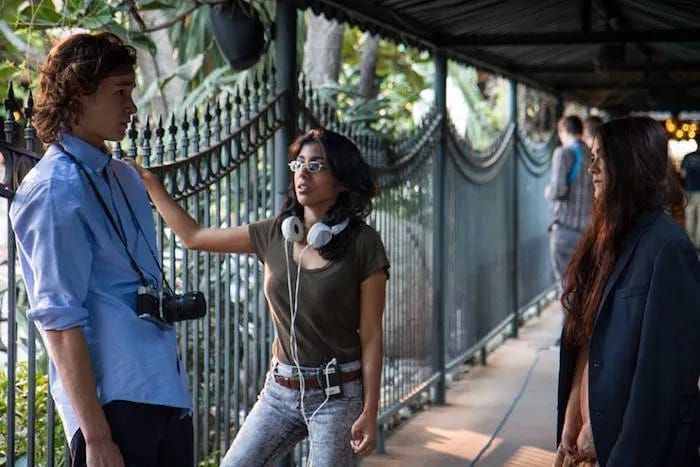
My conversation with the writer-director of the feature film Hala.
I first met filmmaker Minhal Baig at the 2013 Black List Screenwriters Lab in Las Vegas. She struck me as a bright, ambitious, and talented storyteller. Since that time, I have followed Minnie’s progress with great interest. This week she is launching a Kickstarter campaign for a short film called Hala. It tells both a compelling and important story about a Muslim-American girl who faces the tensions between faith, family, and sexual exploration. This project is hopefully a first step toward a feature-length movie.
As I see part of the mission of this blog to support independent filmmakers, I took the opportunity to ask Minnie some questions about her background and what she envisions for the Hala project.
Scott: What is your background?
Minhal: I was born and raised in Rogers Park, a small, diverse neighborhood in Chicago, by immigrant Pakistani Muslim parents. I had a fairly happy childhood. My parents knew I was the “artist” in the family, but they didn’t really expect that I’d pursue that professionally. I was always writing creatively, whether it was fiction, poetry or plays. At Yale, I chose to be an art major and studied painting for three and a half years. I also took classes in playwriting and screenwriting. By the time I graduated, I knew I wanted to tell stories, and that filmmaking combined my interests in art and narrative.
Scott: How did you find your way into writing?
Minhal: I found my way into writing through art. When I was really young, six or seven, my dad would bring home reams of paper from work — fax paper with perforated edges. At the hospital where my dad worked, they’d recycle the paper if it had any writing on it, so he would bring some home to me because he saw that I was interested in drawing. Eventually, my drawings were accompanied with words and they turned into longer stories. I spent my summers making elaborate picture books and sharing them with my friends at school.
As I got older, I got really interested in fan fiction. I always felt a little like an outsider at my middle school, so I retreated to the Internet to find friends. I found communities of people organized around their favorite books, television, anime and movies. These same communities had a lot of people writing stories using the characters from their fandoms. Those communities still exist on forums and blogs everywhere today, and they’re even more popular now because of social media. Back then, it was a cool little thing I did that nobody at school knew about.
Between the ages of 11 and 17, I wrote a lot of fan fiction — hundreds of thousands of words across dozens of stories for my favorite anime, videogames and TV shows. I posted my work online on a whim and suddenly there were people who responded to my work and wanted more. They’d leave positive reviews and share the story with other authors on the site. I had a small following on fanfiction.net for a few years. I’m too embarrassed to share my username but there’s still a few stories still posted, they’re from about ten years ago. At some point in high school, writing characters from preexisting stories didn’t appeal to me anymore. If I was writing thousands of words anyway, I might as well write my own characters.
In college, I took several classes in playwriting. I credit a lot of my development as a writer to the work I did in two classes, taught by Donald Margulies and Deb Margolin. They were phenomenal teachers. By the time I graduated, I’d written several full-length plays and a screenplay. I moved out to Los Angeles and started working at a talent agency, but continued writing plays when I could. Sometime after moving to LA, I shifted my focus to screenplays and I’ve been writing them ever since.
Scott: What are some influences in terms of movies, TV, and books?
Minhal: The first time I went to a theater, I watched Salman Khan swing on a chandelier and sing to his co-star and legendary Indian actress, Madhuri Dixit, in Hum Aapke Hain Koun…! These were the masala movies of Bollywood that my family saw at the small theater that played them. We soon migrated to watching American movies in the great effort to fit in. Jurassic Park was the first Hollywood film I saw in a theater and it was a life-changer. Movies could transcend national and cultural boundaries. They could be entertaining, universal and accessible.
Some of my favorite working filmmakers came out of the independent filmmaking movement: Sofia Coppola, Wes Anderson, Quentin Tarantino, Paul Thomas Anderson, Gus Van Sant, Richard Linklater, Darren Arronofsky and Steven Soderbergh, Spike Jonze and Michel Gondry, to name a few. Foreign filmmakers that I love: Asghar Farhadi, Wong Kar-Wai, Jean Luc Godard, Ingmar Bergman, Jane Campion — there’s so many more. The directors that I admire the most have a unique perspective and/or point of view on the story they’re telling. I’m just going to go ahead and list some movies that have inspired me over the years, in no particular order: A Separation, Pan’s Labyrinth, Shame, Blue is the Warmest Color, Black Swan, Fight Club, Boyhood, Lost in Translation, Rachel Getting Married, Eternal Sunshine of the Spotless Mind, Spirited Away, In The Mood for Love, Margaret, The Fountain, Russian Ark, Blue Valentine, Once, Melancholia, Before Midnight, Mother, Children of Men, The Royal Tenenbaums, Fish Tank, Winter’s Bone, Psycho, Memento, 4 Months 3 Weeks and 2 Days, Network, The Graduate, Minnie and Moskowitz, Pieta, It’s a Wonderful Life, Pulp Fiction, Lawrence of Arabia, Jurassic Park, 12 Angry Men, The 400 Blows, Uncle Boonmee Who Can Recall his Past Lives, and The Shining. My favorite films of the past year or so: Whiplash, Foxcatcher, Nightcrawler, Wild Tales and Ex Machina.
In terms of television, I’ve really enjoyed Breaking Bad, Arrested Development, The Fall, Top of the Lake, Twin Peaks, Downton Abbey, Freaks and Geeks, The Killing, Louie, Futurama and The Golden Girls. I’ve just recently gotten into Bojack Horseman and Bob’s Burgers and really like them so far. When I was growing up, I watched a lot of anime, and still love some of them today: Ghost in the Shell, Akira, Paranoia Agent, Grave of the Fireflies, and every film to come out of Studio Ghibli, but especially Princess Mononoke.
I’ve also been influenced by videogames and comics. I grew up on role-playing games like Final Fantasy and Watchmen was one of my favorite comic books. The last video game I really enjoyed was The Last of Us and one comic that is currently blowing my mind is the new Ms. Marvel. There are too many books that I love, but The Little Prince by Antoine de Saint-Exupéry is my favorite of all time.
Scott: I first got to know you when you were selected as one of six fellows for the first annual week-long Black List Screenwriters Lab in Las Vegas back in 2013. What was that experience like and what did you take away from the workshop?
Minhal: The Black List Labs was a really incredible experience. When I found out I was selected, I was back in Chicago, living with my family and working as a sales associate at Gamestop. It was all a little unbelievable for me at the time. Franklin flew out the six of us to Las Vegas for a whole week. We had group workshops and then one-on-one meetings with Brian Koppelman, Billy Ray, Kirsten Smith and you. We received notes on our scripts and workshopped them. The Labs was like screenwriting camp. Everyone there had a common love of story. Before Labs, I didn’t really have a community; after labs, the act of writing felt less lonely because I’d found out that even accomplished, professional writers had the same writing problems as me. My biggest takeaway from the Lab was the importance of revision, and being able to throw away something that was just ‘good’ so you could make it great.
Scott: Your first film is a feature length movie called One Night, which you wrote and directed. Plot summary: “Past and present collide when two couples explore love over the course of one night at a hotel.” Where did you get the inspiration for One Night?
Minhal: The inspiration for One Night comes from a very simple place. Everyone has fallen in love and fallen out of it; for me, I’d graduated school and fell in love with someone who I thought I’d be spending the rest of my life with. That didn’t happen, of course. That relationship is a major inspiration for One Night. I’ve always wanted to write an unconventional love story. I also wanted to explore how people fall in love, grow together, drift apart, and come together again. I’d been very inspired by Wong Kar-Wai’s In the Mood for Love, Richard Linklater’s Before trilogy, Drake Doremus’s Like Crazy, and of course, Han Canosa’s film, Conversations with Other Women. He is one of the producers on the project.
Originally, the idea was that two people (who were once together) reconnect at a friend’s party in New York and spend the rest of the night talking and getting to know each other again. I revised this idea so that there would be three couples (at different stages of life), in one location, spending the night together. Eventually, the story focused in on two couples (one younger, one older), who end up learning about love from one another. The story went through many drafts and the version we shot has a surprising turn that I can’t quite talk about. You’ll have to see the movie.
Scott: How did that project come together?
Minhal: The story behind how One Night came together starts with a play I wrote in 2012, called This is Los Angeles. After I’d graduated college, I moved out here so that I could get a job working in an agency mailroom, which I eventually did. I wanted to continue creating no matter what. I spent a good amount of time in cafes near UCLA, where I was living at the time, working on This is Los Angeles — a play about my experience moving to LA and working as an assistant in Hollywood. I contacted artistic directors of theaters around town to see if anyone would be interested in putting up a reading of the play. A few requested to read the script, but I never heard back from any of them.
Eventually, a breakthrough happened when I attended a comedy show at Bang! Comedy Theatre and met Lizzie Czerner, the artistic director at the time. I went up to her after the show was over and asked if she’d be interested in reading the script for This is Los Angeles. In retrospect, that was pretty gutsy. We got to talking and she said she would definitely read the script, so I went home and sent it to her. Within the next day, she’d read the play and said she’d love to help. I would have to cast and direct it, as well as market it myself, but she’d give me the space at the theatre to hold auditions and have the reading of the play. I cast through Craigslist, had a friend design the poster and held rehearsals — all while I was working in the mailroom at UTA.
I invited everyone in the mailroom to attend, including a filmmaker friend of mine who I went to college with. She was friends with Hans Canosa, a director and producer, for whom I had completed script coverage for once. He directed one of my favorite films, Conversations with Other Women, which is a huge influence for One Night. In return for writing coverage for Hans, I asked him to attend the reading of my play. After the play, we spoke. He thought I had a voice, and that should be cultivated. He believed in me as an artist right away, and encouraged me to keep writing. Weeks later, I pitched him the idea for One Night and he suggested that I write it. Eventually, I left my job at the agency and returned home to Chicago, where I wrote the first draft of One Night. I sent the script to Hans and he immediately took to it. He said it would need a lot of work, but it was definitely a film that we could make. Without his belief in me, there is no way One Night would have been made.
For the next year and a half, I rewrote the script many times with his notes. We had Kerry Barden, a casting director from New York, come on board after reading the script. Then, in late 2013, director/producer Marius Markevicius, who had produced several independent features, including Douchebag and Like Crazy (a major inspiration for the film), came on board the project. With his support, we were able to push the project into the talent agencies for casting. We submitted the script to talent agents and made offers to cast. While we were making submissions, I was revising the script and storyboarding the film. By August of last year, we had all the financing for the project and had just one more role to cast. I flew out to Los Angeles last August to begin pre-production. We began production on September 22nd and shot for sixteen days. We wrapped October 10th and entered post-production. A year later, we are submitting the feature to film festivals.
The process for One Night was lucky. I had very supportive producers who really believed in the script and in me. I owe everything them; they never stopped fighting for the movie.
Scott: Why did you decide to direct your own script?
Minhal: I initially wrote the script without the intention of directing it. I was given the opportunity to direct the script by my creative producer, Hans Canosa. He was convinced that I knew the story best and that I should direct it. Although I’d written and directed a few student short films, I’d never done anything on this scale before. I’d taken a few courses in filmmaking while I had been at Yale, but my focus had been in painting and playwriting.
Hans gave me the courage to direct my movie. He also gave me a very valuable piece of wisdom: Nobody is ever ready to direct their first film. A first-time filmmaker needs conviction in their vision, patience and perseverance. With that in mind, I consumed everything on the art of directing — from the more technical aspects of filmmaking and production to working with actors. I went through NYU’s graduate film school syllabus and read all the books I could get my hands on. I consulted other directors. I watched a lot of movies and listened to director commentaries. All the while, I kept revising the script and thinking about who we’d cast and what it would look like.
I was ready to direct One Night by the time we shot the film because I’d lived with the story so long. I’d written and rewritten the script, watched reference films, storyboarded the entire movie and knew my story backwards and forward. By the time I arrived on set, I was prepared to work with my actors and crew, and I owe a lot to both of my producers, Marius and Hans, for being so supportive of my vision despite my inexperience. They believed in me the whole way through. I could not have directed this film without them.
Scott: What did you learn from your One Night experience about the importance of writing for actors?
Minhal: Actors are desperate for good writing. When they find a good script, they jump at the opportunity to play a part. Actors are artists just like writers and directors are. They want to find parts that challenge them and give them a chance to do something they haven’t done before. My experience with One Night taught me about the importance of writing a character that an actor wants to play. In a truly exceptional script, character IS plot; the two cannot be separated. Those are the roles that actors want to play the most. Writing for actors is difficult, but it elevates screenwriting. I’ve also learned that I’m not just writing a script, but a movie; writing for actors is an important part of that.
Scott: What was it like directing an independent film and how has that affected the way you write scripts now?
Minhal: I’ve always been in love with words, since I studied playwriting in college and plays are all about dialogue. Dialogue is the most pleasurable part of reading a script but the least visual part of making a film. I learned that while making One Night, which is a dialogue-driven movie; every scene was a conversation between two characters. Fortunately, this is exactly the kind of film I wanted One Night to be.
For Hala, the tone and aesthetic is very different; it’s a lot quieter, for one. While writing Hala, I was always cutting dialogue. If a scene could operate without dialogue, that was ideal. My feature scripts are lot more spare than they were before One Night. I’ve focused a lot more of my efforts on structure and the “spine” of the story.
Scott: Let’s talk about your upcoming project Hala. We discussed the idea at the Black List Screenwriters Lab — a coming-of-age story of a Muslim-American girl who faces the tensions between faith and personal and sexual exploration. I remember encouraging you to tell that story as it struck me as one which needs to be told. What was your inspiration for Hala?
Minhal: About three years ago, I knew I wanted to make a film, but I wasn’t ready to tell this story yet. I operate from the “use what you have” philosophy of filmmaking; three years ago, I didn’t have what I needed to make Hala but I had the resources and relationships to make One Night, so I made that film first. I learned everything I could. Now I’m ready to make this movie.
Hala is inspired by my own coming-of-age. As I entered my teen years, I drifted from my parents; I began to question the faith and principles with which I had been raised. I wasn’t comfortable pretending to be one person at home and another at school. Managing two very different and separate existences became an impossible task. Eventually, they collided, and not without consequences. I was discovering who I was and what I cared about, but the process was not an easy one. I had to hide a lot from my family. I was raised in a socially conservative household, one in which sex was never discussed. I’m not even sure the word was ever spoken out loud in my house. Hala was written as a way to explore the anxiety of adulthood that I personally experienced.
Scott: Why do you want to tell this story?
Minhal: Hala is a very personal film, but it’s not autobiographical. Although I never had to wear hijab, my experience of growing up as a first-generation Muslim American has shaped the script, as well as the experiences of other Muslim American girls I knew growing up. I knew I wanted to tell a coming-of-age story and this was the story that I knew the best and was most fascinated by. As filmmakers, we shouldn’t just chase the stories that we think are interesting, but the ones that we have a distinctive take on. I asked myself an honest question: “Is there a story that only you can tell?” The answer was Hala.
Scott: Why are you crowdfunding the short film first?
Minhal: Now that I’ve directed a feature film, I know how important it is to provide as clear of a picture as possible of what the film will be. Many directors have found success in finding financing for their feature films by directing a short first. A few notable examples: In 1993, Paul Thomas Anderson directed Coffee & Cigarettes, on the basis of which he was accepted into Sundance Labs, where he then developed a feature version of the story, Hard Eight (1996). More recently, Damien Chazelle directed a scene from his feature feature script to raise money for Whiplash (2014). For a character-driven drama that is largely execution-dependent, a short film can help investors see what the eventual film will look like. One of the goals of a director is to present a project with as many of its elements as possible — producers, talent, crew, schedule, financing, locations — so that the film will appear as real and feasible as possible to interested investors. My team and I plan to use the short film to raise financing and present a clear picture of what can be expected from the feature.
Scott: How have you gone about building an audience/community around your film?
Minhal: The process of building an audience around Hala is actually inspired by a lot of literature on crowdfunding philosophy. Crowdfunding has become a very legitimate means of providing a way for people to financially support a project they believe in. Crowdfunding isn’t begging. It’s building a community around art, which has becoming increasingly necessary so that your art has an audience. It’s more important than ever to give an avenue for your audience to engage with you. Crowdfunding is just one of these many avenues.
The first effort to create and engage a community around Hala was to shoot and share teasers that demonstrated the tone and texture of the film. The teasers were both shot one night in downtown Los Angeles and a Burbank parking lot with a four-person crew: me, my cinematographer, focus puller and actress. Almost all of our camera equipment was borrowed. I edited both of the teasers on Adobe Premiere and we released them within two weeks of each other. The response to our teasers has been unexpected and enormous, both inside and outside of the industry. I am so grateful for everyone who has come out in support of Hala.
For the last two months, I’ve reached out to my contacts about the film for contributions. Slowly, the teasers, the website and tweets pushed the project in front of a lot of people, many of whom might never have heard about the project if it hadn’t been for social media. I’ve had people reach out to me to about contributing to the film, donating equipment/labor/production and post-production services, as well as investor interest in the feature film.
I opened up avenues for people to engage with Hala. I was never afraid to ask for help. I don’t take no for an answer and I don’t wait for permission. Building a community for this movie has been very empowering as a filmmaker, in a climate where I was used to hearing that I would have to “wait my turn” or “build my credibility” or that the film was “too niche” and “indie” to be worth making. There is definitely a market for this film; the people who have come out to support and engage with the movie have already proven that.
Scott: What do you hope to achieve with Hala?
Minhal: My hope for Hala is simple. I want to tell a personal story as authentically as possible. I want to take emotional risks and dig deeply. I want Hala to be a visually aggressive experience: a burst of feeling, full of rich color and texture. This film is a subjective, intimate portrait of a girl becoming a woman. It’s a departure from the dialogue-driven One Night. I wanted Hala to be spare in its dialogue and driven by images instead. There’s a lot that I’m excited to discover with this next movie. The height of filmmaking is making an honest movie. If I can do that with Hala and it resonates with people, I will have accomplished everything I hoped to achieve with this story.
Scott: Why should people contribute to this film?
Minhal: There are a few major reasons to support Hala. The feature is a coming-of-age story, which is one of the most accessible genres in storytelling. If I represent an experience as authentically and personally as possible, it will emotionally resonate with a wider audience. Blue is the Warmest Color had a wide audience that extended outside of France and the LGBT community. Blue is a love story that happens to have lesbians as its main characters. Similarly, Hala is a coming-of-age story that happens to have a Muslim American teenager as its protagonist. This is a deeply personal story for me but it is also universal and accessible because everyone has had an adolescence.
American cinema lacks female representation, in front of and behind the camera. Compelling female protagonists are challenging to find in mainstream film. They are often relegated to demeaning, sexist or sidekick roles that don’t take advantage of their full talents. The film business is slowly realizing that there is a real demand in the market for compelling stories about women. Additionally, there aren’t many films that have explored what the Muslim diaspora looks like in America, or the first-generation Muslim American experience. Hala explores both from the perspective of a teenage girl.
I also want to briefly discuss the underrepresentation of women in film. In 2015, Sundance, in association with Women in Film, conducted research on the barriers and opportunities facing independent female filmmakers. At the highest platform of theatrical distribution, male directors outnumber female directors by a factor of 6 to 1. The gender gap is also widest in top-grossing films; of the 1,300 top-grossing films from 2002 and 2014, only 4.1% of them were directed by women. There is a great misconception that films featuring women or created by women won’t perform at the box office. That could not be further from the truth. Women consumers are an untapped economical force. If you believe in diversity and women making movies, support those voices and the stories you want to see on screen. Every time you support a film like this — by contributing or going to see it in a theater — you inform the market that there is a demand for such movies.
By supporting Hala, you aren’t just supporting this film, you are also supporting me: a first-generation, minority female filmmaker. I do want to be clear: I didn’t set out to make a film to break glass ceilings or affect social change. I hope, through telling an authentic and personal story, that it resonates with you. If this is a story you want to see on screen, I hope that you support us by contributing or sharing the campaign with others.
UPDATE: Minhal not only made the short, she used that to finance a feature length version of the film. It was the first movie Apple TV acquired for that streaming service.
For my interviews with dozens of other Black List writers, go here.