Go Into The Story Interview: Patty Jones
Patty Jones’ original screenplay “Joe Banks” won the Vancouver based writer a 2013 Nicholl fellowship.
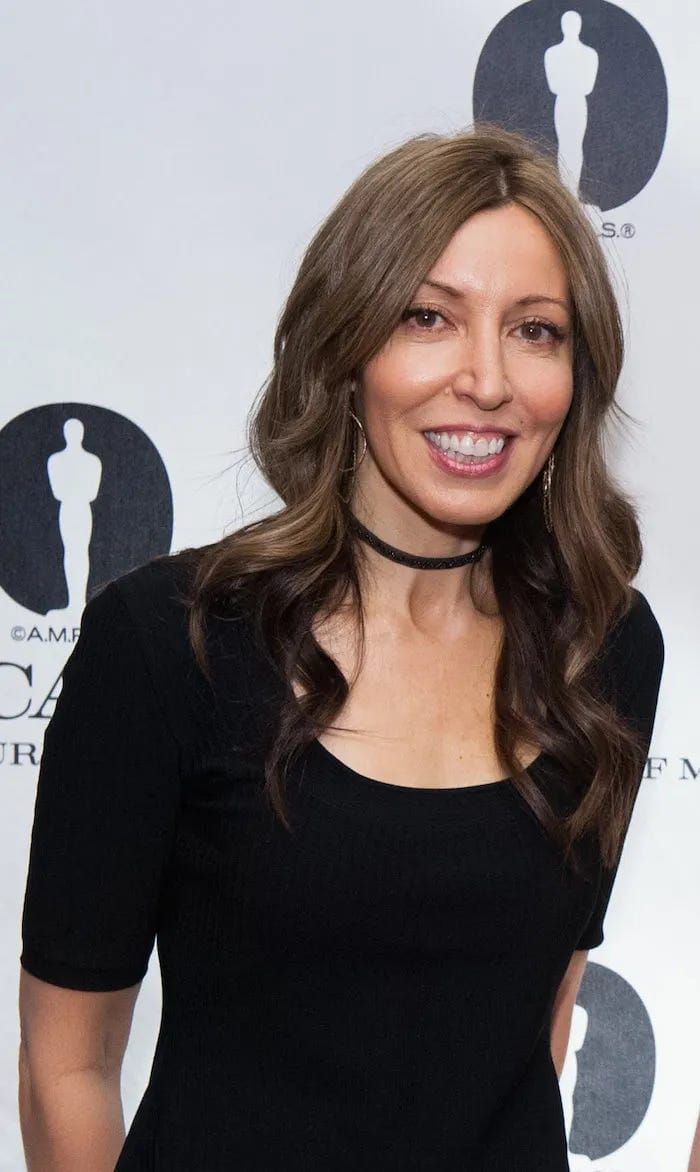
Patty Jones’ original screenplay “Joe Banks” won the Vancouver based writer a 2013 Nicholl fellowship.
I only have anecdotal evidence, but it seems to me the Nicholl Fellowship does not often select a comedy script as a winning entry. So when Joe Banks won in 2013, I was excited to reach out to its writer: Patty Jones. The script is funny. Very funny. And as would be expected, so is Patty.
Scott: So let’s start at the beginning. Where did you grow up?
Patty: There’s an area near Vancouver called North Burnaby. I grew up at the foot of a mountain, where there’s a big university at the top called Simon Fraser University. I grew up at the foot of it, which sounds like it was in the middle of the woods — and for a while it was.
Scott: You’re still in Vancouver?
Patty: I live in downtown Vancouver for now. I’m doing the LA commute, because we all love to commute, right?
Scott: When did you discover your interest in writing?
Patty: This is going to sound like the cliché thing, but reading will get that going. I’m the youngest of five kids. I had surprisingly nice siblings who were kind to me. The oldest ones would read to me. I remember my oldest brother reading The Hobbit to me when I was about four. We would sit on his bed and he had a poster of Middle Earth and I remember thinking, “Who are these creatures?” I was trying to comprehend this world.
It probably started there. I read a lot. Even in kindergarten, my mom would put a stack of books on my bed. She would lie down for a nap ‑‑ having five children ‑‑ and I would be tucked into mine with this whole stack of books. I was a pretty heavy reader. Even if you fall off it when you’re a teenager and you get into other pursuits and bad behavior, the stuff you read as a kid forever resonates.
I was always reading the British stuff, CS Lewis and Enid Blyton and Arthur Ransome. There’s something about the way British authors write, where they don’t distill it for kids. It’s the good, the bad and the ugly. They don’t try to make it safe or nice. I remember being fascinated by all the adventures.
I went to school. Initially I did a Bachelor’s in music. I didn’t complete it, mind you, but I started that way. Then, somewhere in there I segued into creative writing. It was my lovely parents who said, “What about writing?”
Scott: You also got a Master’s in creative writing.
Patty: Yeah, this was at the University of British Columbia. I went straight into a Master’s from the Bachelor’s. My thesis was in short fiction. I got a scholarship for fiction. I was submitting stories. I remember getting a really nice letter from The New Yorker and some other magazines that were saying, “Hey, let’s pursue this. Send us another story.”
I lost interest in short fiction for myself, in terms of writing it. But I took one screenwriting class in my Bachelor’s and another in my Master’s, and I remember thinking, “This is something you can learn.” Whereas I thought with short fiction, you either have an instinct for writing or you don’t and you have a feel — with screenwriting I thought, “You can learn this because you can learn structure.” That was interesting to me.
Scott: Had you always been a fan of movies?
Patty: My first memory is, literally, The Good, the Bad and the Ugly one Saturday afternoon on TV. There was the Ennio Morricone soundtrack and there was Clint Eastwood. I had a crush on him when I was about four years old.
You couldn’t have a more different genre from say, for instance, Woody Allen. I’m a big fan of Woody Allen. Yet, I love these Sergio Leone movies — The Good, the Bad and the Ugly being my favorite, then, of course, A Fistful of Dollars and For a Few Dollars More. The whole atmosphere and the fact that they shot them in Spain and all the dubbing of the Italian actors, that captured me.
I started seeing Kubrick films. It’s probably more directors that affected me when I was younger than writers — then writer-directors, obviously, like Woody Allen. But I love Kubrick. Dr. Strangelove probably takes it. When I was a kid, I saw a lot of Peter Sellers. When you’re in Canada, you tend to watch Monty Python and take up all that British humor. I remember a lot of silliness.
But what initially clicked was Woody Allen — Hannah and Her Sisters, Manhattan, Annie Hall and Play It Again, Sam. And there’s no one better to say Woody’s dialogue than himself. I wrote one script in university that was almost entirely Woody Allenesque dialogue. I wrote that in about a week because I was late.
The whole New York thing — I had all these romantic ideas about the city. The black-and-white images in Manhattan, the voice-over, the Gershwin soundtrack, “Rhapsody in Blue” — all that captured me. I still seem to have the writer-directors in my head, like Noah Baumbach, Alexander Payne, Paul Thomas Anderson and, of course, Billy Wilder. And I love the Coen brothers. But it all started with Woody Allen.
Scott: You’d been writing for something called the Georgia Straight. I gather that’s a weekly publication in Vancouver.
Patty: Yeah, I fell into that, I fell into journalism. I was helping them out, editing for them, and proofreading — there’s not a lot that gets past me, except in my own script, of course. And I fell into feature writing. I did a lot of movie junkets, where I was interviewing actors.
Then, also on the side, I was being a script reader for the Canadian government film‑funding arm, which is called Telefilm Canada. They started recommending me to production companies. I started reading for them. Occasionally, I’d do a dialogue polish.
There was a point where I thought, I want to write my own stuff. But in the middle of that, my boyfriend created a board game and I wrote everything on that for him. I wrote the back of the box and I wrote the instructions — with collaboration, of course, because I was the hired gun. The game got out there and the next thing we knew, we had a call from CAA and they wanted to turn it into a game show.
You see, the game was getting a lot of press all over the place. There were a lot more game stores then. We had game stores in New York that would say, “Oh, celebrities are buying it. Susan Sarandon is buying it.” Amazingly, Susan Sarandon still plays it every Thanksgiving from what we can see online. She and her daughter, Eva Amurri, mention it. And I remember when Cher’s assistant called us up to buy a case and we could literally hear Cher in the background saying, “We pissed our pants laughing” playing the game. The game is called “Wise and Otherwise”, by the way.
Scott: No way! My family plays that!
Patty: Do you?
Scott: Absolutely.
Patty: I’m not the inventor. My boyfriend is the inventor. But I typed every game card.
Scott: Are you serious?
Patty: I’m not kidding. For the printing company to print it, I typeset all the layouts.
Scott: You know what’s funny about it to me? You hear all these stories about how people wind their way into Hollywood agencies, but I’ve never heard of anybody finding their way into CAA via a board game.
Patty: I remember how amusing it was because they found us and called us up. It was a young agent. He thought I was a secretary. We thought, “Well, that’s funny. We’ll let them think that I’m the secretary.”
So they pursued us. We wrote pitches. We were new to it. It hasn’t become a show — yet — but it was a lot of fun. We had a “Playboy After Dark” idea about it. We pictured all these celebrities playing it while drinking cocktails. [laughs] This is definitely still on our brains to develop for cable or online.
Scott: In the midst of this, at some point, you studied online through the UCLA Professional Program in Screenwriting.
Patty: Yes, I did. You’re a very good journalist. I wasn’t exactly looking for learning or teaching. I was looking for a regular expectation of pages. So I thought, “Well, UCLA is close to the industry. I’m going to do that.” That’s where I started “Joe Banks”.
Scott: What was that online education experience for you?
Patty: My classmates were lovely. My teacher was great. The important thing was, I had to turn in the 10 pages every week. That was what it accomplished. I did a first draft of “Joe Banks” in that class.
Scott: Let’s talk about “Joe Banks”. It’s interesting to track your history where you are always interested in reading. You got into writing pretty early. You had a love for movies particularly writer-directors. You were interviewing actors. Got both a B.F.A. and a Master’s in creative writing. Did the UCLA professional program and did all that script reading. Even had a little foray in Hollywood via the board game. So it’s like all that stuff was preparing you.
Patty: A whole loser trajectory. That’s a sad, sad story arc.
Scott: Classic Hollywood fashion. Boom! You have this wonderful experience with “Joe Banks”. I’d love to talk about the script, which is so fun. Here is a description of the plot:
“A wild comic odyssey about a son conceived using sperm from a sperm bank who believes his father is an esteemed Noble Prize–winning novelist and aspires to be like him. His true father is a ‘drinking airport novelist’ whose Noble Prize was taken away after a sex scandal. Together, father and son get to know each other during a wild book tour and discover themselves along the way.”
Which came first? Sperm bank, Noble Prize–winning novelist, drinking airport novelist or road trip with father and son?
Patty: With any good writer, drinking always come first. That’s the credo, isn’t it? [laughter] Again, with my boyfriend, we had thought of a sperm bank story before. Then, lo and behold, all these sperm bank or sperm donor movies came out. There was The Kids Are All Right. There was a Jennifer Aniston one. A Jennifer Lopez. The Jennifers had cornered the market on sperm banks. But I had created this one character of an author who was very much a side character in that idea.
I literally woke up one morning. It was 7:00 AM and I’m lying there in bed. I said to my boyfriend, “I think I have an idea.” I started telling him about this father and son thing, and the Noble Prize. The writer I originally thought of for our other idea, he was already larger than life, but all of a sudden I pictured this father and son dynamic.
Scott: The adult son in the script is Sam. How would you describe this character?
Patty: I’m probably Sam, except I’m not a 21‑year‑old boy, that I’ve noticed. It is about identity. I’m a little bit older than Sam, but you wonder, Who the hell am I and am I going to amount to anything? The answer is no. [laughs]
The answer is we try. And Sam’s got all the ego and insecurity that…I don’t know about you, but I’m a terrible mix of ego and insecurity. He’s probably me except with the strange twist of finding Joe attractive. Which is all wrong.
Scott: Yeah, I found a quote from you where you said about this story, “It’s about who you are. We all wonder about our identity and what we’re going to achieve in life.”
That seems so apt for Sam because he’s trying to live up to the fame and creative talent of this Nobel Prize–winning novelist father Porter Gray. Then he has the rug pulled out from under him when he discovers that Porter is not his father.
Then he’s confused even more when he learns the identity of his real father, this Joe Banks character who’s this larger than life, bombastic figure who writes these pulp novels. When we meet him, he’s really in this state of having everything rather up‑ended and in search of his own identity.
Patty: Yeah, yeah. I don’t know what it is, but I have a huge empathy for men. I like men. I seem to like writing the male characters. I don’t know what it is. I wanted to do it through these two guys. Maybe men have more fun. I don’t know. I have a lot of feeling and a lot of empathy and passion. Men probably have a weird role nowadays. Women do, too. It gets harder and harder.
I don’t know how young men, and I don’t know how a character like Joe’s age, how they fit into the modern construct of masculinity with everything that’s going on today. Women are obviously doing their own things and don’t need a guy to be all the traditional things, and yet Joe is very masculine. He’s clearly, obviously, not a misogynist. He’s comfortable and he loves women. I don’t know. Apparently, I was in a mood. [laughs]
Scott: I’d like to talk about the two father figures who loom over Sam. Let’s start with Porter Gray. What are some of his key character attributes, and what was the inspiration for him as a character?
Patty: He’s a selfish bastard. He’s a peacock. I’m picturing, truly, someone who’s caught up in his own myth but doesn’t have the generosity of spirit to give to his son. Strictly visually, the way he looks — for some reason I always think of Updike. That’s how I see Porter looking, or like Spalding Gray, without the personality of Spalding Gray. The worst scenario of someone who has gotten overinflated. But I always heard Christopher Walken’s voice, whom I also love — that disdainful cool.
Scott: He doesn’t have a lot of pages, but he comes across as a visceral type of a character because he is such an asshole. It creates this really stark distance between he and Sam.
Sam, of course, thinks, for years, that this is his father. Is it safe to say ‑‑ not to get too deep here ‑‑ that that created an emotional vacuum in Sam’s life, that distance between he and Porter?
Patty: For Sam, no real father, that’s the pain. It comes down to the pain of missing a parent. But I can’t help but try to be funny.
Scott: Into the void of that steps Joe Banks, who in many ways is the central character in the story. As I was reading the script, I couldn’t get rid of the image of that guy in those Dos Equis commercials — The World’s Most Interesting Man. For example Joe says, “Men don’t converse without a goddamn scotch in their hand.” It seems like something that guy would say.
We know he was a side character in this previous sperm bank project. Then you wake up one morning and all of a sudden there’s this guy.
Patty: I must have been thinking about sex when I woke up.
Scott: Yeah, it’s on his mind a lot, isn’t it?
Patty: Um, yes. It comes back to the men thing. Thinking about Hemingway and Norman Mailer and probably a bit of Harold Robbins. I was a bit worried, frankly. I did notice with producers who have contacted me that they have mostly been men.
Here I’m a woman, but I worried that I was alienating women, that they would not love Joe as I loved Joe, and that perhaps they would see him as the wrong throwback and that this was old‑school in the wrong way.
I see him, as I said, as a lover of women and certainly not a misogynist. There was a very careful line I had to tread, even in the way he talks to Sam. I didn’t want him to be a bully. He’s a little bullying, but I wanted him to be warm and soulful, but fucking funny. I wanted people to love him and not to think, “What a jerk,” or, “What a jerk to his son,” or he’s throwback‑y in the wrong way.
Interestingly enough, of course, Hemingway went on a lot of safaris and probably shot a lot of animals. Of course, I have Joe doing the opposite and being a protector and a conservationist, which was a twist on the whole Africa safari thing.
Scott: Joe’s got this voracious appetite for life and, in particular, sex and alcohol. You would think, “OK, writer, sex, alcohol, that’s probably a negative addiction that’s masking some deep needs and insecurities.” You don’t get that feeling from Joe. It’s more like he really revels in life in a frenetic, tactile way.
Patty: [laughs] Yes, he’s very tactile. That’s right. As we should all live. We should be tactile. [laughs]
Scott: Similarly, in his interactions with Sam, even early on one gets the sense that, yeah, he’s got a lot of edge towards him and he can be pretty rough with Sam. But it’s more about him wanting to get the kid to experience life directly.
Patty: Yeah, absolutely. He thinks that he’s lived a sheltered life and been protected by his mother, probably. He wants to strip all that away. I have to say, I labored over a couple of those monologues because I thought, “Oh God, I worry about sincerity and here’s where you have to be sincere.”
I tend to turn everything comic, even in real life. People will often say to me, “I can’t tell when you’re being serious. You seem like you’re joking all the time.” I did want people to feel that sweetness, and I wanted it to feel poignant.
And I quickly realized that I had gotten myself into something when I started the character of Joe and I thought, “You better keep this up.” There were moments where I thought, first of all, “Can I come up with any more euphemisms for testicles? Can I come up with more?” I was online searching and then I made up a whole ton of them. Then I thought, “He can’t peter out,” no pun intended. He’s got to stay Joe right to the end.
In the sex scene where Sam is being read aloud to from Joe’s novel, I had to write what was supposed to be an actual part of the novel. I thought, “Oh, shit, I’ve got to write like this guy. How am I going to do it? I’d better do it. I’m a writer, and I’d better try to write like this guy.”
And I’ve been to Russia, so I thought, Where can I stick him? I’ll stick him at the Russian border, which is exactly what happened to me. The border guards took away our passports and we thought we were never going to get them back.
Scott: This is with Book Store Chick, right? The beat‑up, old Lada had stopped at the border guard.
Patty: Yeah, there’s a lot of Ladas.
Scott: I was thinking Joe must have been a lot of fun to write, but it sounds like it was also a challenge for you to sustain his bombastic, colorful personality throughout.
Patty: Yeah, but I loved him. He was real. I wrote that first draft at UCLA, and my teacher gave me notes — all apologies to him, but I realized afterwards that I never looked at the notes. I just submitted to the Nicholl. My boyfriend read it three days before the deadline, and he said, “It’s 70 percent there.” Then I thought, “Fuck it.” I squeezed in another nine hours, which is why I call it not quite a second draft. A draft and a quarter. I submitted it to the Nicholl with no one having read it but me. That was a very kamikaze pilot act to do.
Scott: I want to talk to you about some narrative choices you made. The middle of the story consists of a road trip. Sam’s been conscripted to be Joe’s minder on a book promotion tour. I was wondering, are you a fan of road trip movies?
Patty: I love road trip movies, but it was probably more an awareness of the world of books — what is happening to books in our world. It was a little bit of a love letter to books and authors.
It was probably more about book tours than about a road trip per se, but it was very handy. I did put in things I love. I’ve never been to Boston, but I do know the Chateau Marmont. Although when I was writing it, the Chateau Marmont driveway had grown longer in my mind. [laughs]
I was putting in what I want. I was probably putting in my fantasies, including the African savanna. I thought, “Put Sam somewhere he doesn’t want to be and with a person he doesn’t want to be with.”
Scott: That dynamic is really interesting to me. Some of my favorite movies are the combining of a sheltered, confused younger man forced to spend time with a more impulsive older man like My Favorite Year, Scent of a Woman or Zorba the Greek.
Patty: I love all those movies. Who’s going to forget hoo‑ha? Who’s going to forget Pacino. I also loved Peter O’Toole. I wasn’t particularly thinking about them, but I’m a fan of all those things.
On that same tack, I think everything is combining in what you’ve seen and what you’ve experienced, and that’s what’s in there too. Joss Whedon talks about filling the tank, seeing and experiencing life and art. Somewhere in there, all those things are in your subconscious. As a writer, you absorb all these things and you maybe imitate, but you end up sounding like yourself. We’re lucky. We don’t sound like that person. In the end, we sound like us.
Scott: You led me into this other thought. One of the things I resonated with in the story is the duality of life. Head versus heart, inner world versus outer world.
You’ve got these two characters, Sam and Joe, each representing different aspects of the human experience. It’s such a nice construct, particularly when the inevitability of them bouncing off each other, bashing into each other.
But father and son finally, at the end of the day, bonding in a way.
Patty: Yeah, I really felt it. It’s a hideous thing to say that your own writing almost makes you teary, but I felt it. I felt for them. They were real to me. I wanted Sam to have that, and I wanted Joe to have that. It moved me, and, like I said, I’m not either of those characters.
I, by the way, do not always believe in “write what you know”, in terms of basic human experience. We know what it’s like to be human animals and doing our best on the planet and doing our best to be hardworking, kind people and to do something great. I believe in the human imagination.
Luckily, we are able to make things up. We’re not dung beetles and we’re not lemurs — not that I don’t love dung beetles and lemurs. What I’m saying is, I don’t have to know what it’s like to be a 21‑year‑old guy or a 50‑year‑old guy, and I still feel the emotion of it. We hurt and we yearn, and then we try to be funny. We do our best.
Scott: I was going to ask you about that. You say your friends say, “I don’t know when you’re not being funny.” Where do you think that sense of humor comes from?
Patty: It’s probably fear. I have a credo. The credo is never be boring. It comes down to thinking: don’t lose people’s interest. Maybe, again, it’s vulnerability, a fear of being vulnerable and being yourself. I never want to write about myself. I have to write about me through things, apparently. I don’t want to talk about myself ‑‑ [laughs] as I’m doing now.
Scott: In that vein, I’d like to wrap‑up the discussion on the script before we get to craft questions with a few Joe‑isms that I drew from dialogue. Here’s a line Joe had.
Patty: Are they about testicles?
Scott: I avoided the testicles with two of the quotes. First one: “A writer must write women who he wants to make love to, preferably ones who can use a crossbow.” What are your thoughts on hearing that line?
Patty: [laughs] I thought that was funny.
Scott: It is funny. “Preferably one who can use a crossbow.”
Patty: Again, respect for women. Joe thinks women are fantastic. Obviously that’s a strong woman, a woman who can use a crossbow. And, uh, don’t get in her sightlines.
Scott: Here’s another quote that he had. He’s poo‑pooing the modern technology, Twitter, whatnot, and somebody mentions PowerPoint.
He says, “PowerPoint? I once made a power point with a Cape Buffalo in the Zambezi Valley. Wrestled, mixed it up. In the end, we called it even.”
Patty: [laughs] That’s a little bit of Hemingway. That’s obviously old‑school masculinity and a nod to that. I had to look up the Zambezi Valley. [laughs] There was research on, you know, dangerous animals like Cape Buffaloes. Sometimes maybe I’m not being super-complex, I’m trying to be funny.
I remember my teacher at UCLA asking me, “Should we see Joe as telling the truth or is he not a truth‑teller and it’s all in his head where he’s fooling us?” I see him as a truth‑teller and these things really happened. I don’t think he’s boastful or into himself. He just is.
Scott: Here’s one more for you. Joe says, “I know how to goddamn live, and it’s a goddamned, soul‑juicing, glorious thing. Do you even have the goddamned cojones to live?” If you had to, in a nutshell, sum up the message Joe would have for Sam, does that zero in on it?
Patty: Is nutshell another euphemism?
Scott: Didn’t want to stray too far from testicular humor.
Patty: Yeah, that would probably be a nice thematic summing‑up. That would be what Sam would need to ask himself. Then, of course, Sam does get Joe to acknowledge some things, as well, things Joe cared about, like the Nobel Prize, which he professes not to care about but, in fact, he quite does. Yeah, that’s probably very good. [laughs] Yes, well done.
Scott: In the script, you describe Sam gets to experience a full‑on, full‑out Hollywood party. You’ve done the whole Nicholl so you’ve got to experience LA high‑life for yourself. What was that like, the whole Nicholl experience?
Patty: I don’t know. It was one big, alcohol-fueled blackout. I’m kidding. You know what? I have to say it was stressful a bit. I could feel the stress coming at the end.
It was great — the letters, the emails were great at the end of July, the end of August. To get the readers’ comments, that was the day before we got the finalist phone call. I thought, “This is nice. Someone’s read it besides me. [laughs] I might not be entirely delusional.”
Being in Canada felt a bit weird, and I wondered when they put the list out, when they announced the finalists, and I could see the word “Canada” beside my name I thought, Will there be a stigma, will there be a bias?
I know Canada is next door to the US and they do a ton of filming here, a ton, but not a lot of writers are writing in Hollywood from Vancouver. I was a bit worried. A lot of people, like Tony Gilroy, for instance, said, “You don’t have to be in LA,” but I thought, “Yeah, maybe that’s true when you’re a little more established, but in the beginning it seems like your face should be somewhere there and they should feel like you’re serious.” I worried about that for a little bit.
And when I was at the Nicholl alumni party, someone said to me, “You’re going to move to LA, right? Anyone I knew who won this thing and didn’t move to LA, I never heard from them ever again.” [laughs]
Scott: Are you thinking about looking to relocate to LA?
Patty: Yes, I am. I am planning to do that shortly. I was caught up, because I had some LA–based re-write work and I was hired on a TV show. I was in a writers’ room here in Vancouver for a good part of the New Year of 2014, but that show is now in limbo. So, yeah, actually being in LA might make it just a tad easier to get to meetings.
Scott: So you’re a finalist of the Nicholl. Now, you’re getting phone calls. Did you get representation at that point or was that later on?
Patty: I had our law firm, Ziffren Brittenham, from the board game. I got a manager and I’ve been focusing on what I’m doing.
Scott: Who’s your manager?
Patty: Daniel Vang at Benderspink, who’s really great.
Scott: I was going to ask whether you have an interest in writing TV. Given the fact that you’re so good with dialogue and character, I would think that that would be something you’d be terrific at.
Patty: Can you put that on the Internet?
Scott: I think we just did! [laughs] You want to write TV?
Patty: That was Daniel’s immediate thought. He thought the same thing about dialogue: “Write a pilot.” The interesting thing was the TV show I got hired on is not a comedy whatsoever. It’s a crime thriller with a family drama in the middle of it. I tried to talk them out of hiring me. [laughs] I recommend this highly as a career move. This is what people should do — try not to get hired. I said, “You know, I’m really comic.” Luckily for me, they said, “That’s OK. We’re looking for that voice. Your voice.”
Anyway, what I’m trying to say is that the TV shows that resonate with me have weirdly been dramas. The idea was that I would write a comedy pilot, but now I’m thinking maybe something more black comedy.
Scott: You mentioned you’re interested in writer‑directors. Is that something you want to do. Maybe write and direct movie?
Patty: It’s interesting. Maybe because I’m the youngest child, I’m incapable of bossing other people. But I’m writing a fantasy-adventure right now — with what I think is a cool mix of comedy and drama and, of course, action — and I’ve never written this genre before. What I’m getting at is that I’ve been bending my brain to do this, but the great thing is that I love it. And I realized how much I can learn, and I’m thinking, “I can probably learn to direct, as well.” It’s certainly a thought, although I’m not very bossy. I’m way too malleable.
Scott: Let’s move into some craft questions. How do you come up with story ideas?
Patty: Well, some things pop wholly formed into your head and some things are a mashup. You probably would agree with that, that you mash things up and then suddenly it turns into something that’s your own.
Scott: Then, one morning, you wake up at seven o’clock and it’s there.
Patty: And you think, “I have a pounding hangover and here’s an idea.”
Scott: How about prep writing… brainstorming, character development, plotting and research, outlining all that? What’s your prep process if any?
Patty: It’s probably changed. “Joe Banks,” I didn’t really know the ending until the second draft. Then, I did have to outline that third act. It did not end that way nine hours before I entered the Nicholl. I made up that whole third act just before.
Scott: Wow.
Patty: In short story writing, I literally thought “process of discovery”. I’d be writing and I’d think, “Oh, that’s interesting. That’s how this is going to go. This is how this is ending,” which is lovely, but it can be time-consuming and it can maybe get you a bit knotted up.
In screenwriting I’ve always thought, “OK, you need to know your ending,” and I’m more a fan of outlining. Of course, with something like what I’m writing now, which is more of a tentpole-type scale, you pretty much have to outline.
Although, I’m always happy when I read an interview with somebody I admire, like the Coen brothers, where they do not outline and they talk about, “Well, we know what scenes are going to be happening a couple of scenes ahead.”
I thought, “Yeah, that I understand.” But yeah, “Joe Banks” was written without a destination, but on that nine‑hour second draft, I got a destination pretty quick.
Scott: You’re good with characters. How do you go about developing them?
Patty: I don’t know if everyone does this. I like to hear actors’ voices in my head. Even if that actor is never going to be a part of this I think, “I’m going to hear this actor.”
I have a character in my current script where I’m hearing a mix of Robert Downey Jr. and Peter Dinklage. It amazingly helps me. I don’t know if other people do this. Maybe everyone does it and I’m like everyone else.
I like to think I’m special, but I’m not. I get into the groove and deep focus, deep underwater…underwater in a good way, I don’t mean drowning, hopefully not drowning [laughs], but really deep focus.
Scott: How important is theme to you? Do you start with a theme or do these things merge as you’re writing the story?
Patty: It becomes more apparent as you go along. You start with something and then it starts to tell you more. With “Joe Banks,” I always knew. I felt that sweetness of father‑son. We talked about identity. I have a feeling that probably you discover more after the first draft.
Scott: How about when you’re writing a scene? What are your goals?
Patty: You might love dialogue like I do, but if it’s not directing towards the plot or towards character development, better get rid of it. I am not very precious. If you chop something out, only you will miss it. You will miss it briefly, and then forget it. It’s like a whisper…you forget it existed. For someone new, they will never know it existed.
Scott: What’s your actual writing process? Do you write every day, or do you go on sporadic bursts? Do you work in private, or do you go to coffee shops? Do you need music or quiet? How do you go about writing?
Patty: I have unpaid serfs to do the writing. I convinced them that it’s an internship where they’ll learn something. Seriously, I have written a ton in airports and coffee shops.
Lately I’ve been writing at home, and I will keep going and going. I’ve had times when people are texting me and saying, “Come out to this club. Hear this band,” and I’m thinking, “No, I’m having fun, doing this.”
Scott: Do you still sing?
Patty: [laughs] I do not sing professionally, but it does not leave my mind that I know how to sing. I would like to write music for a film. That’s what I’d like to do. I could be the complete undercover person who’s the voice for the actor.
Yeah, I do still sing. I sing to myself, but I’ve got a big voice. I’ve got a four-octave range, or something. A lot of people do not even know that about me. That was a while ago that I was doing my Bachelor’s in music. I don’t even mention it to most people.
Scott: Clearly what you need to do at some point is write, direct, do the music, do some singing, do it all… like Woody Allen.
Patty: Yeah, I haven’t heard Woody sing that I can think of. He did have his musical, which I liked.
Scott: And you loved the Coen Brothers ‑‑ not that they sing, but music is a big, big part of their movies.
Patty: Absolutely. Why don’t I have a brother to write with? I’m envious of that relationship, endlessly.
Scott: Okay, here’s a fun one. What’s your single best excuse not to write?
Patty: Being asleep [laughs]. Jeez…we’ve got to be hardcore. There is no excuse not to write. Better write and flagellate yourself, sleep on a bed of nails if you haven’t written something.
Scott: What do you love most about writing?
Patty: Obviously, sometimes it’s extremely hard. When I’m in the groove, I think, “This is a ridiculously fun way to spend some time.” Writing dialogue is insanely fun, and I believe in it. I believe what I’m writing. I believe these characters exist, and I can’t believe I’m doing this.
Scott: Finally ‑‑ and you’re going to probably be getting this more as you move into this career ‑‑ what advice can you offer to aspiring screenwriters about learning the craft, and breaking into the business?
Patty: Never be boring is a big one. I would say, imitating is fine because you will turn out like yourself. That’s better than screenwriting books. Reading a ton of scripts…when I was a script reader, I probably read hundreds of scripts.
I watched movies, and I literally timed when things happen. I’m sure people do this, so that’s probably not a revelation. I’m looking, OK it’s seven minutes in, blah, blah, blah.
I also think that you don’t have to niche yourself. I thought I could only write comedies and comedy dramas, and yet I was working on a crime thriller family drama TV show. Now I’m doing a fantasy adventure, and I didn’t think I could do those things. But the brain is a flexible instrument.
I also should tell you that I have an Einstein quote on my computer which is, “Don’t do anything that’s easy.” [laughs] No ‑‑ I’m looking at my hideously written quote — it’s “One should not pursue goals that are easily achieved. One must develop an instinct for what one can barely achieve through one’s greatest efforts.”
You’d better grow. Better not be in the comfort zone. Yeah, be profoundly uncomfortable. At all times.
Here is Patty’s acceptance speech at the Nicholl ceremony.
For my interviews with every Nicholl winner since 2012, go here.